
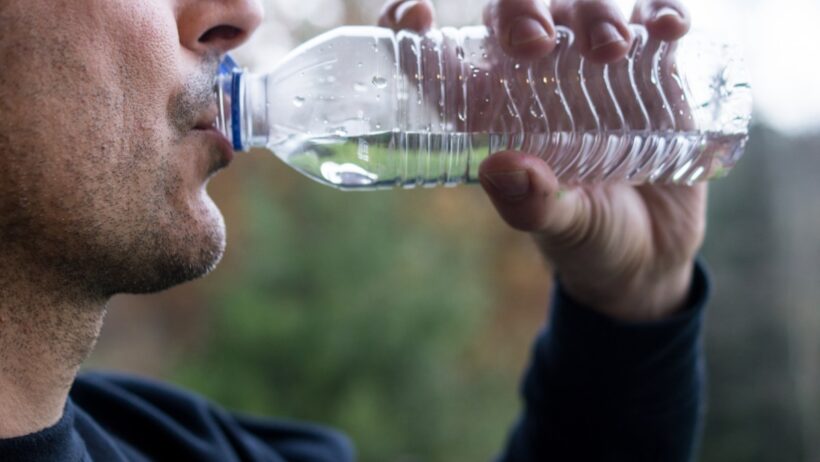
A Long Island mother is sharing her family’s experience after her 39-year-old son nearly died from overhydration after a day of golf during a recent heat wave. She hopes that her story will raise awareness about the dangers of overhydration during extreme heat.
Barrie Smith, a Westbury resident, says that her son became seriously ill after playing 18 holes with friends on Bethpage Black Golf Course on July 3 during a heat wave. She says that he appeared normal for several hours, but at around 8:45 p.m., she received a call from him saying that he had vomited all over her apartment.
Smith happened to be down the block at a nearby restaurant, so she ran over to see him. She noticed that he looked pale and his face was swollen. Believing he was suffering from heat exhaustion, she asked a neighbor for electrolytes. When she returned, he no longer knew his own name and that prompted her to call 911.
As they were waiting for the first responders, her son stopped breathing and began having multiple seizures. The ambulance arrived and they transported him to the hospital.
“He can’t die. He can’t die. He can’t die. By the grace of God, that was my mantra,” says Smith. “When they got him somewhat stable and put him on a respirator, we were finally able to see him. He was in an induced coma for a week, on life support, and he developed double pneumonia because he aspirated fluid during the seizures.”
Dr. Morgan Dauer, an emergency physician at Northwell Lenox Hill Hospital, says drinking excessive amounts of water can dilute the body’s sodium levels and lead to serious medical complications.
“When you drink too much water, this can dilute the blood and the salt content in the body,” says Dauer. “This can lead to seizures, comas, and if it gets really bad, their brain can swell and then ultimately it can lead to death.”
A normal blood sodium level ranges from 135 to 145 milliequivalents per liter (mEq/L). Levels below 120 can put you at high risk of seizures. Smith said that her son’s blood sodium level was 105 when he was admitted into the hospital.
Dauer also says that one of the biggest misconceptions about hydrating in hot weather is that more water is better.
“Generally, when you’re working out and when you’re outside in hot weather, you want to replace your losses,” says Dauer. “What people think is that all the losses are coming out in sweat, but the losses are coming out in your normal respiration.”
Smith says that she hopes that sharing her experience will help others understand the dangers of drinking too much water during extreme temperatures.
“People need to know the dangers of hydration and heat,” says Smith. “There has to be more education and awareness because nobody knew about this situation. I don’t want another parent to go through what I went through.”