
Open this photo in gallery:
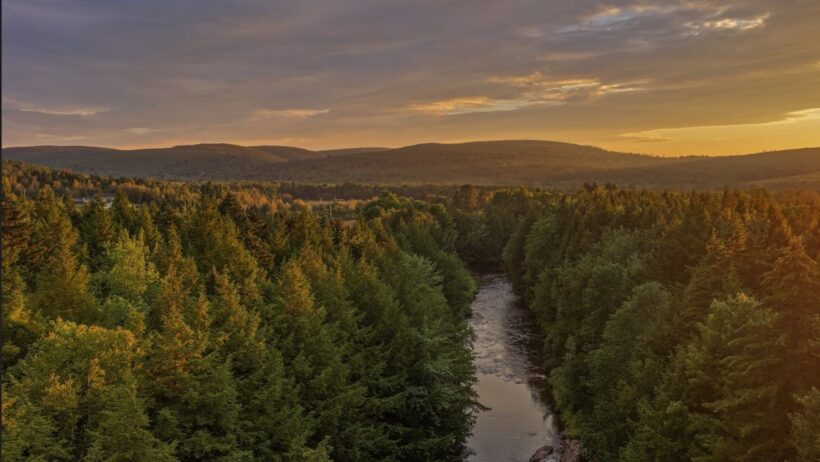
Golf brand Cabot is widening its portfolio to include Cabot Wilds, a forthcoming 2,500-acre course nestled in the foothills of Nova Scotia’s Cobequid Mountains, with the area’s River Philip running through it.Supplied/Cabot
A golf resort brand is expanding its footprint in Atlantic Canada amid a country wide golf boom.
Scheduled to open in 2028, Cabot is expanding its portfolio with a third course in Nova Scotia, Cabot Wilds, which is 2,500 acres and located on the rolling foothills of the province’s Cobequid Mountains.
In addition to Cabot Links and Cabot Cliffs in Cape Breton, the new course comes amid increased golf tourism in Atlantic Canada, according to Sam MacPhail, chief executive at Golf PEI, a non-profit representing tourism operators and golf course owners across that province.
“Historically, Banff and Jasper were the go-tos for golf tourism in Canada,” he says. “If you had come here 10 or 15 years ago, the golf industry was in a much different place. Now, they’re trying to make the math work – whether that’s an accommodation play or whether that’s other amenities.”
Golf’s growth in the Maritimes
Recent statistics released by Golf PEI show the golf industry contributes roughly $107-million annually to the province’s GDP.
“Last year, we hit half-a-million rounds of golf played in a province of 180,000 people,” said Mr. MacPhail, who is also the Atlantic Canada regional director of the National Golf Course Owners Association Canada. “That clearly indicates there’s a lot of tourists coming here to play.”
Data from Statistics Canada supports MacPhail’s hypothesis: Prince Edward Island’s golf industry had the fastest-growing revenue in Canada between 2019 and 2024, rising 89 per cent over the five-year period.
The growth of Atlantic Canada’s golf industry is not just taking place in the country’s smallest province. Across the Confederation Bridge, developers are flocking to New Brunswick and Nova Scotia to build luxury golf courses.
For example, the luxury Fox Harb’r Resort on Nova Scotia’s Northumberland Shore recently debuted a redesigned 18-hole course, bringing 36 holes of golf to the property in 2027 along with new luxury oceanview accommodations.
“We’re seeing a lot of people doing week-long golf trips here instead of Florida, Myrtle Beach or Arizona,” said Mr. MacPhail, citing the United States’ current geo-political climate as a factor potentially driving this decision.
Despite the sport’s popularity and expansion, not all Nova Scotians have welcomed the idea of new courses being built in the province. In 2025, Premier Tim Houston declined Cabot’s third proposal to build its third course in Cape Breton’s West Mabou Beach Provincial Park.
Open this photo in gallery:
Like all Cabot’s golf resorts, Cabot Wilds will feature a clubhouse, restaurant, pro shop and locker rooms. The property will also feature residential real estate offerings such as cottages, river-view and course-view lots.Supplied/Cabot
Partnering with blueberry billionaire
Scheduled to fully open in 2028, Canadian billionaire John Bragg and his family are partners with Cabot to create Cabot Wilds, a new luxury course being built a stones-throw away from Nova Scotia’s Collingwood Corner, a small farming community where Mr. Bragg grew up.
“John [Bragg] had a desire to build a golf course in the village in which his family has been for generations,” said Ben Cowan-Dewar, chief executive and co-founder of Cabot. “He had the land, and he’d been a long-time partner, mentor and friend of mine, so I said I would look at the property and recommend an architect to design his planned course.”
Mr. Bragg founded Oxford Frozen Foods in Oxford, N.S., in 1968 and grew the business into a world leader in harvesting, processing and marketing wild blueberries.
“This project builds on the back of a lot of years of friendship,” said Mr. Cowan-Dewar. “The area is bucolic and the wild blueberry capital of Canada – it’s just such a stunning part of the province. Cabot Wilds offers a different face of Nova Scotia.”
The star of the show
Golf architect Jeff Mingay, who is designing the Cabot Wilds course, was inspired by Nova Scotia’s River Philip, which will run prominently through the site adjacent to Cumberland County’s highlands and valleys.
“From my first visit to the site, I told Mr. Bragg and [Mr. Cowan-Dewar] that the River Philip needed to be the star of the show,” Mr. Mingay said. “On more than half the holes, you are either looking at the river, playing next to it or hitting over it.”
The architect says he wants the golf course to feel like it’s been in the area for 100 years. So far, he shares that most of the course’s holes have been shaped, except for numbers four through eight, which are expected to be done by early winter.
Like all Cabot ventures, the newest property will feature a clubhouse with a restaurant, pro shop and locker rooms. Cabot is also planning to develop a limited selection of luxury residential properties, including two-, four- and eight-bedroom cottages, along with river-view and course-view lots.
Open this photo in gallery:
Scheduled to open in 2028, the golf resort is near Nova Scotia’s small farming community of Collingwood Corner – a village where Canadian blueberry billionaire John Bragg, who is partnering with Cabot on the project, grew up.Supplied/Cabot
Clusters
For Mr. MacPhail, golf courses work best in “clusters,” groups of courses in an area that are located in close proximity to one another. He points to Cabot Wilds and Fox Harb’r Resort, two different luxury golf courses in Nova Scotia, as examples.
“I know that they’ll work together in some capacity because if you’re coming to play Cabot Wilds, chances are you are going down the road to Fox Harb’r,” said Mr. MacPhail.
“A rising tide lifts all boats. If people are coming to play one course in the area, chances are they’re going to get out their phone and search for what other courses are nearby – whether that’s a stay in Nova Scotia, going up to Cape Breton or coming across the Confederation Bridge to PEI.”