
Penalty areas provide greater flexibility for play, maintenance and setup.
Under the old Rules of Golf, an area had to contain water or at least hold water sometimes to be classified as a water hazard. This definition excluded many areas of a golf course where balls are commonly lost, such as areas of tall grass or deserts. However, many courses marked these areas as hazards anyway, and many golfers played them as hazards regardless of how they were marked.
“The new Rules introduce the concept of penalty areas, which can be marked almost anywhere on the course,” says Wallace. “Previously, if a golfer lost a ball in an area of long grass, they were required to play another ball from the spot of their previous stroke. Now, if that area is marked as a penalty area and the golfer knows their ball is lost there, they have more relief options.”
Not only can naturalized areas, forests and deserts be marked as penalty areas under the new Rules, they don’t actually have to be marked at all. Physical features can now be used to define a penalty area instead of a painted line or stakes. For example, a golf course could state that all areas of naturalized rough should be treated as a red-marked penalty area. This eliminates the setup and maintenance costs involved with marking the edges of large penalty areas.
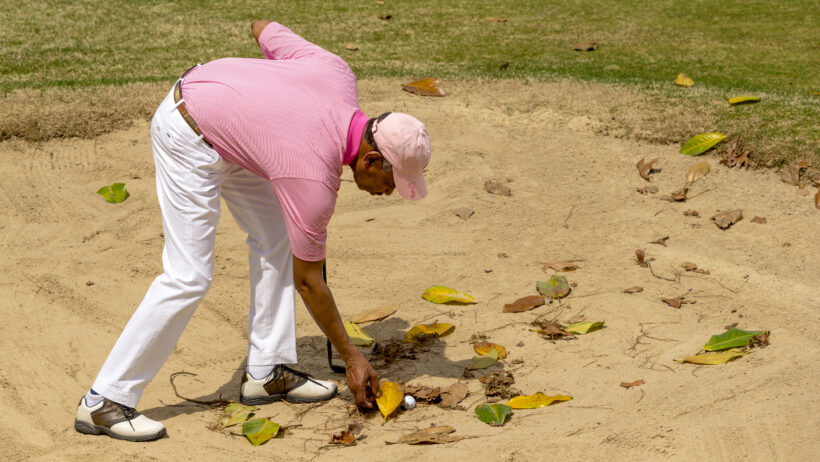
In addition to greater flexibility for defining and marking a penalty area, golfers have more freedom when playing from these areas. Under the new Rules, loose impediments can now be moved in a penalty area, and golfers may ground their club behind the ball or take practice swings that touch the ground. These options were not available in a water hazard under the old Rules.
More damage can be repaired on putting greens.
In the past, only ball marks and old hole plugs could be repaired on the putting green. Unfortunately, many other types of damage can occur to putting greens throughout any given day. Being unable to repair these issues often interfered with playability and created frustration. Now, golfers can repair almost any damage on the putting green, including damage caused by shoes, animals or maintenance practices.
Larry Gilhuly has been a USGA agronomist for more than 35 years, and he often hears golfers express concern about how putting green conditions change throughout the day.
“No matter how well-prepared putting greens may be in the morning, some disruption inevitably occurs during the course of the day,” explains Gilhuly. “Scuffs from golf shoes are a perfect example. In the past, those scuffs were not allowed to be repaired and one person’s mistake could create a playability issue for many other golfers that day.”
Being able to repair more damage to the putting greens gives golfers a better experience throughout the day, but it is important to avoid doing more harm than good. If golfers discover damage that is not easy to repair, they should inform the golf shop or the maintenance staff so that the problem can be fixed properly.
“People shouldn’t expect putting conditions to be exactly the same throughout the day,” said Gilhuly, “but allowing golfers to fix some common damage on the putting green is going to help them have more fun and make the superintendent’s life a little easier.”
The changes made to the Rules of Golf were designed to make them easier to understand and easier to apply. The new Rules are also intended to reflect the realities of how the game is played today. The changes discussed above are good examples of these goals in action, and there should be increasing benefits for golfers and facilities as familiarity with the new Rules grows. To learn more, visit the Rules section of usga.org.
George Waters is the manager of Green Section education for the USGA. Email him at gwaters@usga.org.