

March 31, 2026, 4:51 p.m. ET
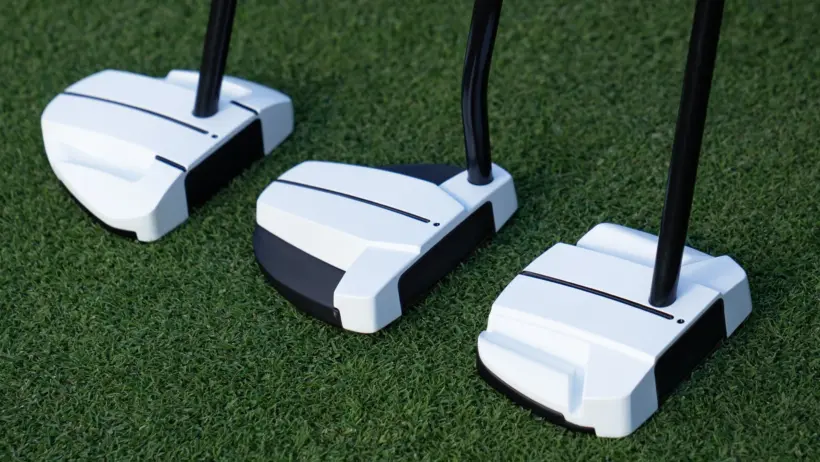
Ping has released a new line of mallet putters called Scottsdale TEC, priced at $435.The putters feature “Eye Q” alignment technology, developed using eye-tracking research to help golfers aim more consistently.Some models offer an unusual “onset” shaft design, which provides an unobstructed view of the ball at address.The multi-material construction combines an aluminum body with a stainless steel sole plate for increased stability.
Gear: Ping Scottsdale TEC putters
Price: $435
Specs: Multi-material mallets with aluminum bodies and stainless steel sole plates and PEBAX face insert.
Available: Pre-order now
Who it’s for: Golfers who prefer mallet putters and want help with alignment, especially those who struggle to consistently aim the face or center the ball at address.
Explore how to live where you love to play Access community guides, golf real estate insights, trusted agent connections, and content built for passionate golfers.
What you should know: Ping’s new Scottsdale TEC line leans heavily into visual performance. Eye-tracking research guided Ping’s development of alignment features, while an unusually shaped onset shaft design models change how the ball and face appear at address.
The Deep Dive: Starting with the release of the 1A back in 1959, Ping has never been afraid to challenge convention in putter design, but the new Scottsdale TEC family feels like one of its more deliberate departures in years. Scottsdale TEC (Tour Elevated Concepts) represents a shift in how Ping is thinking about what golfers see, how they aim and, ultimately, how they start the ball on line.

At the center of that shift is what Ping calls Eye Q alignment technology, developed using eye-tracking research that studied where golfers focus just before making a stroke. The concept is rooted in “Quiet Eye,” a visual performance theory that links longer, more stable gaze patterns to improved results. What Ping found was that certain alignment designs stabilized a golfer’s gaze and extended Quiet Eye duration, leading to improved performance.
So instead of simply adding more lines or louder alignment aids, Ping is trying to guide your eyes more deliberately. Each model features a defined focal point, a dot on the front of the topline, paired with a long alignment line that stretches to the back of the head. It encourages a steadier, more centered look at the ball. It’s not about giving you more to look at; Scottsdale TEC is designed to help you focus on the right thing for longer.
The most interesting models in the lineup are the Ally Blue Onset and Ketsch Onset. As their names imply, they introduce an onset configuration with the shaft entering the head behind the face and closer to the centerline. For golfers used to offset, where the shaft or hosel sits in front of the face, it creates a very different visual at address. However, you get a full, unobstructed view of the ball and the alignment system.

For golfers who struggle with aim, especially those who feel like the shaft or hosel interferes with their perception of face angle, this design can make the putter look more square and easier to align. It also influences how the putter moves through the stroke, which is why Ping offers different models tuned for straight and slight-arc strokes.
To be clear, the Ally Blue Onset and Ketsch Onset are not zero-torque putters.
The Hayden takes a more familiar route with a heel-shafted configuration and full offset, but still leans into the Eye Q concept with a long alignment line that pulls your focus forward to a small dot on the top rail.
From a shape standpoint, the Ally Blue Onset has a more compact, squared-off look, while the Ketsch Onset is larger and more geometric with multiple alignment references. The Hayden sits in between, offering a more traditional visual.

From a construction standpoint, the Scottsdale TEC models follow a familiar Ping formula with a few modern tweaks. Each has an aluminum body with a stainless steel sole plate to boost perimeter weighting. The result is high MOI and increased stability on off-center strikes.
The face insert is made from PEBAX, an elastomer more commonly associated with running shoes, but one Ping has used before. It’s lightweight and helps normalize ball speed for improved distance control without feeling overly soft or muted.
If you’ve grown up on Ping Ansers or use something like a DS72, these are not putters you would immediately associate with the Phoenix-based brand. The shapes are bigger. The alignment is more intentional. They’re white, and the onset models, in particular, change how the putter frames the ball, which some golfers will immediately like and others may need time to adjust to.
That’s exactly why this line matters.
Scottsdale TEC isn’t replacing anything. It’s expanding Ping’s fitting matrix. For golfers who struggle with alignment, prefer mallet stability but want a cleaner look at the ball, or simply haven’t found a shape that matches their eye, this gives fitters another option to explore.
And in a category where confidence is often the difference between a good roll and a missed opportunity, having another look — literally — can go a long way.
