

What’s the best golf driver of 2026? Our expert team has tested all the latest models on a launch monitor to help you choose the right one for your game…
With so many models to choose from, picking the best golf driver for you can be difficult without knowing what to look for. Drivers come in many different specifications and sizes now, so the days of simply choosing based on looks and feel are long gone.
This presents another problem, though. All this new data can be hard to decipher for anyone only casually acquainted with the numbers, and, as the driver is the key to a good start on nearly every hole, it’s important that we get the decision right.
Get things wrong, however, and you’ll be faced with a club that becomes more of a hindrance than a help.
Fighting a bad shot shape – whether it’s a hook, pull, push, slice, or thin – will make your game infinitely worse, with unpredictable results every time you tee it up. This can make a significant difference to your score, of course, but it also impacts your confidence, leaving you without a sure solution to the problem.
This is where the TG expert testing team comes in! Whether you’re a brand loyalist for the likes of Callaway, TaylorMade, or Ping, or you want specific performance that works for mid-handicaps, beginner golfers, and ladies’ options. We even have guides to second-hand and budget driver models.
We’ve collected together every major driver available this year and taken them through their paces with our resident professional, Neil Wain, to find out how they all stack up, and let you know what the best models are for your game.
You’ll find all the data and verdicts for each driver further down the page, but if you’re in a hurry, our top picks are just below…
Best golf drivers 2026: Today’s Golfer’s winners
Best golf driver – overall: Callaway Quantum Triple Diamond Max | VIEW OFFER
Best low spin driver: Callaway Quantum Triple Diamond | VIEW OFFER
Best driver for forgiveness: Ping G440 Max | VIEW OFFER
Best core model driver: Callaway Quantum Max | VIEW OFFER
Best driver for max height: Srixon ZXi | VIEW OFFER
JUMP TO:
Best golf drivers 2026 – Overall winners
The best drivers have been selected based on performance data, where each key category is ranked and then aggregated, followed by the TG team using its expertise to select the models that will be applicable for any category of golfer. This helps us prevent a head from winning that clearly wouldn’t suit most golfers (Technically, the TaylorMade Qi35 LS won in 2025, but it’s not a driver that would have been comfortably used by the majority of the market).
Best Driver 2026 – Winner
 What we say:
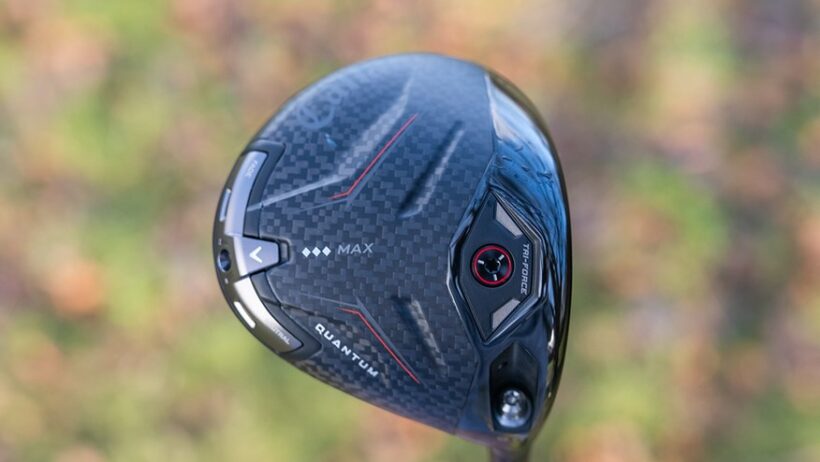
The winner of the 2026 driver test, the Quantum TDM has surprised us at every moment of our journey with it, from release all the way through our hands-on review and now through our official testing period.
The Triple Diamond Max represents a true jack-of-all-trades offering great consistency, top of the line distance, and stability that’s closer to the heads in the ‘Forgiving’ category than the ‘Low Spin’ one.
Eagle-eyed readers might notice that, statistically, the Triple Diamond outperformed the TDM for metrics, but TG’s experts believe the standard TD just doesn’t have the same long-term performance benefits and playability for the majority of golfers.
Callaway’s Quantum Triple Diamond Max, however, is friendly enough for far more than just elite-level golfers in 2026.
What our tester says:
“I love the Triple Diamond Max. There are only minimal differences between this and the Triple Diamond – slight amount of offset, fractionally bigger frame, etc – but I feel like I can’t really miss with the TDM because of that. I’d be quite happy to play this but equally put it into the hands of a mid-handicap player.”
Read our full Callaway Quantum Triple Diamond Max review
Key driver test data
Ball Speed 161.1 mph | Carry 282.9 yards | Spin 2,065 rpm | Launch Angle 12.3º | Height 31.7 yards | Descent Angle 35.3º | L-R Dispersion 16.3 yards
Specs Features
Lofts 9º / 10.5º Dexterity RH / LH Stock Shaft Options True Temper Denali Frost Silver 50g (S) / Fujikura Ventus Black 60g (S/X) Stock Grip Options Golf Pride Tour Velvet 360 Black Cap CHEV 50g Tri-Force three-layer face design of titanium, poly mesh, and carbon fiberAi-Optimized modelling for enhanced ball speed on mishits360º Carbon Chassis for precise CG placementLighter and stronger materials for improved forgiveness and tighter dispersion
Best Driver 2026 – Runner-up
 What we say:
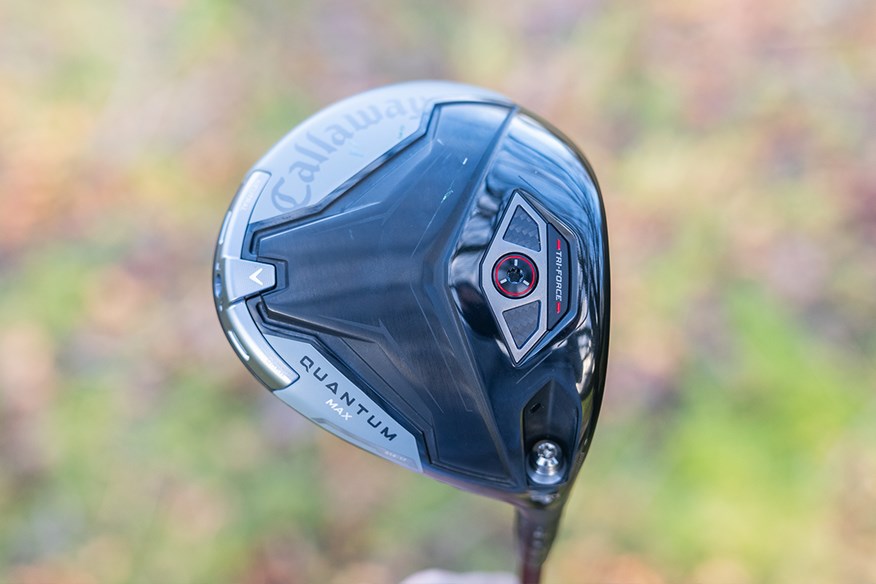
In 2025, we labelled the core Callaway release as the most fit-able product on the market, although it missed out on winning any of our major awards by a slim margin.
Apparently, Callaway took this personally because they’ve seriously brought the heat with the new Quantum Max. One of the hottest faces we tested in 2026, the entire Quantum range is incredibly fast but what we love about the Max is that it retains that versatility of the previous model, while gaining speed.
An outstanding driver, and one that only just loses out on top spot to its sister model.
What our tester says:
“I don’t think you’ll be looking far to see a Quantum Max in golfers’ bags this year. The shape and style look better than the Elyte, with a slightly bigger profile seeming to invite you into it. I love the feeling from the face as well!”
Read our full Callaway Quantum Max review
Key driver test data
Ball Speed 163.7 mph | Carry 286.2 yards | Spin 2,128 rpm | Launch Angle 11.4º | Height 30.2 yards | Descent Angle 35.2º | L-R Dispersion 16.3 yards
Specs Features
Lofts 9º / 10.5º / 12º Dexterity RH / LH Stock Shaft Options Mitsubishi Chemical Vanquish 40g (R2) / True Temper Denali Frost Silver 50g (R/S), 60g (S/X) Stock Grip Options Golf Pride Tour Velvet 360 Black Cap CHEV 50g Tri-Force three-layer face design of titanium, poly mesh, and carbon fiberAi-Optimized modelling for enhanced ball speed on mishitsAdvanced Perimeter Weighting for precise CG placementLighter and stronger materials for improved forgiveness and tighter dispersion
Best Driver 2026 – Third Place

 What we say:
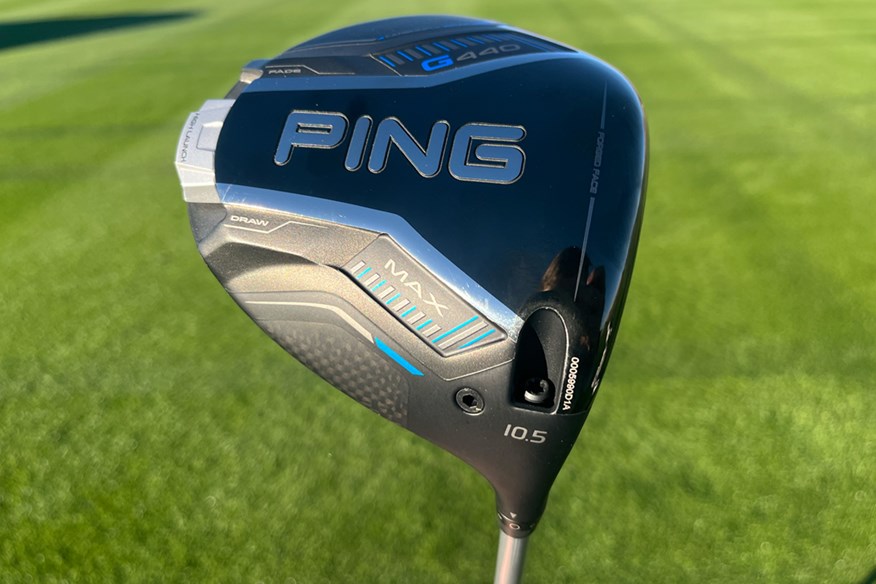
Ping remain perpetually amongst the high performers despite their G440 line being unchanged, bar the addition of the ultra-forgiving G440 K model, for 2026. The G440 Max taking the title of ‘Best Forgiving’ model is no surprise after it came so close to winning last year as well.
We think Ping’s decision to add the 10K option is one of their smartest choices, as it allows them to push the mainline Max model slightly more in the direction of speed, making the product sneaky long.
While there were a few options that actually generated slightly more peak height than the G440 Max, the fact that it goes ‘forward’ as well as ‘up’ means it’s a more well-rounded, complete option for golfers who struggle with launching the ball.
What our tester says:
“It’s so hard to argue against Ping drivers, isn’t it? The G440 Max is so easy to hit, and I can’t really find a fault here. There might be slightly faster drivers, but there’s not much that’s more stable and forgiving than a Ping.”
Read our full Ping G440 Max review
Key driver test data
Ball Speed 160.2 mph | Carry 281.4 yards | Spin 2,308 rpm | Launch Angle 13.0º | Height 35.8 yards | Descent Angle 39.6º | L-R Dispersion 8.7 yards
Specs Features
Lofts 9º / 10.5º / 12º Dexterity RH / LH Stock Shaft Options Ping Alta CB Blue 50g (SR/R/S) / Tour 2.0 Chrome 65g (R/S/X) / Tour 2.0 Black 65g (S/X) / Mitsubishi Chemical Tensei 1K Black 65g (S/X) Stock Grip Options Golf Pride Tour Velvet 360 (Undersize, Standard, Midsize, Jumbo) Hotter, thinner face for more ball speed and distanceCarbonfly Wrap crowns relocates CG for increased forgivenessFree Hosel design pushes mass away from the heel for better CG placementMoveable weight allows for optimized setup in any golfer Best core drivers 2026
These core – or standard – models are designed to offer a good blend of everything. You may also notice that some heads, like the Ping G440 Max, feature in both this and the Max Forgiveness category. This is because certain models sit somewhere in-between the categories or the brand’s core model is also their highest forgiveness option.
Best Core Driver 2026 – Winner
What we say:
In 2025, we labelled the core Callaway release as the most fit-able product on the market, although it missed out on winning any of our major awards by a slim margin.
Apparently, Callaway took this personally because they’ve seriously brought the heat with the new Quantum Max. One of the hottest faces we tested in 2026, the entire Quantum range is incredibly fast but what we love about the Max is that it retains that versatility of the previous model, while gaining speed.
An outstanding driver, and one that only just loses out on top spot to its sister model.
What our tester says:
“I don’t think you’ll be looking far to see a Quantum Max in golfers’ bags this year. The shape and style look better than the Elyte, with a slightly bigger profile seeming to invite you into it. I love the feeling from the face as well!”
Read our full Callaway Quantum Max review
Key driver test data
Ball Speed 163.7 mph | Carry 286.2 yards | Spin 2,128 rpm | Launch Angle 11.4º | Height 30.2 yards | Descent Angle 35.2º | L-R Dispersion 16.3 yards
Specs Features
Lofts 9º / 10.5º / 12º Dexterity RH / LH Stock Shaft Options Mitsubishi Chemical Vanquish 40g (R2) / True Temper Denali Frost Silver 50g (R/S), 60g (S/X) Stock Grip Options Golf Pride Tour Velvet 360 Black Cap CHEV 50g Tri-Force three-layer face design of titanium, poly mesh, and carbon fiberAi-Optimized modelling for enhanced ball speed on mishitsAdvanced Perimeter Weighting for precise CG placementLighter and stronger materials for improved forgiveness and tighter dispersion
Best Core Driver 2026 – Runner-up
What we say:
Ping remain perpetually amongst the high performers despite their G440 line being unchanged, bar the addition of the ultra-forgiving G440 K model, for 2026, and the G440 Max taking the title of ‘Best Forgiving’ model is no surprise after it came so close to winning last year as well.
We think Ping’s decision to add the 10K option is one of their smartest choices, as it allows them to push the mainline Max model slightly more in the direction of speed, making the product sneaky long.
While there were a few options that actually generated slightly more peak height than the G440 Max, the fact that it goes ‘forward’ as well as ‘up’ means it’s a more well-rounded, complete option for golfers who struggle with launching the ball.
What our tester says:
“It’s so hard to argue against Ping drivers, isn’t it? The G440 Max is so easy to hit, and I can’t really find a fault here. There might be slightly faster drivers, but there’s not much that’s more stable and forgiving than a Ping.”
Read our full Ping G440 Max review
Key driver test data
Ball Speed 160.2 mph | Carry 281.4 yards | Spin 2,308 rpm | Launch Angle 13.0º | Height 35.8 yards | Descent Angle 39.6º | L-R Dispersion 8.7 yards
Specs Features
Lofts 9º / 10.5º / 12º Dexterity RH / LH Stock Shaft Options Ping Alta CB Blue 50g (SR/R/S) / Tour 2.0 Chrome 65g (R/S/X) / Tour 2.0 Black 65g (S/X) / Mitsubishi Chemical Tensei 1K Black 65g (S/X) Stock Grip Options Golf Pride Tour Velvet 360 (Undersize, Standard, Midsize, Jumbo) Hotter, thinner face for more ball speed and distanceCarbonfly Wrap crowns relocates CG for increased forgivenessFree Hosel design pushes mass away from the heel for better CG placementMoveable weight allows for optimized setup in any golfer
Best Core Driver 2026 – Third place
 What we say:
Titleist’s GT2 remains one of the most versatile drivers on the market, and with the reduced price point savings, it’s also becoming one of the most cost-effective choices.
Great for reduced spin, finishing 8th lowest in testing overall, while also nearly breaking into the top 10 for ball speed (13th), the GT2 can shift into another gear if you want to chase some added distance in your game, and with a 12th-place L-R dispersion position (12 yards) you aren’t going to be giving up straight drives for that power in 2026.
The only issue you may find from our data is that it isn’t the highest launching driver here, but you can always go for some extra loft if needed.
What our tester says:
“I can see why Adam Scott loves playing the GT2. It’s clean, compact, and the slightly shallower face invites you in. It explains why he was hitting this from the deck at the Scottish Open last year! Overall, this is a hard to beat package with great feel and great performance.”
Read our full Titleist GT2 review
Key driver test data
Ball Speed 160.9 mph | Carry 279.8 yards | Spin 1,968 rpm | Launch Angle 10.9º | Height 26.5 yards | Descent Angle 31.6º | L-R Dispersion 12.0 yards
Specs Features
Lofts 8º / 9º / 10º / 11º Dexterity RH / LH Stock Shaft Options Mitsubishi Chemical Tensei 1K Black 65g (S/X/TX) / Tensei 1K Blue 55g (R2/R/S/X) / Project X HZRDUS Black 5G 60g (5.5/6.0/6.5) Stock Grip Options Titleist Universal 360 Grip (52g) Seamless Thermoform Crown for improved CG positioningSplit Mass Construction to increase stability and lower spinSpeedring VFT for off-center ball speed performanceAerodynamic construction adds speed to your delivery Best core drivers: Head-to-head dataManufacturerModelClub Head Speed (mph)Ball Speed (mph)Carry Distance (yds)Backspin (rpm)Launch Angle (°)Peak Height (yds)Descent Angle (°)L-R Dispersion (yds)CallawayQuantum Max112.6163.7286.2212811.430.235.215.9CobraOPTM X (back) (10.5º)111158.1275.2221412.031.636.520.7CobraOPTM X (forward) (10.5º)110.8160.0274.9201510.926.232.223.7MizunoJPX One (10.5°)111.4160.1270.225549.928.636.115.2PingG440 Max111.4160.2281.4230813.035.839.68.7PXGLightning Mid Tour (back)111.4161.3281.0227011.631.937.021.7PXGLightning Mid Tour (forward)111.5160.8279.3196311.527.633.120.5SrixonZXi112.7160.6271.9283212.438.042.613.6TaylorMadeQi4D (back)112.2160.8282.6209410.527.633.518.6TaylorMadeQi4D (forward)112.6160.8280.8210710.027.232.911.8TitleistGT2110.9160.9279.8196810.926.531.612.0Tour EdgeExotics Max110.5158.8274.4246512.334.739.720.2ViceVGD01+111159.2271.3266112.938.141.414.3Wilson StaffDynaPwr Carbon (back)110.6160.0275.3254412.237.939.217.1Wilson StaffDynaPwr Carbon (forward)110.1160.2279.1236711.836.236.39.0Wilson StaffDynaPwr Max108.9158.7271.1270612.438.041.712.3Best drivers for forgiveness 2026
The most forgiving drivers go all out to offer maximum stability and forgiveness. Don’t be fooled into thinking these are only for high handicappers, though – plenty of highly skilled golfers benefit from a maximum forgiveness driver. Draw-biased drivers also fit in here.
Best Driver for Forgiveness 2026 – Winner
What we say:
Ping remain perpetually amongst the high performers despite their G440 line being unchanged, bar the addition of the ultra-forgiving G440 K model, for 2026, and the G440 Max taking the title of ‘Best Forgiving’ model is no surprise after it came so close to winning last year as well.
We think Ping’s decision to add the 10K option is one of their smartest choices, as it allows them to push the mainline Max model slightly more in the direction of speed, making the product sneaky long.
While there were a few options that actually generated slightly more peak height than the G440 Max, the fact that it goes ‘forward’ as well as ‘up’ means it’s a more well-rounded, complete option for golfers who struggle with launching the ball.
What our tester says:
“It’s so hard to argue against Ping drivers, isn’t it? The G440 Max is so easy to hit, and I can’t really find a fault here. There might be slightly faster drivers, but there’s not much that’s more stable and forgiving than a Ping.”
Read our full Ping G440 Max review
Key driver test data
Ball Speed 160.2 mph | Carry 281.4 yards | Spin 2,308 rpm | Launch Angle 13.0º | Height 35.8 yards | Descent Angle 39.6º | L-R Dispersion 8.7 yards
Specs Features
Lofts 9º / 10.5º / 12º Dexterity RH / LH Stock Shaft Options Ping Alta CB Blue 50g (SR/R/S) / Tour 2.0 Chrome 65g (R/S/X) / Tour 2.0 Black 65g (S/X) / Mitsubishi Chemical Tensei 1K Black 65g (S/X) Stock Grip Options Golf Pride Tour Velvet 360 (Undersize, Standard, Midsize, Jumbo) Hotter, thinner face for more ball speed and distanceCarbonfly Wrap crowns relocates CG for increased forgivenessFree Hosel design pushes mass away from the heel for better CG placementMoveable weight allows for optimized setup in any golfer
Best Driver for Forgiveness 2026 – Runner-up

 What we say:
The Ping G440 SFT, like with most Ping product, is extremely adaptable. Why would you want that in a draw bias driver? Well, like everything in golf, we all have individual needs and two golfers suffering from the same issue might need different solutions.
The SFT is one of the few draw models on the market with adjustable weighting as well as loft sleeve movement, giving the option of ‘draw’ with a central weighting or ‘draw+’ by pulling even more mass into the heel – a genuine difference maker in the market.
What our tester says:
“There’s not much difference between the shapes of any of the Ping G440 models, which is a good thing for the SFT. I think it gives confidence to the golfer when they eventually transition from SFT to the Max as they improve. That aside, this is a good driver that can stay with you longer on your journey than other draw bias models can.”
Read our full Ping G440 SFT review
Key driver test data
Ball Speed 160.4 mph | Carry 277.3 yards | Spin 2,434 rpm | Launch Angle 12.4º | Height 35.0 yards | Descent Angle 40.9º | L-R Dispersion 12.8 yards
Specs Features
Lofts 9º / 10.5º Dexterity RH / LH Stock Shaft Options Ping Alta CB Blue 50g (SR/R/S) / Tour 2.0 Chrome 65g (R/S/X) / Tour 2.0 Black 65g (S/X) / Mitsubishi Chemical Tensei 1K Black 65g (S/X) Stock Grip Options Golf Pride Tour Velvet 360 (Undersize, Standard, Midsize, Jumbo) Hotter, thinner face for more ball speed and distanceCarbonfly Wrap crowns relocates CG for increased forgivenessFree Hosel design pushes mass away from the heel for better CG placemenMoveable weight allows for optimized setup in any golfer
Best Driver for Forgiveness 2026 – Third place
 What we say:
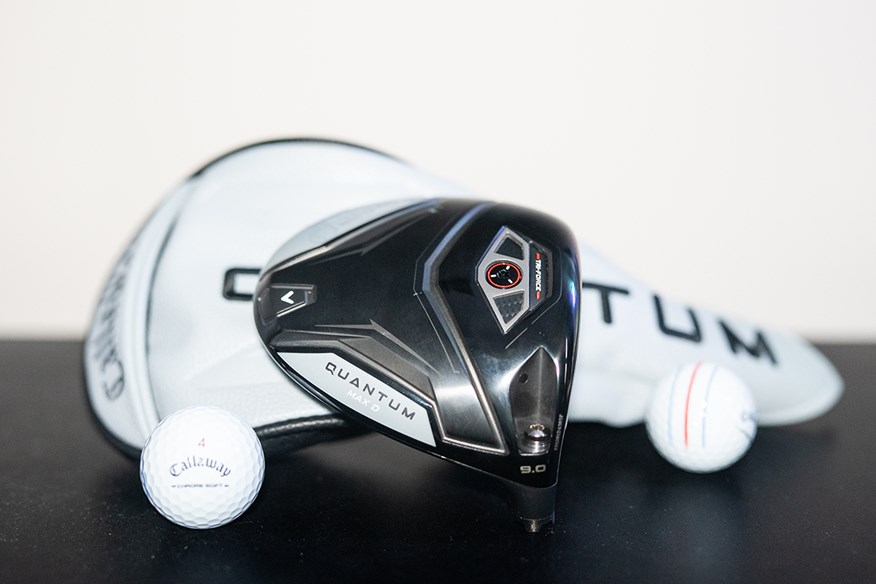
While Max D isn’t quite as fast as the rest of the Quantum range (by a fraction), Callaway’s choice of issuing golfers with a draw-bias offering over just a high-MOI is definitely worthy of praise.
Ultra-forgiving 10K-style heads can be harder to square up due to their nature of being more resistant to twisting, so seeing a commit to a driver that is built to help shot shape as well as retain distance.
That being said, Quantum Max D did is still very forgiving, and for the golfer fighting a slice this is one of the most impressive options of the year.
What our tester says:
“There’s a little bit more of a closed face here, but otherwise it’s not that different in look from the core Max model – great for golfers who need the help but don’t want to look down at something that looks ‘too draw biased’ while still being easy to turn over.”
Key driver test data
Ball Speed 160.7 mph | Carry 281.1 yards | Spin 2,043 rpm | Launch Angle 11.4º | Height 29.0 yards | Descent Angle 34.6º | L-R Dispersion 21.8 yards
Specs Features
Lofts 9º / 10.5º / 12º Dexterity RH / LH Stock Shaft Options Mitsubishi Chemical Vanquish 40g (R2) / True Temper Denali Frost Silver 50g (R/S), 60g (S/X) Stock Grip Options Golf Pride Tour Velvet 360 Black Cap CHEV 50g Tri-Force three-layer face design of titanium, poly mesh, and carbon fiberAi-Optimized modelling for enhanced ball speed on mishitsAdvanced Perimeter Weighting for precise CG placementLighter and stronger materials for improved forgiveness and tighter dispersion Best forgiving drivers: Head-to-head dataManufacturerModelClub Head Speed (mph)Ball Speed (mph)Carry Distance (yds)Backspin (rpm)Launch Angle (°)Peak Height (yds)Descent Angle (°)L-R Dispersion (yds)CallawayQuantum Max112.6163.7286.2212811.430.235.215.9CallawayQuantum Max D112.3160.7281.1204311.429.034.621.8CobraOPTM Max D (10.5º)111.9160.5272.0245510.528.837.410.2CobraOPTM Max K (10.5º)109.9156.4260.2315013.339.744.317.9PingG440 10K111.3161.8277.7253211.433.339.118.5PingG440 SFT111.8160.4277.3243412.435.040.912.8PXGLightning Max 10k (back)109.6158.5272.0224410.928.035.020.5PXGLightning Max 10k (forward)111.1159.7280.2195411.628.333.211.8SrixonZXi Max113.1157.5265.8283413.840.244.210.0TaylorMadeQi4D Max (back)111.4160.1276.1245812.234.239.524.6TaylorMadeQi4D Max (forward)110.7160.3274.9240811.130.836.714.6TitleistGT1111.3159.0276.5234312.233.438.517.6Wilson StaffDynaPwr Max Plus109.8159.6271.8279112.739.242.310.8Best low-spin drivers 2026
The name says it all. Low-spin drivers are designed to reduce spin and are typically best suited for golfers with faster swing speeds. They are generally less forgiving than other models.
Best Low Spin Driver 2026 – Winner
 What we say:
We aren’t being hyperbolic to say the Callaway Quantum Triple Diamond is monstrously long, even with how tight performance can be when comparing modern drivers.
Number one for carry (286.3 yards), number two for ball speed (162.8 mph), and creating a stable ball flight at a nearly 2,000 rpm of spin, the TD is scary-good.
If you’re looking for unbeatable distance from a driver, and you can afford a little bit of off-center forgiveness, Triple Diamond needs to be a consideration for anyone who’s serious about hitting their shortest iron possible into the green.
What our tester says:
“This driver is ridiculous, isn’t it? The Triple Diamond just feels like it’s flying off the face so fast, but I actually feel like the flight is good with it – it’s not dropping out the air. That slightly smaller head looks great behind the ball as well.”
Read our full Callaway Quantum Triple Diamond review
Key driver test data
Ball Speed 162.8 mph | Carry 286.3 yards | Spin 1,996 rpm | Launch Angle 11.9º | Height 30.0 yards | Descent Angle 34.7º | L-R Dispersion 12.3 yards
Specs Features
Lofts 8º / 9º / 10.5º Dexterity RH / LH (9º, 10.5º only) Stock Shaft Options True Temper Denali Frost Silver 50g (S) / Fujikura Ventus Black 60g (S/X), 70g (S/X) Stock Grip Options Golf Pride Tour Velvet 360 Black Cap CHEV 50g Tri-Force three-layer face design of titanium, poly mesh, and carbon fiberAi-Optimized modelling for enhanced ball speed on mishits360º Carbon Chassis for precise CG placementLighter and stronger materials for improved forgiveness and tighter dispersion
Best Low Spin Driver 2026 – Runner-up
 What we say:
As always, a TaylorMade driver family wouldn’t be complete without a distance machine somewhere in the line-up.
The Qi4D LS is the model to focus on if you want to combine the clean new styling with a low-spin, power-first approach, and it’s one of our favourite choices in 2026 for pushing the boundaries of distance in your game.
Fitting has been simplified over the Qi35 LS driver, but that doesn’t mean there isn’t plenty of play within the head. Our testing shows quite the contrast, with weight-back providing stable spin with retained ball speed, and weight-forward being the lowest spin average in the test – almost too low for many, so be aware when testing yourself!
What our tester says:
“You can’t beat an old school TaylorMade low spin monster, can you? It’s almost silly how low spin stays with this driver and for the right player this will go for miles. That compact shape also frames the ball really nicely, just like its sister models.”
Read our full TaylorMade Qi4D LS review
Key driver test data
Weight Forward
Ball Speed 162.3 mph | Carry 278.4 yards | Spin 1,730 rpm | Launch Angle 9.0º | Height 27.1 yards | Descent Angle 30.7º | L-R Dispersion 16.5 yards
Weight Back
Ball Speed 162.6 mph | Carry 284.7 yards | Spin 2,052 rpm | Launch Angle 10.9º | Height 28.5 yards | Descent Angle 35.7º | L-R Dispersion 10.1 yards
Specs Features
Lofts 8º / 9º / 10.5º Dexterity RH / LH (9º, 10.5º only) Stock Shaft Options Mitsubishi Chemical REAX HR 60g, MR 60g, LR 60g (R/S/X) Stock Grip Options Golf Pride Z-Grip Black / Silver Reengineered head profile designed for speedNew improved face roll radius for spin and launch consistency60X Carbon Face for maximum ball speedFlight adjustment through two Trajectory Adjustment System weights
Best Low Spin Driver 2026 – Third place

 What we say:
The winner for our 2025 ‘best drivers’ test, the Titleist GT3 continues to offer outstanding performance for more golfers than you’d think might suit this style of head.
Classic all-Titleist style is still a great selling point on its own for the GT3, but the quality goes beyond just the superficial. This is still a top five driver for both Carry and Ball Speed, with our data confirming it still comes with a flatter trajectory than most.
Where GT3 has fallen down this year is just in the L-R dispersion category, but on a different day we could see a change in this again. What we are impressed by is that the Titleist continues to perform at the highest level for the second year in a row, giving us enough reason to tell you that you should still be considering it even 18 months after release.
What our tester says:
“The GT3 is still one of my favourite drivers I’ve tested, and it’s so hard to argue against playing it. You do lose a little bit of forgiveness over the GT2, but it makes up for it in spades with the additional speed. Plus, the looks are killer.”
Read our full Titleist GT3 review
Key driver test data
Ball Speed 162.4 mph | Carry 283.3 yards | Spin 2,004 rpm | Launch Angle 11.0º | Height 27.6 yards | Descent Angle 32.7º | L-R Dispersion 20.1 yards
Specs Features
Lofts 8º / 9º / 10º / 11º Dexterity RH / LH Stock Shaft Options Mitsubishi Chemical Tensei 1K Black 65g (S/X/TX) / Tensei 1K Blue 55g (R2/R/S/X) / Project X HZRDUS Black 5G 60g (5.5/6.0/6.5) Stock Grip Options Titleist Universal 360 Grip (52g) Seamless Thermoform Crown for improved CG positioningSplit Mass Construction to increase stability and lower spinSpeedring VFT for off-center ball speed performanceAerodynamic construction adds speed to your delivery Best low-spin drivers: Head-to-head dataManufacturerModelClub Head Speed (mph)Ball Speed (mph)Carry Distance (yds)Backspin (rpm)Launch Angle (°)Peak Height (yds)Descent Angle (°)L-R Dispersion (yds)CallawayQuantum Triple Diamond112.7162.8286.3199211.930.034.712.3CallawayQuantum Triple Diamond Max112161.1282.9206512.331.735.316.3CobraOPTM LS (back) (10.5º)110.9159.8276.7211311.328.734.217.7CobraOPTM LS (forward) (10.5º)111.8161.5280.3205111.127.933.723.6MizunoJPX One Select111.7161.7278.5205910.225.931.913.5PingG440 LST112.4160.2280.2239913.738.841.621.7PXGLightning Tour (back)111.4160.4268.417869.620.527.211.0PXGLightning Tour (forward)111.3161.0275.6182410.623.829.615.6SrixonZXi LS (back)112.3159.1271.8267412.336.341.08.1SrixonZXi LS (forward)112.8160.7279.9243112.936.940.818.7TaylorMadeQi4D LS (back)112.3162.6284.7205210.928.535.710.1TaylorMadeQi4D LS (forward)112.4162.3278.417309.027.130.716.5TitleistGT3112162.4283.3200411.027.632.720.1TitleistGT4 (back)110.8160.3281.6192711.828.333.525.3TitleistGT4 (forward)110.7161.0280.6203911.328.233.112.1Tour EdgeExotics LS109.8157.6272.7244012.334.038.99.7Wilson StaffDynaPwr LS (back)111.3158.8278.1204611.729.534.615.4Wilson StaffDynaPwr LS (forward)111.1158.7278.2195312.029.034.017.3Best drivers for max height 2026
The drivers below aren’t necessarily going to give you the absolutely most for distance, at least from our data testing, but what they will provide is an easy option for getting the ball up and into the air, for either a slow swing speed golfer or someone new to the game.
Best Driver for Max Height 2026 – Winner
 What we say:
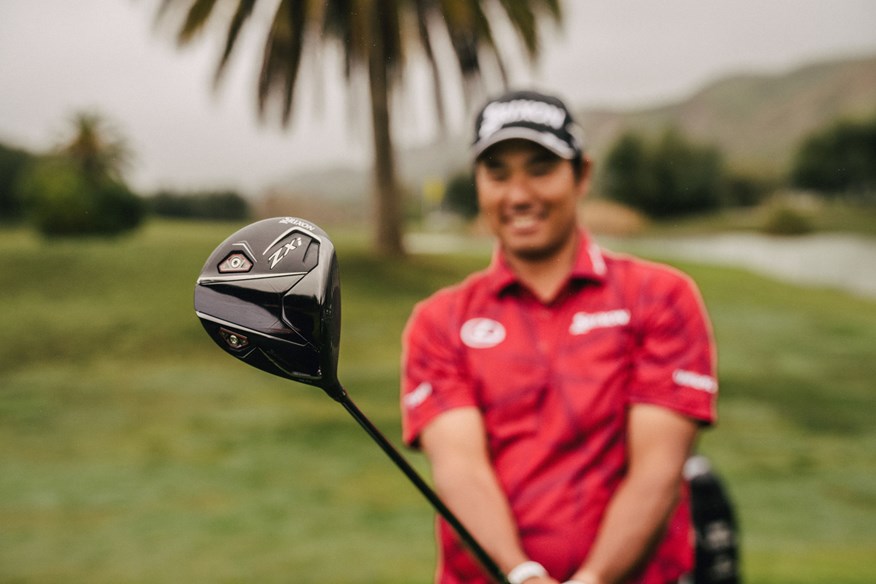
Now in its second year since release, the Srixon ZXi is still holding up to our thoughts from our original review – namely, this is still one of the straightest drivers on the market by any comparison.
The ZXi is starting to feel a little long in the tooth, as most two-season cycle drivers tend to, but there’s no doubt that the performance is still holding up to the same standard as it did in our previous test.
We’re tempted to recategorise the ZXi into the ‘Forgiving’ section, but ultimately this remains Srixon’s core offering so has to be judged by that standard.
What our tester says:
“Srixon still aren’t the first brand I’d consider in woods, despite their growing reputation, but I think the ZXi holds up as a very competent driver, even if it isn’t going to set the world alight in 2026. If I was looking for a little more launch or spin but wanted a clean look, this would probably be my choice.”
Read our full Srixon ZXi review
Key driver test data
Ball Speed 160.6 mph | Carry 271.9 yards | Spin 2,832 rpm | Launch Angle 12.4º | Height 38.0 yards | Descent Angle 42.6º | L-R Dispersion 13.6 yards
Specs Features
Lofts 9º / 10.5º Dexterity RH / LH Stock Shaft Options Fujikura Ventus TR Blue 60g (R/S/X) Stock Grip Options Golf Pride Tour Velvet 360 Patented i-Flex Face TechnologyStar Frame Crown DesignPrecision Laser Face MillingTour-Proven Rebound Frame StructurePremium Shaft OptionsFull Weight and Loft Adjustability
Best Driver for Max Height 2026 – Runner-up
 What we say:
The Max+ is Wilson’s latest addition to the renewed DynaPwr family for 2026, but for TG we have something of a conundrum on our hands.
Despite an increased Moment of Inertia bringing the ‘Plus’ into the realms of the 10K designation, we’re struggling to see much of a performance difference between this and the already established DynaPwr Max driver, even if the Max+ has put itself ahead slightly by data rankings.
With near identical numbers in launch, backspin, peak height, and carry distance, the choice between the two is most likely going to come down to your personal feedback or preference for looks here, over any performance variation.
What our tester says:
“I think if you’re really struggling to get the ball into the air, the Max Plus is going to be great for your confidence with that slightly bigger head shape. Outside of that, I think other DynaPwr models offer more bang for your buck.”
Read our full Wilson Staff DynaPwr Max+ review
Key driver test data
Ball Speed 159.6 mph | Carry 271.8 yards | Spin 2,791 rpm | Launch Angle 12.7º | Height 39.2 yards | Descent Angle 42.3º | L-R Dispersion 10.8 yards
Specs Features
Lofts 9° / 10.5° / 12° Dexterity RH / LH (10.5 only) Stock Shaft Options UST LIN-Q Power Core Blue 50g (R/S) / UST Helium NCT 40g (Lite) Stock Grip Options Lamkin Crossline 360 Black Ai-Optimized PKR-360 Face for maximum ball speed across the faceOpen Hosel Construction for efficient weight savings and improved CG locationPrecision Rib Placement for powerful, engaging soundStability-driven shape for high MOI driver properties
Best Driver for Max Height 2026 – Third place
 What we say:
Srixon say this isn’t a true 10K driver, but it’s still incredibly close in the high-9000s so should retain very similar forgiveness properties while keeping a little more distance and spin control that most ultra-high MOI designs.
Unfortunately, the reality is quite matching the spec at least during TG’s testing, with the ZXi Max being the highest-launching, and second highest-spinning driver for averages.
This has also led to a drop in carry, but if you’re a golfer who really needs to focus on being able to flight the ball higher, the Srixon ZXi Max shouldn’t be looked over.
What our tester says:
“If the flagstick was on the moon, this would be my driver of choice! There’s no doubt if you want more height, the ZXi Max needs to be tried out. Aside from that, I just don’t who this will benefit.”
Read our full Srixon ZXi Max review
Key driver test data
Ball Speed 157.5 mph | Carry 265.8 yards | Spin 2,834 rpm | Launch Angle 13.8º | Height 40.2 yards | Descent Angle 44.2º | L-R Dispersion 10.0 yards
Specs Features
Lofts 9º / 10.5º / 12º Dexterity RH / LH (10.5º, 12º only) Stock Shaft Options Project X Denali Red 50g (A/R/S) Stock Grip Options Golf Pride Tour Velvet 360 Patented i-Flex Face TechnologyStar Frame Crown DesignPrecision Laser Face MillingTour-Proven Rebound Frame StructurePremium Shaft OptionsFull Loft Adjustability Best golf drivers 2026: The full data comparison
Here you’ll find a comprehensive list of every model and their performance metrics in the 2026 Drivers Test.
ManufacturerModelClub Head Speed (mph)Ball Speed (mph)Carry Distance (yds)Backspin (rpm)Launch Angle (º)Peak Height (yds)Descent Angle (º)L-R Dispersion (yds)CallawayQuantum Max112.6163.7286.2212811.430.235.215.9CallawayQuantum Max D112.3160.7281.1204311.429.034.621.8CallawayQuantum Triple Diamond112.7162.8286.3199211.930.034.712.3CallawayQuantum Triple Diamond Max112161.1282.9206512.331.735.316.3CobraOPTM LS (back) (10.5º)110.9159.8276.7211311.328.734.217.7CobraOPTM LS (forward) (10.5º)111.8161.5280.3205111.127.933.723.6CobraOPTM Max D (10.5º)111.9160.5272.0245510.528.837.410.2CobraOPTM Max K (10.5º)109.9156.4260.2315013.339.744.317.9CobraOPTM X (back) (10.5º)111158.1275.2221412.031.636.520.7CobraOPTM X (forward) (10.5º)110.8160.0274.9201510.926.232.223.7MizunoJPX One (10.5°)111.4160.1270.225549.928.636.115.2MizunoJPX One Select111.7161.7278.5205910.225.931.913.5PingG440 10K111.3161.8277.7253211.433.339.118.5PingG440 LST112.4160.2280.2239913.738.841.621.7PingG440 Max111.4160.2281.4230813.035.839.68.7PingG440 SFT111.8160.4277.3243412.435.040.912.8PXGLightning Max 10k (back)109.6158.5272.0224410.928.035.020.5PXGLightning Max 10k (forward)111.1159.7280.2195411.628.333.211.8PXGLightning Mid Tour (back)111.4161.3281.0227011.631.937.021.7PXGLightning Mid Tour (forward)111.5160.8279.3196311.527.633.120.5PXGLightning Tour (back)111.4160.4268.417869.620.527.211.0PXGLightning Tour (forward)111.3161.0275.6182410.623.829.615.6SrixonZxi112.7160.6271.9283212.438.042.613.6SrixonZxi LS (back)112.3159.1271.8267412.336.341.08.1SrixonZxi LS (forward)112.8160.7279.9243112.936.940.818.7SrixonZxi Max113.1157.5265.8283413.840.244.210.0TaylorMadeQi4D (back)112.2160.8282.6209410.527.633.518.6TaylorMadeQi4D (forward)112.6160.8280.8210710.027.232.911.8TaylorMadeQi4D LS (back)112.3162.6284.7205210.928.535.710.1TaylorMadeQi4D LS (forward)112.4162.3278.417309.027.130.716.5TaylorMadeQi4D Max (back)111.4160.1276.1245812.234.239.524.6TaylorMadeQi4D Max (forward)110.7160.3274.9240811.130.836.714.6TitleistGT1111.3159.0276.5234312.233.438.517.6TitleistGT2110.9160.9279.8196810.926.531.612.0TitleistGT3112162.4283.3200411.027.632.720.1TitleistGT4 (back)110.8160.3281.6192711.828.333.525.3TitleistGT4 (forward)110.7161.0280.6203911.328.233.112.1Tour EdgeExotics LS (back)109.8157.6272.7244012.334.038.99.7Tour EdgeExotics Max110.5158.8274.4246512.334.739.720.2ViceVGD01+111159.2271.3266112.938.141.414.3Wilson StaffDynapower Carbon (back)110.6160.0275.3254412.237.939.217.1Wilson StaffDynapower Carbon (forward)110.1160.2279.1236711.836.236.39.0Wilson StaffDynapower LS (back)111.3158.8278.1204611.729.534.615.4Wilson StaffDynapower LS (forward)111.1158.7278.2195312.029.034.017.3Wilson StaffDynapower Max108.9158.7271.1270612.438.041.712.3Wilson StaffDynapower Max Plus109.8159.6271.8279112.739.242.310.8 Numbers glossary
We’ve added some new data to the testing categories this year, so we thought we’d give you a quick explainer of what the less commonly known ones mean.
Clubhead Speed: How fast the driver is traveling at impact. Measured in miles per hour.
Ball Speed: How fast the golf ball comes off the driver face at impact. Measured in miles per hour.
Carry Distance: How far the golf ball traveled through the air before hitting the ground. Measured in yards.
Spin: The amount of times the golf ball completed a full turn around its center over a set amount of time. Measured in rotations per minute.
Launch Angle: The angle that the golf ball exited impact at in relation to the ground. Measured in degrees.
Height: The highest apex distance from the ground that the golf ball achieved during its flight. Measured in feet.
Descent Angle: The trajectory at which the golf ball impacts the ground at. A steeper angle will produce less roll-out but could help with carry distance. A shallow angle can reduce carry distance but will create more total distance from roll-out when optimized. Affected by Ball Speed, Spin, and Launch Angle.
Dispersion: The difference between the furthest shot left and the furthest shot right during our testing. This is to show how consistent each driver is with finding the target.
 General terms glossary
In the modern age of technology, with all the science that goes into club design, there are more and more technical terms used every year to describe the latest and greatest innovations. If you find yourself confused by any of these, we’ve expanded our glossary to cover all these new phrases and words so you know exactly what is meant.
Loft: This is a key factor in how much distance, height, and spin a driver could generate for you. Imagine a straight line going up from the ground to the sky. When you put the driver up against this line, the difference in angle between the line and the face is what makes up loft.
Lie: The lie angle is a term for the difference between the angle the shaft points to, in relation to the ground. If the shaft is lying flat against the ground, it would be a 0º lie angle. If the shaft was pointing straight up to the sky, it’d be a 90º lie angle. Drivers are the flattest clubs, at roughly 56º lie angle, and wedges are the most upright, at 64º degrees.
Length: Golf club length is measured from where the sole (bottom) of the club touches the ground, up from the heel, and along the shaft to where the grip ends. There is a legal limit to club length at 46 inches. Drivers are the longest clubs, at 45-46 inches, and putters are the shortest at 33-36 inches, although you will occasionally see a long putter used at the full 46 inches.
Heel/Toe: These two refer to different parts of a golf club’s face. The ‘heel’ is the part closest to the hosel (the part where the shaft goes into the head), and the ‘toe’ is the part furthest away. Think about the parts of your own feet and where they connect to your ankle for an easy understanding.
Moment of Inertia: An increasingly popular term for manufacturers to quote, particularly with drivers, Moment of Inertia – or MOI as it’s more commonly known – refers to the ability of a golf club to resist twisting during impact. It is measured in grams per centimeter-squared (g-cm2). Mainly a factor for off-center strikes, it’s become a big talking point as brands have started reaching the legal limit. MOI is measured in heel-to-toe and top-to-bottom angles, with heel-toe measurement being limited to 5,700 g-cm2. The most forgiving drivers on the market are advertised as being 10K, or 10,000 MOI.

Center of Gravity: Center of Gravity – or CG – is essentially the point that the golf club head balances around, and affects forgiveness, launch, and spin. Gravity is always trying to pull this point as low to the ground as possible, so golf club designers can manipulate it to create differences in clubs, drivers especially, because they have the largest heads. Low CG lowers spin and raises launch. High CG raises spin and lowers launch. You can also put CG closer to the heel or toe to create draw- or fade-bias in the club. CG closer to the face makes the club less forgiving (lowering MOI), but can increase ball speed from the middle of the face. CG further away (increasing MOI) helps on mishits, but might not generate as much ball speed.
Gear Effect: This is a fun one, and one you’ll likely have heard someone like Bryson DeChambeau referring to during his press conference questions. Gear Effect is a measurement of how the golf ball can react to being hit from off-center positions on the face.
Think of a big gear sitting on top of the driver, as you look down on it. Connected to it is another gear on top of the golf ball. If the ball is hit from the Toe, the driver can twist open in reaction (refer back to the MOI- resistance to twisting – we spoke about earlier). In this case, the ‘gear’ on the driver will be rotating clockwise with the head, which will make the gear on the ball move anti-clockwise as a reaction. As a result, the ball will have more right-to-left curvature (for a Right-Handed player) when it takes flight.
The opposite is true with the Heel, with the driver gear rotating anti-clockwise and the ball moving clockwise, causing the ball to move left-to-right for the same golfer. Manufacturers use Bulge and Roll to offset this effect, some more than others, like with TaylorMade’s TwistFace technology.
Bulge/Roll: These two refer to the curvature of the club face. Bulge is the measurement from heel to toe, and affects how straight a ball might fly. Roll is measured from top to bottom and affects spin, launch, and height. Having more or less curvature built into the face will help or hinder golfers based on how they swing and where they miss. Having a more open toe for a right-handed player who already misses to the right will make this miss worse, but less curvature could bring the ball back into the fairway for them. A golfer who hooks the ball will often prefer more Bulge curvature, helping to keep the ball from turning over.
 Why custom fitting is important
While our test will hopefully help you shortlist some drivers that will work best for you, we always recommend getting a proper custom fitting before deciding on an upgrade. It’s the only way to ensure your new driver is optimised to your swing, and, without a fitting, you could be leaving serious distance gains on the table. I say that as a man who carried out more than 5,000 fittings in my career. (You can read my full guide to fittings and fitting myths for a more detailed explanation.)
As an example, in 2025 we tested all the heads in 10.5° lofts and standard settings to create a fair comparison, but it’s not necessarily the setup our test pro would be fitted into. His perfect setup in then-current TaylorMade Qi35 driver would be a 9° loft with the heavier weight in the forward position. With that setup, he generated an extra 19.9 yards of carry distance, thanks to a huge gain in ball speed and significantly reduced spin.
The shaft was the same and the heads were otherwise identical, so it proves what a difference the correct setup can make.
The long and short of it is go and get fitted, because you could be missing out on more than you’d think.
Data PointsTaylorMade Qi35, 9º Loft, Weight Forward TaylorMade Qi35, 10.5º, Weight Rear Fitted Performance Change Ball Speed 169.7 mph 162.4 mph Gained 7.3 mph Carry 295.7 yards 275.8 yards Gained 19.9 yards Landing Angle 37.7º 41.9º Decreased by 4.2º Height 31.7 yards 36.7 yards Decreased by 5 yards Spin 2226 rpm 2856 rpm Decreased by 630 rpm Best golf drivers buying guideDriver design innovations in 2026
Last year saw some of the biggest driver innovations for a decade as brands focused strongly on forgiveness. Increased MOI delivered more stable clubheads that boosted distance and accuracy on off-center strikes.
If 2025 was the year of MOI drivers, what is the theme in 2026? Based on the key technologies we’ve been diving into, 2026 is set to be the year of speed and distance.
There’s a distinct drop off in how many 10K models we’re seeing on the market, and with brands like Callaway using multi-material face construction for the Quantum family as well as the well-known carbon fiber ones in TaylorMade’s Qi4D range, drivers this year are looking to go back to what made them great – making the ball go as far as possible.
But it’s not just the mainline brands that we’re seeing performance being pushed.
Mizuno, Srixon, Wilson, and PXG have also optimised the power production of their new designs, making 2026 one of the most impressive years for drivers across the board.
The importance of Center of Gravity
One of, if not the most important aspects of modern driver design is CG placement. CG will help dictate the characteristics of the driver by influencing how the head wants to present itself during impact and how it reacts to different strikes.
While CG overall is a way to describe the point that the driver’s weight is balanced in all directions, and is measured over three planes: the X-, Y-, and Z-axis.
Shot Shape: X-Axis is about heel-to-toe location and can influence how much draw or fade bias a driver can have. If I’ve put the Center of Gravity closer to the heel, the club will be easier to square up and can help with fighting a cut shot or open-face strikes. The driver will be harder to close if the weight is in the toe.
Ping’s G440 SFT and Cobra’s OPTM Max D are both heel-bias CG drivers to help golfers who struggle with slices or cut shots. The Srixon ZXi driver can be flipped between heel and toe CG positions.
Spin: The Y-Axis is high-to-low (or crown to-sole) and changes the driver spin rates. If I have CG higher in the head, impacts below that placement will cause the driver to ‘deflect’ downwards and cause the ball to spin more through ‘Gear Effect’. Conversely, lower CG will mean more of the face will resist the backspin being created.
Forgiveness: Finally, the Z-axis is the front-to-back placement, affecting the forgiveness and power potential of the driver. The easiest way to think of this is by imagining a triangle down the middle of the club with the point towards the rear of the head.
If we move the point further back, the triangle has a wider base at the driver face. If we move the triangle higher up, the point is closer to the face so the triangle has a narrower base.
Think of CG like the triangle, the further back it is the more influence it has on the rest of the face, helping stabilise a wider spread of strikes. The further forward CG has less stability on off-center impact, but it’s more concentrated in the middle.
This is what golf equipment manufacturers mean when they talk about Moment of Inertia. It’s the driver’s resistance to twisting on bad contact, helping retain ball speed, distance, and keeping the ball straighter.
The further back you can get CG, the higher the MOI rating. This is what the new models of 10K drivers, such as the Ping G440 K or PXG Lightning Max 10K, are offering.
A forward-CG driver, meanwhile, can give you great ball speed and power by producing a ‘hotter’ spot in the center, but if you aren’t finding the middle consistently then you’re going to suffer greater performance drop-off. The Titleist GT4 and Cobra’s OPTM LS fall into this category.
Some drivers, like the Qi4D or the Srixon ZXi LS, have weights that can be swapped between forward and back positions to alter Z-axis CG.
 Loft
Finding the right loft is one of the most important elements to consider with a new driver. Possibly the biggest influence on key metrics including spin, launch, height, and descent angle, it will also impact the speed and distance of your drives. More loft works better for slow swing speeds, or golfers that hit ‘down’ on the ball. Less loft works better for faster swing speeds or golfers that hit ‘up’ on the ball.
Adjustability
As we mentioned with Center of Gravity, some drivers can be altered to suit different players’ needs. This can come in the format of the moveable weights you see with Ping’s G440 Max or Callaway’s Quantum Max or with a fixed position that can have different weights installed like the Titleist GT2 offers.
Golfers are also now being given loft and lie options with every major brand on the market. Cobra have engineered their all-new FutureFit33 loft sleeve, giving you more setup positions than any brand ever has before.
Working with the right professional to find the correct choice in the plethora of settings now available is paramount.
Custom fitting
While it’s 2026 and we’re in the most advanced position we’ve ever been in with fitting technology, a surprising number of golfers are still just buying off-the-shelf models.
Visiting a custom fitter doesn’t have to come with an extortionate price point or the upcharges you’ve been led to believe. A lot of custom-fitted clubs can be purchased at the same price as the stock options but giving yourself the best chance at striking the ball out the middle and finding your target is essential to playing better golf.
Budget
Drivers, like everything, are getting more expensive, no doubt. I think there are two ways of considering the budget you want to commit to when searching for a new driver.
If you’re new to the game of golf, or progressing rapidly in your golf game, it may not be the best idea to commit to a $600 driver immediately, as there is a strong chance your needs will also change within 12-18 months. (Although if you can don’t mind the cost, we wouldn’t want you to dismiss a new model driver.)
The alternative is to consider how long you’ll likely have the driver for. Golfers keep their woods for five years on average, so I’d think about how the price will break down over the length of time you’ll have the club in your bag.
A $600 driver over five years is $120 a year – that’s a far more reasonable amount for the use you’ll get out of it each year.

Best Golf Drivers: FAQs
How do I find the right driver for me?
The best way to find the right driver for you is to go and test golf clubs. You can use our handy driver guide above to get a good idea to start with, but the bottom line is that you need to go and try them yourself. You can test them at a larger retail store or independent fitter, but make sure it’s done with someone who knows what they’re talking about so you get the best driver for your game.
How much should I spend on a driver?
How much you spend on a driver should be based on your budget. If you can afford to purchase a fully custom-fit product with a high-grade custom at $700-1000 and are happy to, then go ahead. If you’re not as comfortable spending that amount, or if you’re new to the game and expecting to improve rapidly, you can purchase a great second-hand option for a lot less.
Some brands also carry models over into the following years, so you can get a one or two-year-old driver for a reduced price over when it was new.
What is the longest driver?
The longest driver in our 2026 test was the Callaway Quantum Triple Diamond model, although that is for one golfer. You should still be fitted for the right product to see what is longest for you, as the lowest-spinning may not be your best choice.
You can see how some of the lowest-spinning drivers compare to the most forgiving drivers here.
What is the straightest driver?
The straightest driver is the one that works best for you. There are some contributing factors, like how much spin the driver is producing, that helps to keep the ball stable in the air, but not every brand will be the same for you.
Finding a driver that you can consistently deliver to impact in the same way will be your straightest. Starting with the most forgiving drivers is a great place to start though.
What is the longest forgiving driver?
The longest and most forgiving driver during our testing was the Ping G440 Max. It came 8th in carry distance and 2nd in left-right dispersion, but the standard deviation for both these metrics was incredibly tight over some of the slightly longer drivers.
But just because the G440 Max came out on top for our tester, that doesn’t mean that this driver is the right one for you. Ultimately, you should still try clubs for yourself.
Which driver is easiest to hit?
The easiest driver to hit in 2026 was the Srixon ZXi Max driver. It ranked 1st for launch and 1st in peak height, also coming 5th in left-right dispersion. Our testing showed it was the easiest driver to get into the air, with a very consistent dispersion, if you’re looking to make life easier from the tee.
We’d still say test a few different drivers alongside the ZXi Max though, as you may suit something different.
What driver does Rory Mcilroy use?
Rory McIlroy currently uses a TaylorMade Qi4D driver, after having played the TaylorMade Qi10 for the previous two seasons.
What degree driver goes the farthest?
The degree of driver that goes furthest is relative to your clubhead speed (or how fast you swing) and your swing, in general. Faster speeds or positive Angle of Attack swings will benefit more from lower degrees of loft. Slower speeds or negative Angle of Attack swings could see better results from more loft.
What flex should my driver shaft be?
Your driver flex is best found by going to see a custom fitting specialist. Traditionally, shaft flex is dictated by how fast you swing the club, but there are many more factors that play into shaft design. Read our guide on how to choose the best driver shaft.