

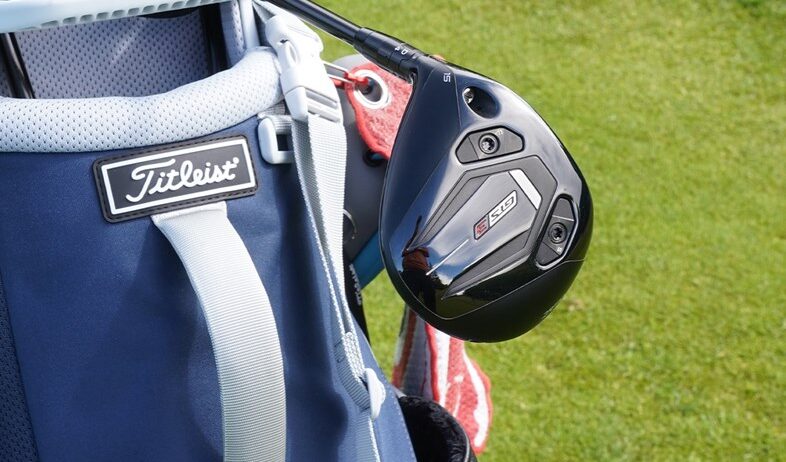
The new Titleist GTS3 fairway woods are changing up their design a dramatic way, both above and underneath the surface, and we’ve been testing it to find out how the new model truly performs.
When creating the best fairway woods, every company wants to make product that gets into the hands of as many golfers as possible. With that in mind, designs have become more homogenous in an effort to suit everybody, leaving less and less options on the market for the niche. Thankfully, the new Titleist GTS3 fairways offer a different perspective.
Built using tour validation and player-led feedback, the GTS3 has undergone the same refinements as the driver that shares its name, with the target audience placed front and center throughout that process, helping to make a stand out model, in the truest sense of the word.
It may not be for everybody, but Titleist have decided that’s okay, and I’ve been more than a little curious to see if this old-school approach can still be successful in the modern game.
Quick Verdict
The Titleist GTS3 fairway woods are unapologetic in their design, built to fill a hole in the market’s appetite that has been severely underfed. While it won’t work for everyone, the GTS3 presents a more defined choice to suit particular golfers and it fits that niche perfectly. Low-launching, low-spinning, but strong in ball speed, this head goes to straight to the top of my list for powerful players in dire need of a drop in ball flight or for those that are consistently striking the ball higher on the face.
Total shot shaping control, with reliable ball speeds

Pros & Cons Ratings Specs Features
Pros Ball speed is great, generating powerful performanceDeeper face suits the target market more clearlyDual Weighting is simple but makes a big difference in flight Cons This is a super niche product in the marketThe silver face does not work for me
Looks, Sound, and Feel
Technology
Performance
Final Verdict
RRP £369.00 / $399.99 Weights 11g Heel / 5g Toe (stock) Lofts 15.0º / 16.5º / 18.0º / 21.0º Lie 56.5º / 56.5º / 57.0º / 58.0º Standard Shaft Length 43.0″ / 43.0″ / 42.0″ / 41.5″ Stock Shaft Options Mitsubishi Tensei 1K White / Mitsubishi Tensei 1K Blue / Mitsubishi Tensei 1K Red / Project X TITAN Black Stock Grip Titleist Universal Grip Thermoform Wraparound Crown repositions weight for improved flight conditionsNew Dual Weighting System allows for precise CG locations and shot shapingRefined fairway wood shaping for more defined model differencesHigh Polish Silver Face emphasizes loft for ideal club delivery
Looks, Sound, and Feel: 4/5
Let’s not beat around the bush, the looks of the new Titleist GTS3 fairway woods are extremely distinctive when compared to the rest of the industry.
I know how that might sound, after all Titleist are probably the most classic looking clubs on the planet, bar the few persimmon makers you can still find, but stick with me. I’ve spent more than a decade addressing woods with dark faces, including my current GT2 fairway, and the silver face of GTS might be one of the most jarring encounters I’ve had in testing equipment.
Titleist do have a reason for the return of the high polish looks, but logic go out the window when you’re considering your own perspective. For their part, the company say that initially this was just a side-effect of prototype testing, but ambassadors involved in the process preferred the new look (although, it’s technically old if you remember the 909 F2 or F3 woods) as they felt it made the face look like it had more loft.
That extra impression of loft gave them the feeling that they could ‘cover’ the ball more, encouraging them to hit more steeply into the ball and strike higher in the face.
For me, the opposite is true, I’ve really struggled with the silver finish. I find that all it does for me is highlight the leading edge of the GTS3, making the club seem ‘sharper’ and more likely to stick into the turf during impact, which leads me to try to shallow my delivery and connect low on the face. It also gives me the impression of the heel and toe having been lowered, in turn making me concerned either end might catch the ground and twist the club.
It’s a personal problem, and your mileage will obviously vary, but it’s something that I’ve found at times difficult to get on with, especially when you consider how many other brands continue to use darker face finishes.
Outside of the high polish, GTS3 is a very Titleist design. Classic shape, muted color scheme that makes you feel like more of an accomplished golfer than you are (or, at least, I am), and a incredibly pleasant sound.
I don’t want to call it a dull noise, but it is certainly more of a thud than a crack, mainly thanks to the continuing tech story from both the GTS driver collection and last generation’s models. I like that sound and feel from the face; it’s not distracting, there’s no ‘oh wow, I smoked that’ thought, it just brings you back to focusing on the ball flight.

Technology: 4.5/5
And ball flight is where the Titleist GTS3 fairway woods are geared to make a difference. The most noticeable new design feature, outside of the face, is the removal of the track weight from the GT3 in favour of a Dual Weighting System.
It’s a choice that swaps the exacting precision of the track for a simpler yet more significant shift in Center of Gravity (CG) through the toe and heel positions, enabling stronger changes to ball flight.
While some will bemoan the removal of the previous system, the new Dual Weighting presents a more definitive difference with higher contrasts in performance, and it’s not the only part of the GTS fairway wood family that is taking part in that trend.
Titleist have been keen to separate the two models in the line-up, with the GTS2 being shallow in face height than before. The GTS3 features a much taller look, further pushing that classic look I mentioned, but also representing a clear split between the two in target audience.
It’s not all change in the tech story, though.
Titleist have retained the seamless Thermoform Crown from the last release, although now it’s been extended in how far it wraps around the crown’s edges. Made from the same PMP material in the drivers, the structure helps reposition weight lower to improve launch conditions and protect low-face strikes.
Further helping those lower impacts, as is common with anything hit from the deck, is the Forged L-Cup face. Essentially, it allows Titleist to make that section of the face more flexible to help retain ball speed, gaining the user more consistency from the bottom of the face.
I’ve taken a little bit away from the full marks on the Titleist GTS3 fairway’s technology as, while it’s still great engineering, there’s not a tremendous amount of change from the GT series.
That being said, if it performs, that makes this a different story.

Performance: 4/5
I want to get the negative out the way first, as I feel they’ll be the cut off point for certain types of golfers and, once I’ve explained, we can get into how the Titleist GTS3 fairway wood can be an outstanding option for the right player.
The depth of face is going to be problematic for the majority of amateurs (and some professionals). It is aggressively tall, and while I understand the purpose, I have had to adapt my delivery to make GTS3 work for me.
I don’t say that lightly either. I’ve grown up with deep woods and normally am at ease using them, but this club has pushed me into a change – to get the best out of it – that I don’t know if I’d be as comfortable with making long term.
Now, as we’ve already said, Titleist have wanted to bring better definition to each model in the GTS family, so it’s been done with good reason, but if you aren’t able to find the middle-to-higher portions of the face this will be a struggle to maximize your performance with.
That being said, once I changed to the steeper swing I needed, GTS3 has been incredible.
The flight produced is one of the most powerful I’ve seen in a fairway metal, with fast, penetrating, low-launching bullets chasing down the fairway from 3-wood that have been going too far at times. There’s been two or three occasions where I’ve been in the trees behind the fairway on doglegs despite thinking I was comfortably out of range; it is exceptional for speed!
I’ve also been using the GTS3 7-wood, the first time Titleist have offered their deeper-faced fairway model in that loft option and it’s certainly a welcome decision from the company.
There’s still a powerful flight to be found, but it’s tempered by the immediate launch and height that’s achieved by the additional loft. With a shorter shaft encouraged a naturally steeper swing, the depth here is more of an advantage for golfers, strikes naturally being higher on the face and more in-line with CG.
I wouldn’t even be surprised to see a mixture of GTS2 3-woods with GTS3 5- and 7-woods in more than a few players’ bags due to the blend of face heights, in all honesty, blending the two for a matching ball flight and apex.

Final Verdict: 4.2/5
My final score is going to undersell the Titleist GTS3 fairway woods, if you’re just looking at category headlines, but I do really like these woods, to be clear.
While they aren’t for everyone, that’s by no means a negative. There’s been a gap in the market that, as a club fitter in my previous life, I’ve been desperate to see filled to help those golfers in the minority that feel somewhat neglected.
The aesthetics I don’t love, but I also understand it’s entirely my personal preference and even then the more I’m exposed to the silver face, the more I’m becoming comfortable with it.
GTS3 isn’t going to be the biggest selling club in 2026, and the lack of versatility is the only reason it’s losing out on a higher score (ironic, I know, considering I’m saying the niche appeal is a good thing) but for those that need this design, there’s not much else I’d point to first.
For everyone else, you’ll find friendlier options out there. And that’s okay, too.
Similar fairway woods to consider
The tour-standard fairway wood

Pros & Cons Ratings Specs Features
Pros Improved shelf appeal and aesthetics from previous generation Sleek, fast look down at addressRefinements from previous success of QiSuperb feel Cons Some may prefer a classical look, such as the Titleist GT3
Looks
Tech
Performance
Overall
RRP £319.00 / $379.99 Lofts 3-15º / 3HL-16.5º (RH Only) / 5-18º / 7-21º / 9-24º (RH Only) Head Size 185cc / 170cc / 150cc Standard Shaft Length 43.25″ / 43.25″ / 42.25″ / 41.75″ / 41.25″ Stock Shaft Options REAX FW 65g (S/X), 55g (A/R) Stock Grip Golf Pride Z-Grip +2 Black/Silver Tour-Proven design in a new, sleek frameAdjustable loft sleeve for ultimate setup perfectionRedesigned looks made to appeal to every level of golferPurpose-built shafts, engineered with Mitsubishi ChemicalSpeedPocket, TwistFace, and Multi-Material Construction for maximized performance
Premium distance with a premium price

Pros & Cons
Pros Taller face inspires confidence off the tee Crisp, clear feedback at impact Excellent forgiveness for a low-spin head Clean, minimalist crown design Cons Premium price compared to other models Higher-pitched sound won’t suit everyone