

June 16, 2026, 12:00 p.m. ET
Bryson DeChambeau was seen testing new TaylorMade prototype drivers before the U.S. Open.Two new TaylorMade driver heads, both with 7 degrees of loft, were added to the USGA’s conforming list.The prototypes are designed for DeChambeau’s high swing speed and specific performance needs.It is not yet known if DeChambeau will use the new drivers in the tournament.
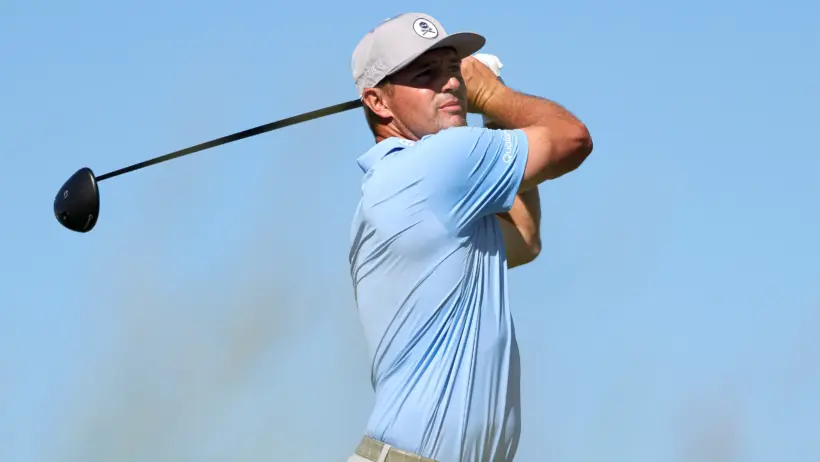
For some players, a driver is a driver. For Bryson DeChambeau, it is closer to a physics project with a headcover. That is why the sight of the two-time U.S. Open champion testing new TaylorMade prototype drivers on the range at Shinnecock Hills before the 2026 U.S. Open immediately became one of the week’s most interesting equipment stories.
DeChambeau was seen on television hitting the drivers on the practice range, and images and reports of the testing spread quickly across social media and several credible golf outlets. The timing was hard to miss. On Monday, two TaylorMade heads were added to the USGA and R&A Conforming Driver Head List: Qi4D Proto 200+ Version 1 and Qi4D Proto 200+ Version 2.
That does not mean DeChambeau is guaranteed to play one in competition. It means the heads are conforming, available to be used under the Rules of Golf, and clearly interesting enough for one of the game’s most famous drivers of the golf ball to test during major championship week.
In other words, this is not nothing.
What the USGA list tells us

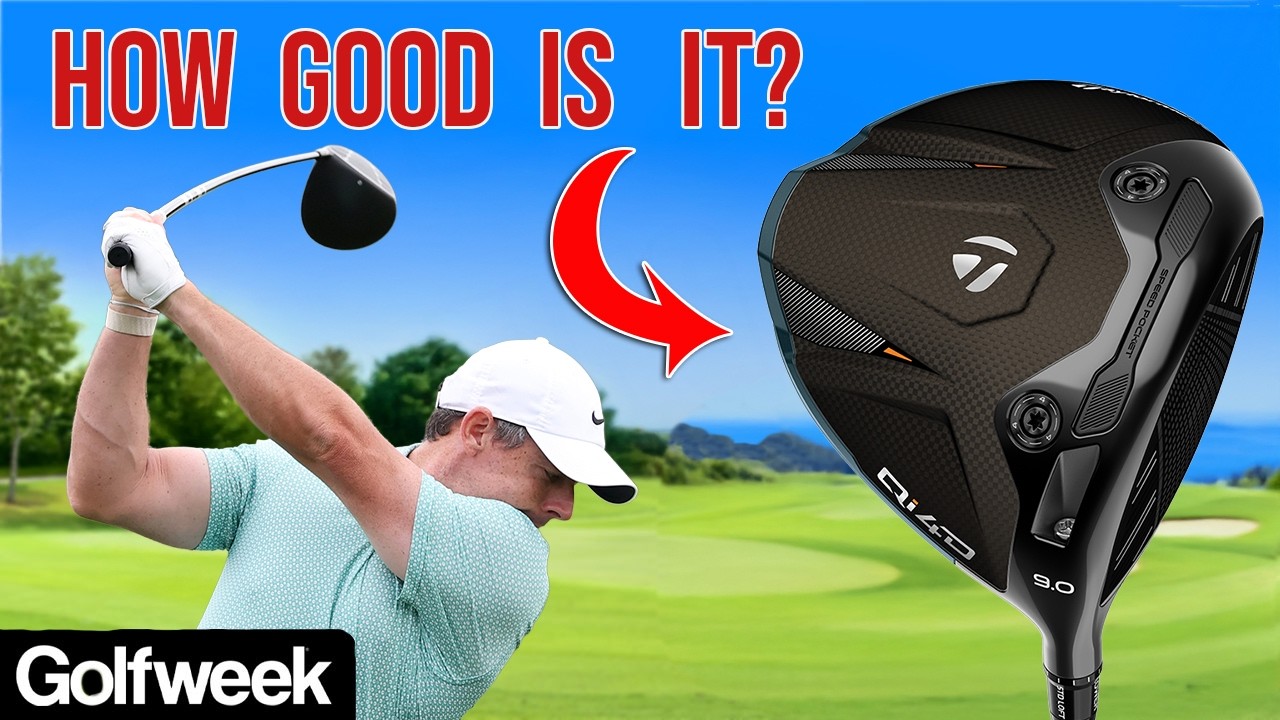
The USGA listing gives us a few hard details. Both heads are TaylorMade Qi4D Proto 200+ models. Both are listed at 7 degrees of loft. Both are marked “PROTO” and “200+,” both have carbon face markings, a TaylorMade T-logo crown alignment mark and hosel orientation indicators. The listing also notes Speed Pocket markings on the sole, along with weight-port markings.
Need a news break? Check out the all new PLAY hub with puzzles, games and more!
Version 1 and Version 2 are separate entries, which tells us TaylorMade did not submit the same head twice under identical markings.
The most eye-catching number is the loft: 7 degrees.
More: Bryson DeChambeau turns to AI to fix his swing.
That is extremely low by normal retail standards, but DeChambeau is not a normal, retail-standard golfer. His speed, launch conditions and preferred shot shape have long made driver fitting more complicated than it is for most players. A 10.5-degree head off the rack is built for the rest of the planet. Bryson lives in a different zip code.
There also appears to be a meaningful weighting difference between the two prototypes. Version 2 has two 10-gram weights positioned in the front heel and toe areas of the sole, which should push the center of gravity more forward. Version 1 has those same two front weights, plus a third weight in the back of the head. All things being equal, that should make Version 1 slightly easier to launch higher and create a little more spin, while Version 2 should be the lower-spinning, more forward-CG option.
The “200+” name is also going to make equipment watchers raise an eyebrow, because DeChambeau has spent years chasing extraordinary ball speed. Still, without confirmation from TaylorMade or DeChambeau, it would be a mistake to assume exactly what that marking means. It could refer to a performance target, an internal project name, a head specification or something else entirely.
What we still don’t know

There is plenty we do not know.
We do not know the head volume. We do not know the exact center-of-gravity location, face curvature, lie angle, playing length, shaft, internal weighting structure or how much these heads differ from TaylorMade’s retail Qi4D drivers. We also do not know whether DeChambeau tested both Version 1 and Version 2 extensively, although it is believed both were part of the testing process.
Most importantly, we do not know whether either prototype will go into the bag when the tournament starts.
That is the important distinction. The USGA’s conforming list is not a retail catalog and it is not a tournament commitment sheet. It simply identifies driver heads that have been submitted for evaluation and determined to conform to the Rules of Golf.
For DeChambeau, though, the search itself is the story.
Why this matters for Bryson

DeChambeau’s relationship with equipment has always been part innovation, part obsession and part controlled chaos. He made one-length irons famous, rebuilt his body in pursuit of speed, turned launch-monitor numbers into appointment viewing and has rarely been shy about asking equipment to do things most golfers would never consider.
That is what makes these TaylorMade prototypes so fascinating. DeChambeau is not just looking for a driver that goes far. Everyone on tour wants that. He needs a driver that can survive his speed, manage spin, control curvature and produce a reliable flight under major championship pressure.
More: 2021: A frustrated Bryson DeChambeau said his driver ‘sucks.’ Cobra, his driver maker, is not happy
At Shinnecock, that matters even more. The course is exposed, strategic and wind-sensitive. Raw distance helps anywhere, but at a U.S. Open venue where angles, fairway position and trajectory control matter, a driver that produces the right miss can be more valuable than one that simply produces the longest ball.
That is the grander equipment lesson here. At the highest level, fitting is not about finding the club that performs best one time. It is about finding the club that performs predictably when the swing is fast, the wind is moving and the consequences are severe.
Will golfers ever see this in stores?
That is the million-dollar question, or, given modern driver pricing, at least the $650 question.
There is no indication these specific TaylorMade Qi4D Proto 200+ heads are headed to retail. In fact, a 7-degree prototype driver built for someone with DeChambeau’s speed profile would make almost no sense for most recreational golfers. For the average player, that kind of loft would turn golf into a low-launch escape room.

But tour prototypes can matter beyond the player they are built for. Sometimes they are one-off solutions. Sometimes they are test beds. Sometimes an idea that starts with an elite player eventually filters into a future retail product in a more playable form.
For now, the safest conclusion is this: TaylorMade has built at least two conforming prototype drivers that appear to be part of DeChambeau’s ongoing search for the ideal driver. He has been testing them at Shinnecock Hills before the U.S. Open. They are legal to play. They are not confirmed for competition. They are not confirmed for retail.
And because it is Bryson, everyone in the equipment world is going to keep watching.