

July 28, 2026, 10:30 a.m. ET
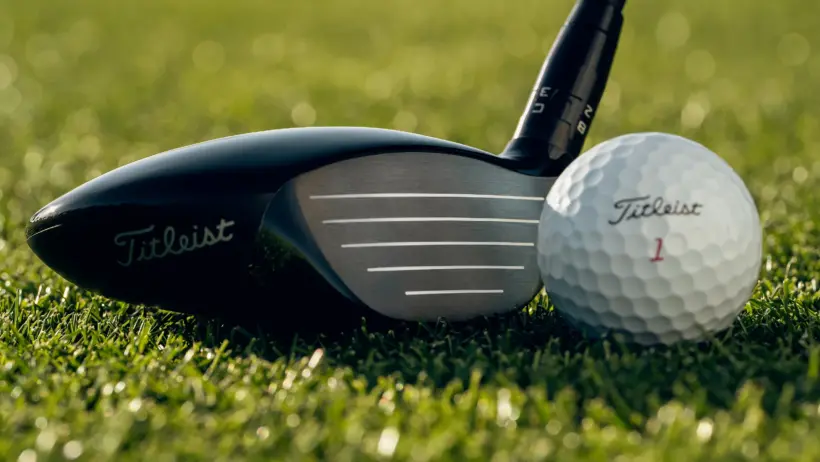
The Titleist GTS2 and GTS2 fairway woods feature a lightweight composite crown to lower the center of gravity for a higher launch and less spin.The GTS2 has a larger, shallower face for golfers with a sweeping swing, while the GTS3 has a deeper, more compact face for those who hit down on the ball.For the first time, both models include interchangeable sole weights to adjust for a draw or fade bias.
Gear: Titleist GTS2 and GTS3 fairway woods
Price: $399 each with Project X Titan Black or Mitsubishi Tensei 1K White, Blue or Red shaft and Titleist Universal 360 grip.
Specs: Stainless steel bodies, wraparound composite crowns, forged high-strength stainless steel L-Cup face inserts and interchangeable 11-gram and 5-gram sole weights. GTS2 lofts: 13.5, 15, 16.5, 18 and 21 degrees. GTS3 lofts: 15, 16.5, 18 and 21 degrees.
Who it’s for: Golfers who want a higher-launching, lower-spinning fairway wood with a choice of profiles designed for either a sweeping or more downward delivery.
What you should know: The Titleist GTS2 and GTS3 fairway woods use lightweight wraparound composite crowns to create lower and deeper center-of-gravity locations, while different face heights help golfers find the model that best matches how they deliver the club.
Need a news break? Check out the all new PLAY hub with puzzles, games and more!
The Deep Dive: Fairway woods have a difficult job. They need to produce driver-like speed from the tee, launch high from the turf and land softly enough to be useful on long approach shots. They also tend to be the longest clubs golfers are expected to hit directly off the ground, which helps explain why many recreational players approach a 3-wood from a tight lie with the enthusiasm of someone opening an unexpected letter from the IRS.
With the GTS2 and GTS3 fairway woods, Titleist’s engineers concentrated on producing more launch, less spin and greater stability while making each model better suited to a specific type of swing.

The foundation of both clubs is a multi-material construction featuring a composite crown that wraps around the sides of the head. The composite is significantly lighter than the stainless steel used in the rest of the chassis, so replacing more of it allowed Titleist to save about 16 grams from the top of the club.
Titleist repositioned that saved weight low in the heads to raise launch and reduce spin. Some of it was also pushed farther back, increasing the clubs’ moments of inertia (MOI) so they resist twisting more effectively on off-center hits.
Normally, moving weight back can increase spin. However, Titleist was able to drop the center of gravity (CG) so significantly that engineers had enough freedom to move it slightly rearward for more stability while still producing less spin than the previous GT fairway woods.
The GTS2 and GTS3 share those technologies, but they look noticeably different behind the ball.

The GTS2 has a larger overall profile and a shallower face designed primarily for golfers who sweep their fairway woods through impact or tend to make contact low on the face. Its face height is closer to that of the previous GT1 than the GT2. The exception is the 13.5-degree 3-wood, which retains a slightly taller face to make it more effective from the tee.
A shallower face can help a sweeping player produce more consistent contact by reducing the distance between a low-face strike and the center of the hitting area. That can help preserve ball speed while reducing the excessive spin that often accompanies thin shots.
The GTS3 has a deeper face and a smaller, more traditional pear-shaped profile. It is designed for golfers who hit down more noticeably with their fairway woods. That downward delivery tends to move the impact location higher on the face, where the GTS3’s additional face height can provide more room for consistent center-face contact.
Both models have flatter soles to allow the leading edge to sit closer to the turf and create a larger usable hitting area from heel to toe. The flatter shapes can also make the clubs appear more inviting behind the ball.

Titleist has replaced the sliding weight track used in the previous GT3 with two interchangeable flat weights positioned in the heel and toe. The standard configuration places an 11-gram weight in the heel and a 5-gram weight in the toe, creating a slight draw bias. Reversing them shifts the CG toward the toe and increases fade bias.
Additional weights will be available to fitters, allowing the overall head weight and heel-to-toe center-of-gravity location to be adjusted more precisely. Significantly, the same system is now included in the GTS2, so golfers no longer need to move into the more compact model to gain directional adjustability.
Titleist also reworked its forged L-Cup face insert. The high-strength stainless steel face wraps underneath the leading edge, allowing the lower portion of the hitting area to flex more efficiently. That is particularly important with a fairway wood because shots struck from the ground frequently make contact below the center of the face.
The technology is designed to retain more ball speed, launch, and distance on those low-face strikes without producing the loss of launch that sometimes accompanied the channels and slots used in older fairway woods.
The GTS2 is available in five lofts, including a 21-degree 7-wood. For the first time, Titleist is also offering the deeper-faced GTS3 at 21 degrees, giving golfers who prefer its compact shape and more downward delivery a 7-wood option.

David Dusek is a senior writer at Golfweek covering golf equipment.