


The Evolution of Antidote
Since introducing the Antidote line of zero torque putters, Bettinardi has brought form and function together in a way only the company can, building momentum among golfers eager to experience the technology for themselves.
By putting the heavy emphasis on materials, form, finish, and of course, feel that has made the brand a premier force within the milled putter world for decades now, the initial four Antidote models have turned heads. Not only do they stay true to the balance concept which makes zero torque effective, but they do so with a visual twist that is pure Bettinardi.

However, those shapes are all still center shaft oriented, creating a visual that can be a bit limiting to some golfers. The reality is simply that for many, it is not the most comfortable look after years of setting up behind one of the many other neck designs out there. Moving to a center shaft look alone can be a lot for a golfer but then add in the onset, which Antidote and most other zero torque putters present, and it becomes too much to overcome.
As a result, the trend has been for companies in the segment to start innovating ways to bring a more familiar visual to the table. Some have done it by design balance helping them to remove much of the onset, but Bettinardi wanted to go further than that. So, the Antidote putter concept with its “Simply Balanced” technology has officially gone Hexperimental in order to meld it with a heel shafted visual.
Zero Torque Meets Hexperimental
In order to create the heel shafted look that they were seeking, Bettinardi turned toward two different head shapes than those found in the core Antidote lineup. What is interesting about that is just how classic both of the heads are, in many ways screaming the uniquely Bettinardi qualities which have made the brand so popular over the years.
The #7 brings a modern mid-mallet shape that utilizes a flange cutout which has become popular over the recent years, while the #9 is a take on the classic high-toe wide blade which Bettinardi has done better than most for a very long time now.

However, the secret sauce to these two models, and what makes them “Hexperimental”, is the design and application method of the neck. Both use what Bettinardi calls a “modified plumber neck” which looks to give the look and feel of a traditional plumbers neck design while maintaining the “Simply Balanced” zero torque performance differentiation. The result is a more familiar look that reduces the onset at setup from the center shaft Antidote models.
Fortunately, THP was able to get the Hexperimental #7 in hand for a closer look, both visually to see just what was going on, and to put performance to the test.
Bettinardi Antidote Hexperimental #7
As a self-admitted putter nerd here on THP, and one who has tried just about every version of zero torque out there since its popularity began to boom, getting this in hand to work with was exciting in ways far beyond just being new and shiny. You see, this is the next step in the evolution of zero torque putters. Initial zero torque designs had offerings that work with the tech and perform in order to get a piece of the pie, but now it is about differentiation, and the #7 definitely checks that box.
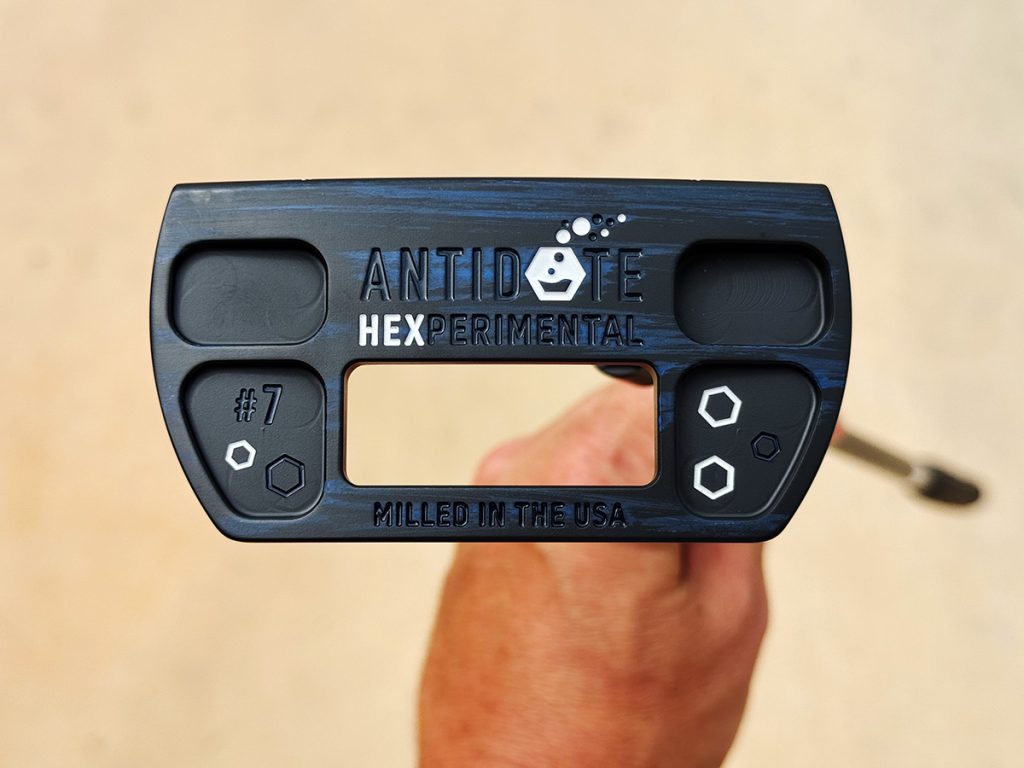
Since our release article went up on the Antidote Hexperimental models, the discussion on the THP Community about them has been a bit of a roller coaster. Naturally, there has been some instant “aha!” reactions, while others still cannot quite get over the idea of what visually seems simply like a reverse plumber neck.
The thing is, honestly, the design concept proved to be very good on the greens. Very good.
Antidote Hexperimental #7 – Looks and Finish
Visually speaking, the #7 is pure Bettinardi. The mid-mallet shape showcases the flange cutout well and it avoids being cumbersome or overdone like some brands have done when implementing such a visual. That said, the putter also maintains the sharper/harder lines and radii that Bettinardi is known for as well, something to keep in mind as we all have our own preferences there.
“Bettinardi proves that zero torque technology doesn’t have to sacrifice traditional aesthetics.”

Even then, it avoids looking overly “industrial”, and part of that is thanks to the finish. The “Black Armor” TPT application is bulletproof looking in-hand and on the greens. From address, it is all business with the deep black finish flowing into the matte black shaft, which really lets the white alignment paint fill pop nicely. The face and sole use the same TPT finish, but with some fun splashes of “distressed blue” that make for a fun visual that was a definite conversation starter.
F.I.T. Face Technology and Feel
Of course, the real curiosity for people will be in the roll, and the feedback. Both of the Hexperimental Antidote models are milled from 303 Stainless Steel, and the decision to go that way is also why Bettinardi implemented their F.I.T. Face (Feel Impact Technology) versus the Honeycomb that so many of our readers love. This version of F.I.T. removes 30% of the material that comes into contact with the ball on a putt, and less material means a softer feel.

Now, we wouldn’t necessarily call the #7 a “soft” feeling putter to be honest, but that also doesn’t mean its harsh. Given the material and application though, it is on the firm side of feedback offering a crisp “tock” through impact. With that, we could easily define the strike location and expected force/pace that was applied with each and every putt. Honestly, it is an experience very much in line with high-end milled 303 Stainless putter.
On Course Performance
The real standout, however, was indeed the balance visually and in terms of the putting stroke. The look is different for sure, but it does check the box of being much more comfortable for those who are used to a heel shafted look but want to try zero torque. In hand, the putter squares the ball incredibly well and it does what a zero torque putter should in terms of if the user can remove the urge to force things, the flow and roll remain consistent and pure. In fact, during testing the distance control off of the #7 was eye opening compared to other zero torque models this reviewer has tested.

There is no need to try and make the ball get to the hole, the F.I.T. Face combined with the overall balance of the putter brought impressive consistency to the table. Even in some high pressure situations, the putter did what it intended, bringing it all down to this user’s sometimes questionable ability to choose the right line.
Final Thoughts on the Bettinardi Antidote Hexperimental #7
Yes, it looks different. Yes, all zero torque putters look different. That said, even if you are someone who doesn’t benefit from the zero torque trend, we should all be excited to see so much evolution ongoing in the putter segment right now when it comes to the tech/concept itself.
The decision to classify these two new Antidote models was a wise one from Bettinardi, as not only does it differentiate them, but it also shows the world that they are as committed to putting innovation as they have always been.
The trend toward incorporating heel-shafted visuals into zero torque putters is one of the more interesting developments in the category. The bottom line however, is that these are, from top to bottom, well thought out and high performing milled putters.
For more information on this model and the entirety of the Antidote lineup, be sure to check out Bettinardi.com
Go to discussion…