

Ping iCrossover Utility Iron deals
Ping iCrossover Utility Iron Review
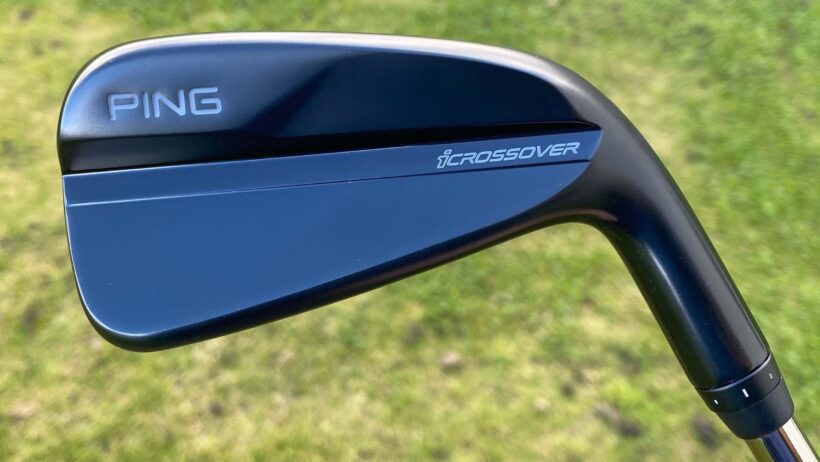
The Ping iCrossover iron is the latest in the line of driving irons that started in 2016 with the launch of the first G Crossover. Aiming to bridge yet another gap in the bag you didn’t realise you had, the Crossover sits between your longest iron and the shortest hybrid to be an iron/hybrid hybrid if that makes sense.

(Image credit: MHopley)
The iCrossover is more of an iron than a hybrid as the hollow head has a maraging steel face that is supported by an EVA polymer in the cavity to improve the sound and feel. Compared to the previous Ping G425 Crossover the sole is a little narrower and the head a bit sleeker to make it play more like an iron.
Best picks for you

(Image credit: MHopley)
At impact the feel and sound of the iCrossover is much crisper than the G425 and is a little on the hollow side like a wood due to the head design. The narrower sole goes through the turf better, especially on tighter lies where the previous model might have struggled. This gives more playable options for drilling the lower lofted 2 (18°) and 3 (21°) versions going into the wind as the flight is lower than the G425 thanks to the new design.

(Image credit: MHopley)
Unlike the 22.5° #4 iCrossover, the #2 (18°) and #3 (20°) versions see the stock Ping Tour 2.0 Chrome graphite shaft shortened by 0.5 inches to create more control. Not that the iCrossover is some wild stallion, far from it, but it is good to see that brands have taken simple steps like this to make longer irons forgiving for a greater numbers of players.
The head also looks better in the bag as the visually challenged notch on the hosel is no more because the iCrossover is the first one to be adjustable. Just like the best ping drivers, you unscrew the shaft and have a choice to vary the loft and/or the lie by 1° or 1.5° up or down.

(Image credit: MHopley)
If you want to leave the loft as is, you will need to choose between a lie of 1.5° flat (F) or upright (U). This is because the shaft has to be bored in off centre to enable the adjustability and the flat option seems to be the ‘stock’ lie, so I would go with that. Changing the settings does vary the flight and carry by 5 to 10 yards. It also changes the face angle, but maybe not as much as you experience with a driver.
(Image credit: MHopley)
As the iCrossover is interacting with the turf more too, the lie has more of an influence on performance and it would be worth doing some testing with a launch monitor or an experience fitter to get the right set up for you. It is good to see adjustability in this type of club and Ping’s hosel is compact enough to ensure that it does not look too bulky at address.

(Image credit: MHopley)
Overall the adjustable hosel on the iCrossover combined with the visual changes and better sound from the sleeker head are an improvement on the G425. The slightly lower flight will have more appeal to better players and in the iCrossover Ping has created one of the best utility irons that combines forgiveness with proper iron playability and earns a spot in our Editor’s Choice for 2023.
Ping iCrossover Utility Iron: Price Comparison