

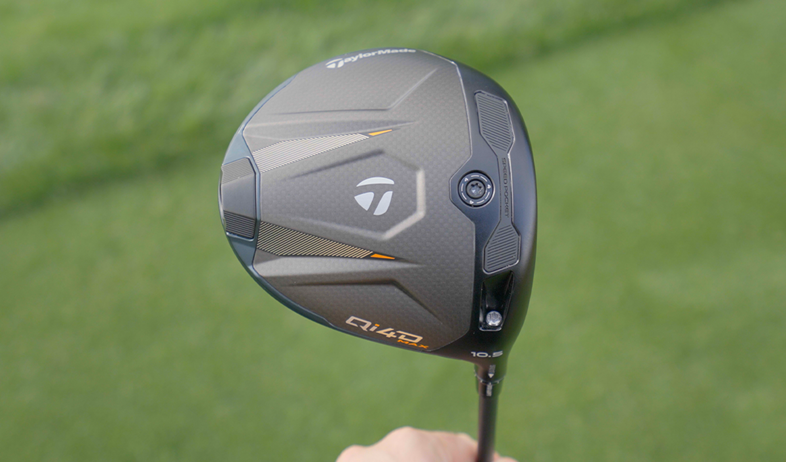
TaylorMade’s Qi4D Max driver offers speed and forgiveness – but not 10,000 MOI. I put it through its paces to find out if that’s a problem.
The 10,000 MOI driver craze started in 2024 with the TaylorMade Qi10 Max – one of the best drivers of the year – pushing the boundaries of forgiveness in an oversized profile. Consumers flocked in their droves to test this new trend, and the results in our drivers tests showed that it works.
Even tour pros like Collin Morikawa and Nelly Korda have benefited from the forgiveness of a 10K MOI driver, and the drive for higher and higher MOI showed no signs of slowing down.
It was therefore surprising to see the MOI on TaylorMade’s new drivers decrease from the previous generation (read the full tech story here).
So is that a problem, or have TaylorMade discovered a formula that doesn’t rely on maximizing MOI?
I have tested the TaylorMade Qi4D Max extensively – both on the course and on a launch monitor – so will answer that question and help you decide whether the Qi4D Max is the driver for you.
Pros & Cons Ratings Specs Features
Pros Much cleaner and more attractive design than previous modelWith the extensive adjustability, this can suit any golfer’s needs TAS make this forgiving and fast Cons The feel off the face falls somewhat flat
Looks
Tech
Performance
Overall
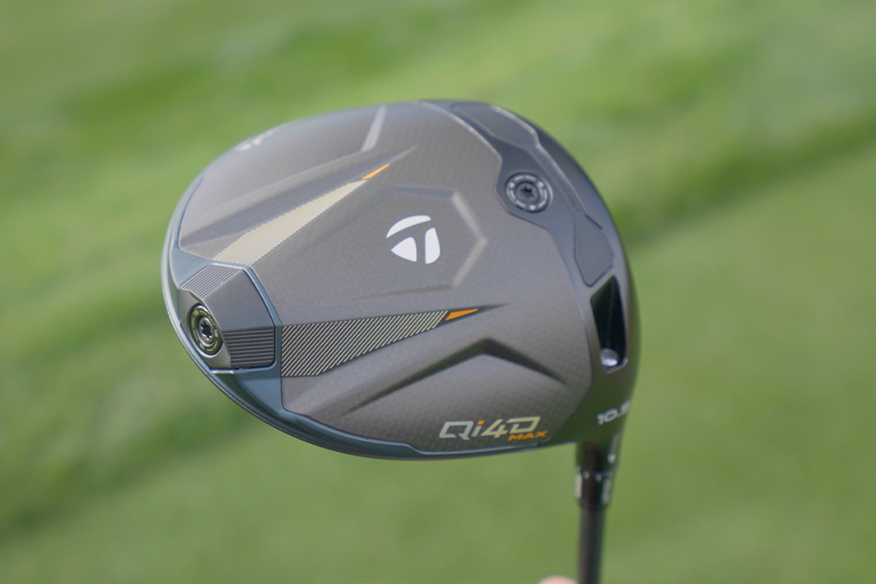
RRP £549.00 / $649.00 Lofts 9° / 10.5°/12° (RH/LH) Head Size 460cc Standard Shaft Length 45.75 Stock Shaft Options Mitsubishi REAX MR,LR,HR Stock Grip Golf Pride Z-Grip Black/Silver Large footprint for max forgivenesPremium adjustability 60x carbon face First modern non-titanium driver for brand
Looks – 4.5/5
I’m never going to give a forgiving driver head full marks for looks, because the quest for stability always means a bulky and less attractive shape than a core or low-spin model.
That being said, TaylorMade have done an incredible job of making the Qi4D Max an attractive model from multiple angles. The darker, elegant color grade does beam confidence to the amateur golfer, and without sounding too basic – it simply looks cool. TaylorMade, year after year, have the ability to make drivers that ooze shelf appeal.
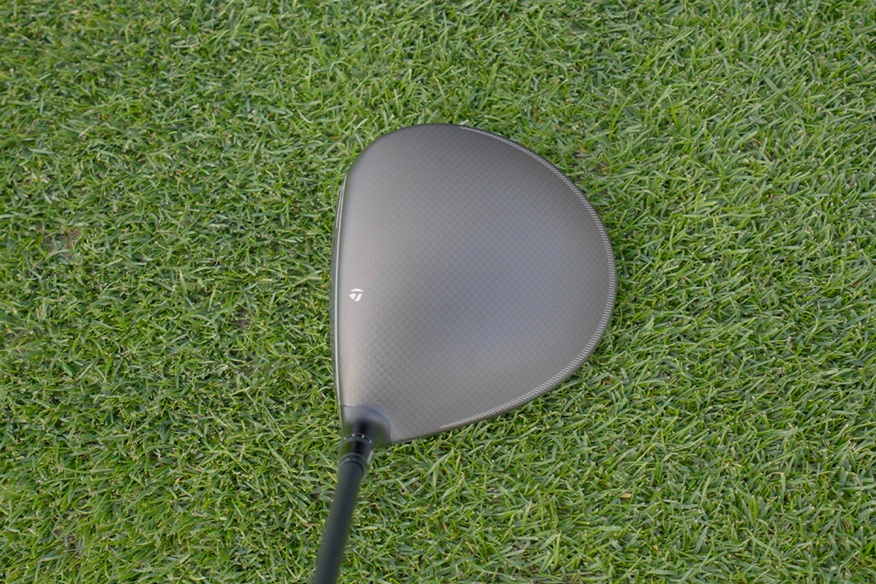
The profile down at address does appear slightly trimmed in comparison to other Max models, especially the TaylorMade Qi35 Max. This sits closer to the TaylorMade Qi35 in my opinion, although I think it may just look slimmer be due to the new, darker aesthetic – the reason I always wear black!
For a category of drivers that always look rather chunky, the TaylorMade Qi4D Max sits firmly at the top in my eyes for shelf appeal and down at address.
Technology – 5/5
I’ll discuss the head shortly, but one of the most significant updates doesn’t sit in the clubhead at all – it’s the shaft, and it delivers what may be one of TaylorMade’s most progressive fitting-led advances in recent years.
Drawing from more than two decades of research and over 20 million recorded driver shots, TaylorMade’s R&D team identified a consistent pattern in how golfers deliver the club: closure rate.
It’s a storyline first introduced with the Qi35, but for 2026 it has been refined, expanded, and applied with far greater intent to help the amateur golfer. By analysing a player’s rotational data during the downswing, TaylorMade can now point golfers to a precise stock shaft profile, designed to help them return the face squarer with center contact – a task many golfers (myself included) struggle with.
This marks a significant step towards simplifying custom fitting. The quality of a fitting experience can still vary depending on the fitter, but by embedding this process into every Qi4D driver, TaylorMade effectively removes a major variable. No matter the retail environment, golfers are far less likely to walk away with a driver that simply doesn’t suit them.
To make this possible, TaylorMade partnered with Mitsubishi, leveraging their materials expertize and production capabilities to create three distinct stock shaft profiles: MR, HR, and LR. These are categorised into where you release the club in the downswing. If you close the clubface quickly, you will be HR (high release). If you release the club later on in the downswing (after impact almost), you will fall into the LR (late release).
Other upmarket shaft options remain available, and in my own testing, while I spent time with the stock Mitsubishi REAX offerings, I ultimately landed back in a Fujikura Ventus VeloCore+ Red 7X.
The TaylorMade Qi4D Max head has seen a significant construction change for 2026. Titanium is a material of the past, with this head being TaylorMade’s first modern non-titanium driver.
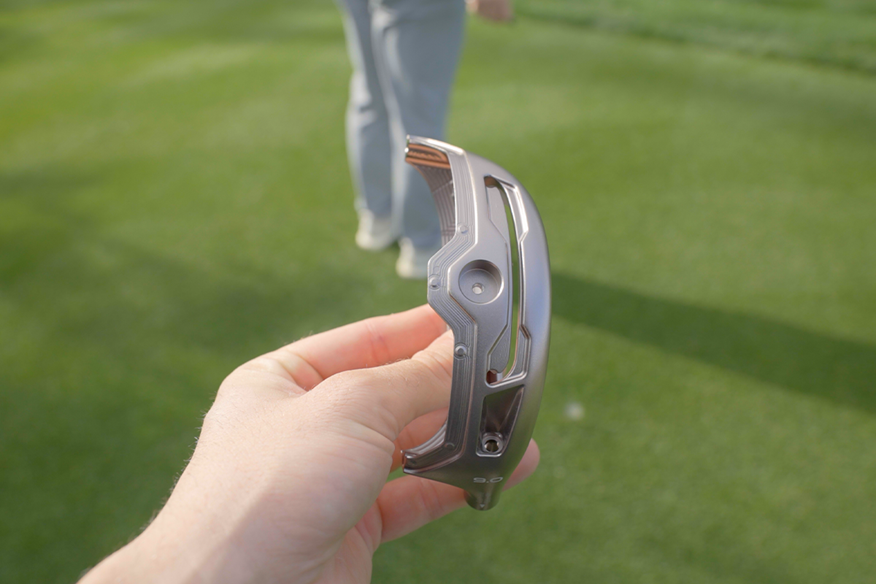
The collar has been forged out of the highest aircraft-grade 7075 aluminum and machined with exacting tolerances, allowing engineers to provide golfers with adjustability in a max MOI head without compromising speed.
The face of the TaylorMade Qi4D Max features a new and improved roll radius, helping the amateur golfer yield more consistent spin regardless of vertical impact location. If you want to push this driver for even more speed, you can utilise the two ‘Trajectory Adjustment System’ weights (13g/4g) to adjust the CG (and the MOI) for lower spin and faster ball speed.
Performance – 4.5/5
On paper, the TaylorMade Qi4D Max driver is the perfect fit for me. I hate to see the ball go left, I struggle with the low miss on the face, and the more forgiveness the better – I am a chopper at heart. However, I actually struggle to square high MOI drivers up at impact, due to their resistance to twisting.
My initial testing saw me struggle to control the spin with the Qi4D Max.
With the heavier weight at the back (the more forgiving setting), spin was at almost 3,600 RPM, which is a long way from optimal.
Putting the heavier weight forward dropped spin by a few hundred RPM but it was still spinning too much and I struggled with dispersion.
User error of course played a big part – I was hitting shots low off the face and struggling to make center contact – but a tweak ahead of further testing changed everything.
Reducing the loft from 9° to 7° turned the Qi4D Max into something special.
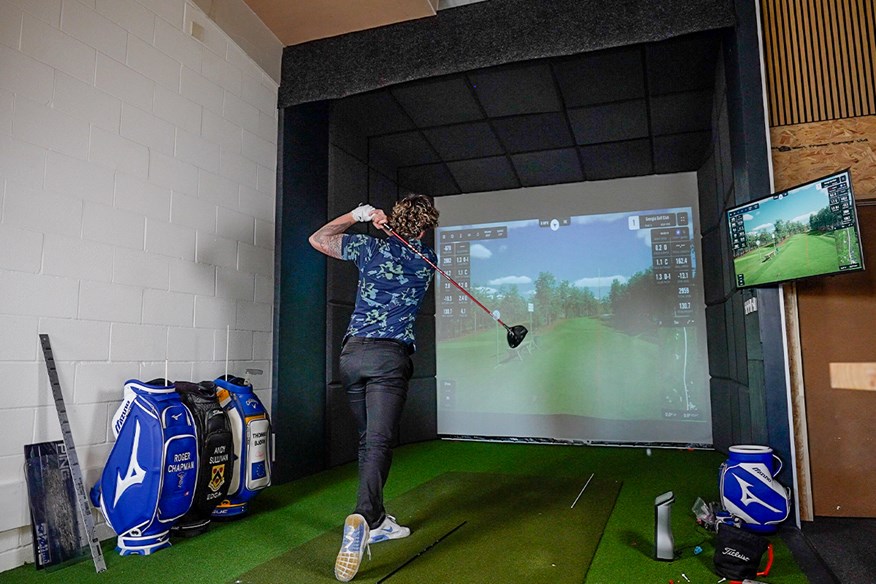
The spin rate on good strikes dropped to 2,800 RPM, which saw my carry distance increase from 289 yards to 299 yards. Even my worst strikes were now only spinning at 3,200 RPM, which was helping retain ball speed and distance.
With these settings, the Qi4D Max becomes a strong contender for going in my bag. My only issue is that the -2° loft setting pushes the face too far open to suit my eye.
The TaylorMade Qi4D seems to be the perfect alternative for me and if you prefer a slimmer profile, you’ll likely prefer it to the Qi4D Max. But if hitting driver isn’t your strong suit and you like the look of a bigger head, the Qi4D Max is a great option with plenty of forgiveness and speed on offer.
My only major criticism of the TaylorMade Qi4D Max driver – and infact all of the TaylorMade Qi4D drivers – is the feel. In my view, the Qi4D drivers feel worse than the Qi35 models they replace. Has feel been sacrificed this year to improve performance? I can’t say for certain, but many drivers from other brands feel better than the Qi4D. Of course, feel is very personal, so it’s something to test and see if you get the performance and feel you’re looking for. But for my testing, the feel off the face felt very dead. I’ve loved carbonwoods for several years now, so this came as a surprise to me more than anyone, but with my best drivers testing for 2026, I found various brands excel in feel – TaylorMade was not one of them.

Final Verdict – 4.5/5
TaylorMade stepping away from the 10,000 MOI arms race initially raised eyebrows, but after extensive testing, I think it’s a smart and deliberate shift rather than a step backwards.
The Qi4D Max still delivers plenty of forgiveness, but it does so with more adjustability and a broader fitting window than many of its direct rivals. Where some 10K MOI drivers work brilliantly for some golfers but aren’t at all suited to others, the Qi4D Max can be tuned to suit a far wider range of golfers – especially once loft and weighting are dialled in correctly.
In my own testing, it took a bit of setup work to unlock the best performance, but once there, the combination of forgiveness, ball speed retention, and consistency was genuinely impressive. It’s not the longest driver I’ve ever hit out of the box, nor the best-feeling, but it’s one of the most dependable when you don’t quite catch it out of the middle – which, let’s be honest, is most of us.
The feel won’t suit everyone, and players sensitive to sound and feedback should absolutely test it first. But if you’re looking for a forgiving, modern driver that offers more versatility than the typical “Max” model, the TaylorMade Qi4D Max stands out in an increasingly crowded category.
It may not chase MOI records anymore, but in real-world performance, this is one of the most well-rounded forgiving drivers TaylorMade have produced.