

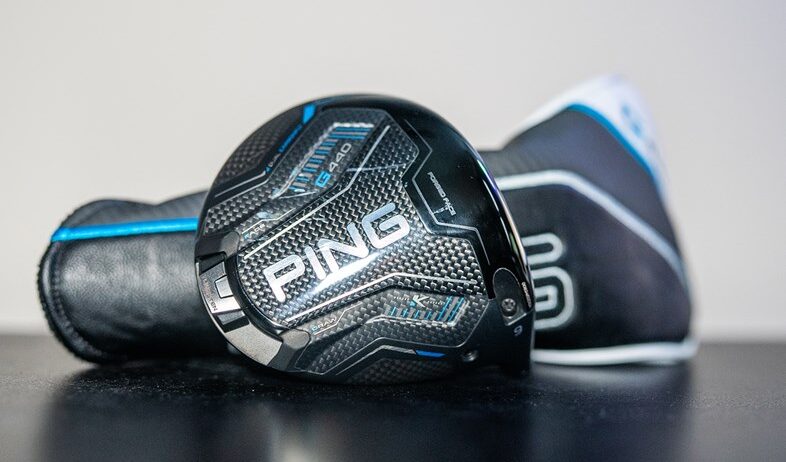
10,000 MOI has returned in 2026 for Ping with their new G440 K model, succeeding the hugely popular Ping G430 Max 10k.
10,000 MOI drivers have been turning heads since 2024, promoting the highest level of forgiveness in an overized shape, suiting the amateur and even the professional golfer. The G440 K’s predecessor drew its merits from TG in our 2025 best drivers test and in the most forgiving drivers category, with the G430 10K offering a “cheat code” in a category that was difficult to dominate.
But, over the last 12 months, 10,000 MOI has fallen somewhat flat. Brands such as Callaway and Titleist still hold firm in not releasing a 10,000 MOI model, and TaylorMade have decided to lower their MOI with the Qi4D Max. Is 10,000 MOI a thing of the past?
The Ping G440 K says otherwise.
When the Ping G440 K driver hit the USGA Conforming List, you could instantly see some of the improvements that Ping have put into the driver head – from adjustable weighting to more carbon, this looked to be ticking all the boxes. After testing the Ping G440 K driver at Custom Golf Works and Mannings Heath Golf & Wine Estate, I can confirm that 10,000 MOI is still alive and well.
10,000 MOI isn’t dead

Pros & Cons Ratings Specs Features
Pros Adjustability separates this from other 10,000 MOI modelsVery forgiving, confidence inspiring look at address.Suited to golfers who miss right Cons Some may find the aesthetic garish at address, not for the traditional golfers
Looks
Tech
Performance
Overall
Lofts 9°, 10.5°, 12° (RH/LH) Head Size 460cc Standard Shaft Length 46″ Stock Shaft Options Ping Tour 2.0 Chrome 65 (R, S, X); PING Tour 2.0 Black 65 (S, X); Mitsubishi Tensei 1K Black 65 (S, X); PRJX Denali Red 50 (5.5, 6.0); PRJX Denali Red 60 (5.5, 6.0, 6.5); PRJX Denali Red 70 (6.0, 6.5) Stock Grip Golf Pride 360 Tour Velvet 32g Adjustable WeightLonger ProfileThinner Face Dual CarbonFly Wrap
Looks – 4.5/5
I’ve spent the last 30 minutes trying to decide the rating between 4 and 4.5, and have decided for the more flattering score after putting myself in the shoes of the amateur golfer who is interested in this model.
10,000 MOI models are, and will always be, large. To push the CG back to maximise the forgiveness of the head – which increases MOI – the head has to have a large footprint.

The Ping G440 K is the exact definition of a 10,000 MOI driver. I like the overall shaping, with no hard edges of protrusions or bulges that you may find in other competitors, such as the TaylorMade Qi35 Max. But it is long. Compared to the Ping G430 10K, the G440 K features a slightly longer profile from front to back, allowing the CG to be pushed back to maximise forgiveness.
Those wanting a more traditional look may be turned off, but the extra size only adds to the confidence a player will receive from the profile if they’re seeking forgiveness from their driver.
The turbulators will always be marmite for golfers. I’m not a fan of them personally, but I know lots of people love them and find them a useful alignment aid to look down on at address.

One key point I noticed was how the Ping G440 K sat at address: It appeared far more closed than other 10K models. Not as severe as the draw-biased Ping G440 SFT, but you can see there is a static draw bias in the head.
Tech – 5/5
This is where the Ping G440 K truly shines, and I can’t say I’m surprised. Ping constantly provide fantastic innovation with their lineups, although they had a tough task this time. The Ping G430 Max 10k was so good, how could they improve on that?
With the Ping G440 K, a new 32 gram back-weight allows the golfer to shift the CG for a certain flight path: draw, neutral, or fade. Ping were not able to have this feature in the Ping G430 10k, as it would have made the model non-conforming by the USGA thresholds. The weight-saving innovation that the Ping G440 K has not only allows this back-weight to be shiftable, but it’s also 4g heavier than the previous iteration. This not only improves the adjustability, but pushes the CG lower and deeper, providing more MOI than any other Ping driver.

It’s not only adjustability and forgiveness that they’ve improved. Ping have been able to save weight in a variety of methods for 2026. A Dual Carbonfly Wrap and Free-Hosel Technology save weight from the G440 K’s sole (3.5g), crown (1.5g), and hosel region, allowing the R&D team at Ping to add weight to the back-weight, make it shiftable, and push the CG lower than ever before. The Dual Carbonfly Wrap is visible across the head, joining the G440 family in the carbon crown head. Not only will this feature push the boundaries of forgiveness in the Ping family, but it will allow for faster ball speeds and more distance.

The T9S+ face is a new addition to the Ping G440 K driver, with a refined VFT face to allow more flexing across the entire face. This will result in faster ball speeds across the entire face, with faster clubhead speed achieved through a 3g lighter head (203g versus 206g).
The Ping G440 K has the potential to be the most forgiving, fastest 10,000 MOI driver ever made. My testing confirmed this potential.
Performance – 4.5/5
I first gathered my opinions for sound and feel of the Ping G440 K driver at Mannings Heath Golf and Wine Estate, a course where accuracy is a must.
My opinions on Ping drivers in the past have been quite critical; I recall being quite negative to previous iterations of Ping drivers, comparing the sound and feel to hitting a saucepan. The Ping G440 K has the Ping DNA for sound and feel, but it’s a pleasing experience. You can feel the flexion on the face – particularly out the sweetspot, which is larger than you’d expect. On a few instances, particularly out of the high toe, I was surprised to see my impact mark being poor as it felt like I’d struck it well!
It does still have the loud, titanium noise to it, very similar to the Ping G430 Max 10k.
I found it accurate but not particularly long during my on-course testing, so I took it to Custom Golf Works to gather some data.
I had two long sessions at Custom Golf Works with the Ping G440 K, with two different swings. My first session, I was swinging at 124mph with a strong out-to-in swing path and open face. I had the driver at 9 degrees, with the 32g weight set to draw. My miss is usually out of the toe.
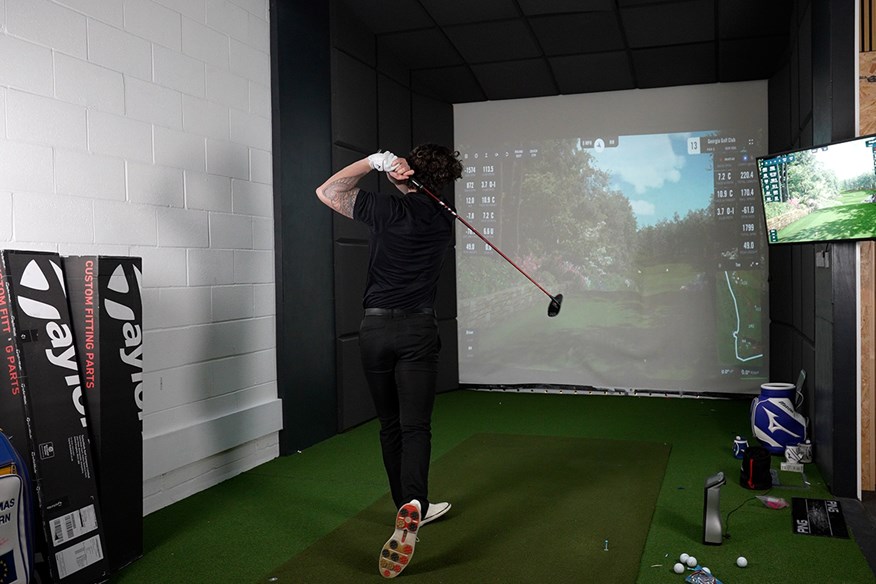
In this session, I found the dispersion to be extremely impressive for how poorly I was hitting it. Essentially, the ball should not have gone where it went! I was expecting a high, horrid slice that had 1000 RPM of sidespin and finished in the right rough. Instead, my results were far more flattering. This did come with a distance loss, mainly due to the spin staying around the 3,500 RPM mark. Not a dealbreaker, and an acceptable sacrifice to make for finding the fairway.
With my second session, my swing was far more optimal – around the neutral swing path mark, with my miss being left. This session saw far stronger numbers, with spin actually on the lower side (largely down to the left miss). I had the loft down to 7.5, with the weight on the toe, and still saw a left miss.
You can see here from this testing that we are approaching anti-slice territory with this driver. This isn’t an element you’d normally expect to award to 10,000 MOI drivers, due to their resistance to twisting that can cause the face to stay open. With the adjustable weight and draw bias elements of the the head, I found that the right miss was actually very difficult, and in some instances, it was too draw-biased for my liking.
Final verdict – 4.5/5
If I imagine the golfer in 2026 who is looking for a new drivers, the improvements Ping have made to the G440 K places it at the top of the list. A 10,000 MOI driver, with draw bias tendencies and CG adjustability makes it near unbeatable for the everyday golfer who has an inconsistent strike pattern and right-sided miss.
If you have a left miss, this could work, but I’d likely push you to other drivers. I would have loved if Ping made the 7.5° degree head available to retail for the faster players, but for most people the 9° degree head will work perfectly.
READ MORE ABOUT PING’S G440 RANGE