

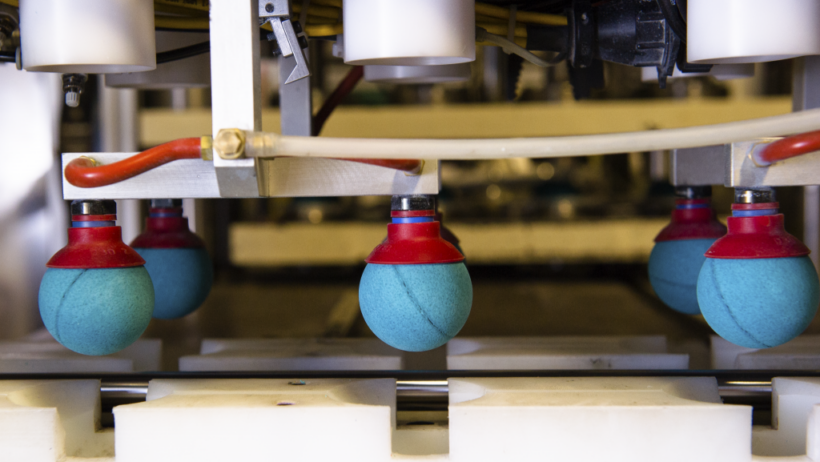
You want to know what a Titleist golf ball plant smells like? Rubber. Want to know what a Titleist golf ball customization plant smells like? Paint.
If you’re wondering anything else — like how Titleist designs and builds its golf balls, how a ball’s core is constructed or what role ball compression really plays — come with me on this journey as I relay my knowledge and experiences from my visit to Titleist’s golf ball facilities.
What’s it like there?
Let’s put it this way, Titleist’s research and design team are possibly the most over-qualified chefs in the world. Biochemists and chemical engineers develop formulas for ingredients with painful precision, and have access to a three-story, factory-style kitchen to cook up golf balls that sell like hot cakes — something to the tune of 240,000 Pro V1 and Pro V1x’s each day.
Ball Plant III (yes, there’s more than one in Massachusetts and another in Thailand) has a rubber mixer that’s taller than three basketball hoops stacked atop one another. It has top-secret rooms that aren’t to be photographed, X-ray machines, automated everything and a terrifying robotic guillotine that slices huge blocks of rubber.
Its R&D facility has a room full of its competitors’ golf balls — pretty much every golf ball ever made, just to keep an eye on the competition — laboratories everywhere and hallways of patent plaques that act as Titleist’s own golf ball hall of fame.
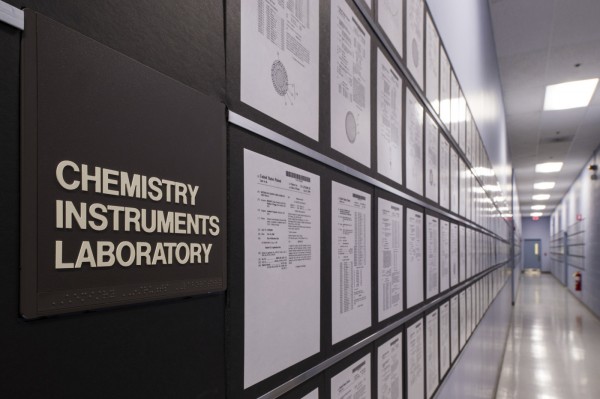
Titleist has over 1,000 patents, the most of any golf ball company, and owns 47 percent of all patents on golf balls.
Just down the road from Titleist’s corporate headquarters in Fairhaven, Mass., is Ball Plant III, where its golf balls are made, as well as Plant C, where Titleist golf balls receive personalized touches.
So what’s it like at Ball Plant III and Plant C? Before I get to that, I’ll start from the beginning.
Chasing perfection
I stood on No. 18 green at New Bedford Country Club, putter and golf ball in-hand, waiting my turn to try the putt that started it all.
The story goes like this.
Acushnet Company founder Phil Young, who was an amateur golfer and owner of a precision molded rubber company at the time, was playing golf one Sunday in the early 1930’s at New Bedford CC. His foursome included Dr. Bonner, head of the x-ray department at St. Luke’s Hospital in New Bedford.

Acushnet Founder Phil Young.
Young was considered a good player, but he was all over the course that day — hitting hooks and slices, struggling mightily to control his ball. On No. 18, however, he had a putt to win the match. Despite a good stroke, the ball rolled offline and missed the hole. While squaring away his bets from the match, Young claimed there was something wrong with his golf ball, not his game.
The argument got heated, and Young convinced Dr. Bonner to go to St. Luke’s Hospital and put his golf ball under the X-ray machine. It turned out Young was right — the exterior of the golf ball was round, but the core was way off center.
Young and Bonner returned to the pro shop and convinced the club professional to let them put a dozen balls of every model under the x-ray machine. Sure enough, every ball had an unbalanced core, some worse than others.
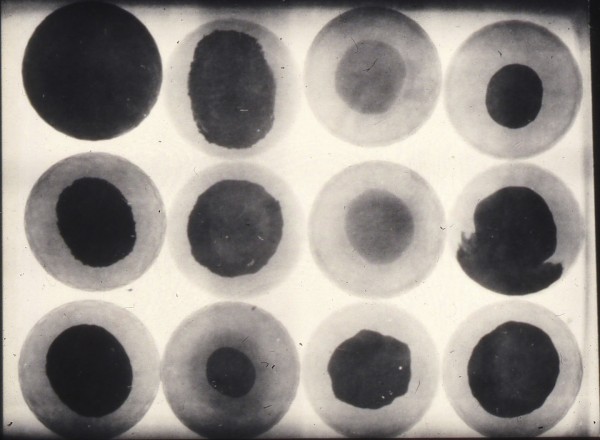
X-rays of out-of-round cores.
This discovery set a fire under Young, who set his mind to developing a truly balanced golf ball. It took nearly three years — in the midst of the Great Depression, mind you — to get a ball that was ready for the golf course. But when he did, he had built golf’s first, perfectly balanced golf ball.
Today, more than 80 years later, quality standards are still paramount with Titleist golf balls. Each Pro V1 goes through more than 90 quality checks, and each Pro V1x, because of its dual core, undergoes over 120 quality checks. And, sticking to it’s roots, every Titleist ball passes through an X-ray machine before it’s retail-ready.
With that said, I did miss my 6-foot putt on No. 18 at New Bedford CC with a new Pro V1x. Titleist balls have been much improved in the 80 years since Phil Young missed the putt that started it all, but it still takes a good stroke to knock a 6-footer in the hole.

Factory workers in the 1960’s analyze Titleist golf balls for any imperfections.
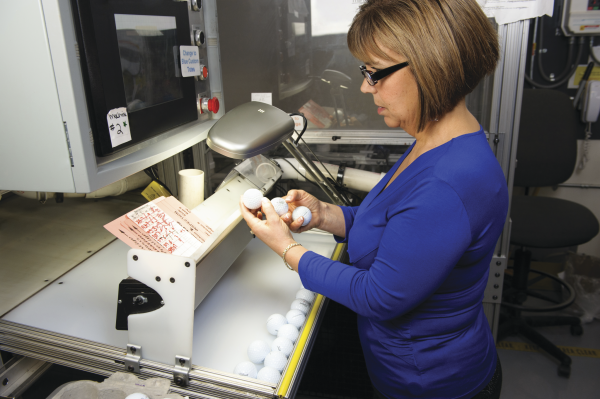
Not much has changed.
Ball Plant III: The Mecca
Now for the fun stuff. Join me on a tour of Ball Plant III, where I saw Pro V1 and Pro V1x golf balls get built from scratch.
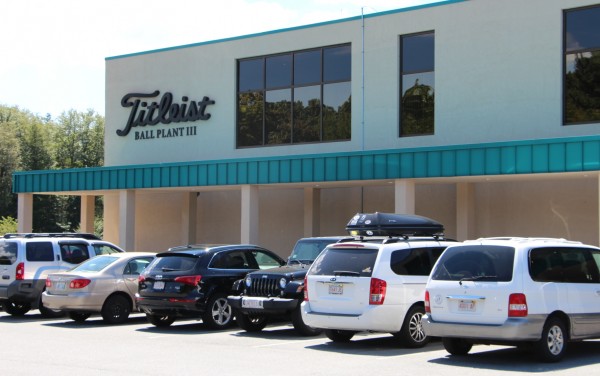
Outside Ball Plant III in New Bedford, Mass.
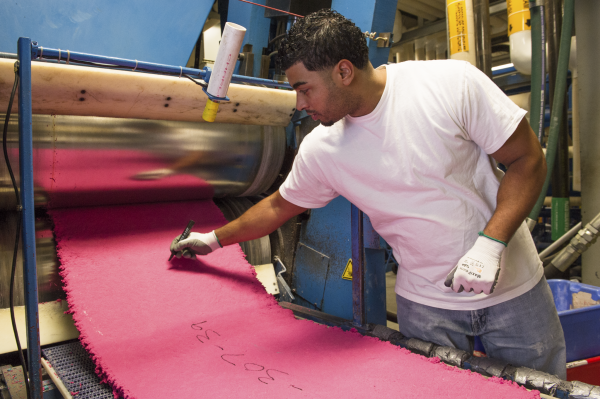
Raw mixture for Pro V1x inner cores get flattened and labeled before getting sliced.
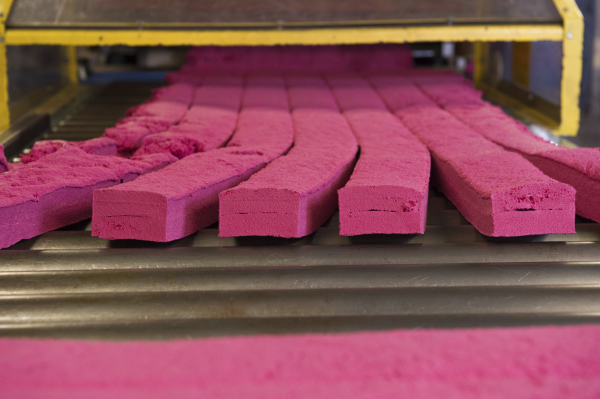
Pro V1x inner core material is sliced and ready to be formed into “preps.”
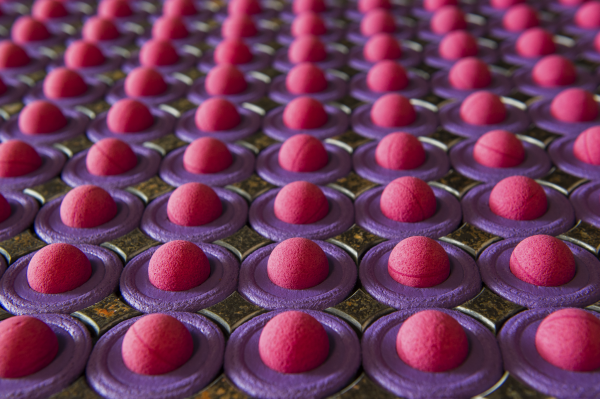
The two-piece core of a Titleist Pro V1x golf ball before they’re molded together.
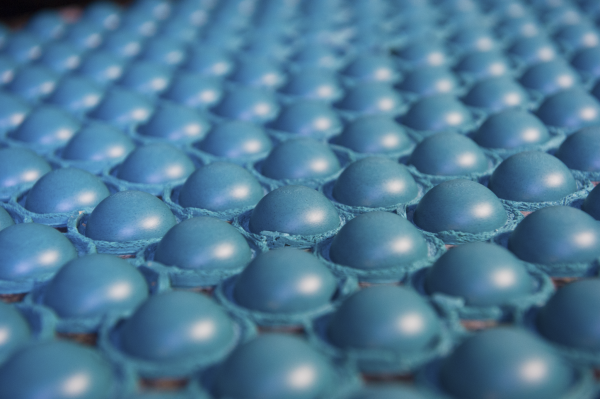
Titleist Pro V1 cores before they’re cut and individually separated.
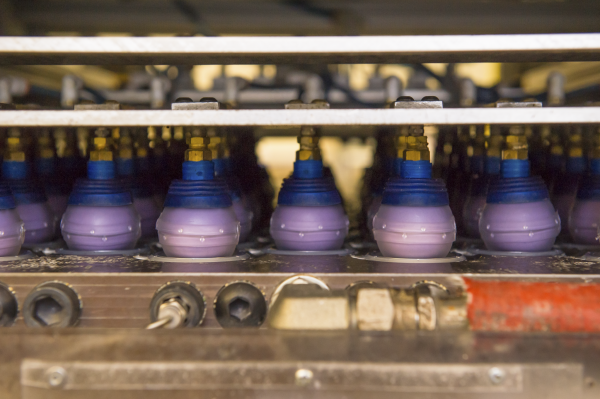
Pro V1x cores before the outer casing has been applied.
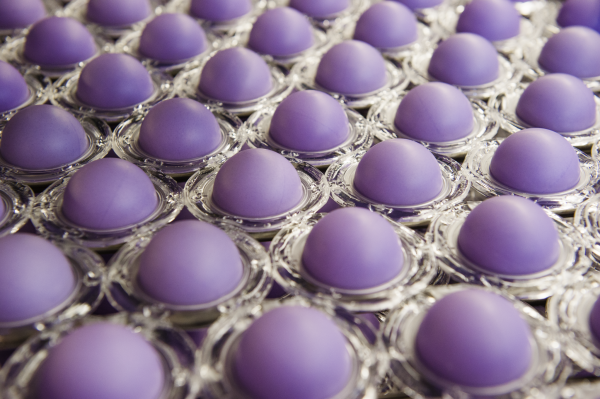
The casing layer has been applied.

Core’s for Titleist Pro V1 golf balls being automatically transported to undergo the next step in the process.

The Urethane Room is so top secret that GolfWRX wasn’t allowed to take photos!
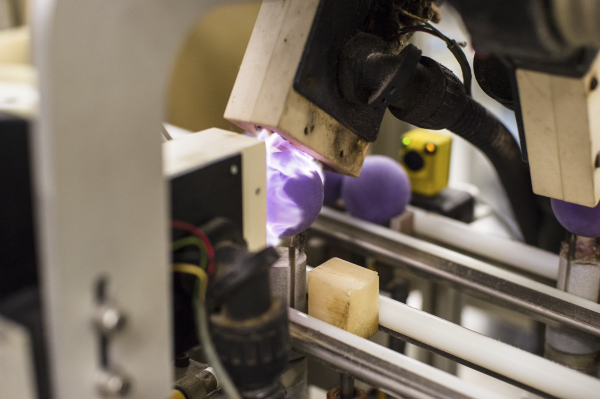
Static electricity is used so that the cover materials better adhere to the core.

Managing Editor Zak Kozuchowski preparing to enter the PAD Print room. It gets messy, plus Titleist didn’t want our hair to get in the paint!
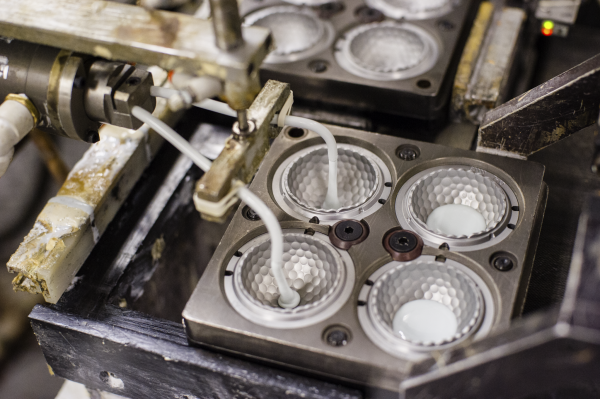
This is where liquid materials react to form the urethane elastomer cover.

This tumbler machine smooths the surface of golf balls before paint is applied.
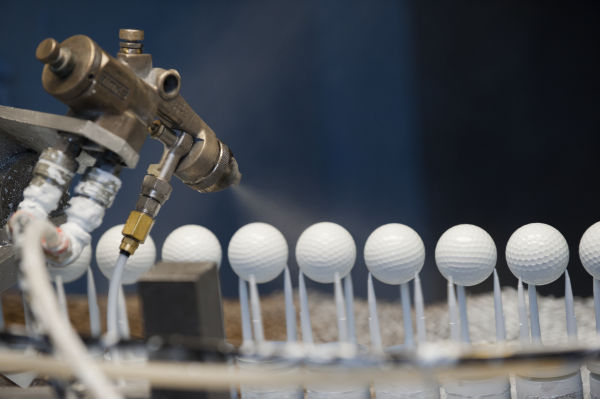
Automated assembly line to paint the outer cover of Pro V1 and Pro V1x golf balls.
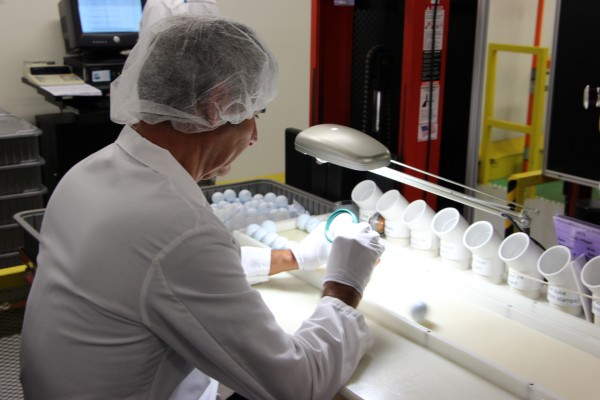
Before adding print onto the balls, employees use a magnifying glass to manually ensure there’s no imperfections.
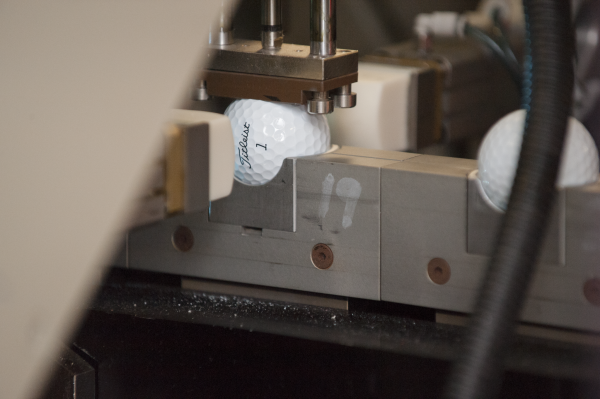
Golf balls are automatically aligned and stamped either Pro V1 or Pro V1x.

Sticking to its roots, Titleist puts every ball through an X-ray before it gets ready for packaging.
The Custom Plant
At the custom plant, employees sit at golf ball stamping machines and exhibit ninja-like hand-eye coordination. You can see below just how fast one of the factory workers moves her hands, changing golf balls in and out to get fresh stampings.
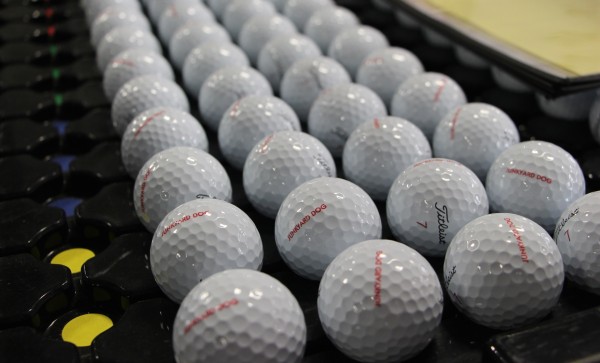
Golf balls with logos, sports teams, organizations, names and sayings lay around the custom plant by the hundreds of thousands. This batch of Titleist Pro V1X No. 7’s read “Junkyard Dog.”

Many small-batch golf ball stampings are still performed by hand at Titleist.

Yes, you’re in New England. At the Custom Plant, workers use chowder cups to sort paint.
5 Minutes, Max
That concludes our tour of Titleist’s golf ball facilities. If you’re like me, you now have a new appreciation of what it takes to make a premium golf ball. Remember, the rules of golf only permit you to search for 5 minutes before a ball is deemed “lost” — even if it’s a Pro V1.
Complete Photo Gallery