
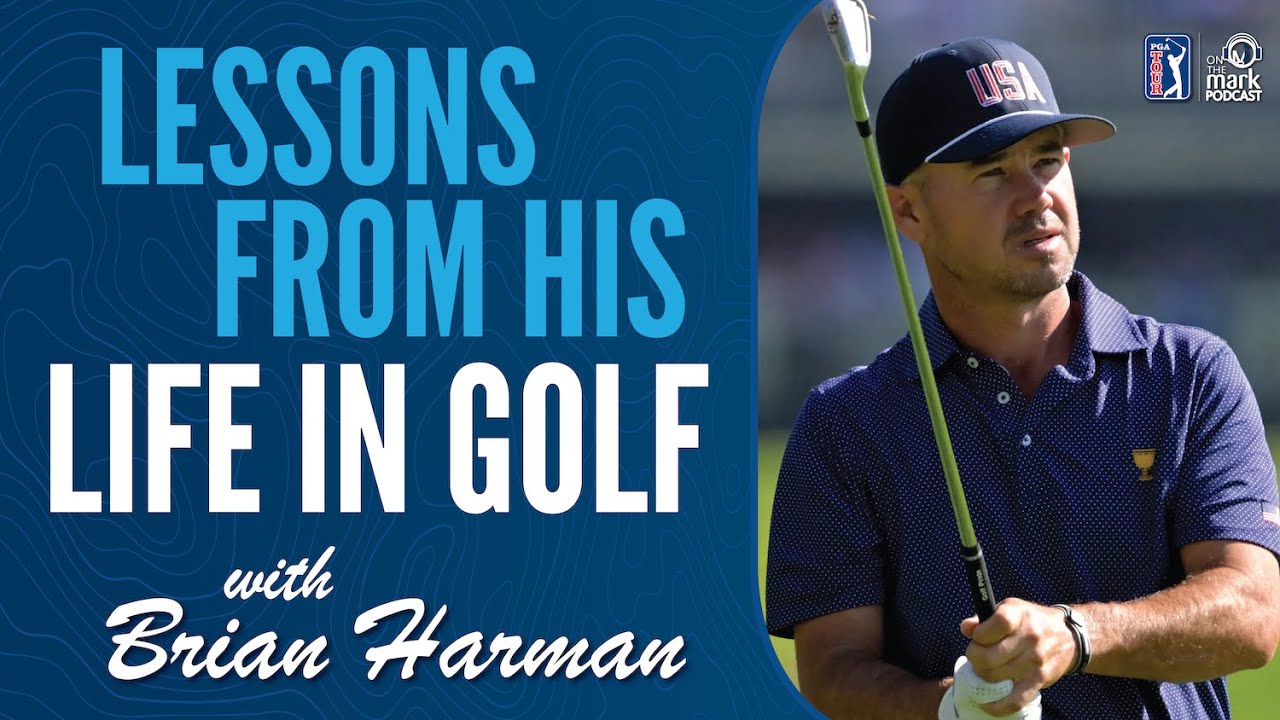
Brian Harman is a 4x winner on the PGA Tour, and The 2023 Open Champion.
The former “Champion Golfer of the Year” joins Mark Immelman to dive into his life in golf, lessons learned, and experiences shared. You are certain to be entertained and informed as he talks about an extensive array of golf and game improvement elements incl:
Junior Golf and Winning the 2003 US (USGA) Junior Amateur
Advice for Junior Golfers and Parents
NCAA Golf in College and Lessons Learned at The University of Georgia
Playing on the professional Mini Tours
Winning on the PGA TOUR and Overcoming Obstacles and Nerves
Competing against the Power Game as a Shorter Hitter
Winning the 2023 Open Championship at Royal Liverpool (Hoylake)
MatchPlay and Playing in the Ryder Cup
Improving Play from 100 Yards and Closer to the Target
Practice, Preparation and Pre-round Checks
Course Management, Maintaining Momentum and Making the Best with What You Have, and
Self Belief and Having a Healthy Relationship with Failure.
Brian descibes himself as a deep thinker and an “onion” as there are a lot of layers to him, and we are sure you will enjoy this podcast as much as you learn from it.
______________________
STREAMING: On the Mark is available on Apple Podcasts, Spotify, Stitcher, Google Podcasts and wherever else you listen to podcasts.
ABOUT ON THE MARK: Mark’s knowledge, insight and experience have made him a sought-after mind on the PGA and European tours. Through his career, he has taught and/or consulted to various Major Champions, PGA Tour winners and global Tour professionals such as: Larry Mize, Loren Roberts, Louis Oosthuizen, Patton Kizzire, Trevor Immelman, Charl Schwartzel, Scott Brown, Andrew Georgiou and Rourke can der Spuy. His golf teaching experience and anecdotal storytelling broadcasting style makes him a popular host for golf outings.
SOCIAL MEDIA
– Follow Mark on Twitter: https://twitter.com/mark_immelman
– Follow Mark on Instagram: https://www.instagram.com/mark_immelman/
– Follow Mark on Facebook:https://www.facebook.com/markimmelman…
– Follow On the Mark Podcast on Twitter: https://twitter.com/OntheMarkRadio
WEBSITE: Read top-notch golf content from Mark at https://markimmelman.com
______________________
#golf #MarkImmelman #PGA #PGATour #juniorgolf #golfpro #golftip #golfcoach
All [Music] right, folks. If you’re not watching this one on YouTube, you need to because it’s not often you get to see an open champion um looking somewhat unshaven like me with a cap on his head with a big smile on his face in his truck because he’s on the farm down there in South Georgia. How are you, Brian? I’m doing great. I’m doing great. taking full advantage of this off season. Uh finally getting some time to to do the stuff I like to do. So yeah, just trying to trying to take it all in and um but at the same time, you know, we got to have this you got to have this time and you got to be kind of selfish with it sometimes so you can kind of reset and and start the year like you want to. Well, you’re doing farm stuff, so I’m thankful that you would join us. really because I know I’m cutting into private time but you just on your way back from India. I mean let’s let’s talk a little bit about golf over in India if I’ve got this correct please. Yeah. Um yeah it fit fit the schedule nice. You know if left to my own devices I’ll put the clubs down for a long time. So the Wednesday practice round last week was the first 18 holes that I’d played since the tour championship. So, uh, I’d hit balls three or four times, but but no real preparation. So, kind of left to my own devices. I I I’ll let everything kind of go there for a while. Stay in the gym pretty good, but uh, you know, golf-wise, I I sort of totally shut it down. So, it was good to get over there and get some information about kind of where my game was and and where I felt like, um, you know, in the in the offseason, you always think about, you know, things you did well over the year, things you didn’t do well, things you wanted to work on. There’s always a little angle that you’re trying to take to try and you grab that little little bit of a percentage point somewhere in the stats and the data to try and you know you know knock off that next next thing whatever it is. Yeah. Um assuming you eat Indian food, right? Or you Yeah, I don’t mind I don’t mind a curry. Um I’m pretty adventurous with my food. I played it pretty close to the vest over there. the uh the stories about, you know, people getting, you know, sick and you know, stuff not settling with them very well. They’re there. I think everyone knows those. So, I played it pretty safe. But I I had a nice trip. It I’d never been. And uh I enjoyed my time over there. The the the people were very welcoming and and very knowledgeable about their golf and they were happy to have me and that that that feels nice. Right. Cool. Okay, folks. Brian Harmon, four-time PGA Tour winner. Um won on many tours as well. you were a star as a kid. Um, so let’s take a step back to a youngster in Savannah, Georgia. Um, you and this Brian is to help aspirant, you know, young people, you know, parents of youngsters and such. You obviously you you were obviously good. you won the 03 US junior amateur, but but just as you look back on the whole thing, you know, coming up through the ranks, do you have a take or two or something that you could share with parents or kids, you know, about sort of, you know, surviving golf as a junior because it’s tough, man, and there’s recruiting and all that sort of stuff, yet you seem to thrive and you achieved this massive win at the US Junior. Um, so I’m keen on you sharing some insights there, please. Um, a couple things really. I’ll start by saying that if I could go back and do it over. I wish because I I played I played all the sports. Um, I didn’t go exclusively golf until I think I was 14 or 15. All right. And by that point, I was already, you know, a ranked junior and, you know, had some golf tournaments. If I could go back and do it again, I wish that I would have stayed in other sports a little bit longer. Okay. To just help train a little bit more athleticism and, you know, worried about uh the the finesse of golf maybe a little bit later. like instead of learning how to hit flop shots when I was 12 and 13, like I probably should have been working on jumping a little bit higher and running a little bit faster because I think in the modern game, being able to hit the ball really as far as you can has translated into it. It’s become a lot more important than it was when we were coming up. you know, you always were trying to hit the ball as far as you could, but you know, first and foremost, you you put the ball in the fairway and that part of the game has become less important the older that I’ve gotten at least. I’m not so sure that that trend is going to continue, but I don’t really see any breaks on it right now. Um, so I wish id have I wish I’d have trained for athleticism a little longer, gotten a little bit bigger, a little bit faster, a little stronger, and then dealt with the, you know, the the finer skills of golf. Um, luckily I I had I had great parents as as a as a kid. My parents never made me practice. They never um checked in on me. You know, golf was just kind of a way that I stayed out of trouble. I’d go to the golf course all day and and uh hang out with my buddies and and we practiced and we played against each other and and uh it’s just super fortunate that I found a a passion like that at a young age. And it’s hard to it’s hard to give parents advice just because every kid’s unique. I was unique in the fact that I did no one had to make me practice. I just I loved the game, right? And I I loved playing. It was all it was all I wanted to do. And so, you know, I I don’t know. I mean, it’s such a it’s such a hard question. I heard um I heard Chris Kirk maybe give the best answer ever because, you know, it’s it’s a a question that you get in in virtually every setting. You know, my my nephew or my son or, you know, this person that I know, he’s a young kid, he’s a good golfer. Like, what can I do to what can I do to help him? Yeah. And Chris Kirk, I I thought gave the best answer. He goes, “Well,” he goes, “When I was 14, there was nothing that you could have done to stop me. There’s nothing that like this was what I was always going to do. And you know, the only thing you could have done was, you know, over, you know, trying to overplay the importance of it, I guess.” So, I always always thought that was pretty insightful and a really well, you know, well said as far as, you know, it’s a it’s a tough it’s it’s a tough deal, man. It’s um professional golf is not it’s not for everyone and not for the faint. It’s not for the faint-hearted. And you know that’s if there is one thing that’s consistent in the game whether you’re a junior or a collegian or a professional or a major champion like you is that there’s going to be tough times. You know there’s ups and downs all of the time. Um, and the one thing, you know, if I had to sort of characterize the Brian Harmon, I know it’s this guy is up for anything and you and you’ll get you’ll get knocked down perhaps, but you’ll be right back up and you’ll be back up in in the face of golf. So, I think there’s something to be learned there. And I’d like you to share the mindset. Now, I know you say you love the game as a kid, but man, it gets hard sometimes, too. And, you know, there’s some dark times, but you found your way all the way through, you know. Yeah. There’s um you know like in in other sports always um I was never the I that was never the biggest. I was never the fastest or the most talented and same way with golf. I’ve never been the most talented but always figured um you know like when I played football I was you know woefully undersized to play football but I played it well because I just figured like well like I’m going to be a little bit meaner. I’m going to work a little bit harder. I’m gonna not be afraid to hit anybody. And like I just always had that sort of mentality of like if I do the things that I know that, you know, that talent doesn’t limit me. Um if I do those things really, really well, then that gives me advantage over someone who might be bigger or, you know, hits the golf ball further. You know, my work ethic was always pretty good. was never afraid um to spend extra time um being you know kind of a perfectionist you know just I understood kind of early that chasing the mastery of it and chasing the process of it was more important than you know shooting low scores and that you I’ve always felt like that there’s a performance lag from your preparation so that all the work that you do at some point it will pay off it may not be immediate not be as soon as you want, but every every like all the hard work that you do, it will lead to something at some point. And so, as long as always felt like if I was really intentional about what I was doing, you know, just trusting my instincts of like gosh, you know, I haven’t I really am not chipping it as well as I should be. or you know if I see a guy that’s you know I can remember uh playing with Rory at Memorial one year pretty early in my career and obviously you know he’s an absolute freaking nature with his ball striking. Yeah. But I watched him like flight this really pretty wedge and I was like man I can’t he can’t be better at me than that you know at that like I have to be better at him than that. And so like I’ve rededicated myself to like my wedge game because like well I can’t I can’t get beat there. Like he’s gonna hit it further. He’s gonna hit it higher. He’s gonna kill me on the par fives, but like I can’t have him, you know, fighting wedges better than I can. Something that where talent isn’t as important, you know, more more reps and more intentional work and and and just being really focused on what you’re trying to accomplish. the uh well the the proof is in the pudding there because I looked through the stats and inside 100 yards you are inside the top 15 on the PGA Tour currently. Uh I want to get to that in a second because I’ve always believed that if you’re good at shot number three you’re going to be decent. Um but I first want to go to college, right? Because you go there and you’re in all America and you’re playing at UG which is kind of the dream of all Georgia kids. But I find out or come to find out because I’ve always thought you were sort of wise, you know, you listen to you in press conferences. It’s thoroughly entertaining. And I noticed that you got the award for the highest GPA three times. So this is Brian Harmon. This not just the athlete, not just the hunter. This is the guy who’s doing his school work. And as a former college coach, I’m like, I need this dude to talk about this cuz most kids aren’t going to make it to the PGA Tour. And you better be doing your schoolwork, too. So So managing the time, I think, is a big deal, right? Yeah. I I always always did did pretty well. I mean, I did well in high school and always always made pretty good grades. I just when it came to the schoolwork, as much as I as I didn’t want to do it at times, for sure, and as much as I was sure that um that I was going to be a professional golfer, man, that’s all I ever wanted to do. Like I just I have a hard time halfassing anything. And when it came to school work and especially like so like growing up um my parents never made me practice. Um but my mom was the one that drove me everywhere. She took me to you she’s the biggest cheerleader. Any tournament that I wanted to play in, she made it possible. I mean without without her I’m not sure um I’m not sure what how it would have turned out. But for her, my grades were very, very important. And so, um, a lot of that in college was, you know, kind of a nod to my mom, you know, that she always felt it was super important that I graduated and got a degree and and so I I applied myself the best that I could with my schoolwork and and uh it it was cumbersome at times for sure, but I’m glad that I’m glad that I I saw it through. Well, there you go, aspirin professionals from an open champion. Do your school work. apply yourself all the time, no matter what you’re doing. I guess what it is, Brian. Um because, you know, everyone on the PGA tour works. That goes without saying. And then you’ll hear some talking head like me saying, “Well, he works harder than the rest.” Which I find laughable. But the reality is when I see you on the range, man, you are you you are working hard. There it’s focused. It’s there’s intent there. It’s not You use the term halfassing. It’s not like you’re just out there hitting balls. It seems to me like there’s always like a purpose to what Brian Harmon is up to when he’s practicing. So, um, part of that I attribute, so, uh, Jack Lumpin was my instructor, um, from the time I was probably 11 until he died in 20 21. Mhm. Um, so he he would he I love he he told stories about uh you know he was he was at Wingfoot when Ben Hogan would come through and so he’s got all these great stories about Hogan and and um he told me a story one day that when Lee Trevino was very young he was uh somewhere in Texas and and Ben Hogan was out practicing and that Trevino goes up to Hogan and says something like hey I would love to just sit sit here and and just watch you hit balls if that’s all right. And you know, Hogan being the crass man that he was is like, “You sit right there. You don’t say anything to me. I’m working. You sit right there and watch all you want, but don’t bother me.” And I just always always thought that was so cool that Hogan was so intent on what he was doing that he’s like, “No, like I’m happy for you to come watch, but this is my time. This is when I’m preparing to, you know, hone my craft. Don’t bother me. And it also speaks to like someone like Trevino that was cool enough to understand that like like that’s still an open invitation to sit there and and learn but with enough respect where he’s not, you know, bugging him. And um so yeah, I’m I’m I’m super selfish with my time when I’m working. And um yeah, I mean and you always say that if you can lose yourself doing something, you lose track of time, that’s how you know that you’re into it. And as much as I love to, you know, hunting and fishing and being outside and and all that, I I still think that working on golf and, you know, have it’s the only thing that really makes time just like just it time just evaporates. Well, you speak you use the term mastery of your craft and I see that now. And and just incidentally, I have the uh I I’ve got the warning because you know us guys before tournament rounds when you’re in contention, we’ll come snoop around the place and try and get insider info. So, I’ll stay out the way and I’ll just watch. Okay. Um jokes aside, um so you turn pro, you’re on a mini tourist for a bit and then you eventually make it to the pros. But but but here’s the thing. I feel like for all of you guys that have made it to the highest of high levels, every step that you’re on is a step to where you’re going, but it’s a place where you’re learning something about yourself or your game or or life or whatever it might be, right? So, the time the time spent on the mini tours because even the major champions have do um if as you look back, is there a lesson you learned from, you know, that grind that was the eolf tour back in the day? Yeah, for sure. I mean, it’s uh, you know, all the all the safety ropes are off. You know, you don’t have a a college team around you. You don’t have, you know, the camaraderie is not near like it is in college. You know, you’re out on your own. You know, you’re having to book your own hotel rooms. You’re having to, you know, I think I I carried a um blowup mattress with me and I would, you know, I’d crash wherever I could. And I can remember I I would go to the grocery store and get me like, you know, I’d make like a turkey sandwich on the way to the course for breakfast or or get like a Chick-fil-A, you know, it’s just but you don’t you know, it’s all relative. You don’t you don’t think about that. But I mean, that’s that’s like pure it’s like just digging it out of the dirt, you know? I mean, I look I look back on those days pretty fondly. Um, you know, it’s not for me. you know, all the money and all the trophies and all that stuff’s nice, but man, that that those days are they were a lot of fun. You know, you you certainly, you know, when you start playing for paychecks, it it it hits a whole lot it hits a whole lot different. I’ll say um you know what you I I’ve I’ve knew for I’ve always respected you but I have even more respect now because I’ve been around golf for a long time and golf at your elite level and I’ve taught plenty of young professionals on many tours and and my wife Tracy at a house they’d pull in because they didn’t have money and they’d stay with us while they were having lessons and stuff and she eventually called it this couch that we used to have the crying couch cuz after a few beers or a few wines and pizza. One other pro golfer who’s not made it just yet is crying because it’s so hard. But here’s you going, man, I was relishing that times and as I look back on it, it’s some of the fondest memories I have. It’s a mindset. Yeah. Cuz it’s it’s just as pure as it gets, you know, and it’s just like, you know, I was single, you know, I didn’t have didn’t have a family. Um didn’t didn’t meet my wife until much later. So, it was just me. So, there’s a there’s a certain amount of freedom there that’s, you know, I could I could work as much as I wanted to. I could, you know, um I could go wherever, you know, I could go wherever. Um and, you know, we’re not we’re not playing the nicest courses, but you know, you’re just out there. And what’s crazy too is like, you know, you’re playing against these guys that have been on these mini tours forever and guys that are like making a living and they good and they’re good. You know, they’re just they’ll cut your throat for a hundred bucks, you know, and that’s uh you know, you learn a lot, you know, you think you know, you know, you think you know every good player in the world and then you show up to a Hooters Tour event and there’s eight guys you’ve never heard of that go out and shoot nine under. You know, there’s just so many people that can that can shoot low golf scores. I mean, it’s it’s it’s jarring to me. It really is. Okay, this has popped in my head and I got to say it because look, you’ve you’ve won a major, you played a Ryder Cup, and they say that the pressure of a Ryder Cup is uh is indescribable. Um, but I’ve also heard it said by Lee Trevino, who you’ve mentioned, and he goes, “There’s no more pressure than playing for $5 when you’ve only got $2 in your pocket.” That’s right. Yeah. So, dealing with the nerves and the pressure out there is kind of where you galvanize who you are and what your game is. Yeah. Yeah. I wish that, you know, I wish I had a a better explanation for because, you know, I play with I’ve played with tons of many tour players on, you know, guys that go out and you watch them hit the ball and you’re like, man, I there’s plenty of guys on tour can’t do that. Yeah. Yeah, you there’s plenty of guys that have been successful can’t can’t do half the stuff you can do. Like what what is it? What’s missing? You know, what is it? You know, and and I don’t know where that secret sauce is. I I don’t I don’t know. I I wish I could put my finger on it. Um, I want to ask, okay, let me ask you this question then because I look at you with great admiration because you are gritty and you’re gutsy and you kind of got that way about you like the junkyard dog kind of thing. Um, but I almost want to say and I want you to correct me if you think I’m wrong. It might not be the secret source, but there’s not this fear of failure when I’m watching someone like you that is like, “All right, I’m up against Goliath right now. watch me watch me roll kind of deal. There’s there’s no apprehension when you go into it. Am I right? Yeah. I mean, yeah. Your your relationship with failure, if you’re going to be successful at golf, it’s certainly an interesting one because as painful as failing is, it’s the only it’s the only way. I mean, it’s the only path forward and the way that you deal with it, you know, and I I just always dealt with it with, you know, a renewed vigor or, you know, renewed passion. Uhhuh. Or, you know, always some sort of insight from the pain, you know, and it sucks and and like, you know, I deal with with my kids now. I mean, they’re little, but you know, you watch them struggle and you want to help them through it. you want to take it from them. But when you understand that the only way to grow and to get better is through that pain, just the agony of it. And you know, my poor parents dealing with me, you know, losing golf tournaments and stuff when I was a kid and I was inconsolable, but it was it was ne, you know, it it it hurt, but you know, the next time that I practiced, it was always with more intent. um after having you just you just just I just never I was never a guy that just laid on the mat too long. Yeah. Well, look, I’m a girl dad and my eldest plays golf at college and I can comfortably say my uh red wine consumption has increased since competitive golf. How oldest is a girl? Uh it it it’s so fr it you see the parts uh that you hate about yourself and your kids and you’re like oh come not this please not this. Okay. Um look great stuff so far. Now now we make it onto the PGA Tour and you play you turn pro in 2010 2014 which is pretty fast. You win your first PGA Tour event at the John Deere Classic. Um, everyone talks about that moment and here’s what I want to I want to ask you because clearly clearly you’re playing well to win on the tour and you ask people so can you remember and a lot of them say I blacked out and such like that but coming down the stretch was it a case for Brian Harmon because the closing stretcher holes there um 14 is a tough easy par four biable and 15’s hard then 16 is challenging 17 you got to make four run and then 18 is just you know, coming down the stretch there. Talk to me about, you know, the nerves, the mindset, wherever, if you can reminisce where you were coming down the stretch contending for your win. Um, you know, I had a I had a week I’d had two, you know, my first year on tour was full of nerves and, you know, you’re always trying to get your footing and um, yeah, I had an okay year. Second year I I struggled. It took me um took me a while to kind of slump in my second year. Uh and then the third year, the year I won, I started I started playing some really good golf. Had several top 10s. Had a couple had a couple decent chances. And then I played in Memphis where we play the uh first playoff event now. And I end up finishing like sixth or something. And I got done I was like, damn, I I should have had that one. Should have had that one. It was the first time I can remember being like, damn, I I really really wasted that opportunity there. Like I I I played better than everyone in the field and just just didn’t happen. And it was the first time when I really think that I believe that I could win to where like, man, I think I think I can, you know, you know, cuz there’s this, you know, when you’re when you’re rookie and there’s this race to like keep your card, right? Like I just, you know, just give me more opportunities, more opportunities. And that was the first time I was like, man, I I can I I think I can do this. And and I was playing very well at the John Deere and and um played with Steve Stricker the last two days. That place Yeah. And he’s, you know, he’s a he’s an icon there. So, I’m playing with him on Sunday and you know the crowds the crowds all behind him and and um I just remember having this like clarity of like you know I’m disappointing all these people today like today’s the day you know and I end up making four I think I made four birdies on the back nine and um made a made a you know knocked it on the green on 18 and I just like I just was very very comfortable Z I mean Even Zack Johnson was up in front of me. He’s, you know, yeah, I local hero and and uh he he had a low low round low round the last day and still ended up clipping him. I just Yeah, that I mean I just I had I had a really good feeling that that was my day um for that first. And that kind of opened the spigot a little bit because then shortly thereafter um you win uh in 2017 at the Wells Fargo but I want to get to the two holes in one in one round cuz I was there on the golf before that. Okay. But before then because I think this is a follow on then you go to a big golf course in Eagle Point I think it was. You hold off DJ and this is like DJ 320 in the air and then there’s Brian who plays out of the fairway and puts right John Rom John Ram was up there and and I looked at this I’m like this is the ultimate in someone just keeping their eyes in their lane and not worrying about just the noise that’s going on around you and the distance you’re playing competitors hitting it and all that sort of stuff. You know, stuff we can get wrapped up in so quickly. You’ve already talked about Rory, but I want you to to to revisit that there because you made a putt on the last green and I’ll never forget it. The thing dove in the hole like it was destiny and and when you were over the ball, I remember thinking, “This dude is going to make this.” So, so I’m keen to get inside your head to find out where you were at that time mentally and emotionally. Yeah. So, um gosh, I played I played so good that week. It was a tough golf course. It was set up hard. Greens were firm, fast and um started playing really well on the Sunday and got right up there. Right up there. I think I was three or four back to start Sunday. Made some birdies. Was feeling really good. Made a really good birdie late in the back nine or midway through the back nine. I think maybe tie for the lead or go to one back and then immediately three putted the 16th hole after I hit a pretty good shot into the green. All right. And so I think at that point that put me one back. Um made a really good made a really good um par on the three putted the 15th hole. Made a good par on 16. And I know I’ve got a chance on 18 to make birdie but 17 was kind of the turning point. had the pen tucked up on top of this ridge. Um, a lot of guys are in threewoods and stuff off of T. I hit driver, got down there, hit a pitching wedge up there to like six feet, made it. I think it was only one of the few birdies on that hole that day. And that put me in a position to where I could play, you know, aggressive and and the way I saw it was like like I just didn’t have a whole lot to lose. I got John Ryan behind me that still got a chance to win. And and I played aggressively into the green and I I block I was in between 3wood and fivewood coming into the green. Tiny little target. I kind of bailed a little bit and got in there kind of a weird spot and hit just kind of an okay chip and uh you know the putt wasn’t it wasn’t a very easy putt but hell no. But you know, sometimes like you just get a you just get good feelings and and I had a really good feeling on that putt. Like So did I. So did I. I just it just sometimes you stand over one like, man, this one looks good. This one just looks good. And I, you know, I just my my only thought process and um yeah, I’d had tons of putts like that in junior golf and college golf and chances to win tournaments and stuff. You know, the times I’ve been successful is just when I’ve just dedicated myself to hitting a good putt. You don’t don’t think about making it. You just think about getting the ball rolling where you think it’s going to going to go. And make sure you give it enough speed. And I gave it plenty of speed. I think it had gone a little bit by, but that one looked good. It looked good the whole way. So, yeah. Yeah. It’d be tough to be tough to forget that one. No. No. I I can see that one. That one felt real good. I can still see the putt. I I’ve got to ask this because great putters and you are one I feel like are really good green readers. Um so so I want you to advise the viewer and the listener here because I I find people you talk about just trying to hit a good putt where someone’s cons people so concerned about the result that they don’t do their process properly. And and as I watch you go about your craft on the greens, it’s thorough, man. You you leave no stone unturned when you’re reading the green. Yeah. I mean, you look, I’ve always had a good pair of eyes. I mean, I’ve always been able to look and and and see contours pretty well. And I think growing up on on really heavily grainy Bermuda greens probably helped because it taught me that I really had to get the ball rolling. Yeah. You know, if you hit a if you hit a marginal putt on bumpy Bermuda greens, you have got no chance. It has to be rolling well to even. So, I think I kind of got lucky that I grew up on greens that weren’t super nice all the time. like it taught me to really get put a good roll on the ball. Yeah. And then, you know, reading grain, you know, people don’t talk about it enough. There’s grain on every green. You know, some greens are grainier than others, but there’s always grain. And that grain always grows downhill. It’s just nature. It’s what I like what Johnny Miller, bless him, said, “The grain does not go toward the setting sun.” I’ve always wondered about that. I’m like, “No, I think this thing’s going to grow where the water goes. It goes where the water goes, man. You drop a you know, wherever the water goes is where is where the grass is grow. It’s just it’s the path of least resistance. It’s the way the grass grows. And um and so like when I’m looking at a green and I I do this in proams all the time, especially when someone misreads obviously misreads a putt. And I always make them I said, “Look, you you guys watch us walk all the way around the hole, right? Mhm. You ever We’re not We’re not always looking at the ball and the hole. I’m looking at all of the different features of the green. I’m looking at the slopes. But, you know, if you stand, you know, on the low side of which way you think it’s going to break, there will be a shiny side and a green side. Yeah. Almost everywhere. A Augusta’s got it. Everywhere’s got it. And that shiny side always tells me which way the ball’s probably gonna go. And you know the guys, you always joke with the guys that do the, you know, the aim point. Uhhuh. And uh they’re like, “Oh, you know, you can’t trust your eyes.” I’m like, “Well, how do you know where to stand when you you see it first, right?” Like, you look with your eyes. You already know what the putt’s doing. You’re just using your feet to try and, you know, get it all straight in your head. Like, you have to look. Like, you can’t just go stand in a random place. You’ve looked at it. Yeah. Yeah, you’ve seen it with your eyes. And so, I mean, your eyes are the most important thing you have when you’re fighting. Um, I I want to move off the green because I teased it earlier. Um, you mentioned it’s a game of power. We we cannot doubt that. But not everyone’s going to hit the ball on the green every single time. So, scrambling is a real big deal. A and you are a scrambler, too. I mean, I’ve watched you the week before the open win. I had you in the final round in Scotland. And I remember you were hitting the ball decent, but you had missed a few and you made some insane up and downs. And we were walking down 18 and I’m like, man, your game’s looking good. And you said to me, you’re like, I’m feeling pretty good. And I said to someone that evening, I’m like, watch Brian Harmon next week at Ole. Well, lo and behold, you win by six. But I want to backtrack some to I don’t think the amateur golfer watching this cuz they’re just going to hit balls on the range. They don’t work on the skill of shot number three as much as what you guys do because it’s just that important. So, please help us. Yeah, I mean golf is for me especially has always been about, you know, momentum. You know, I always I try to operate on that edge to where if one thing clicks, I can be completely off to the races. But more often than not, it’s not clicking. I mean, very rarely do are you in a spot to where you’ve got 10footers for birdie on every hole. It happens once in a blue moon. So, most of the time you’re having to figure out how to make the best of what you’ve got. Yeah. And the only thing that you can really control, I mean, your short game, you know, I always say like short game is like a really good defense in football. Like it travels. Like my short game travels everywhere. like there isn’t there isn’t a place where I feel like there’s an excuse for me to have a poor short game. And so I I use that as like, you know, that’s my defense, man. That’s that’s like it’s got to be strong because it buys me time. It buys me time in the golf tournament. The more time I can buy, the more time I have to figure out, you know, how to get seven iron a little bit closer, how to get a couple more balls in the fairway, how to get a couple more wedges closer. And if I’m able to take that pressure off of my long game by chipping it in there really close or, you know, or on the flip side, when things are going really well, it also a really good short game gives you the freedom to fire at stuff that you normally wouldn’t fire at. Like, man, I’m not scared of that short side over there. Um, I’m not scared of these bunkers. I’m not scared of this rough. Um, it helps you be more aggressive and you know, a lot of the um, my dad’s going my dad’s going to come bother me here in a second. He just But, uh, a lot of that a lot of that is the knowledge of the course, too. Like you see me chip it, you know, to this a whole lot. Well, a lot of times I’ve hit it there on purpose. You know, I’ve missed it. I’ve missed it on the proper side. I haven’t given myself an impossible up and down. So, there’s a lot that goes there’s a lot that goes in that goes into the short game before. Hey, I’m I’m doing a podcast. Cool. Hi, Dad. I’m farming, buddy. There you go. Family joke. Hey. Uh, so yeah, short game. I mean, there’s a lot more to it than just being able to the mechanical chipping, putting, you know, flop shots, bunker shots. A lot of that is missing in the right spot. I remember this past year I won in San Antonio and you know all anyone could talk about over the weekend was oh you know he chipped it chipped it so good he chipped it so good it’s like well the greens are so small and the wind’s blowing so hard that I’m almost like aiming to make sure that I have an easy up and down to make par like I’m I’m playing very strategically so that my short game can bail me out. That takes a lot of discipline. Um now you talk about momentum. I’m I’m going to backtrack here. I was on hand when PGA Tour live was just very small and we were in Planefields, New Jersey and we were doing featured holes at that stage and one of our featured holes I think it was 15. But anyhow, here Brian Harmon shows up. You already made an ace earlier in the round. I think it was 15. And lo and behold, with like a hybrid in your hand or something cuz this whole Yeah. Four four hybrid. Yeah. You make you make your second ace in one. You make some people don’t make two aces in a lifetime and you made two in one round. Let’s Yeah, it’s momentum. They both got me back to even par for the day. So, tell you what, it was a playoff event. I ended up shooting two under and that got me, you know, into the I think it guaranteed me into the third playoff event or something. So, uh yeah, this was a just a wild wild thing. I mean, seven iron, they both went in like putts, too. I mean, seven iron, fourth, third, fourth hole, something like that, trickles in and then four, I mean, the four iron, I mean, there that whole uh it wasn’t an easy flag for draw. It was a flag. So excited to walk off with a three. Okay. So excited. Well, anyway, that so so that’s the fun part of it. Now, I want to get back to, you know, the gaming of the thing, too, because you talked about the course management of missing the ball in the right place. And so you go off to the 202 uh3 Open at Hoy Lake right after I’d watched you play nicely. Um alongside Bob McIntyre strangely at the Genesis British Open the week before and you end up playing great. The weather’s horrible. It’s like to me it’s the it’s the ultimate grind event that was on the go. And you absolutely lapped the field. You win by six. I I I don’t want to say you look threatened because you know golf there’s never any guarantees but I want you to talk about that when you’re playing and you’re lining up and you can see it in your sights right and we’ve all been there like it might be our low career score what might be winning the club championship here’s Brian Harmon multiple winner lining up the clar jug and you got a lead and it’s so hard for your mind to go ahead to when you win then you got to pull yourself back and then the crowds are going after you a little bit because they were just mean cuz it was difficult out there. I I want you to talk about again mindset because again I think of Brian Harmon and I think of the ultimate in like battling mindset. So I had a I had a really great thought that I I sort of came across that week because you know it became apparent that that if I just kept moving that I was going to win the British Open. Yeah. Right. like and and like I’m not I’m smart enough to like I’m almost too situ situationally aware at times. It’s part of a a downfall, you know, but that week, you know, I kept finding myself fast forwarding to the end. I just it’s it’s a natural human emotion. And so I just sort of had a conversation with myself. I was like, “All right, if you want to if you want to think about it, let’s let’s think about it rationally.” All right? like what what do you want to do? Like, well, I want to win I want to win the golf tourn. I want to win the open championship. Well, what’s the what’s the best way to win the open championship? Well, gosh, if I had a big lead on 18, that would sure be great. Yeah. Okay. Yeah, that that would make that 18th hole a lot easier if I had a big lead. Well, how do you how do you get a a big lead on 18? Like, well, I’ve got to play, you know, I would certainly have to play the 17th hole. Well, yeah, right. I’d have to 17th hole that week was very challenging. Small little green. Certainly have to hit it up on that green and and you know if I got it on that green in regulation I’ that’d be great. Well yeah. So I just I kept going backwards. I kept going backwards all the way and it’s like if I want to win the open championship in order to have a big lead on 18 in order to play 17 well in order to play it just kept going back like I have to execute this shot right now. Yeah. And the more that I do this now, the less stressful this is going to be on 18. So if I’m able to do this, like it it was like I was having a contest with myself as to how well I could execute the next shot in order to keep making it easier and easier and easier as I went. That’s like I’ll it’s like I’ll take I’ll take the hard now to to get rid of the hard later. That makes sense. Yeah, that makes a lot of sense. It’s kind of brilliant in a way. Um because all of our minds wonder as you point out and then you end up then you’re like man I shouldn’t think about that. Then you’re more worried about what you’re thinking where you were like I was questionable about this and saying okay I’m Yeah. And I I did kind of the same thing. Um when I first got on tour I I wasn’t very good inside of 10 feet putting. I was I was a good putter, but I would miss the odd, you know, three-footer, four-footer, just the nervy one that you’re not you’re not quite settled on and and um you know, then it became like a you know, you’re thinking about them a lot. Yeah. And and so I just I like same deal. I had like a real conversation like no, I kind of treat these putts like life or death. Like they’re so important. And then I just sort of thought I’m like, well, what if it was life or death? How would I hit the putt? Like what if it was life or death? Would I, you know, like I would definitely make sure that, you know, I was settled, right? I would definitely make sure that I gave it enough break. I would definitely make sure that I stayed, you know, nice and still. I would definitely make sure I went through my routine. You know, all the stuff that, you know, I um I remember listening to a podcast somewhere. They’re talking about like the fastest growth in any sport was this uh like free like no rope rock climbing. Yeah. because it it puts these people in this literal fight or flight, life or death situation. Like if they miss, you know, a handhold, it’s over. Like it’s all over. And it puts them in this heightened sense of focus where they, you know, they don’t worry about messing up. It’s just they’re just executing, executing, executing. And that just helped me that like that thought like that literal like you know the basic like all right man if this is if you’re going to think about this like life or death then how would you hit it if it it it was like how would you how would you do it? How would you give yourself the best chance to make this buff? Gosh, you went from farmer Harmon to Reverend Harmon there with one observation. Okay, I’m going to let you get back to your job here, but I got to ask you two more things. I’m sure the fans want to know because the clar jug. Look, it’s the clar jug. Um, what’s the best uh drink that you’ve had out of the clar jug or the most enjoyable one? So, um, I took it up to I took it up to Augusta National. Mhm. Um and I was I was kind of taken a back because um everyone um the staff, head pro, everyone just wanted to they all wanted to you know and it was just it was kind of like over the top sort of I’m like I just don’t I don’t see and they’re like look man it’s never been here for real. Doug’s never been here. Geez. Okay. It’s never been here. And so, uh, a dear friend of mine who hosted me that week, um, he knows who he is. I’m not going to say his name, but he had he’d made a he’d made a hole in one. Mhm. Uh, previous and and they have some deal to where they get some beautiful bottle of wine. I’m not I mean, I love wine. I don’t know anything about it, but um, we poured that wine out of the Claire jug and it was just I mean, it was really really cool. So, I got I got to serve uh some dear friends that were with me. I got to serve them wine out of the CLA jug and we enjoyed that. So, that was probably the coolest. That is the best. Okay, two more. One is golf tips, then one is just life tips. Um it was the BMW at Olympia Fields. You were in contention. I had your group. Uh you were playing nicely and before the time you sort of shared in passing. I’m like, “How’s it going?” me like I’m feel like I’m solid and then I’m like anything new I need to know about and you said no I’m just doing my regular routine and I probed you one more to step then I stepped out of the way out of your office and you know now I’ve got this routine I go through pre-round where I make sure my body’s in order I make sure my alignments my ball positions all this sort of stuff you like just basically check all the boxes fundamentally and then off you go I’d love you to talk about that because I feel like that could help everybody no matter their handicap Yeah. So, um that was I mean that’s been something that’s really sort of elevated my success um on tour. I’ve always been kind of a free spirit, fly by the seat of my pants. You know, my swing is really feely and you know, I just I never really liked a lot of structure and a lot of you know, I didn’t like being bound by anything. It’s like sometimes I’d get to the course three hours before I played. Sometimes I get there 45 minutes before I played and okay, I was just kind of all over the place. And um I attribute a lot of that. Justin Justin Parsons and I um Jack got pretty sick there at the end and and um felt like I needed some help and I hired Justin Parsons and Justin um he got on to me pretty good about routine and you know he noticed some inconsistent inconsistencies in my setup and you know we just sort of came up with like two or three little drills that would put my swing back to a really neutral spot and I just felt like that it gave me so much more consistency and like I could predict, you know, I like for the longest time on tour, even like in prep, like I had no idea how I was going to play that week. No idea. I had weeks where I thought I was hitting it great and I would play terrible and then I had weeks where I was, you know, thought I was hitting it terrible and I’d play great. And, you know, after Justin and I started working together, it got to be really predictable and it helped me a lot. it’ be like either my game is in shape and it’s time to go, my game is not in shape. It just helped me plan and so getting a little bit more structure into warming up and, you know, seeing seeing the ball and and and just way more aware of where my ball striking was, which for, you know, my first six, seven years on tour was kind of the kind of the most inconsistent Mhm. part of my game was, you know, iron play and and so that I felt like that structure and I’ve tried to, you know, build upon that on other parts of my game and I feel like it’s helped a lot. It’ll help anybody. All right, Brian, thanks for your time. I know you got to get back to work. Work. Yeah, work. Yeah, fun work. I asked this to people and again, people don’t realize the Brian Harmon um who is like really deep thinking and fascinating. You called yourself an onion one time in a press conference, right? because there’s many layers to um so I’m going to ask you and to peel back the layers and answer this question for me because I asked this to wise people. I’m like, if if you had to say right now if there’s anything you know for sure when it comes to life and playing this golf world, is there something like you could put on the headstone one day when you hit pass onto the heavenly fairways? It’s like I know this for sure and I have no doubt about is is there something? I think the more, you know, I touched on it earlier about just not halfassing anything, just just applying yourself, you know, really really applying yourself, being really intentional about what you’re doing. You know, I I read a great quote one time that if you can if you can clearly articulate and write down what the problem is, then you’re more than halfway there to solving it. And so just having that, you know, whether I’m washing the dish or I’m farming or I’m hunting or I’m cleaning my boat or I’m hanging out with kids, like I just want to be all there. I want to be totally present and apply myself and do the absolute best I can. And that for me, like if I if I if I’ve got a pitching wedge and I go through my routine and I do everything that I’m supposed to do and I fail, well, at least now I know I I’ve got, you know, these things that I can go back on like, why, you know, now I know that I did everything I could and I failed. So now I can go back to the drawing board and I can figure out why. And then next time the pitching wedge goes a little bit better. But if I don’t apply myself in the moment, if I don’t go through my routine, if I don’t do all the stuff that I’m supposed to do and you fail, h how could you know? You know, how could you how could you know? So, you know, just just applying yourself and and being comfortable with the whatever result is because it’s good, bad or ugly, it’s going to it’s going to make you better. Brilliant. Okay. Before I let you go, any anywhere folks can find you or foundations they can support? Is there a website? anything you want to direct folks toward, please? Man, I don’t I don’t do a lot of the I don’t really do I got a I got a foundation we’re getting going. Um uh going to serve my area and around Savannah where we’re doing um trade school scholarships. Cool. I think, you know, I have a lot of respect for people that that get dirty and work with their hands and, you know, people that make the world go around. Not everybody is is uh you know, not everyone’s a scholar, you know, like we and the essential, you know, the essentials. I I have a lot of respect for for for people that aren’t afraid of of doing the dirty work. Um so we’ve we’ve started a foundation to try to help that Brian Harmon found Brian Harmon Foundation. And um yeah, man. I I you know, no social I I struggle I struggle with the social media stuff, man. I’m not good at it. I I don’t I don’t don’t like being famous at all. I don’t you know I like I like being able to disappear. Um but I do you know it it you know we we wouldn’t we wouldn’t do what we do if we didn’t have people to watch. So I I know that’s important but yeah I just try to I try to be entertaining um with how I go about my business and how I play the game. And well, you know, I hope I hope that’s good enough. I’m thankful to you because you’ve been thoroughly entertaining and informational. Now it’s time for you to go and get your hands dirty. Thank you very much for your time. Thanks so much, buddy. You got it. [Music] [Music]
2 Comments
Bloody great interview Mark. I get the feeling Brian has spent his time wisely in becoming the most self assured golfer he can be, in all departments. A real competitor.
Haha, I'm doing a podcast………………………..best thing I have seen on YouTube. Great stuff guys. Brian, you dont struggle with social media……………..social media needs real people.