
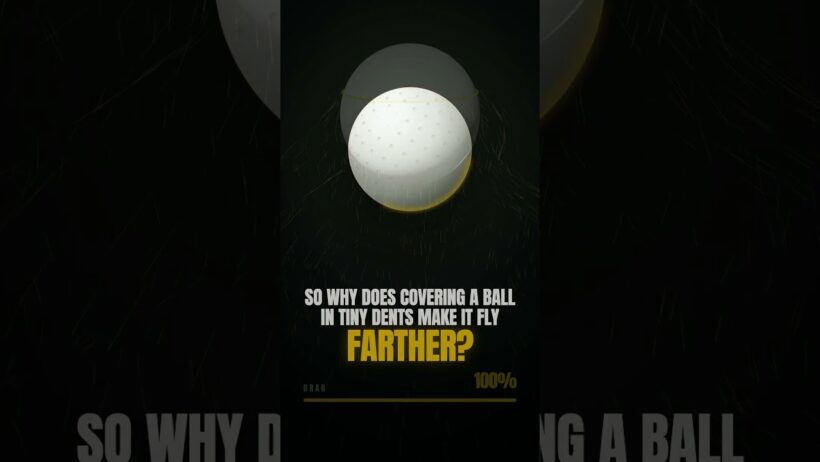
Take the dimples off a golf ball and a pro can’t hit it half as far. Not a little worse — half. Which makes no sense, because everything else built to move fast is smooth: a bullet, a jet, a race car.
So why does covering a ball in tiny dents make it fly farther? A smooth ball drags a big pocket of low-pressure air behind it that pulls back on it like a parachute. The dimples trip the air into a thin, spinning layer that hugs the ball and closes in tight behind it — smaller pocket, half the drag.
And nobody designed it. In the 1800s, golfers noticed their beat-up balls flew better than the new ones. The scratches were the upgrade — so they spent a century making them on purpose.
That scuffed ball at the bottom of your bag? It might fly better than the one still in the box.