
Iranian threats might not be that credible now that the US is fortifying Trump’s US golf courses. This is while Trump alternates good news about negotiations with threatening Iran’s ‘obliteration’. Meanwhile, Iran has bigger problems with internal power struggles, Iraq’s militias and oil tankers, while keeping its leverage over the US.
Islamic Revolutionary Guards Corps (IRGC) Quds Force Commander Brigadier General Esmail Ghaani warned Iraqi militia leaders against armed confrontation with the Iraqi government and to reach a settlement to avoid handing over militia weapons to the state during an August 10 visit to Baghdad, according to informed sources speaking to Iraqi media.[22]
Ghaani reportedly also met with political and security officials and Shia Coordination Framework officials, including Badr Organization leader Hadi al Ameri.[23] Ghaani’s reported emphasis on avoiding conflict with the Iraqi government could indicate Tehran’s concern over such a scenario. Iraqi, Western, and regional reports in recent months have described both Iranian pressure on some Iraqi militias to pursue politics over military activity as well as Iran’s refusal for the militias to give their weapons to the federal government.[24] It is plausible that Iran may support the disarmament of Iraqi militias that Iran has had less control over in recent years, such as Asaib Ahl al Haq. The group played a role in the assassination attempt against Kadhimi and announced its willingness to disarm on June 2.[25]
Ghaani likely discussed Iranian-backed Iraqi militias’ recent attacks on Gulf states, namely Saudi Arabia, during his visit to Baghdad. Iraqi militias initially warned that they would attack US and Saudi interests in response to US-Saudi strikes on militia positions in Iraq on July 28.[26] The Islamic Resistance in Iraq, which is a coalition of Iranian-backed Iraqi militias, later announced on August 7 that it would postpone its planned attacks following mediation from Ameri.[27] The IRGC has coordinated Iraqi militias’ attacks on Gulf states throughout the war, and Reuters reported on June 19 that the IRGC Quds Force formed cells within Iraqi militias to report directly to Iran and attack Gulf states under IRGC orders as early as April.[28] Iranian state media also reported that US-Saudi strikes in Iraq on July 28 also killed four IRGC Quds Force officers, which indicates that the IRGC and the Quds Force, which is specifically responsible for maintaining Iran’s Axis of Resistance, play an outsized role in determining Iraqi militia attacks on Gulf states.[29]
Publicly reported information from Ghaani’s meetings in Baghdad provided no indication of what stance, if any, Ghaani may have expressed on recent Iraqi militia threats to attack Saudi Arabia, however.
Iranian leaders, including Ghaani, are likely attempting to draw the Iraqi government away from developing alternative oil export corridors to the Strait of Hormuz.
An unspecified informed source told Iraqi media on August 10 that Ghaani also discussed prospects for Iran to permit Iraqi oil tankers to transit the Strait of Hormuz with militia leaders and Shia Coordination Framework leaders in Baghdad.[30] Iraqi media did not report whether Ghaani discussed any mechanism through which Iran would ensure safe passage for Iraqi vessels through the Strait or whether Iran intends to charge Iraqi vessels with transit fees.[31]
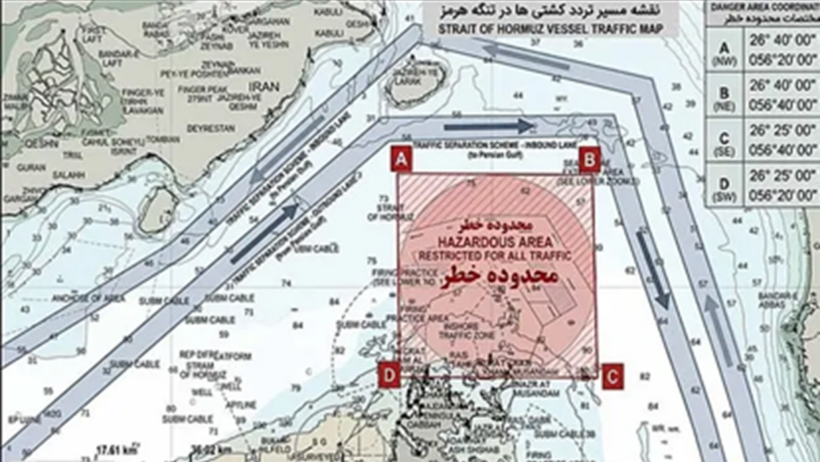
Iran’s offer to provide safe passage for Iraqi tankers would require Iraq to recognize Iranian control over the Strait, and thereby lend legitimacy to Iran’s illegal efforts to codify its domination of the waterway. The arrangement would also cement Iraq’s economic and political dependence on Iran because Iraq would need to rely on Iranian terms to export its oil, which accounts for up to 90 percent of the Iraqi government’s revenues.[32]
Iranian leaders also almost certainly intend to preserve Iran’s leverage over regional states, the United States, and the global economy by promoting an arrangement that would offer Iraq short-term economic relief and reduce Iraq’s incentive to develop alternative oil export corridors to the Strait.
Iraq is currently facing a liquidity crisis, primarily because of its inability to export oil through the Strait, and is unable to pay government employees as a result.[33]
Ghaani’s discussion also comes amid Iraqi consultations with the United States and regional partners in recent weeks to develop pipelines and overland transit corridors through Iraq that could export oil to the Mediterranean and Red Seas, amid Iran’s ongoing attempts to control the Strait of Hormuz.[34] The Iraqi Oil Ministry announced plans on August 10 to develop a new pipeline that will extend from Basra to the Syrian Mediterranean port of Baniyas with investment from US corporations, for example.[35] These projects challenge Iran’s leverage over the global economy by creating alternatives for major oil-producing regional states to export fuel through the Strait, thereby reducing the waterway’s importance to global commerce.
Iranian leaders also likely intend to undercut regional rivals and adversaries, including Saudi Arabia, Turkey, and Syria, that are collaborating with Iraq to develop pipelines that would draw economic activity and oil exports away from the Strait.[36]
A sustained US naval blockade could increase economic and political pressure on Iran and may eventually compel at least some regime officials to accept greater concessions in negotiations.
The Wall Street Journal reported on August 10 that US President Donald Trump has settled, “at least for now,” on allowing sanctions and the naval blockade time to impose economic costs on Iran, according to unspecified US officials.[37] The sources added that administration officials argued that sustained pressure could eventually force the regime to change its position.[38]
The Iranian regime’s recent appointments suggest that the officials who currently dominate decision-making may be less responsive to that pressure and more inclined to maintain maximalist positions, however.[39]
Iranian President Masoud Pezeshkian previously pressured Supreme Leader Mojtaba Khamenei to approve the US-Iran memorandum of understanding as the first US naval blockade between April and June 2026 worsened Iran’s economic conditions.[40] Mojtaba’s reported willingness to accept Pezeshkian’s resignation if Pezeshkian again tried to use that threat to influence policy suggests that Mojtaba may be less willing to accept pressure from pragmatist officials over deteriorating economic conditions.[41] Mojtaba’s recent appointment of former IRGC Commander Major General Mohsen Rezaei as Supreme National Security Council secretary and his elevation of other hardline security officials further separately indicate that the regime is consolidating decision-making around officials who are less inclined to quickly compromise.[42] Rezaei stated on August 11 that Iran will not reopen the Strait of Hormuz until the United States ends the war and naval blockade, releases Iran’s frozen assets, and agrees to a region-wide ceasefire, including in Lebanon and Gaza.[43]