


Shorter formats are reshaping how Australians play golf, with new data from the Capital.com GA Handicap revealing a significant surge in nine-hole rounds across the country.
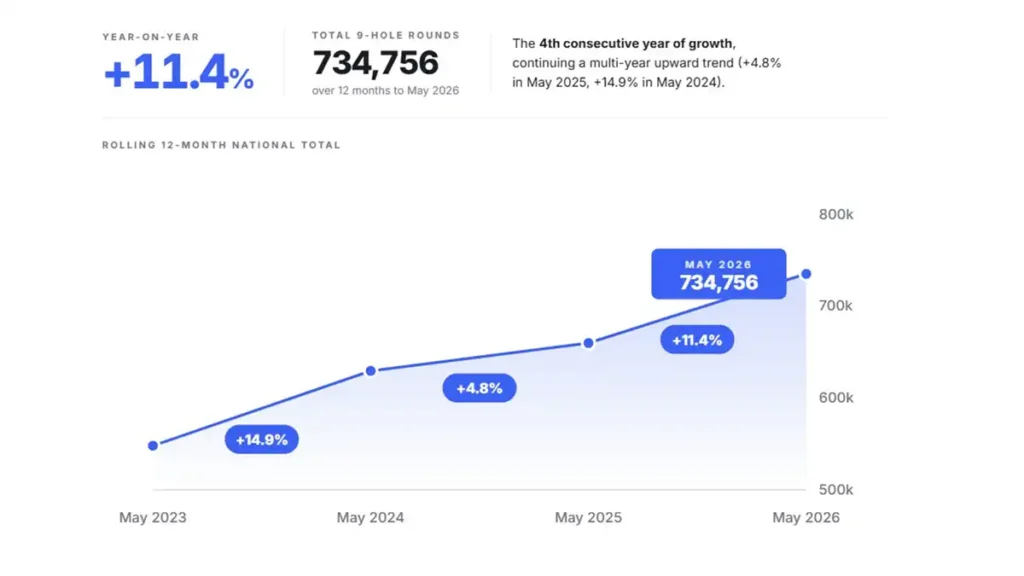
The inaugural report for Golf Australia Insights Hub, which analysed more than 20 million rounds from the past four years, shows more than 734,000 nine-hole rounds were submitted in the 12 months to May 2026, an 11.4 percent increase year-on-year, continuing a strong upward trend in shorter-format play.
FROM THE MAGAZINE: Nine-hole courses are underrated in Australian golf, yet many represent intriguing options
Nine-hole rounds now account for 5.86 percent of all GA Handicap rounds nationally, up from 5.42 percent the previous year, highlighting a growing shift in how Australians engage with the game.
Golf Australia chief executive James Sutherland said while 18-hole rounds were still the dominant preference for four in five golfers submitting rounds for handicapping, the new data reflects a consistent evolution in golfer behaviour across formats.
“What we’re seeing is a clear shift towards formats that better fit modern lifestyles,” Sutherland said. “Golf is being played in more flexible and accessible ways, and nine-hole rounds are a big part of that. They allow people to enjoy the game in less time, whether that’s around work and other commitments or socially with friends.
“Importantly, the benefits of golf don’t change. Whether you’re playing nine holes in around two hours or a full round in four, you’re still getting the physical activity, the mental wellbeing boost and the social connection that make golf such a valuable part of people’s lives.”
Nine-hole golfer profile: Age and skill insights
The report found women are more than three times as likely as men to submit nine-hole rounds for handicapping, with 13.5 percent of all women’s rounds played over nine holes compared to just more than 4 percent for men.
The data also reveals a clear and growing segment of golfers who favour shorter formats. Nearly 20 percent of golfers play both nine and 18 holes, 3 percent only play nine holes while 77 percent play only 18-hole rounds. About 6 percent of golfers are “nine-hole dominant”, playing more shorter rounds than longer.
Younger golfers are more likely to engage with shorter formats, with players under 18 recording a nine-hole share of 8.1 percent nationally, followed by golfers aged 55+ (6.21 percent).
Golf Australia and PGA of Australia head of data and intelligence, Dr Jarred Pilgrim, said the data points to sustained growth in shorter formats across the game.
“Women are clearly leading when it comes to nine-hole participation, with a significantly higher share of rounds compared to men,” Pilgrim said.
“But more broadly, we’re seeing consistent growth in nine-hole play across the board. Total nine-hole rounds increased by more than 11 percent year-on-year, and the national share of rounds has continued to rise, which shows this is not a short-term spike but an ongoing trend.
“What’s also important in the data is the spread of that growth. Every state has seen an increase in nine-hole share over time, and nearly one in five golfers are now playing both nine and 18 holes, which highlights how this format is becoming a regular part of how people engage with the game.”
From a performance perspective, nine-hole dominant golfers tend to be earlier in their golf journey. Golfers who primarily play nine holes have an average handicap of 30.4, compared to 17.9 for 18-hole dominant players, and typically play fewer rounds per year (19.2 vs 30.3).
“The handicap data reinforces that nine-hole golf is an important entry point into the sport,” Pilgrim said. “These players are generally newer and still developing their skills, which highlights the role shorter formats can play in supporting progression and long-term participation.”
Tasmania (14.8 percent) and the Northern Territory (16.8 percent) continue to lead the country in nine-hole share, while Western Australia (11.2 percent) also significantly outperforms the national average.
Victoria recorded one of the strongest year-on-year increases (+0.76 percentage points to 5.82 percent), while New South Wales (3.29 percent) and Queensland (4.94 percent), show a preference for 18-hole rounds, sitting below the national average.
Shorter days, more rounds
Ahead of the winter solstice on June 21, the shortest day of the year, Golf Australia is encouraging golfers, clubs and venues across the country to embrace nine-hole golf and help turn one of the lowest participation days on the calendar into one of the biggest.
By scheduling more nine-hole rounds and competitions, the initiative aims to showcase how shorter formats can keep golfers playing year-round, even when daylight hours are limited.