


£265.
That’s now the average summer green fee across the Top 100 Golf Courses in the UK & Ireland. It’s up more than 11% in a year, and climbed from £161 in 2021 – figures highlighted by a member of our golf course review panel, David Jones, aka UK Golf Guy. Eleven of the 100 clubs have raised prices by 20% or more year-on-year.
At some point, this stops being a trend and starts becoming something else entirely.
Because the uncomfortable question is no longer: Is golf getting too expensive?
It’s becoming: Who is it actually for now?
The numbers are getting hard to ignore
We all expect prices to creep up. That’s nothing new. But this isn’t creeping.
An 11% year-on-year increase is more than three times the rate of inflation.
And, at the very top end, the rise is even steeper.
The average top 25 course is now £407, a 15% increase on 2025’s rates.
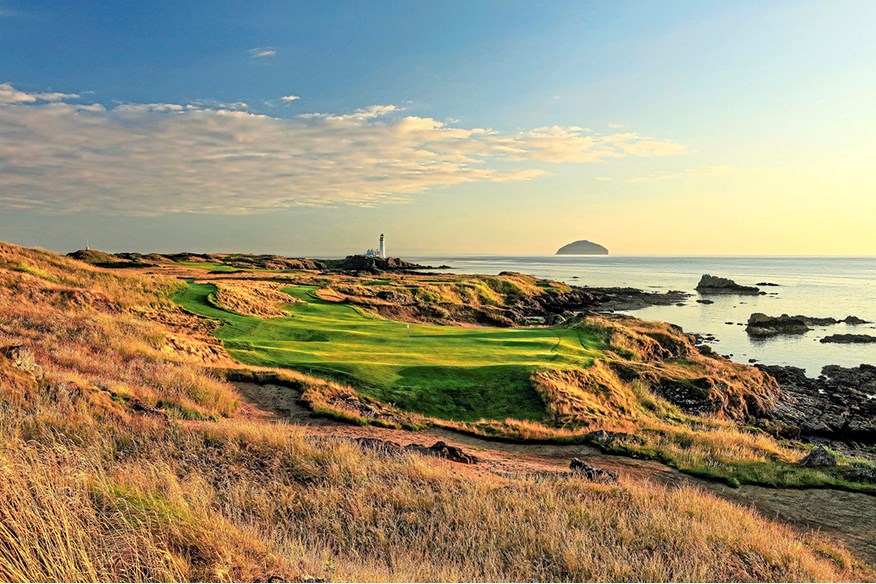
A summer round on the Ailsa Course at Trump Turnberry will set you back £1,000. That’s an extreme example, of course, but it’s representative of something bigger.
Because while not every club is charging four figures, plenty are now firmly north of £200. And, perhaps more worryingly, a £150 green fee – which felt high not that long ago – has somehow become the “reasonable” middle ground.
This isn’t accidental
It’s easy to blame increased demand due to golf’s post-Covid boom, or a surge in golf tourism – and those things do play a part.
But what’s happening now feels more deliberate than that.
Clubs aren’t just raising prices – they’re also reducing availability. Fewer visitor tee times. Tighter windows. More emphasis on higher-spending guests.
Some say it’s supply and demand. But, in some instances, it’s less a case of rising demand and more one of restricting supply.
The result is that higher prices become easier to justify – and thus the rises continue.
At this point, expensive green fees aren’t just a result of the market moving – they’re part of the strategy.

The American argument doesn’t quite stack up
There’s a long-standing explanation that gets wheeled out whenever this comes up: American visitors.
The idea goes that traveling golfers – particularly from the US – judge courses based on green fees. An expensive course must be good, so it’s worth playing. A cheaper one can’t be much to write home about, so it gets left off the itinerary.
There’s some truth in that. But it’s not the full picture.
As Jones, who runs the UK Golf Guy website, notes, a huge number of overseas golfers come through tour operators. They’re buying packages – flights, hotels, transport, golf – all bundled together, which means many of them don’t actually see the individual green fee at all.
Nonetheless, if clubs are targeting golf tourists more than UK-based visitors, an extra £50 or £100 is easier to slip through. Overseas golfers have less of a reference point – both in terms of what comparable courses nearby charge and what that same course might have cost just a few years ago.
Which makes those increases easier to absorb and easier to justify.
It increasingly feels like these green fees aren’t being set with the everyday UK golfer in mind.
Not every club is playing the same game
While some clubs are clearly pushing the ceiling, others are quietly resisting it.
Hollinwell, in Nottinghamshire, is a good example. Rather than chasing the market upwards, it has actually reduced its green fees in recent years to remain accessible.
Then there’s Muirfield – a course with as much global demand as almost anywhere in the UK.
It could charge more. Probably a lot more.
Instead, it has kept prices relatively stable, continued to offer good visitor access, and even embraced winter play.
That’s a conscious choice. And it shows there is another way of doing this.
Mind the gap
As a result, a significant divide is emerging.
On one side are the courses leaning hard into global demand – higher fees, fewer tee times, a more exclusive feel.
On the other hand are golf clubs that still see value in accessibility, in turnover, in keeping the game within reach.
Neither approach is inherently right or wrong. Golf clubs are businesses, after all, and free to make decisions they deem best for their long-term health.
But the gap between the two approaches is growing. And for the average golfer, that gap is starting to feel like a wall.

When does it stop feeling normal?
Price rises don’t just change what we pay – they change what we accept.
£200 rounds start to feel standard. £150 feels like a deal. And the idea of playing some of the country’s best courses becomes less of a regular treat and more of a once-in-a-lifetime event.
That shift doesn’t happen overnight. But it’s happening.
And once it does, there’s generally no going back.
First-world problems
Of course, you don’t need to spend £200 or £300 to enjoy golf in this country.
There are thousands of courses across the UK where you can still get a good game at a sensible price. Solid layouts, decent conditions, a proper day out without the eye-watering bill.
Golf, at its core, is still accessible.
But that’s not really the point.
Because what’s changing isn’t just the price of the very best, bucket-list courses. It’s the steady creep happening just below that level – and the way everything else quietly follows.
When the headline courses push towards £250, £300, and beyond, the “normal” green fees don’t stay still. They rise too. Maybe not as dramatically, but enough that £40 becomes £60, £60 becomes £90, and suddenly the baseline for a decent round has shifted.
The really solid tracks. The ones you’d happily travel for. The courses that used to feel like a treat – but a realistic one. Those are the ones edging further out of reach.
And that’s where it starts to become a bigger problem.
Because when even that middle ground begins to disappear, golf starts to alienate the normal golfer with a normal budget.

The bigger risk
Clubs can charge what they like. If people keep paying, the model works.
For now, demand is still strong. Tee sheets are still filling up. The market, on the surface, looks healthy.
But there’s a longer-term question sitting underneath it all.
The more UK golf clubs lean into global, high-end demand, the further they drift from the golfers who live here, play here, and sustain the game year-round.
That works – until it doesn’t.
Because if overseas demand drops, whether through economic shifts or the rising cost of travel, clubs may find themselves needing the very golfers they’ve spent years pricing out.
