
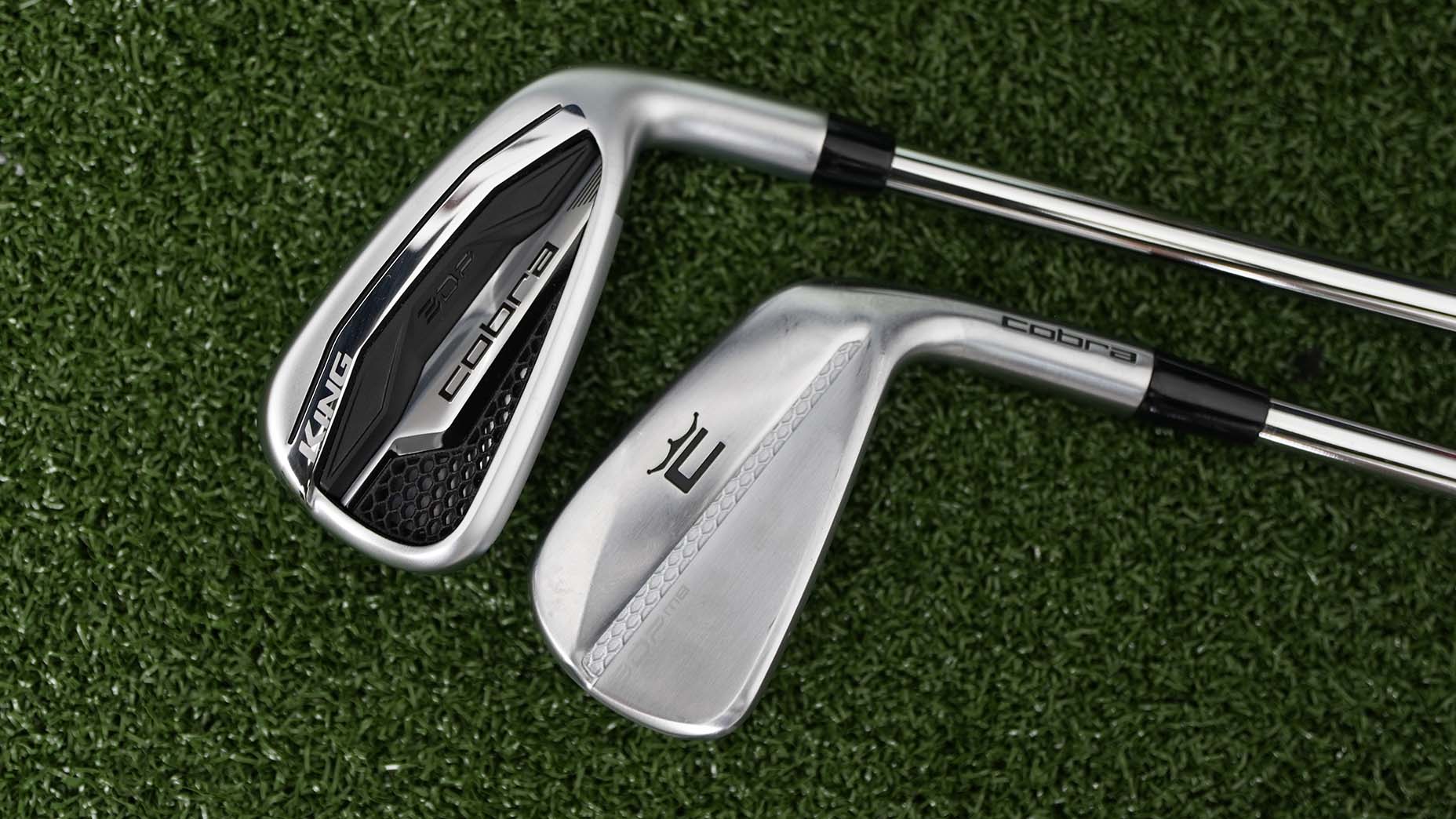
Game-improvement (GI) irons, like the new for 2026 Cobra King irons, seem to get a really bad reputation, which is sad because I think they’re actually my favorite category of irons to test and talk about.
The problem with GI-style irons is that they’re big, and that hurts people’s egos. Nobody wants their buddy making fun of them on the first tee when they pull out a large and in charge 7-iron. The truth is, though, there are probably more golfers who could benefit from playing this style of iron than any other. Game-improvement irons are designed to be the most helpful and to make scoring easier. They aren’t just for slower players or beginners. They’re for anybody who just needs a little assistance. The category has also grown over the past decade, and there are actually micro-categories within the GI bucket to really make sure that players are getting the level of help they need.
The biggest problem that I see, though? We don’t talk about GI irons properly.
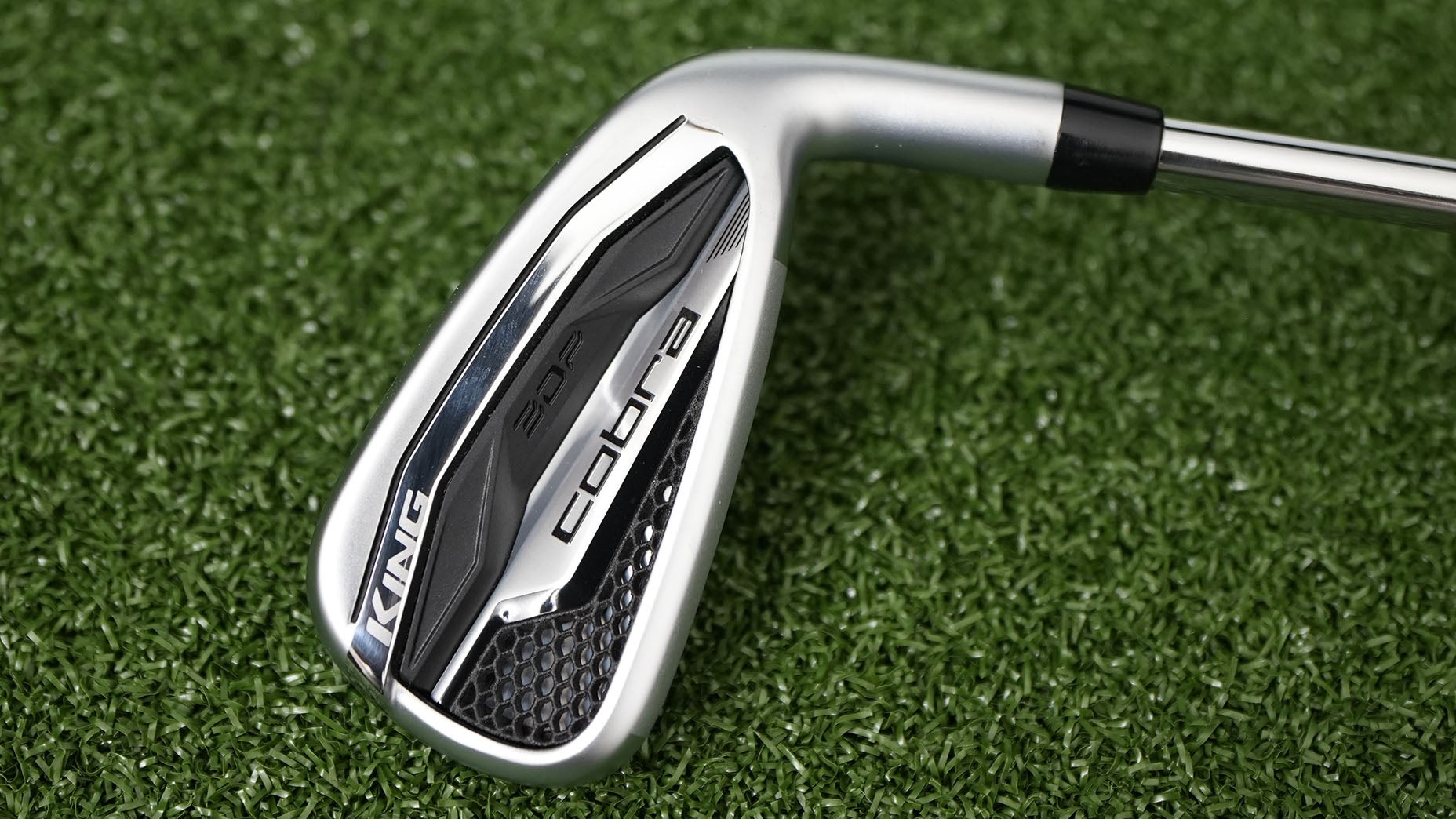
The Cobra King game improvement irons for 2026
Jake Morrow / GOLF
Opportunity versus guaranteed results
What I mean when I say we don’t talk about them properly is that it’s often incorrectly stated — even by me — what they actually do. Nothing in club fitting is black and white. There aren’t magical guaranteed fixes for any club in the bag, or any category of club that they fall into.
While GI irons are typically larger designs with more forgiveness (M.O.I.), wider, higher-bounce soles, and a lower center of gravity (C.G.) position, that doesn’t mean that they are going to be super straight high-launching options for every player. Instead, the correct way to think is that they are easier to launch higher or to get away with mishits. The way they are designed gives them the chance to do those things better than other designs, but ultimately, performance is dictated by impact. Different players are going to get the club to the ball in different ways, and not everyone will have the same experience.
I tested some offerings from Cobra using my Foresight QuadMax, and this data demonstrates what I mean.
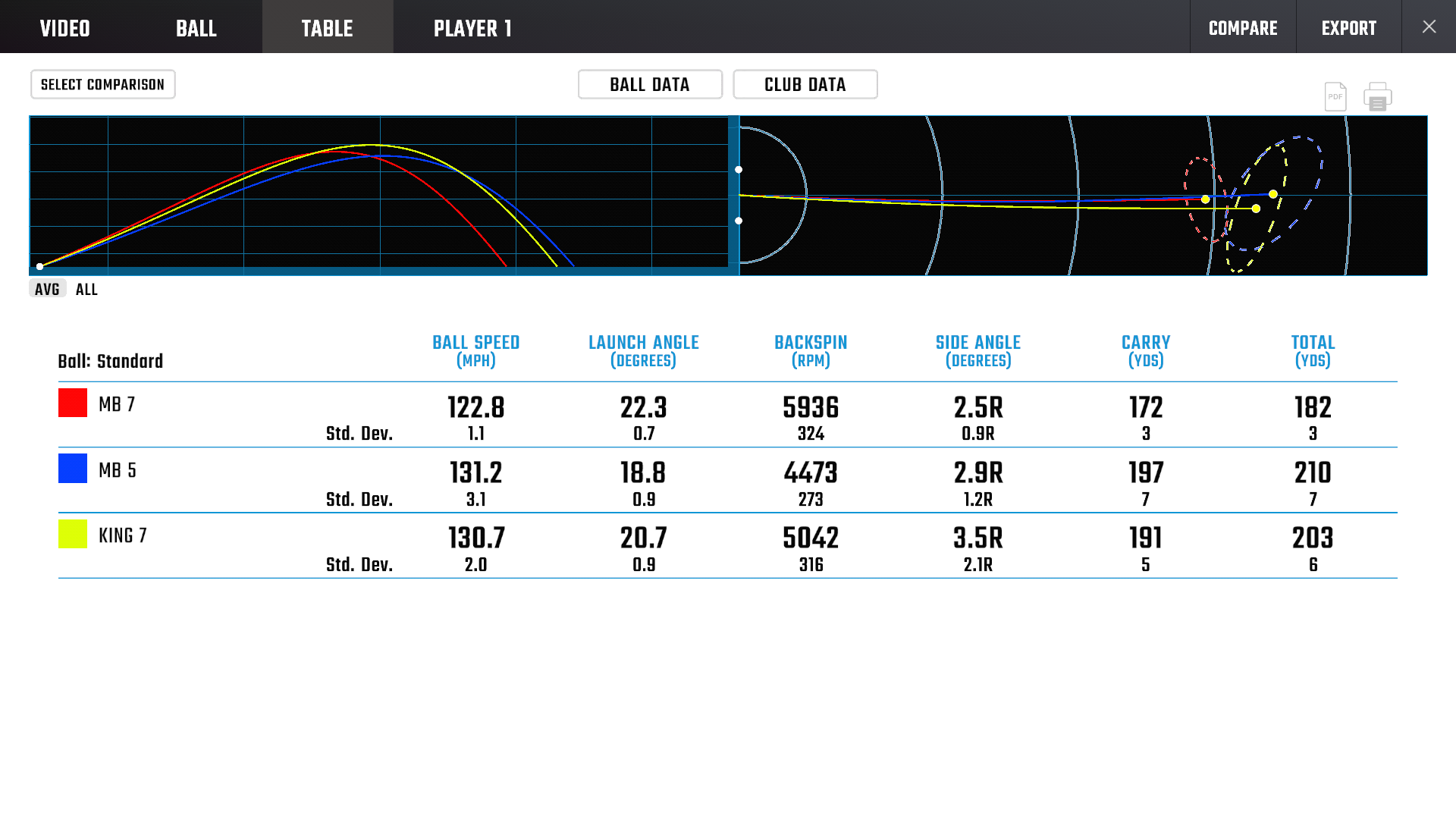
Comparing averages across 10 shots with each offering
Foresight Sports
You can see in the data that the launch numbers don’t shift much between my Cobra 3DP MB irons and the new Cobra King GI style irons I tested. The big difference, though, is in spin and speed. Even with the Cobra King GI iron being 6.5º stronger than the 3DP MB, the launch remains about the same. The good news, though, is that’s the real point, and the one I want to drive home. There’s a miscommunication in what “higher launching” actually means.
“>

Topline comparison between the Cobra King GI style iron and the Cobra 3DP.MB irons currently in the author’s bag
Jake Morrow / GOLF
Game-improvement irons and stronger lofts
This is one of my least favorite topics to discuss. The internet gets bent out of shape over it, and it’s the number one most mistalked about topic in the entire game of golf: loft jacking.
Loft jacking is the process of strengthening the lofts of an iron set. Usually, that carries a negative connotation that OEMs like Cobra are just trying to fake extra distance by giving your 7-iron the loft of your 5-iron. But that’s not the only reason they do it, which brings us back to launch. When designing a game-improvement-style iron, it’s important to give it as low a center of gravity as possible. This encourages launch, no matter who is swinging the golf club. The problem is that modern design and C.G. placement have started to launch the ball too high, to the point where other launch characteristics are negatively affected.
So how do they combat this? Strengthen the lofts. This brings the iron package down to a more usable performance window, giving the golfer who needs help the best chance of success with these offerings. So to demonstrate, I hit some 5-irons with my 3DP MB as well, which has a more similar loft package to the Cobra King GI 7-iron.
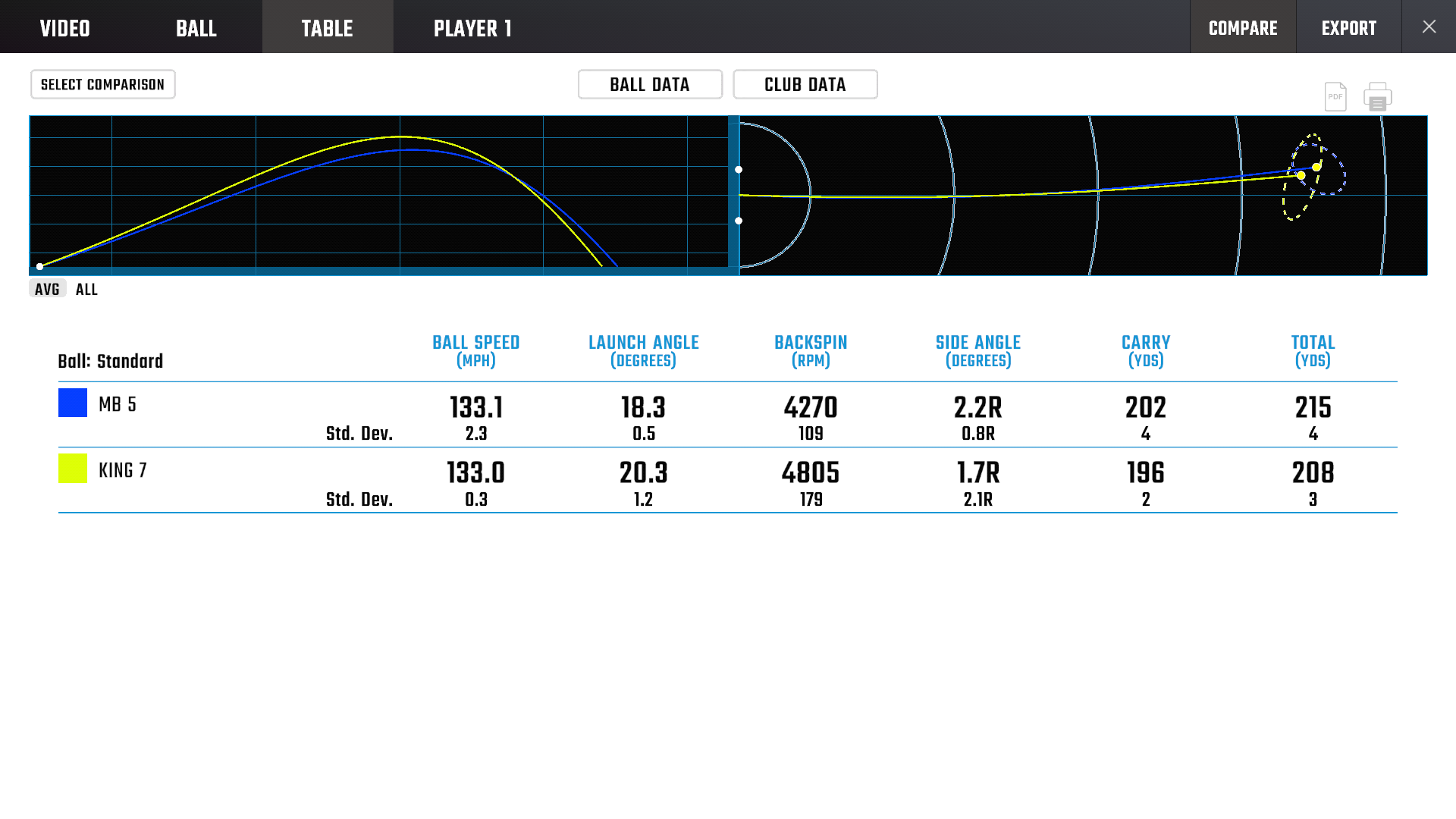
Comparing the BEST shots with the Cobra 3DP.MB 5-iron and the Cobra King 7-iron
Foresight Sports
You’ll notice now that the King 7-iron is launching higher than the 3DP MB 5-iron at the same loft. The C.G. package of the King iron is built to launch higher. You also have to keep in mind that speed creates launch. I am not the player designed to be hitting the King iron, so my data between these two examples will be closer than that of the player who actually does need to play an iron like this. At lower speeds, the difference in launch is going to get wider between the two.

Cobra 3DP MB Custom Irons
The 3DP MB iron combines the looks and feel of a traditional forged muscle back with the forgiveness of a cavity back iron. The most forgiving blade on the market, the MB has captivated Tour players by checking all the boxes and exceeding expectations with its exceptional stability and feel.
FORGIVING MUSCLE BACK BLADE SHAPE
A slightly revised shape from the KING MB inspired by feedback from PGA Tour player Max Homa, the MB features a thinned topline and enhanced offset. The internal 3D printed lattice and heel, toe and hosel tungsten increases MOI for stability, and positions the CG perfectly centered and lower than the KING MB to promote higher launch.
EXTREME FORGIVENESS MEETS SOFT FEEL
The 3D printed internal lattice structure not only optimizes weight savings, but also provides the stiffness and strength to support the face and fine-tune the acoustics of each iron to produce the most appealing impact sound and feel.
TUNGSTEN WEIGHTING
The discretionary weight savings from the 3D printed lattice allowed for up to 55g of tungsten to be positioned low in the heel, toe and hosel resulting in the perfect blend of a compact blade shape with a low CG and high MOI that mirrors a game improvement iron.
View Product
What about spin?
Take a look at the differences in spin between the King GI 7-iron, my 3DP MB 7-iron and my 3DP MB 5 iron.
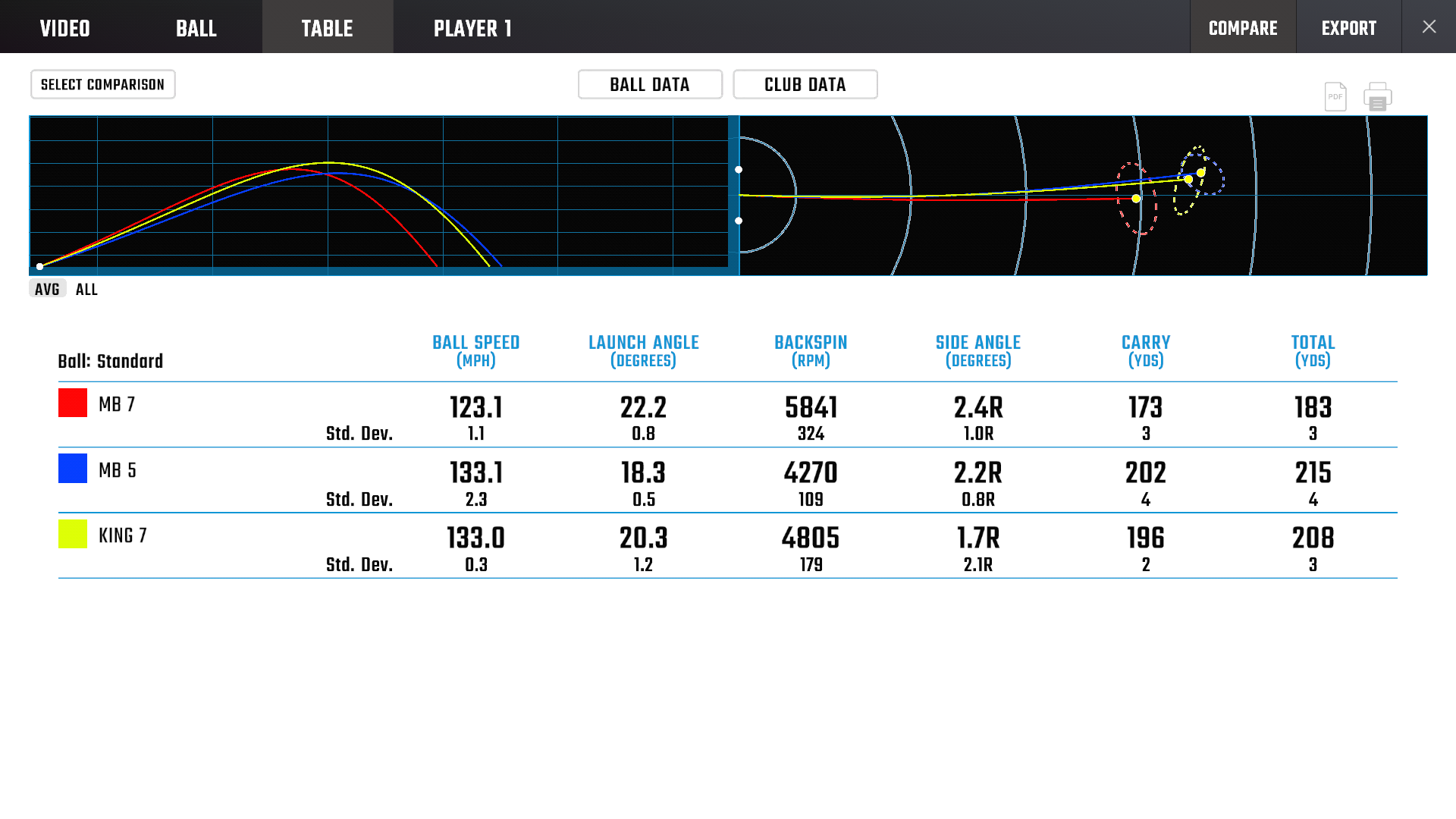
Comparing the average of the BEST three shots with each offering
Foresight Sports
Overall, the King 7-iron is definitely acting more like the 3DP MB 5-iron, and in some ways, as we’ve discussed, it sort of should. But you’ll notice that compared to the 3DP MB 7-iron, the King is in a much lower spin window, by a little over 1,000 rpms on the best swings. Again, I see this as a great thing. The player who needs all this help will be over the moon that their 7-iron is performing this well. My peak heights were getting up to 135 feet. While that is probably too high for me, the benefits for a player who struggles to get the ball up in the air are priceless.
For beginners who want to be encouraged to come back and play, or players who just want to be able to hit the ball as far as they used to, something like the Cobra King iron is perfect.
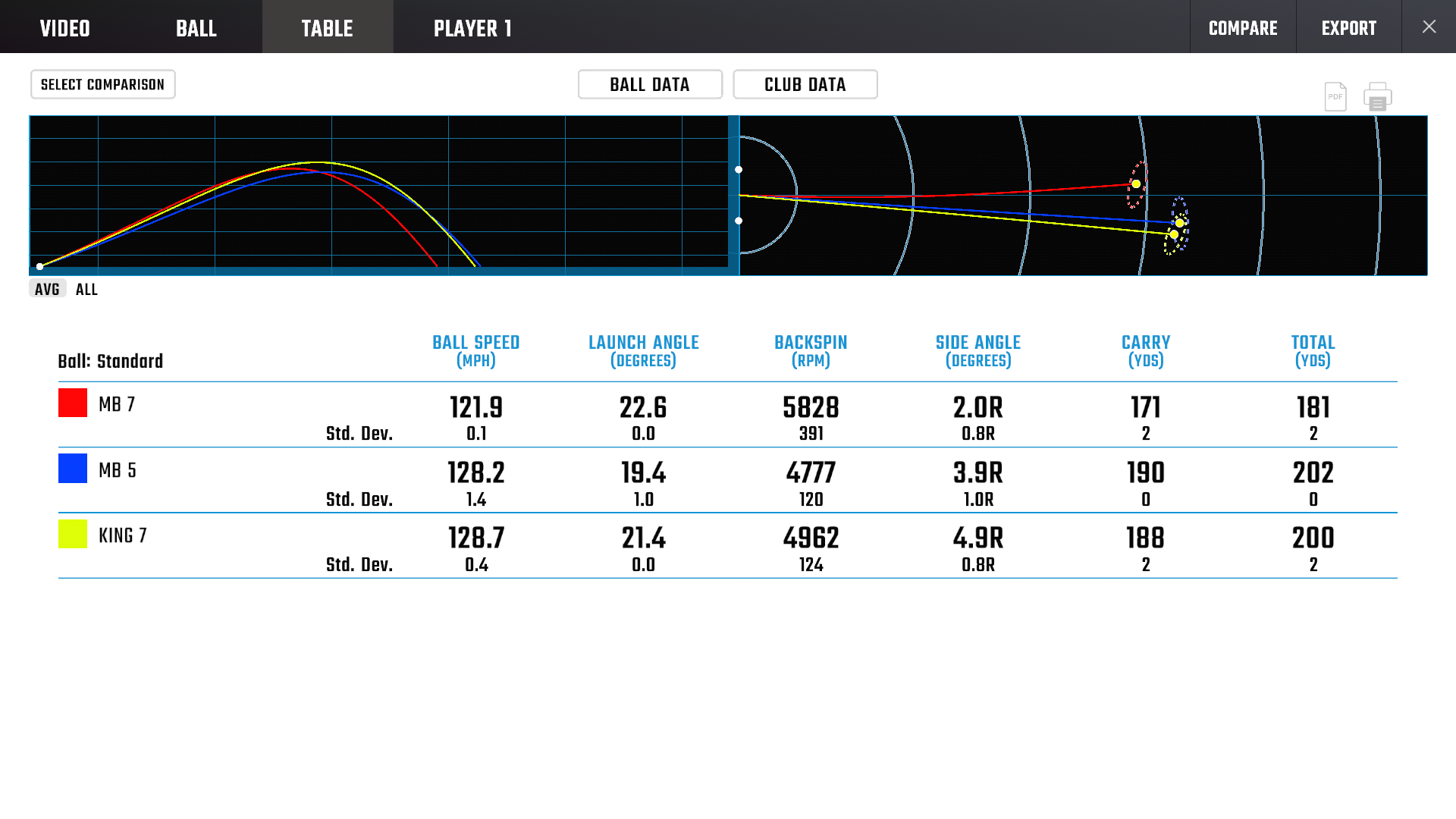
Average of the WORST three shots with each club
Foresight Sports
Instead of comparing the club apples to apples with a head that has the same number on it, it’s better to discuss who it’s for and what it does. The best example I can give is for the player slowing down. What’s the benefit for a player who plays cavity-back irons of moving to a game-improvement iron? It’s an easier answer. Now they can play the same number club they are used to. The same CB 7-iron they used to play might be going 15-20 yards shorter and probably not getting hit high enough to produce any sort of spin or stopping power. Throw a game-improvement club in that player’s hands, and all of a sudden, they are back to their “normal” 7-iron distance, and the ball is shooting up nice and high to land softly enough on the green and help deliver a more playable golf experience on course.
It doesn’t matter that the irons have a faster face, less loft or a wider sole. All that matters is that the golfer can feel confident again and get around the golf course with ease while shooting the lowest possible score, regardless of skill, speed, or age.

Cobra King and Cobra 3DP.MB sole width comparison
Jake Morrow / GOLF
Check your ego at the door

Should more golfers play blades? Here’s what you should know | Bag Builders
By:
Jake Morrow
Clubs like these Cobra King irons are very, very helpful designs for the right player. The problem with the internet is that arguments get lost in comparing clubs that should never be compared with players who shouldn’t be hitting them in the first place.
For someone like me, the stronger lofts, hotter face and wider sole are going to turn these irons into rocket launchers. But they aren’t built for me. They’re built for players who want to get distance back. Players who feel like they are losing out on enjoyment during their buddies match every week because they just don’t have the juice they used to. Beginners are still great options for an iron like this. It will give them the opportunity to learn the game in a more forgiving way and create a less aggressive barrier to entry into the sport.
The golf world is full of plenty of complaints about stronger lofts and hotter faces on irons, mostly from players who don’t need these types of irons. But my question to you is: Have you ever heard of a player who actually needs these irons but complains that they go too far, too high and too straight? I didn’t think so.
If you’d like to get fit for the right irons to match your game, visit your local True Spec and get dialed in!