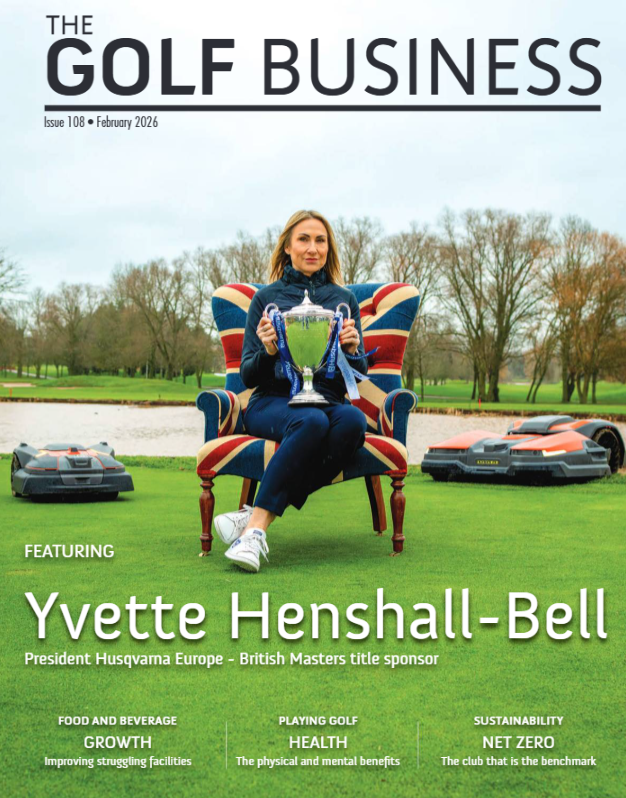
Husqvarna’s multi-year title sponsorship of tournaments including the British Masters signals more than a marketing move — it marks the arrival of course maintenance technology at the centre of golf’s biggest stages. As autonomous mowing gains credibility at tournament level, the partnership highlights a broader shift toward sustainable, data-driven and resilient course management across the industry.
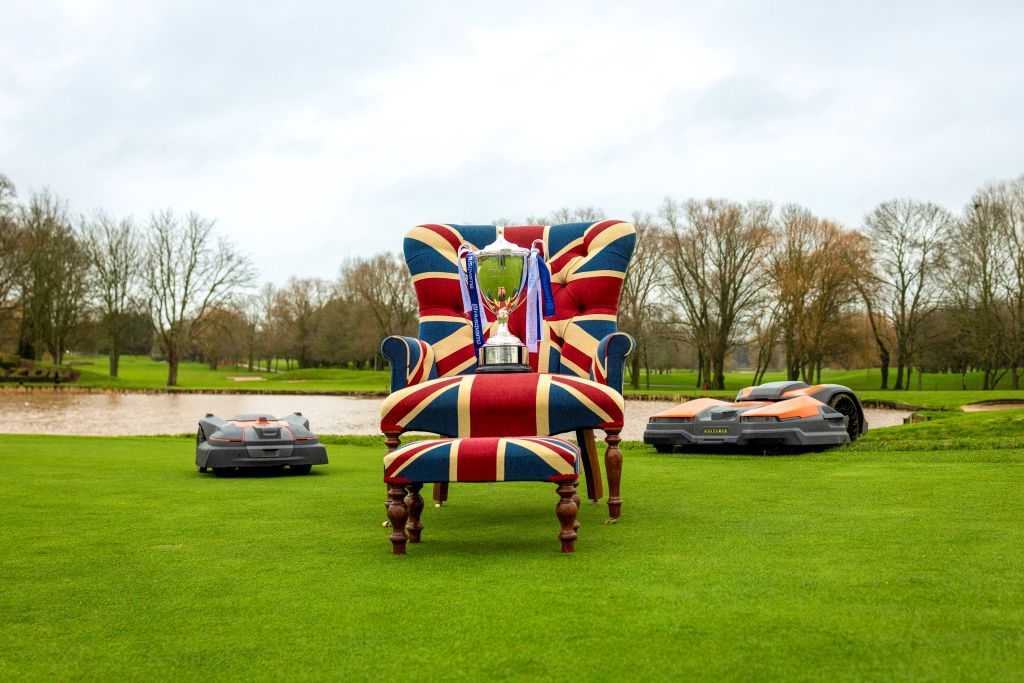
Husqvarna’s multi-year title sponsorship of the British Masters is more than a branding exercise. It’s a rare example of a company that golf facilities work with every day stepping onto one of the sport’s most prestigious stages, and using that platform to spotlight the future of sustainable, autonomous course maintenance.
By any measure, the title sponsor of a major golf tournament is normally a brand you’d expect to see in a player’s travel bag, on a hospitality lanyard, or in the premium lounge on Sunday afternoon.
But it is still far less common to see the title sponsor as a company whose products spend most of their time doing something far less glamorous, and far more essential: helping golf clubs quietly deliver the playing conditions golfers expect, day after day.
That is what makes Husqvarna’s new role as title partner of the British Masters such an intriguing development for the wider golf business.
Announced as a multi-year agreement, Husqvarna becomes the new title partner of one of the most historic tournaments in the European golf calendar, with the 2026 Husqvarna British Masters set to be staged at The Belfry’s Brabazon Course yet again. As part of the same agreement, the company will also become the official robotic mowing partner of the DP World Tour.
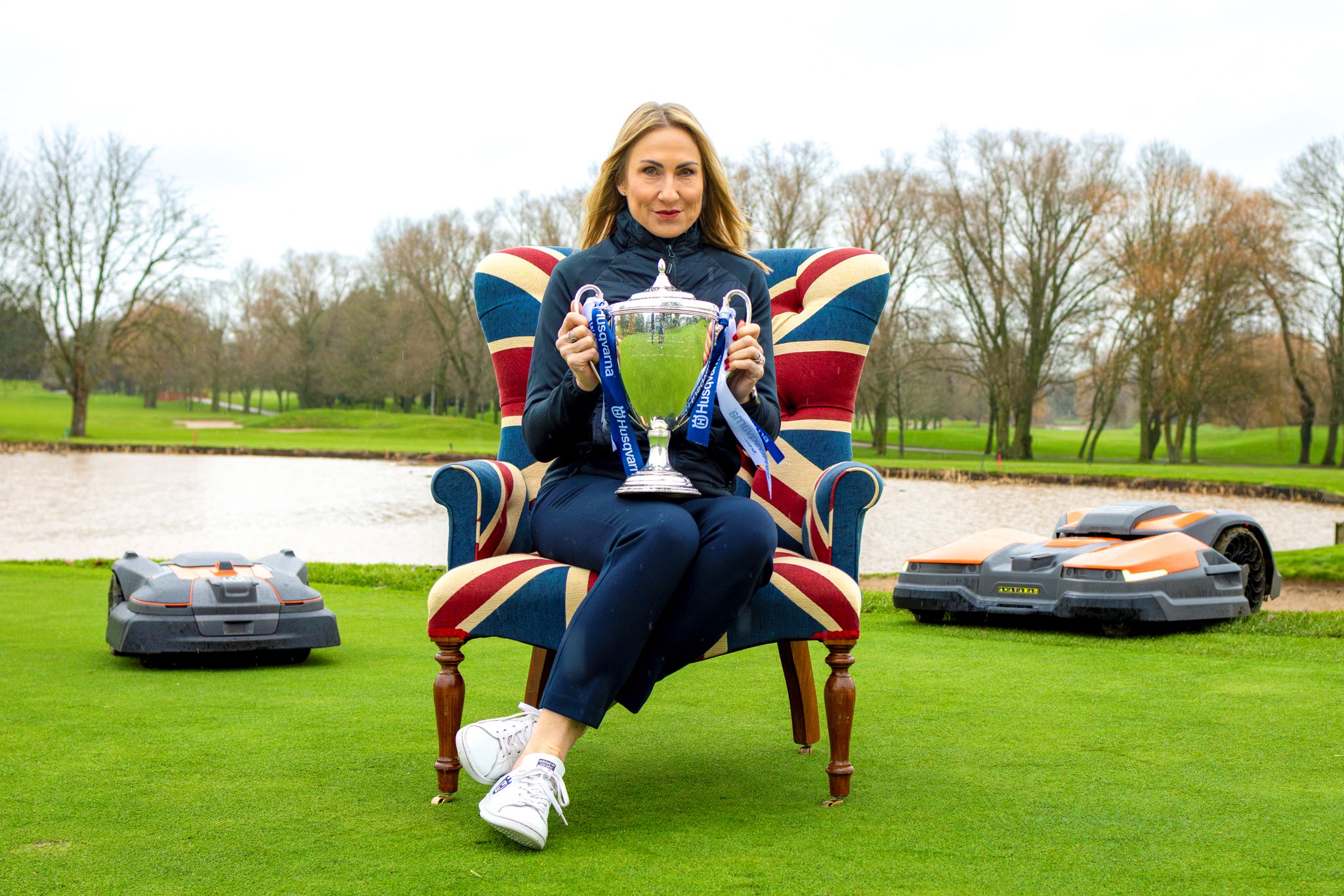
 Yvette Henshall-Bell, President Husqvarna Forest & Garden Division
For golf course owners, general managers, and course managers, it’s a partnership that feels different. Because it is different.
It’s not an abstract marketing message. It’s a supplier the industry already knows, increasingly a supplier that operators have already invested in, stepping into the title role of an event that has been played by legends, won by champions, and hosted in recent years by some of the sport’s most recognisable names.
And that, in itself, tells a bigger story about where course management is heading, and what the future of tournament-standard turf maintenance might look like.
Golf’s sponsorship landscape has, for decades, largely been built around financial services, automotive, luxury goods and technology. The kind of organisations that benefit from the sport’s demographics and its business-to-business hospitality potential.
But when a course maintenance company takes centre stage, the dynamic changes. Because it’s instantly more tangible to the operational side of the industry.
Since its introduction in the professional maintenance industry in 2022 Husqvarna is increasingly embedded into the fabric of course management across the UK and Europe, particularly through its growing adoption in robotic mowing and autonomous turf solutions. And, increasingly, that presence extends from ‘supporting role’ to ‘strategic partnership.’
The British Masters deal is a very visible symbol of that shift.
“Golf is the perfect stage to demonstrate the performance of Husqvarna’s robotic mowers, already delivering world-class results at over 1,700 courses worldwide,” said Yvette Henshall-Bell, President Husqvarna Forest & Garden Division and a member of Group Management.
“This partnership marks a shared commitment to reinvent golf course maintenance for a new era.”
That phrase – reinvent golf course maintenance for a new era – is the sort of ambition that only works if it’s underpinned by proof. And Husqvarna’s proof point is not theoretical.

From an operational perspective, the appeal of autonomous mowing isn’t simply that it is new or innovative. It’s that it promises a combination that course managers constantly chase:
• Precision and consistency
• Labour efficiency
• Sustainability improvements
• Reduced disruption
• Repeatable presentation standards
Husqvarna positions its commercial robotic mowing range as suited for large, complex environments, with solutions enabled by EPOS® technology to cover defined areas without physical boundary wires.
For the modern golf business, that matters because the maintenance conversation has changed. Clubs are balancing high customer expectations with labour pressures, energy costs, environmental goals and longer-term capital planning – all at the same time.
A technology that can deliver consistent outcomes while freeing up skilled teams to focus on higher-value tasks is no longer a ‘nice-to-have’. For many operators, it’s a route to resilience.
Husqvarna states that more than 1,700 golf courses worldwide now use its advanced robotic mowing solutions, with growth ‘led by Europe’ as adoption accelerates. Put simply, this is not a brand attempting to ‘enter’ golf. It’s a brand already operating inside it.
There’s a neat symmetry to The Belfry hosting the Husqvarna British Masters. The venue needs no introduction. The Brabazon Course has staged major golf events including the Ryder Cup, is operationally sophisticated, and is accustomed to delivering on expectations, whether for elite tournaments or high-volume visitor demand.
It’s the kind of stage where credibility isn’t granted through branding alone. It’s earned in performance. And Husqvarna’s proposition is, essentially, performance that repeats itself, consistently, at scale.
Husqvarna’s DP World Tour relationship builds on a partnership that has already been developing, and 2026 represents an increase in activity across key events.
The company will be:
– Official Tournament Partner to the British Masters and the Amgen Irish Open.
– Corporate Partner to the BMW International Open, KLM Open, and FedEx Open de France and will showcase products across DP World Tour channels throughout the season.
But the most compelling element for course operators is not the logo placement, it’s the live deployment.
The announcement notes that at the AIG Women’s Open at Royal Porthcawl, 15 Husqvarna CEORA robotic mowers maintained all fairways during the tournament, described as the first time robotic mowers have maintained fairways live on the world golf stage.
That is a significant milestone, because championship golf is an unforgiving environment. It’s where presentation meets scrutiny, from players, broadcast, spectators and the industry itself. And it’s a setting where technology has to cope not only with performance demands, but with the realities of tournament logistics, such as timetables, weather, variable traffic, safety protocols and the pressures of constant visibility.

When successful, it sends a clear message. Autonomous mowing is no longer confined to quieter times of day or reserved for practice areas. It can be a functioning part of tournament operations.
The British Masters headline is, of course, the most visible moment. But Husqvarna’s wider story is one of momentum, particularly in Europe where it says adoption has accelerated. Husqvarna began in 2025 with the aim of reaching 1,000 European courses by year-end. A target it not only met, but exceeded dramatically, with more than 1,200 courses in Europe embracing Husqvarna technology by the end of the year.
For context, that’s roughly one in eight golf courses in Europe, a striking penetration rate that suggests autonomous turf solutions are moving rapidly from early adopter territory into the mainstream. And, critically, the narrative here isn’t purely about sustainability, although that is clearly a key element. It’s about a blend of outcomes that course operators genuinely care about.
“Golf courses around the world are choosing Husqvarna because they want the perfect blend of precision, consistency, cost efficiency and sustainability,” said Henshall-Bell. “Surpassing 1,700 global courses isn’t just a milestone for us, it signals a major shift in global turf care towards smarter, cleaner and more future-ready solutions.”
In practical terms, Husqvarna highlights benefits including: consistent cut quality, optimised labour efficiency, significant CO2 reductions, reduced turf compaction compared to traditional machinery, quieter operation and the ability to run around the clock, and support / parts availability designed for long-term use.
It’s the kind of operational messaging that resonates, particularly at a time when clubs are taking a closer look at their maintenance strategies and machinery mix, both for cost management and longer-term sustainability.
Alongside the numbers and tournament optics, Husqvarna has also been keen to position this moment as part of its wider brand narrative: the idea that every sporting dream starts somewhere humble.
The backyard.
It’s a simple phrase, but it speaks to something golf understands well. The idea that excellence is built through repetition. Sometimes alone, sometimes uncelebrated, and long before anyone is watching.
In golf terms, it also speaks to the reality that playing conditions aren’t built in front of galleries. They’re built in early mornings, long afternoons, and squeezed in between tee times.
By committing more visibly to sport, Husqvarna is effectively connecting three levels of the game. The world stage of televised professional golf, the grassroots club environment where most of the industry lives and the home or ‘backyard’ environment where enthusiasm for sport begins.
It is, in its own way, a reminder that sport depends on surfaces, and surfaces depend on the people, equipment and decisions made behind the scenes.

For the golf business, that’s a useful thought. That high-performance turf isn’t only about tournament week. It’s about creating the conditions that make good golf possible every day, for every player.
So, what does a title sponsorship really mean to the average club? It’s not that every facility will suddenly adopt robotic mowing overnight. But it does point to two important shifts in the market. Firstly, autonomous turf solutions are being treated as serious, tour-level technology, not experimental equipment. Secondly, suppliers are beginning to see golf not only as a marketing platform, but as a long-term innovation partner sector. That changes the conversation from ‘what’s available?’ to ‘what’s next?’.
Yet, unlike your more traditional championship sponsors, this isn’t a luxury brand. Instead it offers a cost-effective, often cheaper solution than traditional mowing practices.
Husqvarna itself says it has set an ambition to be recognised worldwide as the leading authority in sustainable golf course maintenance and innovative turf care.
For operators, the practical takeaway is that technology is not just arriving, it’s maturing. The clubs that are best positioned for the next decade will likely be those that treat course maintenance as a strategic function. One that can strengthen sustainability credentials, improve operational reliability and protect the quality of playing conditions even under difficult constraints, while remaining affordable for a broad range of clubs, not just those at the very top end of the market.
And if a company that golf clubs actively work with can also become title partner of a historic tournament like the British Masters, it suggests something else too. That the most influential brands in golf’s future may not only be those seen on leaderboards, but those shaping the playing conditions underneath them.
There is also an undeniable sense of occasion in the tournament itself. First played in 1946, the British Masters has been won by a roll-call that includes Peter Thompson, Tony Jacklin, Bernhard Langer, Ian Woosnam, Seve Ballesteros, Sir Nick Faldo and Colin Montgomerie, among others.
In 2026, it will be hosted again by Sir Nick Faldo, a six-time major winner, and notably, a Husqvarna brand ambassador. “As a former champion, I take great pride in hosting this iconic tournament and it’s about to enter an exciting new era with this new partnership,” Faldo said. “I love Husqvarna’s products, and they will be out in full force at The Belfry in August to make sure the Brabazon Course is in perfect condition.”
That final line might be the most fitting summary of the entire partnership, because it circles back to the point golf clubs care about most: Conditions. Performance. Consistency.
And in this case, a title sponsorship that actually means something on the ground.