
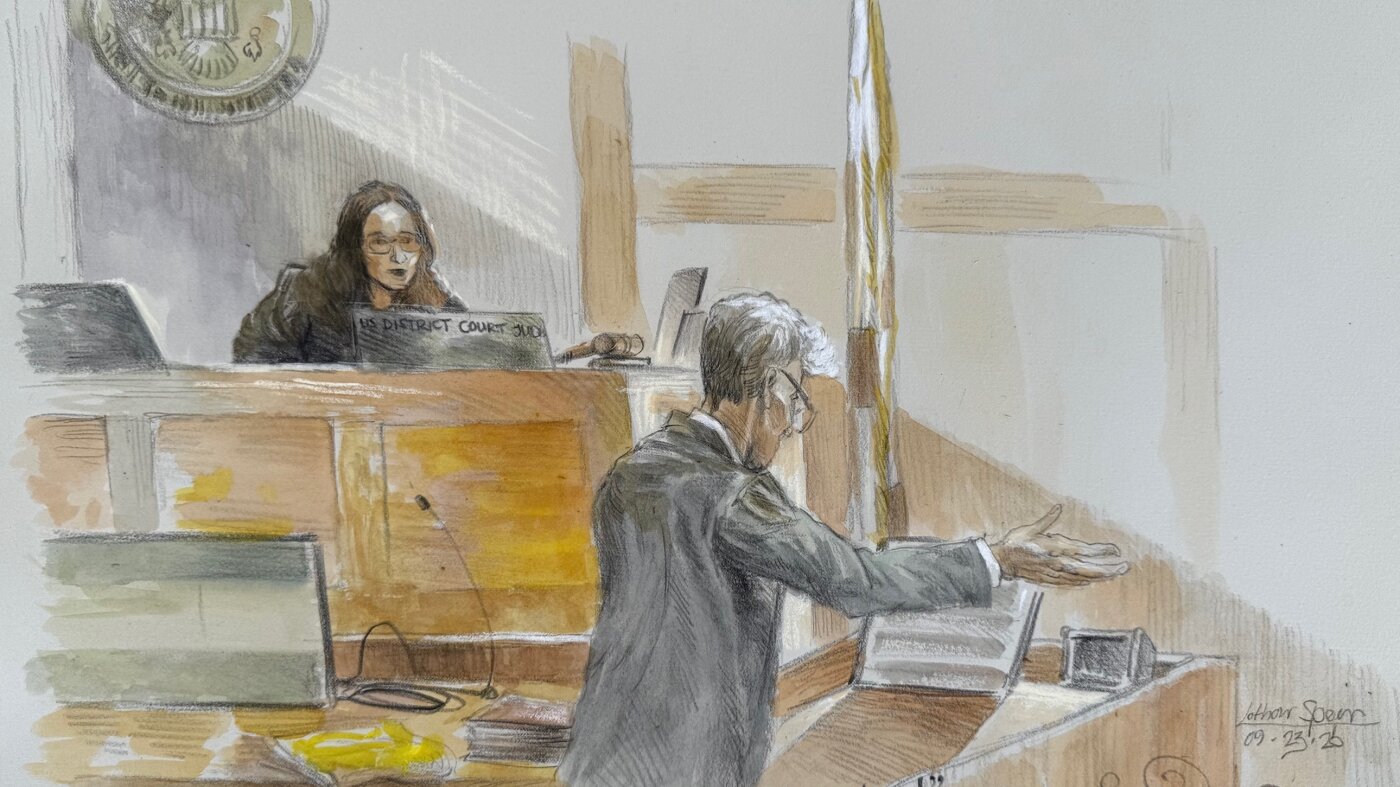
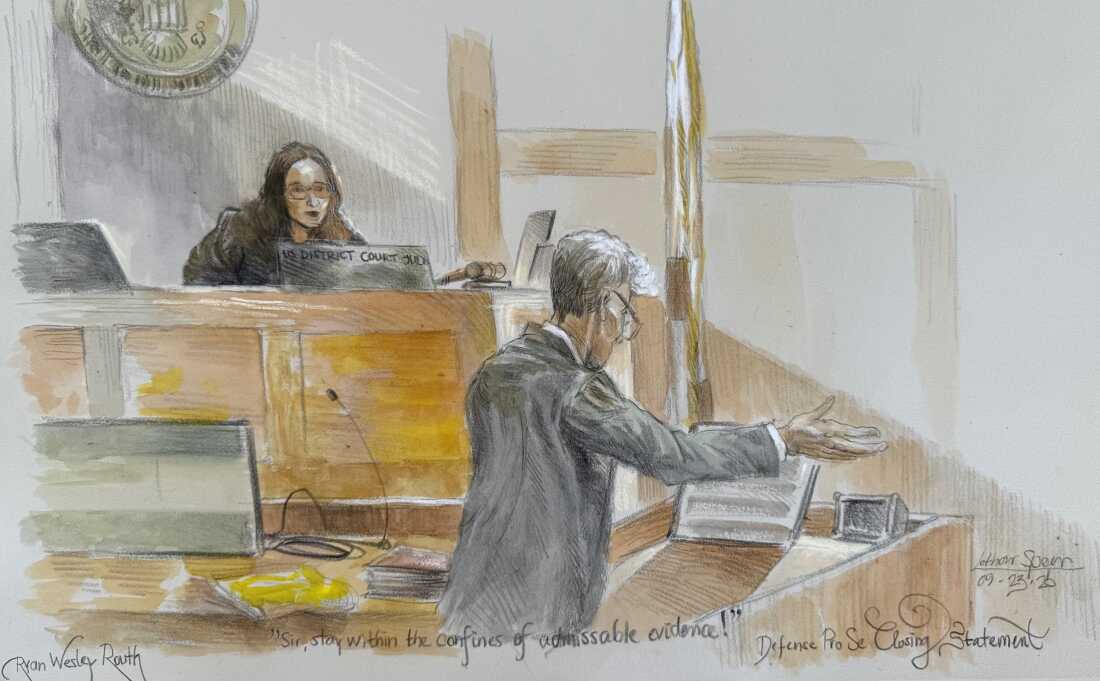
Ryan Routh was arrested on Sept. 15, 2024, and charged with attempting to assassinate a presidential candidate. A jury convicted him last fall and a judge sentenced him to life in prison.
Lothar Speer/via AP
hide caption
toggle caption
Lothar Speer/via AP
Ryan Routh, the man charged with trying to assassinate Donald Trump when he was running for president in 2024, will spend the rest of his life in prison.
Routh, 60, was found guilty last year on five counts for his planned attempt on Trump’s life when the then-presidential candidate was golfing at his club in West Palm Beach. In addition to a life sentence ordered by U.S. District Judge Aileen Cannon on Wednesday, he received an additional seven years for one of his gun convictions.
At the sentencing in Fort Pierce, Fla., Routh addressed the court seeking leniency, but Judge Cannon was unmoved. “Your plot to kill was deliberate and evil,” she said. “You are not a peaceful man.”
Following the hearing, U.S. Attorney Jason A. Reding Quiñones of the Southern District of Florida issued a statement. “This life sentence reflects a fundamental truth: political violence is un-American and will never be tolerated,” he said. “Today’s life sentence ensures the defendant will never again threaten public safety and sends a clear message that those who choose violence to advance their beliefs will face swift, certain, and decisive justice.”
Routh represented himself at trial, but Judge Cannon granted his request to appoint a lawyer for the sentencing. The lawyer, Martin Roth, cited his client’s ineffectual defense, his mental health and his age. He told the judge that his client was remorseful. “He was trying to tell people that might be influenced by him that political violence is never helpful. It’s harmful to the democratic process and I think he was renouncing the thought that a political assassination is ever appropriate.”
Roth told reporters later he believed the judge erred in applying the federal crime of terrorism enhancement and that he would file an appeal.
Routh’s planned attack came just two months after Trump survived another assassination attempt in Pennsylvania. In that incident, Thomas Crooks fired several shots from a semi-automatic rifle, wounding Trump on his right ear. Crooks was shot and killed at the scene by a Secret Service agent.
In September 2024, a Secret Service agent saw a man he later identified as Routh holding a semi-automatic rifle hidden in the tree line at Trump International in West Palm Beach. The agent accosted and then fired on Routh, who fled in his car and was arrested a short time later.
In a 2 1/2-week-long trial last fall, prosecutors spent seven days detailing Routh’s activities in the weeks before the planned sniper attack. They said Routh, a former roofing contractor, traveled from North Carolina to West Palm Beach. Using cellphone data and license plate readers, investigators tracked his movements as he scouted locations while living in his vehicle at a truck stop.
Routh’s defense case, by contrast, took just a few hours. In the months before the trial, he had a series of disagreements with his federal public defenders and asked to represent himself in court. Routh presented just three witnesses and a disjointed, ineffective defense. He told the jury that he was a peaceful and nonviolent person who lacked the “cold heart” needed to kill someone. It took the jury two hours to find him guilty on all charges.
In court last year, when the verdict was read, Routh attempted to stab himself in the neck with a pen before being subdued by federal marshals. Afterward, in a series of erratic court filings, Routh apologized to the judge for what he called “the nuisance of the trial.” Referring to his attempt to stab himself when the verdict was read, he wrote, “just a quarter inch further back and we all would not have to deal with all this mess.”