
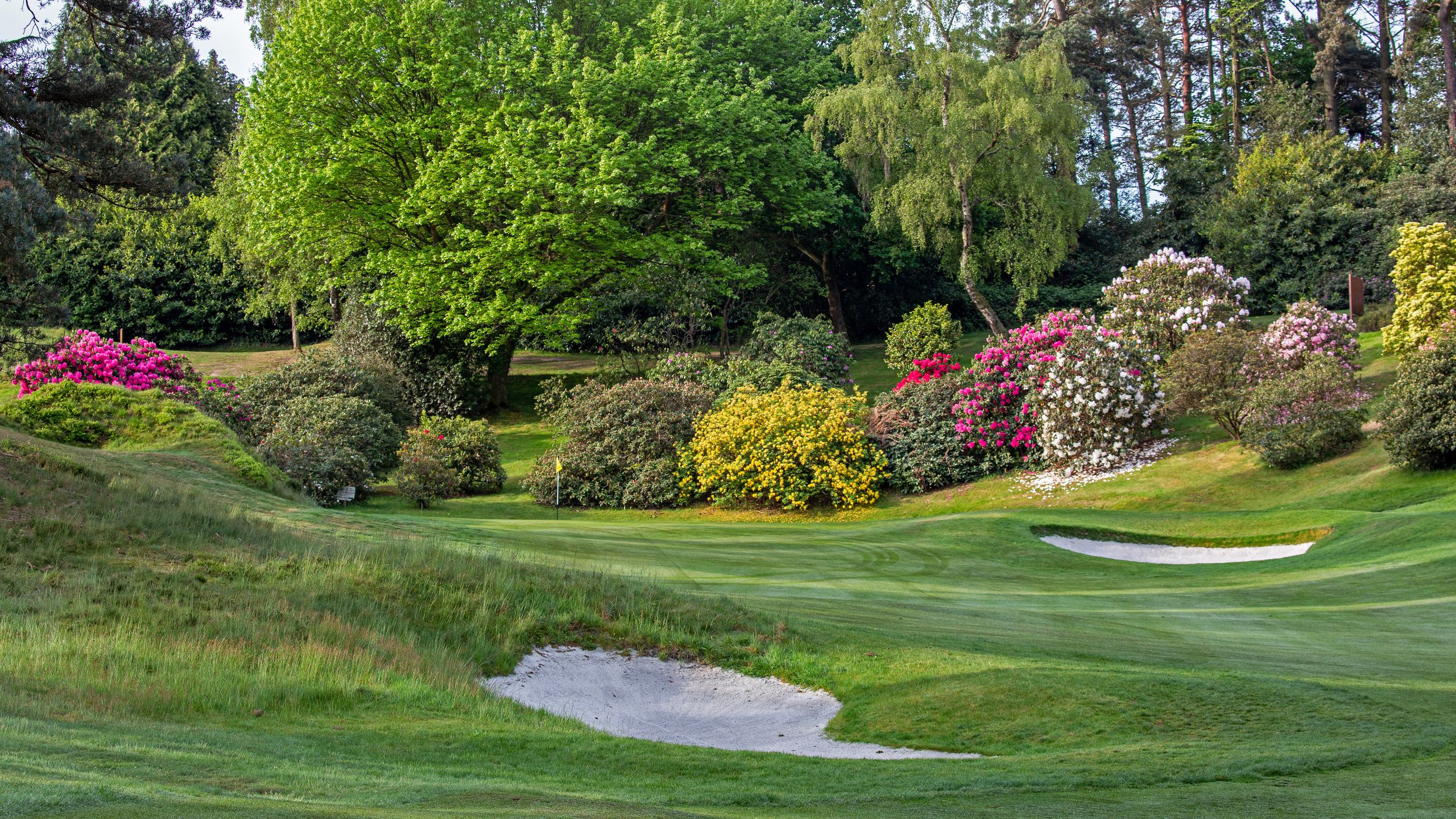
Born in 1871, John Henry Taylor was a quite brilliant golfer who first became Open champion in 1894 at Royal St George’s, and repeated this feat four times with his final victory at Royal Liverpool in 1913. While still playing, he began designing courses, and his legacy includes these five extremely varied layouts in England and in Ireland.
Hindhead

The green on the par-4 7th at Hindhead
(Image credit: Hindhead Golf Club)
Hindhead in Surrey has been a huge favourite in the Golf Monthly Next 100 since its first inclusion 15 years ago. In that time, various bunker enhancements and course changes as well as a clubhouse refurbishment have subtly and consistently bettered the whole experience making this one of golf’s great days out.

The 12th green is in a dip surrounded by beautiful heather
(Image credit: Rob Smith)
This JH Taylor classic dates back to 1904 and has two distinct and different halves with the front nine running dramatically through ancient, ice age valleys, before a back nine on higher ground which finishes with two excellent and very testing par 4s. If you are lucky, you may spot a deer or two, and the magnificent pines and alluring setting are sure to captivate. In a county with more than its fair share of premium golf, this is one of the best golf courses in Surrey.
You may like
Highwoods

The beautiful green on the par-4 8th at Highwoods
(Image credit: Simon Potter)
Highwoods is one of those clubs and courses that flies inexplicably under the radar. This Taylor design celebrated its centenary in 2024 and is great fun with two contrasting nines kept in excellent condition. Opening with three testing par 4s, there are two short holes going out with the 7th a real beauty from an elevated tee.

The 14th plays from right to left, over a pond to a raised green
(Image credit: Rob Smith)
The back nine has two strategic and engaging par 5s at 11 and 17, while the signature hole is the excellent end extremely pretty 14th, a dogleg to the left played over a pond. This friendly club deserves to be way better known.
Arklow

The front nine closes with a well-protected par 3
(Image credit: Kevin Markham)
Just down the coast from the recently sold European Club south of Dublin, a stalwart in the Golf Monthly Top 100, Arklow was opened 99 years ago and designed by Taylor in conjunction with Fred Hawtree. It has since evolved courtesy of Eddie Hackett and more recently Eddie Connaughton, and is presented in consistently fine shape with distinctive green complexes boasting intriguing slopes.
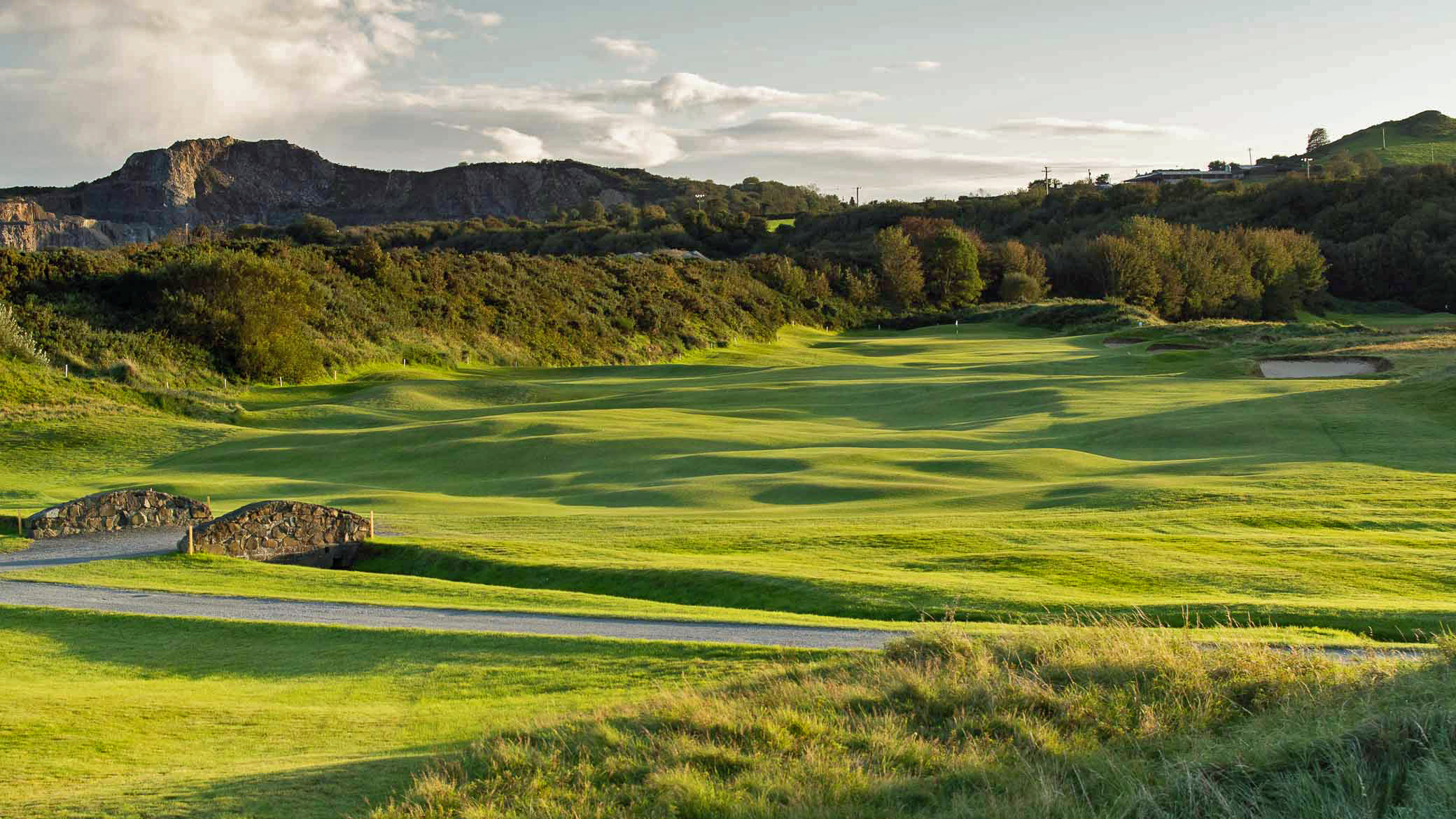
The strong par-4 12th plays over a rumpled fairway
(Image credit: Kevin Markham)
This is particularly true of the five terrific par 3s of which three are close together among crumpled dunes by the sea. There is bold bunkering, especially in the middle of the course where the dunes are at their most impressive.
Eaton

The par-4 3rd at Eaton is stroke index one – long and with a sloping fairway
(Image credit: Geoff Ellis – golfworking.co.uk)
Despite later modifications and a few new holes, this is very much credited as a JH Taylor design dating back to two years after the club was formed in 1910. Tree-lined, the layout gives lie to the notion that Norfolk is totally flat away from its northern cliffs. This is a thinking golfer’s course where positional play from the tee or on the lay-up is key. Not so well-known, it is still one of the best golf courses in Norfolk.

Surrounded by five bunkers, the green on the par-3 11th
(Image credit: Geoff Ellis – golfworking.co.uk)
There are three par 5s and a handful of short holes of differing lengths, the most demanding of which is the excellent 9th guarded by two sleepered bunkers. This is a charming course that is nonetheless a proper test of golf at a very friendly club.
Long Ashton

The par-3 2nd at Long Ashton is on the site of an old quarry
(Image credit: Geoff Ellis – golfworking.co.uk)
Just to the west of Bristol, Long Ashton’s beautifully varied course runs either side of Providence Lane. Various changes have been made since its foundation over 130 years ago, but it’s the Hawtree and Taylor work from 1937 that has defined today’s course. Feature holes include the short but very sweet par-3 2nd and the risk/reward driveable par-4 8th.
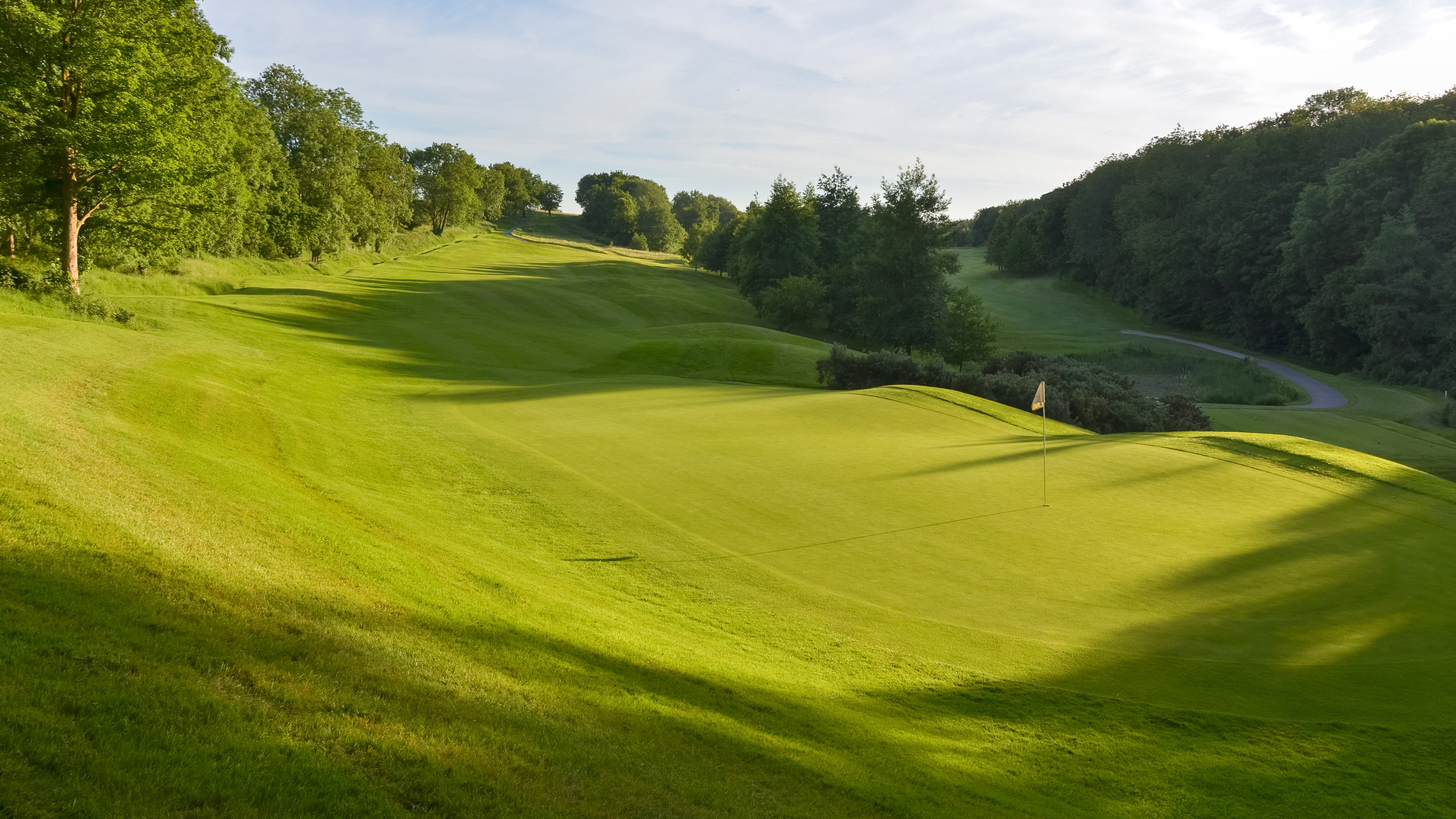
Looking back up the 6th hole, played from an elevated tee to an ever-narrowing fairway
(Image credit: Geoff Ellis – golfworking.co.uk)
There are far-reaching views both over Bristol, and to the south and west towards Somerset. Former Golf Monthly playing editor and Ryder Cup star Chris Wood learnt his golf here and still has links with the club.