
By Violet Li
Casey Council has ruled out an independent tree review of the Cranbourne Golf Course redevelopment, saying the developer’s assessment is “adequate”, despite residents questioning why only one of more than 3,800 trees was rated high retention value.
The Council also says the developer’s assessment provides enough information to assess canopy tree removal under the State’s new planning rules.
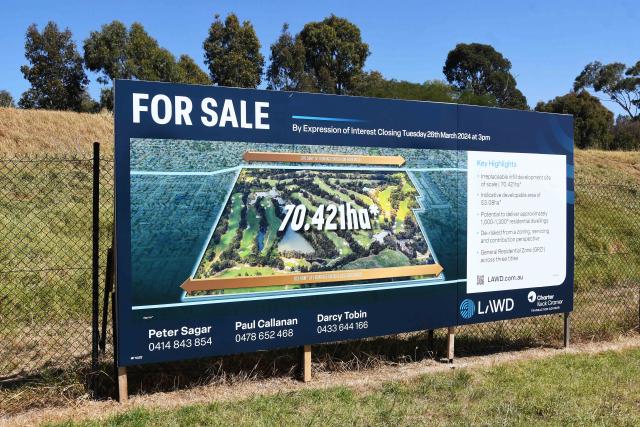
The controversial proposal to build more than 1000 homes on the Cranbourne Golf Course will be decided by councillors in the upcoming Council Meeting on Tuesday 17 February.
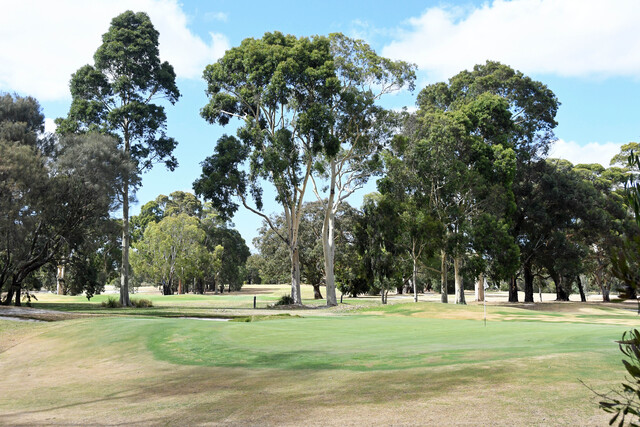
When Star News talked to the redevelopment objectors last year, many of them mentioned their concerns about the massive loss of the trees on-site.
According to the developer Browns Property Group’s submitted Landscape Plans, Arboricultural Report, and Tree Retention Plans, about 130 of the more than 3,800 existing trees are proposed to be retained in the future Woodhaven estate.
“While they are planning to retrain some of the trees, they’re going to chop down a majority of them,” local resident Jill Nambu told Star News last year after one of the objector meetings.
However, the objectors were told that the developer would plant about 2000 new trees.
“And then it’ll take decades for any of the trees to be planted (to grow),” Ms Nambu said.
She had asked whether Casey Council could commission its own independent tree assessment, and she was informed that while Council can carry out independent assessments, they are costly and not typically done for every planning application.
“(I thought) this is a large area, and it might be worth setting some budget aside for something like this (independent tree assessment),” Ms Nambu said.
“What the community is asking for is trees.”
The Hampton Park local found it hard to believe that the tree assessment report commissioned by the developer rated just one tree as having a “high” retention value, with 95 trees given a moderate rating.
The remaining trees, more than 3,700, were classified as having low or no retention value, with most recommended for removal to allow subdivision works to proceed.
According to the report, while around 80 per cent of trees recorded on the site are native species, many are planted specimens, short-lived trees or environmental weeds such as Monterey Pines, Southern Mahogany and Spotted Gum.
The arborist also found that a large proportion of trees were in fair-to-poor condition, with limited long-term structural viability.
The report states that retention values are subjective and intended only as a design guide at the master-planning stage, noting that engineering requirements, drainage, roads and housing layout will ultimately determine which trees can realistically be retained.
It does not include a replanting or replacement strategy.
Local resident Garry Page argued that the data from the developer’s tree report shows many other trees are similar or larger in height, canopy spread and trunk diameter, and questions why these trees were not assessed as having comparable retention value.
According to his own research, there are well over 100 canopy trees that are more significant than that one high-retention value tree.
“It seems unlikely that a site within excess of 3,000 trees that only one tree (No. 530) should receive a recommendation of ‘High’ to retain,” he said in his objection.
“The Council should obtain its own independent assessment for the site.”
Mr Page also argued that the developer’s assessment, produced in August 2024, was outdated and failed to address Planning Amendment VC289, which introduced Clause 52.37 into all Victorian planning schemes in September 2025.
The clause requires a permit to remove, destroy or lop a canopy tree in a General Residential Zone.
A canopy tree means a tree that has a height of more than 5 metres above ground level, a trunk circumference of more than 0.5 metres, measured at 1.4 metres above ground level, and a canopy diameter of at least 4 metres.
The clause also sets a minimum canopy cover target of about 20 per cent on land larger than 1,000 square metres. The Cranbourne Golf Course site spans approximately 70 hectares, and the clause encourages replacement tree planting where removal occurs.
The developer’s arboricultural report does not explicitly assess trees against Clause 52.37.
However, City of Casey Manager of Growth and Investment Michael Ford said the submitted Arboriculture Assessment and Report adequately identifies the condition of existing trees and those proposed for removal or retention.
“Officers have sufficient information to assess the additional requirements introduced by Clause 52.37 of the Casey Planning Scheme and to inform their report to Council,” he said.
“Therefore, officers do not consider it necessary to engage an independent specialist.”