

Updated February 4, 2026 — 11:59am,first published February 4, 2026 — 10:23am
Save
You have reached your maximum number of saved items.
Remove items from your saved list to add more.
Save this article for later
Add articles to your saved list and come back to them anytime.
Got it
AAA
A dramatic sale of 35,000 hectares of defence real estate – including some of the nation’s most historic barracks – is expected to raise almost $2 billion to be ploughed back into new military equipment and upgrades to essential bases.
Islands, golf courses, rifle ranges, office buildings and training depots across the country will be sold under the Albanese government’s long-awaited response to a sweeping audit of the nation’s defence estate portfolio.
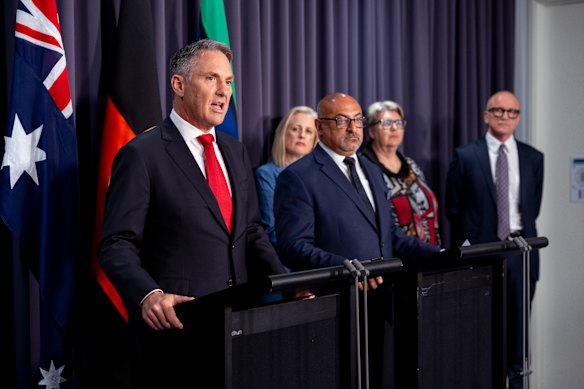 Defence Minister Richard Marles and Assistant Defence Minister Peter Khalil announce the major sale of Defence property.Dominic Lorrimer
The government has decided to stare down opposition to sell-offs from the military establishment, which has jealously guarded its access to prized sites.
The release of the government’s response to the audit has been delayed by over two years as it braces for blowback from veterans and local communities to the sale of some of the country’s most iconic defence facilities.
This masthead revealed on Wednesday that the Victoria Barracks sites in Sydney, Melbourne and Brisbane will be sold, opening up the possibility of housing developments in inner-city areas.
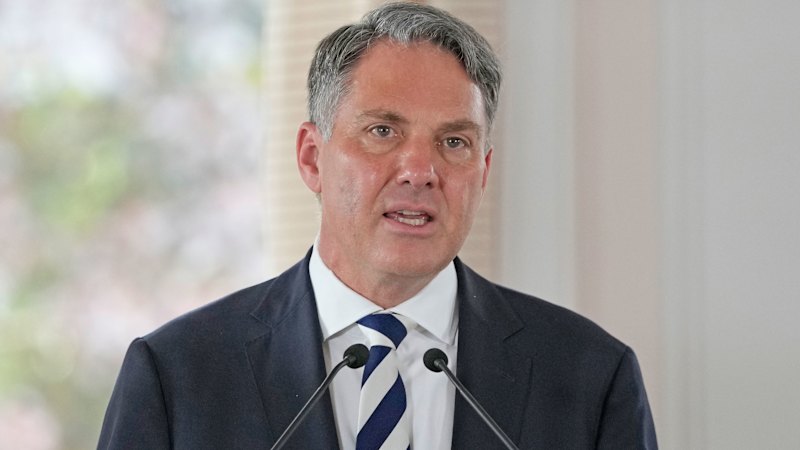
Defence Minister Richard Marles said the government was undertaking the “most significant reform to Australia’s defence estate in our nation’s history”.
“The heritage value of these properties does not belong to the Australian Army or, for that matter, the Australian Defence Force. It belongs to the Australian people,” Marles said.
“And right now, the Australian people are prevented from seeing these properties, they exist behind a defence wall.”
Acknowledging the long delay between receiving the audit and releasing a response, Marles said: “It has taken time because it has been difficult. This is a challenging issue.”
Related Article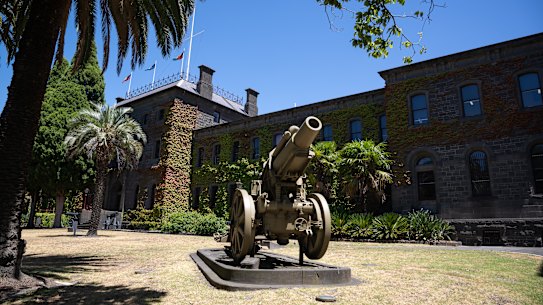
Sixty-seven defence sites will be fully or partially sold – including the birthplace of the Royal Australian Air Force in Victoria and the army’s headquarters in Sydney – by the Department of Finance, with an estimated sale price of $3 billion. Relocating staff and remediation works ahead of sale could cost as much as $1.2 billion, meaning net proceeds of up to $1.8 billion are expected from the divestments.
The government also expects to save $100 million a year by reducing maintenance costs.
All the money raised from the sales, which are expected to take years to complete, will be reinvested into defence.
Asked about the scope to expand the supply of housing by selling defence sites, Marles said: “I expect that housing will be part of the opportunity that is created here, but I want to be really clear: that’s not why we’re doing this.
“This is around making sure we have a defence estate which is properly attuned to the capabilities of the Australian Defence Force, and that we are not wasting money on property which gives no capability benefit.”
Finance Minister Katy Gallagher said the asset sales would be decided on a case-by-case basis.
“I mean, there are some prime locations. I imagine there will be a lot of interest and a lot of views about what it can be used for,” she said.
“I’m hopeful some of that would be for housing, but it really is to be determined, and no decisions have been made.”
Assistant Defence Minister Peter Khalil said he was shocked to recently visit a vacant training depot in Penrith, in western Sydney, which had cost $1 million over six years to maintain but was strewn with rubbish and covered in graffiti.
Meanwhile, he said, some salubrious facilities “have grass tennis courts that rival Wimbledon, manicured lawns, sprawling golf courses, but they are also not meeting the operational and capability requirements for our ADF”.
The audit, conducted by former Defence Housing Australia managing director Jan Mason and Infrastructure Victoria chair Jim Miller, found the defence estate is riddled with waste and that tough decisions are required to ensure taxpayer money is being spent wisely.
“It is very clear and widely acknowledged that Defence does not need and cannot afford all of the current estate,” Mason and Miller wrote in their audit report, delivered to the government in December 2023.
“Underutilised portions of the Defence estate are draining resources from higher priority needs. Sustainment budgets as they relate to this part of the estate are stretched too thinly, resulting in critical failures and costly unscheduled repairs.”
The auditors acknowledged that their recommendations “are likely to evoke strong emotions associated with its history, scale and diversity”.
A government source, speaking on condition of anonymity to discuss sensitive matters, said taxpayers had been “pissing money up against a wall and it needs to stop”.
In NSW, the sites to be sold include:
Victoria Barracks, PaddingtonLancer Barracks, ParramattaHMAS Penguin (partial sale)Randwick Barracks (partial sale)RAAF GlenbrookSpectacle Island
In Victoria, the sites include:
Latchford BarracksNewland BarracksRAAF Williams, Point CookRAAF Williams, Laverton (partial)Defence site MaribyrnongVictoria Barracks
In Queensland, the sites include:
St Lucia Training DepotMount Isa Rifle RangeVictoria BarracksSave
You have reached your maximum number of saved items.
Remove items from your saved list to add more.
 Matthew Knott is the foreign affairs and national security correspondent for The Sydney Morning Herald and The Age.Connect via X, Facebook or email.From our partners