
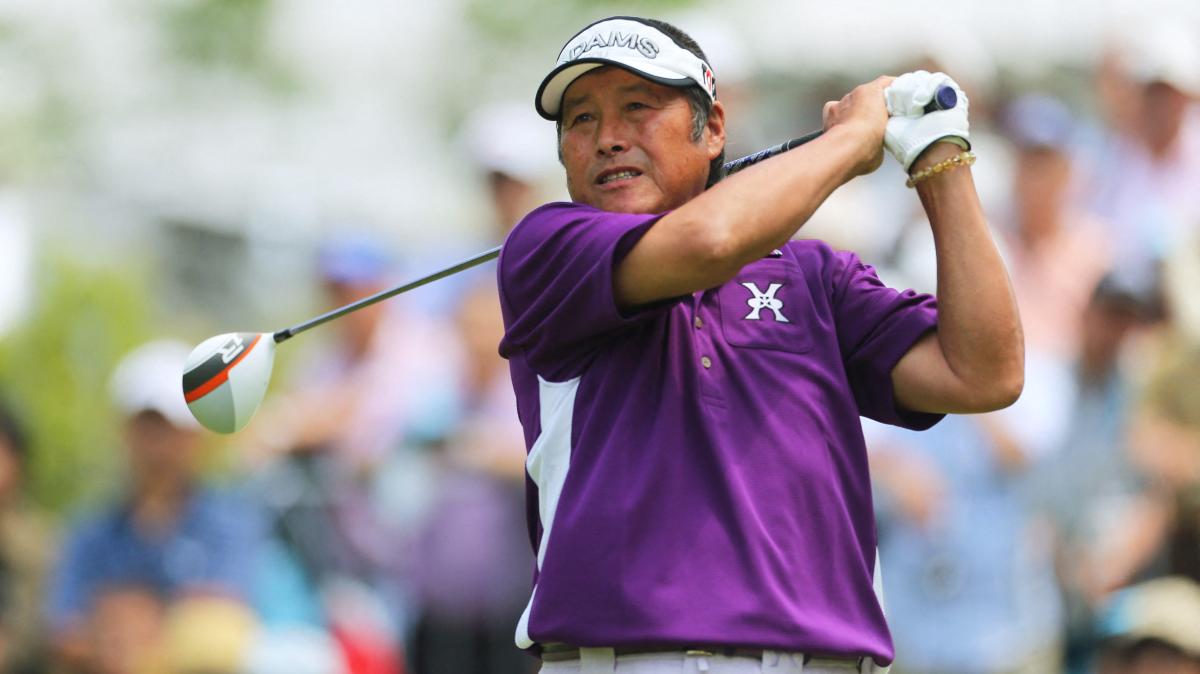
To understand the dominance of Masashi “Jumbo” Ozaki on his native Japanese golf tour, compare his record with that of two of the world’s greatest players, Sam Snead and Tiger Woods, who share the official record for the most victories on America’s PGA Tour. Snead and Woods won 82 times apiece. Jack Nicklaus is in third place, with 73, numbers considered beyond the reach of today’s players.
Of Ozaki’s 113 career victories, 94 of them were achieved on the Japanese tour between 1973 and 2002. Among his victories were five national Open titles and six Japan PGA championships. The next most successful player on the Japanese tour is Isao Aoki, who won 51 times. Ozaki topped the Japanese golf tour money list on 12 occasions (also a record by some margin) and spent more than 200 weeks in the top ten in the world rankings, reaching a career high of No 5 in 1996. He was inducted into the World Golf Hall of Fame in 2011.
Nicknamed “Jumbo” because of his prodigious length from the tee, Ozaki was a reluctant traveller to tournaments overseas — on the occasions when he did travel abroad, he went with a sushi chef so that his support team did not miss their home comforts. He played only 96 times on the PGA Tour, and never in more than nine events a season, and consequently in America there was scepticism over whether he deserved his elevated place in the world rankings. While he expressed regret that he had not played more outside Japan, he said he was proud of the support he gave to his native tour. The New Zealand PGA Championship in 1972 was his only significant overseas victory.
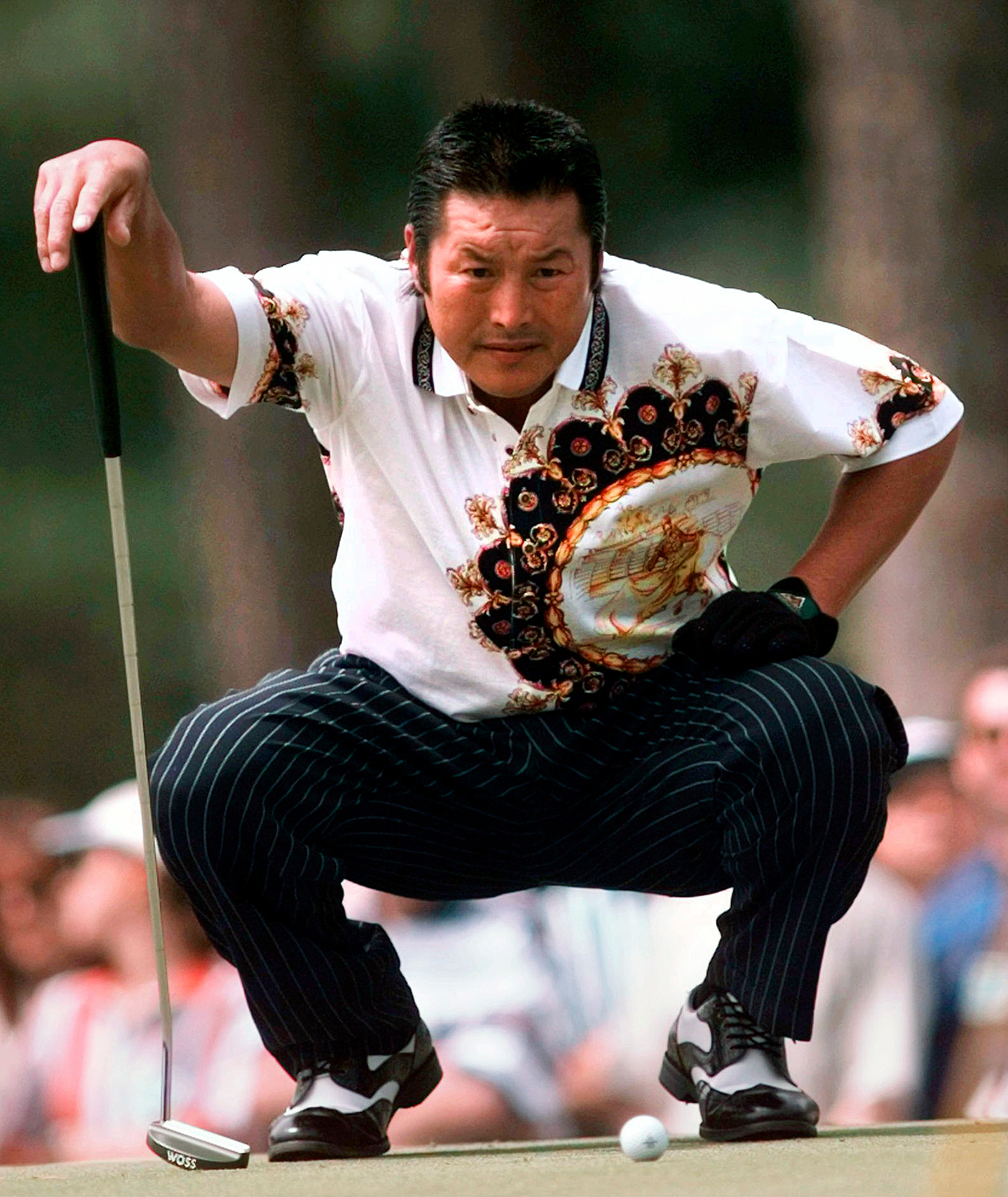
Ozaki lines up a putt during the final round of the Masters in Augusta, 1997
DAVE MARTIN/AP
With an aggressive style of play, he took part in 49 major championships, his best finish a tie for sixth in the US Open in 1989. His four-round total of 281, one over par, left him just three shots behind the winner, Curtis Strange. He was also the first Japanese golfer to earn a top ten finish in the Masters. In 1973, a first round 69 had him in a tie for second with Nicklaus, a shot behind the eventual champion, Tommy Aaron. A pair of 73s over the weekend dropped him into a share of eighth. In 1979, he had his best finish in the Open Championship — a tie for tenth.
In 1996, he made his one and only appearance for the international team in the Presidents Cup against the USA. Two years later, despite being fourth in the international team rankings, his reluctance to travel saw him turn down the opportunity to play in the event in Australia, handing the place to his younger brother Naomichi. The international team won in what remains their only success in the competition.
Such was Ozaki’s popularity, he was regularly followed on the fairways by the Jumbo Army, a huge entourage of up to 3,000 fans. He was regarded as the Japanese equivalent to Arnold Palmer, and when he played in the major championships the media centres would be full of Japanese golf writers, photographers and TV reporters — all there to see one man.
Masashi Ozaki was born in 1947 in Kaifu District, Tokushima. Ironically, golf was Ozaki’s second chosen sport. He was educated at Kainan Senior High School where he excelled as a pitcher, leading the school to victory in the 1964 National Invitational High School Baseball Tournament. The following year he was offered terms by the Nishitetsu Lions where he remained for three years. He left the club in 1968 when he failed to reach the required standard and turned his attention to golf, becoming a pro in 1970, aged 23. His two younger brothers, Tateo (nicknamed Jet) and Naomichi (referred to as Joe) followed him into the pro ranks.

Ozaki playing in Hong Kong in 1973
CHAN KIU/SOUTH CHINA MORNING POST VIA GETTY IMAGES
It was not only Ozaki’s golf that attracted headlines. Off the course he owned a fleet of sports cars, classic guitars, and had more than 1,000 bottles of wine in his cellar. On the course, he wore handmade clothes: cashmere sweaters with elaborate designs, floral silk shirts and baggy trousers. Equipment was made exclusively for him. In late 1989, Nicklaus played an exhibition match with Ozaki and was intrigued by the graphite-shafted, metal-headed driver, embossed with the words “Professional Weapon”, that Bridgestone had designed for Ozaki and which he used to power drives 50 yards past the Golden Bear. Nicklaus begged to be sent one, and the following April used it to finish sixth in the Masters, aged 50.
Charismatic sports people are frequently referred to as a rock star. In Ozaki’s case, he was one, literally, having had three hit singles in the Japanese pop charts. But despite all this success, Ozaki is thought to have lost his wealth in the Japanese real estate crash and was declared bankrupt in 2005 with debts of more than $18 million. Adding to his mystery, there were unsubstantiated rumours that Ozaki was linked to the yakuza, the Japanese mafia.
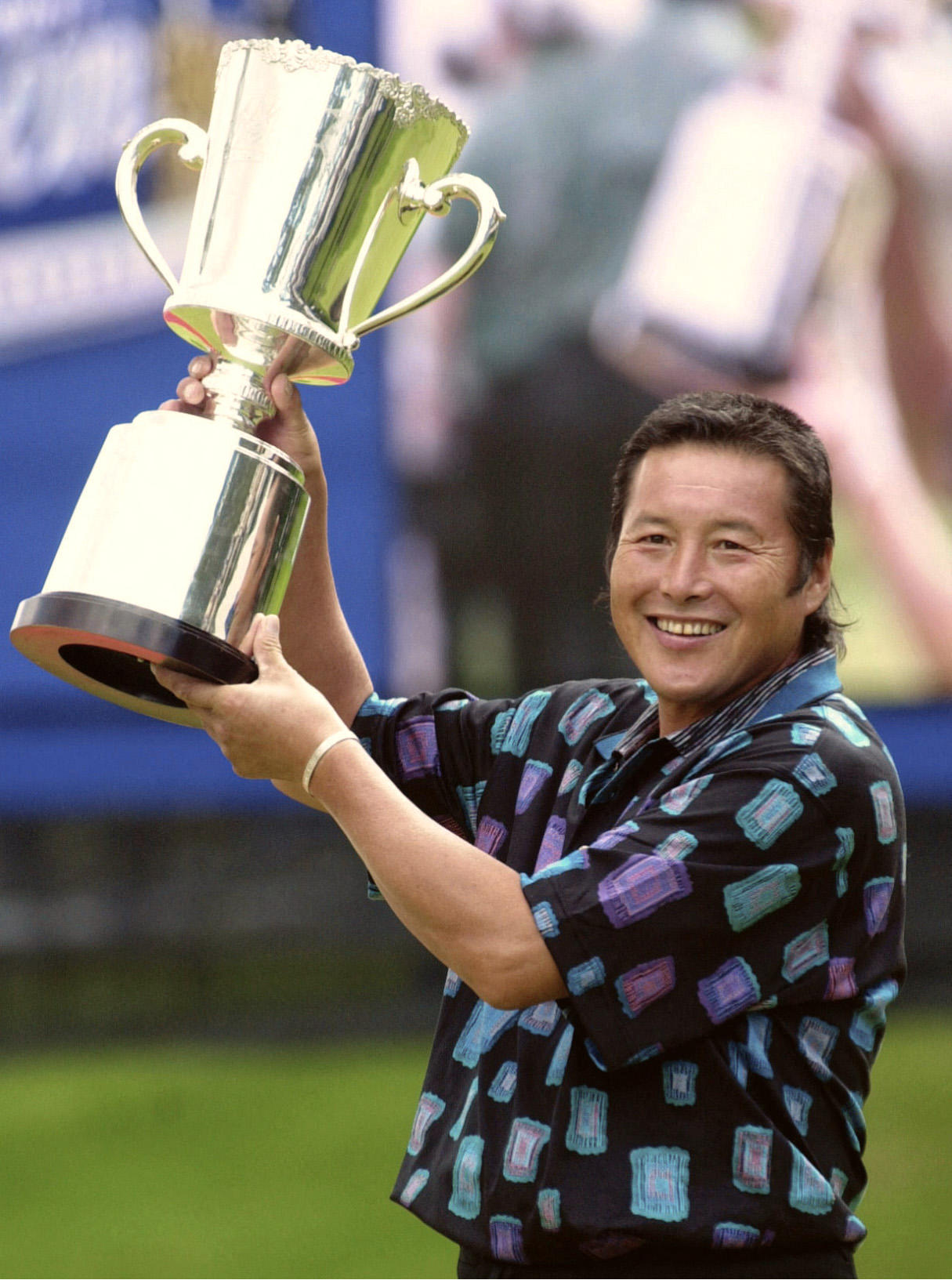
Ozaki won the ANA Open in Hokkaido in 2002
ALAMY
His aura was such that the golf commentator Brandel Chamblee called Ozaki “Sinatra in spikes” and remembered seeing him on a tee box at the 1999 US Open, waiting to hit a shot, when he stuck two fingers out to the side in what looked like a peace sign. Moments later, a member of his entourage placed a lit cigarette between them.
Masashi “Jumbo” Ozaki, golfer, was born on January 24, 1947. He died of colorectal cancer on December 23, 2025, aged 78