
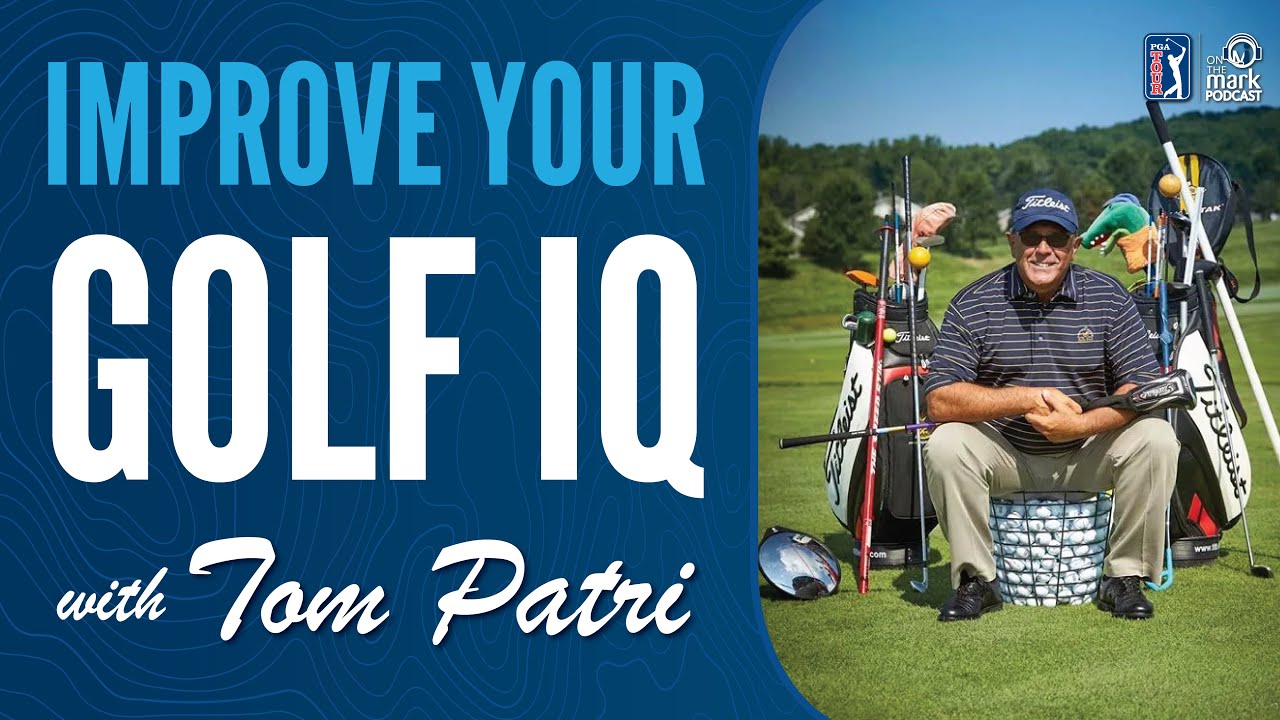
Tom Patri is a respected PGA Professional and the Director of Player Development at Twin Eagles Club in Naples, FL. Tom is a Golf Digest and Golf Magazine Top 100 Teacher and is sought out by players of all skill levels for help with their games. The main reason being that he is a player’s teacher, having played as a Tour Professional for a portion of his career.
Tom brings his experience and insight to the #OntheMark podcast to help you sharpen up your understanding of what it takes to play your best golf when it matters most.
Among various game improvement topics he elaborates on:
— Golf Swing Methods and what to look out for
— Picking “Your” Path to develop Consistent Shotmaking
— Footwork and Good Balance
— Unhurried yet Purpose-driven Pre-Shot Routines
— Keys for Center Strikes
— Understanding Swing Feels
— Playing Golf over Golf swing
— Trusting Technique Changes, and
— Understanding and Avoiding Situational Mistakes.
______________________
STREAMING: On the Mark is available on Apple Podcasts, Spotify, Stitcher, Google Podcasts and wherever else you listen to podcasts.
ABOUT ON THE MARK: Mark’s knowledge, insight and experience have made him a sought-after mind on the PGA and European tours. Through his career, he has taught and/or consulted to various Major Champions, PGA Tour winners and global Tour professionals such as: Larry Mize, Loren Roberts, Louis Oosthuizen, Patton Kizzire, Trevor Immelman, Charl Schwartzel, Scott Brown, Andrew Georgiou and Rourke can der Spuy. His golf teaching experience and anecdotal storytelling broadcasting style makes him a popular host for golf outings.
SOCIAL MEDIA
– Follow Mark on Twitter: https://twitter.com/mark_immelman
– Follow Mark on Instagram: https://www.instagram.com/mark_immelman/
– Follow Mark on Facebook:https://www.facebook.com/markimmelman…
– Follow On the Mark Podcast on Twitter: https://twitter.com/OntheMarkRadio
WEBSITE: Read top-notch golf content from Mark at https://markimmelman.com
______________________
#golf #MarkImmelman #PGA #PGATour #juniorgolf #golfpro #golftip #golfcoach
[music] [music] So Tom Patri and I just giggling before I hit record about our last names and how I oftenimes mispronounce mine, but Tom, I got yours correct. How are you? Welcome to the show. >> Mark, it's great to be with you. I'm a I'm a big fan of yours, a big fan of your brothers and uh I followed both of your careers um both as a broadcaster and him as a player. So, I'm uh I'm really honored to be here. Thank you for having me on. >> Well, thank you. You're very kind. Uh looking at your resume and knowing you played division 2 golf just like me and you won a championship amongst other things. cuz um you know it's a thrill to have you on too and and I I look forward to you know making golf simple for folks because often times we can lose the forest for the trees with all the data and the information we have now you're one of those guys that doesn't necessarily need a launch monitor to tell you what the golf ball's what the golf ball's doing what the club is but but before I go there um I know where you stand on this and this is where I want to tee you off because I just want to get your blood curdling a little bit. [laughter] I am It's like nails down a chalkboard to me >> and someone asks me, "So, what method do you teach?" >> Or [snorts] when I have a teacher that can describe Exactly. If you folks, if you're listening on audio, you will see Tom, if you watch it on YouTube, you'll see him shaking his head already. So, talk to us about method instruction. And it almost seems like there's a proliferation of it because teachers are trying to set themselves trying to separate themselves from others, but it's doing a disservice to the game. So >> I I couldn't I couldn't Mark I couldn't agree with you more. Um, you know, I'm sitting in my learning center here at Twin Eagles in North Naples, Florida, and every person that walks through that door behind me comes in with a different degree of flexibility, of athletic ability, of hand eye coordination, some different ages obviously, and genders. Mhm. >> And it's confusing to me and actually perplexing to me how anybody can teach one method all those body types and athleticisms. >> Yeah. >> Um not that there aren't certain things in different methods that I admire and I've been pretty good as in becoming a chameleon in stealing a little bit of this one and a little bit of that one. >> Yeah. >> That I find helpful. But I have a real problem, a real problem with a quote unquote method for the masses. Um, I think it's absolute, pardon my French, >> horseshit, >> if you will. Um, the, you know, Mark, you've been around some great players, as have I. Um, have you ever seen two that look exactly alike? Does Freddy look like Furick? Does Furick look like VJ? Does VJ look like Illeman? >> No. And I know where you're going because you had a post on your social media account that you know I follow social because it keeps me a breast of where things are going a little bit and and I love yours because there's like a raw truth to everything you put up there. And there was a video where you had a culmination. I remember seeing Freddy and Johnny Miller and I think there might have been old school Jack Nicholas on there and your question was do these guys do the same thing yet they all hit the ball like when they hit the ball you know there may be slight separation in how the ball goes power-wise and maybe curvature but the way the ball and the club interact are basically the same no matter what their style looks like >> you know um Mark you can't see it here but in my studio behind me here I have P1 through 10 the P language up above me >> that I sold. I spent a winner um in 1992 or three in Palm Springs with a fell named Mrady. >> Yeah. >> And I I I think I was the first person that made it from November to March without being thrown out. Um I made it all the way through the winter with Mac without him telling me to get lost. Um and obviously a a different cat but a very bright mind and I learned an awful lot from him. And in that P language up there, the only the only one that really matters is P7 at impact, >> you know, and that golf club only speaks to the golf ball for about a 24th of a second. >> Yeah. >> It translates all its information in that one second. So, we know, you know, and I know both that we've seen so many different motions on on tour, and I'm including the ladies tour with that, too. Um, but the ones that are really good deliver the golf club the same way every time. Yeah. >> Now, how they get there, there's a different roadmap for all of them. No two are exactly alike. I mean, if we had if we had uh some of the greatest artists in the world, we're going to paint the Mona Lisa 15 times, great artists would make it look from 30 feet away exactly the same. But if we got up close to that painting, the brush strokes would be a little bit different in each one of those painting. They wouldn't be identical. >> Uh and that's the way I look at the golf swing. I mean, we we got to deliver the golf club uh in a certain manner at that P7 interval, but there's a lot of different ways to get there. >> Yeah, folks, you need to go and look at YouTube because behind Tom, he's speaking without saying a word and he's got a couple pictures there. The one is of a club that's got foot spray on it and there's some ball marks all over the face. And then there's another one where it's like an image of a club face with a center strike and then one with strikes all over the top of it. We're going to talk about this stuff to help you to hit the ball better, to play better golf. >> Perfect. >> But before we go there, um you've said you're Twin Eagles down there, you're multiple award winner. Um you've spoken about Mac. Just give us the quick backstory before we dive into the material. Tell us about Tom, please. >> So Tom grew up on the east end of Long Island out by a place called Shinikok Hills. >> Yeah. And uh in in a day when in the fall came, people actually left the Hamptons and and it was desolate, which is not anymore. >> And and Tom would drive his 1969 Chevy Capri out there to uh one of the side roads and park it in the woods and put his bag on his back and play the back six holes at Shinock, the back six holes at National, and the back six holes at Southampton, walking through the trees and uh and and falling in love with golf. I mean, just >> him too, huh? >> Falling in love. I mean, just uh it was like somebody put a heroin needle in my arm and it said golf on it and I was I was all in. and and growing up in that area in the Mets section as you know Mark is a really good great golf section with great golf courses uh you know won I know 17 junior events in the area and then [clears throat] went on and played my college golf at Florida Southern and was fortunate enough to win five college events in an NCAA in division two >> and then played for a living for eight years and um woke up one morning and literally thought you know I'm chasing my tail I'm pretty good but I'm not just good enough. I'm just not good enough. Mhm. >> Um, and it was a real it was a real difficult time and didn't know what I wanted to do and took a year, went home and and and really didn't know what I was going to do. Really didn't know. And pure luck, I met a man named John Kennedy um in that time period who who became the director of golf at Westchester Country Club where they held the Buick Classic. And he and he he saw something in me that I definitely didn't see in myself. >> Yeah. And as a 29year-old, he gave me the title of director of instruction at Westchester, which I was Mark, I promise you in 1990, I was not qualified for. >> We you we've given some bad lessons back in the day, haven't we? >> I was not I was not qualified for that position. >> But I'll say this, in 1990, the previous staff had given 975 hours of instruction the year before I got there. And the year I the year I left there, 11 years later, we gave 9700 hours of instruction. >> Wow. >> So, we did something right and we learned something along the way. But one key part of that time period was I I met a man, it's a long story, I won't bore you with it, named Bill Strawbot, and anybody that knows anything about the PJ of America knows that name. And Bill took me under his wing and and was an incredible inspiration to me and introduced me to Flick, Tuski, Mlan, Adams, Hebrin, uh, and I can go on and on and on. >> Essentially listening, you're almost listing the Mount Rushmore of EG. >> David, David was involved at that time. I took some instruction from David Leet, um, Hank Haney. I mean, it goes on and on and on. and I got to spend some time around some incredible people and because of because of Westchester and the Buick. Um, very often that event was the event before the US Open and people would come in and use it as a warm-up event and with them came their coaches. So, I got them I got to see them work in a very important time the week before the open. And I'll tell you one thing about the fraternity that we live in. Nobody ever told me no. Somebody told me I couldn't watch, >> I couldn't ask, I couldn't listen. >> So those 11 years were incredibly invaluable to me. I mean, it just was incred an incredible time. >> Um, and because of those relationships, I would I would fly different places and see them at their home courses and spend some time with them. So those 11 years were an incredible education um that you couldn't put a dollar value on. Um, and that kind of that kind of that opportunity from John Kennedy as a director of golf there and then from Bill Strawbar just uh just launched everything for me. >> Well, you parlayed all of that stuff into MET PGA teacher of the year, South Florida PGA teacher of the year. Um, golf the best in state. I mean, you highly respected and what I like is sort of the old school bent to to this new school game that we currently play. But if there's one thing I know is there's nothing new under the sun, you know. >> No, there is nothing new. I I had the opportunity. You'll love this, Mark. I had the opportunity at Westchester to have on my teaching staff a fellow named Harry Lighor Cooper. If you don't know that name, >> he won 42 events in the 30s and 40s on tour. Uh he he spent some time teaching a fellow named Hogan and Nelson. >> And we we we actually John and I actually buried him at age 93. Um, but Harry when I inherited him was 88 and we spent countless hours talking about his his period in golf and the evolution from his period to the current period in golf and he was kind of like the encyclopedia botanica with me. He just kind of kept talking and I kept listening. Um, so so the point of the story is all these people uh were extremely giving. >> Yeah. um and uh and extremely kind to me in sharing an incredible wealth of knowledge and allowing me access. So >> yeah, I'm going to stop you because you're being awfully humble and everyone listening to this is like, "Okay, we want to dive into this treasure." >> Um as I said, I want to simplify it all and we'll sort of blend old and new. And I'm going to start you with this. You did a very interesting post. I hadn't seen it packaged that way. It made a lot of sense and I want you to share this. Now just about all in sunundry nowadays have certainly got access to a phone camera and certain folks have access to a launch monitor. And the issue with a launch monitor is, yeah, there you're holding up your phone. And we got all this data and stuff. And then when people look at launch monitors, unless they're looking at ball speed and club speed and spin and stuff, if they're looking at any Dplane stuff, they're looking at numbers in isolation, which is a mistake. And then they might work with someone and the guy puts them on the launch monitor and says, "Yo, Tom, your path is 10 degrees outside in." And you're hitting a pull fade all day long. You're laughing. you know where I'm going and and then now we got to get you going more in the opposite direction and who knows I mean it to me I know there's kind of a golfer's sweet spot but you said in a post you're like pick your path you don't have to hit it from 3° inside out or whatever the number is find yours find your sweet spot realize what sort of ball flight that produces because if you do that you've got something predictable in this game that's highly unpredictable so please bring the thoughts there. >> So, you know, people walk through the store every day and they say, "I want to hit this type of shot." And they say, "I have to see my numbers on Trackman." >> Mhm. >> Okay. So, I show them numbers on Trackman. And now we're talking about Mr. Mrs. Smith, Mr. Mrs. Joe Average at the club. >> Mhm. >> And they look at their numbers and I say to them, "Explain those numbers to me." >> Can't. >> Yeah. >> What What numbers do you want to change? And they'll say to me things like, "Is negative good or bad? Is positive good or bad?" We don't have a starting point. >> Yeah. >> From a from a golf IQ standpoint, we don't even have a starting point. >> Mhm. >> And a guy says to me, "Well, I want to hit a fade, but his his path number is six degrees in to out." >> Yeah. >> With a fourderee closed face. I said, "Do you understand that?" He goes, "No, I don't understand the math." So, we have to kind of dumb it down and explain what that means first of all. And then once they know what it means, I say to them, "Do you think you can tell the difference in feeling six positive and four positive?" There's no way. >> Exactly. >> The guy the guy can't hit a pitch over a bunker. >> Yeah. >> Right. So, now we have to educate. Okay. And I said, ' Listen, here's what we need to do. What do you think that would feel like if you did that? >> Okay. >> And they go, I don't know. I said, 'Well, let's let's play with that. I'm going to turn this launch monitor off and I'm going to ask you to create some feelings in your golf swing, and I'm getting to give you some cues, and when we we give you those cues, why don't we just watch and see what the ball does? >> Yeah. Right. >> Because you know what? The ball never lies. >> No. >> The ball never lies. Mhm. >> I remember I was given a day uh this is 10 years ago now. We become very good friends. I was given a day with a man named Bob Voki. >> Yes. >> And we become really dear friends and I think the world of the guy. And I was out in Carl's bed at the Titles R&D center. We were walking out on the range. I'd never met him before. And he had a a bundle of wedges under his arm and we're going to hit some shots and talk wedge play. And behind him was this little young man following with a Trackman in his hand. Yeah. >> And we got about halfway out. I didn't know anything about how Bob taught or what he thought or anything. And I said to him, I said, "Bob," I said, "Do you do you do you use Trackman very much when you fit wedges?" >> And Mark, as God is my witness, I'll never forget this day. He grabbed me by the shirt like this. And he said, "Son, how long have you been teaching? I read your bio." I said, "Yes, I about 30 years." She goes, "Do you think if we hit a shot and you heard the sound and you saw the divot and you watched the ball, do you think we couldn't figure out what the hell just happened?" >> Yeah. >> I said, "What what about this kid with the Trackman?" He said, "Well, they make him follow me around every day." I said, "Well, ever use that?" He goes, "I don't know anything about that machine. I don't know a thing about that machine." >> Randy Smith calls it a drama box. [laughter] At the at the risk of antagonizing >> I love that. I've never heard that. I love that. >> At the risk of antagoniz Ry's a great guy. Tell him I'm going to steal that. I'm going to use that. >> At the risk of antagonizing the launch monitor, folks. >> Yeah. >> Let's do this though because it is helpful to place like if you say, "Okay, I I feel I'm swinging outside in argument sakes." And then we just want to straighten that a little bit to make it functional, right? And then you could feel I'm with you. Go and search for fields as opposed to watching for numbers. But the numbers can put some sort of a value to feel cuz you cuz you can say no that's on the way but not enough kind of thing. >> But here's what I think. I think too many golfers when they see this they think in terms of straight lines and they don't realize that this golf swing travels downward, outward and back upward and inward. And when you explain that to them then they're like go ash so if I move my ball position I could affect that number on that face of that launch monitor as well. So so that's where for me the understanding lies. Yes. >> That's that's that is so beautiful because I I said to a guy just the other day, I said, "Um, if we didn't do anything, he was he was way over the top, you know, way outside in." I said, "What would happen if I move that ball way back in your stance and I had Trackman on?" >> Yeah. >> And he was probably six over, something like that. Seven over. He said, "What do you mean?" I said, "Well, do me a favor. Just just hit a couple shots with that ball with that seven iron of yours too far back." >> Mhm. And I have some monitors on the wall up here so they can see themselves, you know, face on. And he stood up to I said, "Look up at the monitor." Is that far back? And he goes, "No, not really." I said, "Put it further back." He said, "But I said,"Put it further back." >> And he put it back, you know, quite a ways finally. And he hit a shot and it went from seven negative to four positive. I said, "We didn't just change Did we change your Did I change you? Did I change your golf swing? >> Did I do anything to change your golf swing?" >> Yeah. >> And he went from hitting a pole cut to a little tiny draw. He said, 'But I can't play with it that far back. I said, why? Why not? Why can't Why? Why? Why can't you? Would you rather hit that pull slice or that little draw? He goes, "Why won't I hit the little draw?" I said, "Well, I guess the lesson's over." >> Isn't it amazing now that you share that little anecdote, which is so emblematic of so many golfers because we everyone's got this sort of holy grail idea about stuff and and they're like, "No, no, I can't play from there because that's not correct." And you're like, "But wait a second." What the >> what the hell does correct mean? What does that mean exactly? >> But that's the point I'm trying to make. It's what the ball does is correct and what you can repeat when the heat is on a little bit. That's correct. >> So you'll love this because you you'll know these people. So it's 1984 and I'm playing in the South African Masters >> at Milner. >> Wind's humping. The wind's pumping probably >> and I get paired in the first round. And I listen, I grew up at the Nissan and Long Wal Island. It's windy. >> Yeah. >> I played my my my college golf in Florida. It's windy. >> So it's not like I've been not blessed by playing in the wind before. And I got paired with a fell named Ters Clawson. >> He could he could flush when he was on. Oh god. >> Okay. So you know where I am now. >> He drank he drank a little bit too much of that swing oil. >> Anyway, the third member of the group is Yubayaki. >> Oh god. Elegant. Yeah. Beautiful. Mhm. >> So we tee off on one and you know you know the golf you know the place and it's blowing and he hits this shot on the second or third hole and I promise you Mark it doesn't get above knee height. >> Mhm. >> But it sound is the sound is flush coming off the face. >> Yeah. >> And I didn't get to see the strike. Didn't see the swing. But I saw the ball flight. >> Mhm. >> And he hits it in there 15 or 18 feet from the hole. And I'm like what the hell was that? What exactly was that? And it was probably from It wasn't more than 170 yards, >> right? Yeah. >> And I walk over to the cat. I go, "What was that?" He goes, "That was a three iron." >> I go, "What?" He goes, "That was a three iron." And I said, "I have a lot to learn, man. I have a lot to learn." >> You know what? You've just taught somebody a lesson just by sharing that. And I want to mine this a little bit >> because I firmly believe that if people took the numbers off the bottom of irons >> Oh, I love you. I love you, Emman. I love you. >> Because it's like, oh, well, I'm supposed to hit seven iron from 155 or something. And you've just shared that tertious um story where it's not the number, it's the result. Again, you know, if you want to play better golf, it's not the club that you hit, it's how you hit the club. I say to my students all the time, my better students now, not Mr. M. Now, we're talking about maybe a a decent college player or a mini tour player. I said, ' Listen, not the club you're trying to hit. What kind of shot are you trying to hit? >> Yeah, exactly. >> What kind of shot are you trying to hit? And what what window are you trying to hit it through to affect the conditions you're playing in? Okay. I spend a lot of time a lot of time on the golf course with people um more and more nowadays. I spend I try to get out of this building as much as I can and get him out on the golf course in the afternoon and we we hit golf shots. We don't we don't play golf swing, we play golf. Um and I think in 2025 heading into 26, we've become engulfed with playing golf swing and not learning how to play golf. >> Yeah. Well, I got to I got to make a comment then let you respond, Mr. Decorated PGA Pro. >> Oh, stop that. Okay. No, this let's say I'm teach I'm I'm I'm aspirinent golfer coming to you. Now look, you can't argue with me and say it's not sexy to be working on something with your golf swing and it's fun, you know, if you got that sort of a mindset. But the reality is we're graded by how we perform on the golf course and not on the driving range. You're gonna tell you're going to tell me. >> Here we are. So if that's what you're in, if that's what excites you, don't join a club. join a range. >> Yeah, >> you don't you don't have to you don't need a club. You don't need any holes. If you're excited about that only, then there's some really nice ranges in South Florida. Beautiful grass, a lot of lot of nice provisions. Go join a range. You don't need to join a club. It's too expensive. Just join a range. We we teach the X's and O's in this environment. >> Yes. >> But this is not this is not how you play golf. The only thing that matters, the only thing that matters out there is the last box. It says total and that number you put in the last box is all that really matters, >> right? I mean, it's I played golf with my son and one of my assistants two days ago at Indian Creek in Miami, which is a really nice golf course and a pretty good golf, pretty good driving golf course. And you know, they're asking me all kind of questions that pick my brain as we play. I said, "Boys, the only thing that matters is the last box. That's all that matters. No, you got you got to put a number in the last box and and you have and I said to him, have you ever played two rounds in your life that were identical? Have you ever played two rounds that were identical? >> You ever shot that been identical in one round of golf? If you think about it, >> right? Not even close. >> Okay, >> I want to ask you this question here. I think I know the answer, but I'm going to ask you nonetheless because this is a learning moment for all the club golfers. would you take? Cuz everyone wants to Well, most club golfers want to hit a draw. Most elite golfers don't want to hit a draw. Okay. Like I you've you've worked with elites. We go from PE teaching people not to slice the ball to teaching people not to hook the ball. Okay. Um would you rather play a reliable 15 yard fade than having a draw and a fade available to you but not knowing what was going to come out of the barrel next? So, I'm going to tell you a story that's kind of sad about myself and I'm not I'm not I'm proud of the story. I can't hit a shot left. >> But that's not a bad thing though. >> No, it's not. It's a I think it's a great thing. So, they make fun of me. My son makes my son hits it a mile. He's a lefty. He's probably this tall. He's a hockey player. He's got speed. Incredible speed. I mean, he's literally this big and he hits it about 330 and hits it pretty good, by the way. and he and he hits a, you know, pretty high draw and he says, "Dad, you know, you're 67 years old. If you could turn it over, you know, it would go 15 yards further." I said, "If I try to turn one over, I might never find it again." Yeah. >> Ever. >> And and I played that way, Mark. I played that way since I was a kid. I played that way at Fargo Southern in college. I I played that way when I played for a living. >> And I, you know, I I don't I don't remember recently losing a golf ball, you know. I don't remember. Well, that's but yeah, so you've you've basically answered the question where so many golfers, they desire what they don't have. Where I want to look at someone say, "Hey, that 15 yard cutter you're hitting, as long as it doesn't start right at your target line, you're going to be just fine." You know, trying to fix that and turn that into a draw, you're going to change the way the golf course looks. You're going to change your alignment. You just It's an entirely new playbook you have to go about in an effort to hit the ball in the opposite direction. I always say to people, listen, you can ask me for anything you want, but be careful what you're asking for because you might get it. >> Yeah. >> Be careful. Just make sure what you're asking for you really truly want. And you know, you know the consequences of what you're asking for. >> Yeah. >> Okay. >> Okay. One more thing to that because draws and fades are created with the face path relationship. So, here's a golfer comes to you and or she comes to you and the path, let's say, is five outside in. Um, I think also that most golfers when they're looking at the launch monitor, they need to zero the thing out or just basically swing on the same angle every single time, which is impossible where all the elites are playing inside of an area in terms of swing path. So teach the people that because I I I feel like people are trying to paint this perfect line as opposed to understanding that golf is sort of played down a channel especially when it comes to your swing path. >> Had I had a gentleman this morning who was not unathletic. He was you know pretty athletic probably 55 years old. He said all you hit is whole phase >> and and and Trackman said he was right. >> All right. He said, 'I just want to see one ball go right to left. That's all I pro in one hour. I just want to see one ball go right to left. I said, ' Okay.' I said, 'I want you to do me a favor on my on my teaching mat up here. I've got I've got some lines drawn on the mat. I want you to make sure the face is aimed down that center line. You can't deviate the face at all. >> Okay, I want you to move the ball back in your stance. I want you to close your stance and close your shoulders. And I want you to swing as far to the right as you can. >> Okay. He said, ' But the ball won't come back. I said, "Move it back in your stance. Close your feet. Close your swing. Swing as far to the right as you can." And it was a seven iron. And the pull cut was going like 148. This guy was pretty athletic. He was not weak. >> Mhm. >> And the first ball he hits that way goes 173. And and and the and the curvature on the ball was seven feet right to left. >> Yeah, it's probably dead straight. He says to me, "But my feet I can't I" Again, he goes back to the same thing. "But I can't play like that, can I?" >> And my answer was the same. Why not? >> Yeah, but here's the problem. Here's the problem, Ryan. Because we know in golf, we're never going to hit the ball perfectly all the time. And as soon as I've had these lessons and they're like, I'm convinced them, look, you can go and play like that. But then as soon as they block one, then their all knowing buddy looks up and says, "Your alignment's bad. You must aim straighter." Yeah. So, please help >> that. And my followup to him, and to your point exactly, Mark, was my followup to him was, >> "Do you like that?" He goes, "I love that. Did it feel good?" He said, "It felt great." I said, "Can you trust it?" >> Yeah. It's there. >> He said, "But [clears throat] I said, well, can you trust that? Can you go out?" I named one of the holes on our golf course, whether it was water, right, of the green. >> I said, "Can you aim that at the right fringe and trust that?" >> He goes, "I'd be scared to death." I said, "I'm sure you would. I'm sure you would. >> So, there is the key. So, then we got to go about this and not make emotional decisions, right? You make the pragmatic stuff and you're like, well, I might go back to my 148 predictable pull cut, huh? >> I said, well, maybe that with that pawn to the right of the green, you might want to hit a little pull cut in there and hit a six iron instead of a seven. But if the pawn's on the left side of the green, maybe you you can grow some courage and hit it at the right fringe and turn it over. Well, let's, you know, I I I love where we're going here because that brings up a situational analysis to this because isn't it, aren't you astounded because I'm speaking to my kindred spirit here. Aren't you astounded how um a golfer goes out there, he's taking lessons with Tom Patrick or Mark and he hits a few bad shots and he goes, "My swing's up to maggots." But if you really look at the stuff, there'll be a situation out there there's a commonality. It might be wind out of the left or problems on the right and that's when the floor in the swing gets shown up. And what you've just said there, let's move the water to the left side of the target. Then you can try what you just been doing. And that's the awareness of situation and not just that this golf swing is like a one-sizefits-all thing. >> And that's why and that's why going back to earlier in this conversation, I'll take that same guy after we've had that lesson. I'll say to us, our next our next get together, let's make it at four o'clock next Wednesday afternoon when there's nobody around. Let's go out on the golf course and hit some shots. >> Okay? >> And let me put you in some situations and let me stand there in a situation where you're uncomfortable, where you're visually uncomfortable and let's hit shots until you are comfortable. And he says, "Well, that sounds like it's a good idea." I said, "It's not a good idea. It's it's an essential idea. We have to do that." >> Yeah. because we're not going to know whether you can make this change unless we can go out to a situation that's real and have you pull the trigger. >> You know what? That is truth, folks. This is Tom with biblical truth. And here's the thing. In the era in which we currently find ourselves, when there's a lot more indoor golf and stuff because it's quicker, there's a reason why in TGL those guys hit the ball so well all the time because they're not looking at bunkers and water and crosswinds and uneven lies and stuff. Even those guys. Huh. >> Yeah. Yeah. Yeah. I mean I mean I think the average player has to you know the average player is under the assumption or has this idea and we both know this is not true that tour players hit perfect shots all the time. >> Yeah. >> But they have these wonderful shots and they said they they say to me they never miss it. I said, ' Listen, when you turn on CBS on Sunday afternoon, >> you're watching the last three groups >> of the best players in the world playing the best that week. Keep in mind that 70 guys missed the cut on Thursday. >> Yep. >> And they weren't hitting it great. >> N matter fact, they were hitting some really crappy golf shots. >> Okay. And they're the best in the world. The game is that hard. >> Yeah. So, you got to give yourself a little bit of a break here and and come up for air a little bit. >> Okay, we're doing a great job here with simplifying the game and helping people understand data and stuff like that. Now, I want to pitch you this. You've also talked about this in a post. And incidentally, folks, Tom does Instagram lives which are thoroughly entertaining and informational, right? I was doing an event one time with my brother. He's the star in the family. Um, Mast's champion and such. And so we had >> I think there's two stars in this family, but go ahead. >> So So yeah, it's like a Q&A and I'm asking him questions and we back and forth and stuff and then we open it to the audience and so I'm moderating and hands go up and I point at a guy I'm like, "Yeah, what's your question?" And he said, "Trevor, what's the most important thing I can try and do in my golf swing?" >> And now that's a farreaching. >> Sure, you can go you go a lot of places with that, right? Trevor, without even batting an eyelid goes, finish retain balance and finish your swing in balance. Balance your follow through on everyone. You did a post about that talking about footwork and balance. Now, we've talked about the club face and the path that swings along and if you aim the club face appropriately and you just move ball position, you can spin the ball differently, right? But good footwork, good balance man, that's tantamount to success because if you're not, you affect where that path's going to, even though you're trying to do the right thing. >> So my problem right now, Mark, maybe you can give me an maybe you can help me and coach me through this because I believe what you just said. Okay? And I believe I believe what Trevor just said, by the way, 100%. >> Scotty Sheffler has has sent my teaching back 150 years in the last two years. I mean, they they they actually walk in here with videos and say, "Well, look at this. Look look at this." I said, "That's a unicorn." >> Yep. >> That's a unicorn. >> Okay. That's You shouldn't be You want to look at something? Look at Adam Scott. Look Look at, you know, look at, you know, Hogan. Look at Nelson. Look at Sneeed. But don't look at Don't look at him. >> Can we do this very fast because I want to talk about Scotty because I've had the good fortune of watching it close and talking to Randy Smith, his coach. If people want to make that argument to you about Scotty Sheffller's footwork, before they make the argument, they need to be able to convince you that they spend enough as enough as much time as he does getting his hands perfectly on that golf club every single time so that the grip face relationship is predictable cuz his hands are not incredibly good. His relationship between the palms of the hands and the club face is identical every single time. So much so, get this, cuz we've featured his uh club maker on the show, his club maker says putting grips on Scotty's clubs is next to impossible. He puts the grip, get this, he puts the grips on the shaft. They have to certain weight the grips with certain wrapping in certain areas, right? Six layers on the bottom, I think it was, and less on the top. And then he puts them on there and while they're still wet, Scotty will pick them up, adjust them, look at the leading edges. Then he gives the clubs to Randy and Randy double checks that just because Scotty is that militant about where his hands sit on the club. Now I'm saying that for you to take it and run because this is a guy whose hands and club connection is perfect. So he can afford to have some misfiring elsewhere. >> So that's easy. How many people walk through my door here in a year whose grip, especially left hand grip, is in the palm, not in the fingers of the left. >> I'd say if you see 10 people, probably about eight. >> You're way too high. >> Really? >> They're they're awful. Every one of them is awful. Terrible. >> You know, they're up in the palm of the left hand, you know, in the palm of the right hand. The right hand's underneath the shaft. Mhm. >> I mean, you know, left hand looks this way. I'm like, you have no freaking chance from there. You have no shot, >> you know. >> And they don't they don't even understand the average Joe. They don't even understand that where it should be. >> Yeah. >> So, I I'll grab their hand. I'll I'll turn it over. I'll say, "Open your hand." And the club is in the palm of their left hand. I'll say, "Is that right or wrong?" They go, "I don't know." How about that as a starting point? >> So then I'll pull up some pictures and put them up on screen of 30 tour players and where the club is in their left hand. They said that that's not what mine is. I said no it's not. No. Why do you think you can't control the face of that golf club? Right. And I say to him, listen, here's the deal. Let's talk face and path. Here's what I say to them. Face is the king. Path is the queen. They go, "What?" I go, "Face is the king. Path is the queen. I'm going to let you get away with a slightly faulty path, but never a bad face." >> Amen. >> Never a bad face. >> Never. >> So, that's the thing. Scotty's club face control is otherworldly, and that's why he hits it as well as he does. And a lot of that footwork, it really goes wonky after contact. So, and I was a very wise wy old golf instructor once said to me. >> He goes, "If a golf swing's mistakes are even numbers, they'll you'll pretty well be functional." He goes, "When you start to get odd numbers of errors, then you got issues." Now, and when he said that, I'm like, "That's too general. I disagree." But the truth is, it's what modern day teachers call matchups. Okay? if one thing covers up for another. But Scotty's footwork is a unicorn, but the handwork is biblical. Right. But now I'm going to direct you I'm going to direct you back to the balance and footwork. So help us there, please. >> So I have I have I have a couple of balance boards here in the building. Um I I use body track um a little bit when I explain things to people about footwork and and ground force. Um, which I don't do with very many people because most of them can't wrap their head around that. You know, it's just a little bit too much for the average player. But, you know, I I tell them, listen, your your left foot is your plant foot and your right foot is your pivot foot. And I I'd like you to make sure the left foot is stable and grounded, and you drive force into it while pivoting your right foot from a flat position to a bank position to a roll to toe. >> And they go, "What does that mean?" They go, "What does that mean?" I go, "Let's let's just spend 30 minutes on how your right foot should behave." And most of them are working heel to toe. So the right knee is going towards the ball. They're, you know, they're coming out of their posture and they're hitting these wonderful shots that are pretty close to the >> hoszle. >> Um, and that's not very good obviously. And then when I start to use their right foot differently and they start to and when it's it's totally foreign to them, by the way, totally foreign. And I actually brace their left foot into a I have a little device where I can brace their right foot so it can't really left foot, excuse me, so it can't really move and start to pivot their right foot correctly from a flat to a bank position. The the um impact location on Trackman goes from way in the heel all of a sudden goes back to the center of the face and what happens to the carry distance number? It goes through the roof, right? And they go, "That's because of my feet." I go, "Yeah, yeah, it's about your feet." I said to him, "Let me ask you a question. I want to name a couple of people for you. Michael Jordan, Derek Jeter, Wayne Gretzky, Olga Corbett, the gymnast, the Olympic gymnast. >> First 10 in the Olympics. >> Pretty good, right?" Yeah. First 10 Olympics, right? Exactly. I said, "What do they have in common?" They go, "Well, they're different sports. I don't know." They go, "They have great footwork." >> Yeah. I said, "Scotty Sheffller is a unicorn, but most great athletes have great footwork." Who had better footwork than Michael Jordan, than Derek Jeter playing shortstop, then Wayne Gretzky on skates miles an hour. >> Think about the tennis tennis players is the same deal. I mean, the >> absolutely absolutely. So, I then show them I like to show them Adam Scott. It's one of my one of my kind of go-tos for footwork. Mhm. >> Um I sometimes use some old Hogan film I have. Um I said it's just great footwork, man. You have to have good footwork. >> He's got sensational footwork as well as Rory Mroy, which brings me to this. Okay. Um because you talked about Grand Reaction Force and such. So people will listen to a show like this or get on YouTube or whatever the case might be and they'll start to hear people say, "Well, you got to jump for power." And this, which is true, but here's the thing. here recently. You're gritting your teeth. Um I had Kyle Burkshshire on the show a while back. >> Wow. >> Okay. Who's he's has hit a drive 576 yards. Okay. >> That's a little longer than me. Just so you know, a little bit past me. >> Driven at a par five basically. Um and when I asked him about power, you know, he hit me all the time. He goes, you know, he moves back and forth between his feet before he hits. He goes, "But if people want to hit it farther, hit the thing." He goes, "Get efficient. Hit it squarely in the face. Get your smash factor as high as you can and like you say, hit it squarely in the face." You push, you're pointing at that picture, right? So to that now, so I'm going to say to people, get less concerned with hopping around the place. Plant that front foot like Tom says, and hit the ball squarely if you want to hit it farther. you know, all the um all the data that I've been privy to. Um some through titleist and some through my own stuff and some through friends that have been been kind to me. You know, we talk about graphite shafts, we talk about certain golf balls, we talk about certain club heads, and we talk about, you know, ground force and all these different things. But all the data shows that the number one way to increase distance is to hit it in the middle of the face. you know, and Mr. Mrs. Smith plays so far out of balance most times. And that's why I what I love what Trevor said. I love what you just said before. >> And I say to them, listen, let's figure out how to hit this in the middle of the face more often and let's see what happens. >> And when I just move them millimeters millimeters towards the center from where they started, you know, with with Trackman in terms of impact location, >> they can't believe how the numbers jump. Yeah, it's true. >> You know, and I say to him, listen, not only does the middle of the face tend to hit it further, but you know, it's funny thing when you hit in the middle of the face, it doesn't curve as much. >> Yeah. >> You know, so not only you going to hit it further, but you can hit straighter. That's a good combination. Just so you know, Mr. Smith, that's that's that's going to help you out a little bit. >> Harvey Pennock legend said the center of the face was the no roll zone. It's like those balls spin from there, they land where they should, they go straight. Um, so let's talk about that because you have those pictures of a bunch of miss strikes and the center strike. I'm a big for drills. >> Yeah. So, one of the things I'll do is I'll put them on the mat. >> Um, and this mat, my mat is really nice. It takes TE's very easily. >> All right. >> And I'll put a ball on the mat and I'll take two T's and I'll put them on a little incline. >> So, when they put their club head behind the ball, I'll give them about this much space on the toe side and the heel side. I said, "All I want you to do is hit that ball and miss those two T's. I'll go a little bit of a gate, an incline gate." And I give them some some I start with some pretty generous space. >> Yeah. >> And of course, every time they swing, one of the TE's is flying out of the ground. >> Mhm. >> I said, "Let's just stand there and hit a couple shots until you can miss those TE's." And I've got Trackman running at the same time just for face location. >> Right. >> Okay. And I'm not showing them numbers right away. And all of a sudden they hit two or three in a row where they missed both T's and they they hit the shot. I said, "Come on over here." So this one, this one, this one, and this one, you hit a T. And your seven went 132. >> Mhm. >> And this one, this one, this one, and this one, you didn't hit any of the T's, but you hit the ball and it went 147. I didn't change your golf swing. I just asked you to miss the TE's. >> They said, "What what should I do?" I said, "Why don't you do that drill a lot? Why don't you do that a whole lot? >> Well, developed the skill of it of landing the club the right way. But I but I want to talk into that a little bit more because it's probably the same folks that have hit the ball short because they miss striking it and then someone said to them, "Well, you got to turn your shoulders more. They they've added extra movement so now they making it harder to get the club down to the ball." >> And I said to him, "Who told you that?" They said, "Well, well, my friend John told you." I said, "What does John do for a living?" He said, "He's a stock broker." said, "Well, if you if you have any stock advice, take it from him. Don't listen to him when he plays golf." Okay? Please don't listen to him. Please. He's not qualified. He should be sued for malpractice. You should be sued. >> I want to say I want to pitch you something and have you go yes, no, you're crazy. There's And now we're sort of bridging old school and new school a little bit, right? Um, one of the best drills in the world that anyone, no matter their standing in the game, could do and and um improve their ball striking is hit balls with their ankles together or their feet right next to each other. I believe that. Where do you >> I've got an article that I give away all the time in my iPad. I mail to people all the time written by a fellow named Peter Ken and we both know who that is, >> okay? And he talks about Stenson having him do Stenson hit countless shots with his feet together. >> Countless. So, no. Yes. And you're not crazy. >> Cool. Okay. So, we got the center strike figured out right now. We just got to get people moving. Um because it seems like there's the pace of play. Police have gotten louder. Um and everyone's like trying to speed up their routine and stuff and they're running between shots and they're hitting more shots so they're playing slower. And I I believe that if you hit fewer shots, you're going to play faster. So what you do prior to the shots very important. And you had a thing that you called waggle, set, go, which to me was great because often times a golfer's over there with nothing going on in their head and they just swing and hop and it doesn't work out. But with this, the waggle is a little pre preamble to what's happening. The set is kind of the trigger and then you pull the trigger. >> Talk about waggle set go and how it can help people. So I I want to I want to make a comment and I want to I want to throw this back at you, Mark. And I something I really don't understand and it I don't have an answer for this and it's really it bothers me. >> So when I go back and I watch Hogan film, I watch Nicholas, I watch Gene Litler, I watch Julius Boros, I watch, you know, anybody from that era, um Jackie Burke, you know, Waggle the Club. Waggle the Club said it and they go. >> Yeah. >> Okay. And everybody I've talked to from that era, including Tom Watson, by the way, has told me it was simply to release tension. >> Yes. >> It was just to relax themselves, release tension, get into a cadence, get into a rhythm, if you will, >> and and they had a routine that they waggled a certain amount of time at a certain pace, actually had a certain pace waggle, and it queued them off in the rhythm in their golf swing, and it put put them in motion. So now I watch the modern player and they stand over the ball statically forever. >> Yeah. >> I mean they get really static and and as the pressure mounts with exception they had some really shitty golf shots. >> Right. >> I think static is a killer. I think static is a killer. >> Yeah. >> And I I I I preach this to a lot of my young players and college players and they and some of them say to me you're going to laugh now. They say, "What's a waggle?" >> They don't even know what a waggle is, you know? Like, what do you mean? What's a waggle? Why would you want me moving around like that? They don't even understand the premise of it. >> And I'll pull up some old film and they'll they'll laugh at me. Well, that film's in black and white. He told me black and white stuff. I said, "By the way, that guy named Hogan was pretty good. I don't know if you know that or not. He was halfway decent. This is Jack." And you know, we go through the whole thing. And I said, "Listen, if you stand over too long stationary or static, it's really hard to pull the trigger and get in in in any kind of rhythm or cadence." And I wish I could pull that question and pull that question across the across the landscape, whether it would be Randy Smith or David Glad Better or or Jimmy Mlan. Actually, I did talk to Jimmy Mlan about this recently, and he agreed wholeheartedly, why they're not teaching their young players that cadence, if they will, as part of their pre-shot. >> I I don't know. There are certain players that are worse than others at it. Um, I believe that force precedes motion. Um, and so if if you want to get the club to sweep away from the golf ball, you know, a little waggles, loosening up the tension allows the body to, you know, kind of get set for what's going on. And it also to me, because when you're doing that and into the waggle and if you're focusing on how the hands are moving or whatever the case might be, then it almost eliminates some of the white noise going on. So you get a little bit more, you know, singular about the shot that you're about to hit. And so there's there's less time spent. And I'm almost like if I've looked at the really smooth swingers of clubs and talked with them, uh you could almost that waggle set go or something to that effect, you could almost put it on a metronome. So they setting the time already. >> Love it. >> So I So I'm completely with you and that's why I wanted to go here because I see golfers and the clubs just stays on the ground and the feet are planted into the turf like this and there's no motion. And so then you got to get the club away and then they drag on the handle or they snatch the wrists away and yeah, the whole thing's a reaction and the golf swing's doomed before they've even got to the top of the back swing. >> Yeah. I just think from a cadence standpoint, from a rhythm and timing standpoint, from a I use this word flow a lot, from a flow, I think it's really important. >> Really important. And and I I just see now listen and they'll say to me, well, I I see Adam Scott standing there a long time or I'll see you know, whoever. I'll say, listen, you don't want to compare yourself to Adam Scott in that sense because he could stand on his head and hit it pretty good. >> Yeah. But I would say like if you I know Adam um they are still moving, you know, the toes are moving in the feet, in the shoes, you know, they're little fine adjustments going on. They don't just put their feet down on the ground. I can't tell you how many golfers I see, they'll aim sort of halfway decent, club behind the ball, feet down, and then that's them. then they don't even like make these micro adjustments before they go >> and they it's highly likely they're not aiming in the right place in the first go anyhow. >> Yeah. It's funny. I I when I when I first posted that waggle set go, it was my it was me hitting a golf shot. I got the nicest note from Billy Harmon. >> Oh yeah. >> And and because I talked about the waggle in this post and he said he said, "Pro, where's that been? Where why why do we lose that? Where do where where along the way did we lose that?" you know, um, so I I I was really kind of touched they they took the time out to send me that note. >> Well, let's let's help people real fast. So, the waggle is just you believe it's kind of got the club in the fingers of the hands. You can knead on the golf club a little bit if you're watching me on YouTube just to take away tension and then it's just little movements with the wrist. It's not big arm swings or anything like that. It's just little almost >> and and and and to your point, Mark, I think the feet are important, too. Yeah. You know, and I think also, and this is this might be a little 301-ish for the average player, but I think the waggle and the pace of the waggle should match your personality. Like Lenny Watkins had a really fast waggle. >> Yeah. >> You know, and Jack had a much slower wagon, you know, and um so I think I think you kind of match that up to the rhythm that you're trying to create >> and and aspire to in your golf swing. Yeah. And I and I love it too because like I talked with Rory Mroy who he doesn't necessarily waggle the club. It moves a little bit but he needs on the grip and he looks at the target. And he had said to me late last year he goes, "I found I was looking at the target more and more and more and more and more and the next thing I'm helping myself from the frying pan into the fire." So he was trying to speed his up with less looks at the flag. And that's where the set thing comes in because it's like at some stage you got to be like, "All right, we're all in now." you know, now part >> so little waggle then the set could be I don't know you could it could be anything it could be a little mental trigger and knee kick >> and I and I share this to people you know Mark Emilman's preset and waggle and cadence is going to be different than Tom Patrick's >> it's going to be different so I think you gota you know horses for courses you got to figure out what works out for the individual was taking too many looks he figured that out you know >> um somebody else might not be taking enough looks or enough wagons or making the waggle at an inappropriate pace or too big of a waggle or too small of a waggle. So, I think it's something you have to play with a little bit based on the individual. >> That's a great idea. I want to leave folks with this. You talked about Nicholas's was softer and smoother. Watson's was more staccato. Trevino's feet all over the show while he was waggling and talking. >> Crazy, right? Crazy. Good. And then Hogan said that because he in his book modern fundamentals he spoke of different players waggles and he said I found and I paraphrase that if I'm going for a power shot the waggle is faster. If I'm going for a finesse shot the waggle is softer and smoother. >> Brilliant. Brilliant stuff. >> Yeah. >> Brilliant stuff. Right. >> Speaking of brilliant stuff, you've been great. Uh which means people are going to want to reach out to you. So uh share the uh handles, the social, the website where they can find you, please. website is really really simple. It's just tomatry.com. >> Uh Instagram, LinkedIn, Facebook. Um and then the YouTube channel has I think at last count 356 videos and video tips on it on the YouTube channel. >> Yeah. >> So, please subscribe. >> All right. >> But I want to go back to the beginning of the hour, Mark, if you don't mind, for just one second. >> Yeah. >> And uh and you know, I I become a fan of your podcast. Uh, >> thank you. >> I be become a fan of your broadcast. Uh, I I just think that there are a lot of people out there on the air and on the airwaves that shouldn't be. Uh, and there's very few in my mind that should be. And you're one of the should bees. and uh and to come on and I know you're coming on my Instagram live next month, I believe on the 5th of November, I think, but >> I um I'm honored to be on here. I know what your guest list looks like and uh I'm not in the same realm of some of those people. Um so I really appreciate that. Um please keep doing what you're doing because you're doing golf a great service, my man. Great service. A great service. and uh the six months I spent in South Africa in 1984 might have been six of the greatest months of my life. Uh you come from a wonderful place and met a lot of wonderful people there. It's a great memory and I appreciate that. >> Well, you're very kind. Um, quickly for folks who don't know, all this podcast is, it's emblematic of a young kid who wanted to be a good golfer who all he knew about golf was what he read in a month old Golf Digest magazine back in the day because we'd get them late. Um, we'd be know we'd have no golf on TV. So, I'd read books and it was always a dream of mine to speak to great minds in golf. So, lo and behold, this podcast happens now for the kids somewhere who might never get to meet you. He's gotten to meet you in a way because I became best friends with Bob Jones and company because of what they said to me out of box. So, that's all the show is. So, you're very kind, but I'm just I'm trying to be a conduit between the aspirant golfer and the bright mind like you. So, thank you. >> Well, you're doing a hell of a job, my man. Hell of a job. I hope someday we can uh we can meet in person. Um, there's a guest room at Kasa Patry whenever you want to come down. The sun's shining. It's pretty nice and warm here. The greens are actually perfect right now. And I'm going to go out and hit about 50 balls before I go home. >> Well, enjoy that. I'll only come down if I can play off the very front, please. Then I'll then it's a deal. >> Well, I'm I'm kind of on the forward side of that that place myself right now. So, we're we're fine. We're fine. >> Tom, you're a legend. Thank you, man. >> Thank you, man. Thanks for having me, Mark. >> [music]
5 Comments
Old School wisdom
great stuff
So good to hear that about Rory recognising he was taking too many looks. Especially with what Izzy Justice explains happens in the brain when you do that.
Go watch Rory US Open at Congressional highlights. He has 3 looks then pulls the trigger.
Great discussion as always.
10:10 "There is nothing new under the sun"… Not entirely true. Not enough old schoolers talk about the effects of new balls, clubs and course conditions on modern play. In the 90's, PGA Professionals were writing and deferring to a PGA Instructional manual with incorrect ball flight "laws". Statistics have also debunked a lot of old-school course management ethos. No question Patri is an ABSOLUTE LEGEND, but I wish the old school guys would give credit where it's due on issues that have actually evolved…and talk about what IS different.
For the record, and please ask any MLB player from that era if you don’t believe me, but Derrick Jeter had the absolute worse “footwork” of any MLB shortstop in the history of MLB. And, Michael Jordan, who has essentially lived on the golf course for the last 25 years, still can’t break 90 on a decent golf course. So Tom, you may need to adjust your footwork analogies somewhat….to say the least. Hey Tom and just for fun, lookup a video if you can find one, of Derrick Jeter attempting to hit a golf ball. Jeter’s golf swing is comparable to that of Charles Barkley, which is why Jeter almost never participates in any type of pro-am. Jeter’s golf swing is a complete joke, and demonstrates his complete lack of athletic ability. Prove me wrong.