

For golf course design and development, the past 15 years have been better than good. It’s not unreasonable to suggest the quality of new courses being built is as high as it has been since the 1920s. In fact, 25 courses that opened since 2010 now reside among the top 200 on our America’s 100 and Second 100 Greatest rankings—a remarkable number (one-eighth) considering how few were constructed during that time.
The quality can largely be attributed to better land. Developers and architects understand their chances for critical and popular success increase in proportion to how naturally suited their properties are to golf, regardless of location. This generally means sandy soils, prompting a “sand rush” that has taken development to all corners of the country—to dunes along oceans, prairies of the Plains and Midwest, off-the-beaten-path locations in the South.
RELATED: Trout National is one of the most hyped new courses in recent memory. And we got a first look
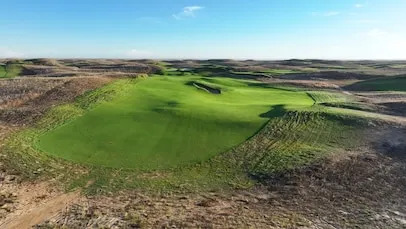
These wild, windy sites have produced some instant classics, but they’ve also fostered a kind of sameness in their designs. Most follow a pattern of enormously wide fairways that rumble into contorted greens surrounded by short grass. The bunkers tend to have chewed, knobby edges to suggest the look of natural erosion and collapse, and the scenery is framed by backdrops of native grasses with veins of exposed sand. This instinct to make golf holes indistinguishable from nature, using primary techniques of blending and mimicry, has become the dominant fashion in architecture, applied across a variety of landscapes, sandy or not. The residual effect is that new courses often look like variations of each other rather than unique entities.
Fashionable trends can be tricky. If they weren’t compelling, they wouldn’t catch on. However, fashion often comes at the expense of style, and contemporary golf architecture, by and large, has gone lacking in style.
RELATED: I walked every hole of Trump’s new course in Scotland. Is it the ‘greatest 36 holes in golf?’
Fashion, by definition, is popular, repeatable and consumable. Whether in the form of a bomber jacket, synthesizer pop or period-piece streaming television, it’s a formula designed to hit the sweet spot of where the market is moving. In golf, architects and developers know that wide-open spaces and the appearance of rugged naturalism sell.
Style, by contrast, is individual, idiosyncratic and risky. It takes inspiration and transforms it into something original: reference without replication. Golf’s best design stylists—Pete Dye, Mike Strantz, Jim Engh, Alister MacKenzie and William Langford—synthesized diverse inspirations (British links, art, technology, even each other) into architectural expressions that were distinct and unmistakably their own. The sources were traceable, but their command and ownership of the material set them apart stylistically.
To some degree, contemporary architects fortunate enough to work in sublime sandy environments are constrained by those advantages—who, in their right mind, would attempt to dig lakes, construct artificial mounds or impose an invasive design perspective? Their job is, and should be, to honor the integrity of the land by coaxing out its assets. Yet from a purely creative perspective, there can also be advantages to working on blanker canvases of swamps, deserts and cornfields.
RELATED: America’s 75 best golf resorts
It’s hard to be too critical of an era that has produced so many beautiful and beloved courses. Architects will counter that their new designs are not the same—that there are meaningful differences from course to course. But those differences have been in degree, not category. The reverence paid to making every hole appear naturally conceived has left room for fresh points of view. Designers of the 1910s and ’20s pushed against established modes to create the courses we now widely revere, and Pete Dye similarly reacted against the status quo 50 years later. Perhaps it’s time for architects and developers to do the same. They might consider whether golf architecture could use a little more style—and a little less fashion.
More From Golf Digest
Courses 13 of the best holes our writers played this year

Golf Digest Logo America’s 25 most beautiful golf courses, ranked

Golf Digest Logo The 25 best trees in golf
• • •
Explore our brand-new course reviews experience with individual course pages for bonus photography, drone footage and expanded reviews of top international courses and all 17,000-plus courses in the United States. Post your own ratings for courses you’ve played … and tell us where it should be ranked.