
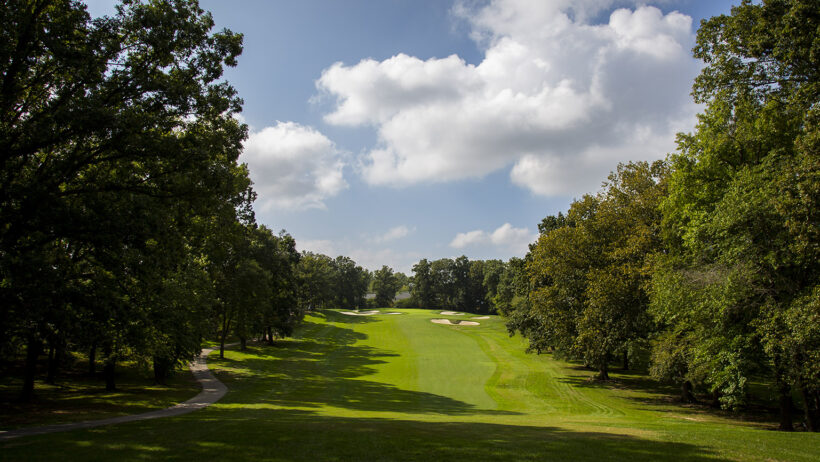
Mount Vernon Country Club in Alexandria, Va., is converting its bentgrass and Poa annua fairways to Latitude 36 bermudagrass as part of a larger project that includes water storage improvements and creek restoration. The total cost of converting the fairway turf is approximately $125,000 and the fairways are typically ready for play eight weeks after planting.
“The new fairway grass will allow us to reduce fairway irrigation by 45-50 percent, reducing our total annual irrigation requirements by 23-25 percent,” said Mike King, Mount Vernon superintendent. “Reduced labor and inputs with the new grass will save us around $65,000 annually. That money can be reinvested in the golf course through programs like fairway topdressing, leading to even better course conditions.”
Hunter Ranch Golf Course, a daily-fee facility in Paso Robles, Calif., has taken a more gradual approach. Its fairways were a mixture of cool-season grasses that required a lot of water during the hot and dry summers. This created undesirable playing conditions and left the facility vulnerable to extreme drought conditions. To address these issues, they planted Santa Ana bermudagrass into the existing fairways with a specialized machine that allowed them to do the work without closing the course.
“We began educating the partners and members about 2-3 months before we started so they understood the entire process and the desired outcome,” said Jason Pautsch, Hunter Ranch superintendent. “We also described the process on the website to inform other golfers.”
Using a gradual approach allows Hunter Ranch to save water and improve playing conditions without excessive disruption to the business. The process will take several years to complete and golfers have had to accept some scruffy patches as bermudagrass takes over, but Hunter Ranch is already realizing firmer playing conditions and 25 percent water reductions after only three years. “The response has been nothing but positive with the firmer, faster, more consistent fairways,” said Pautsch.
“It’s exciting to see a growing number of golf courses converting primary playing surfaces to these grasses as they look to conserve water, reduce costs and improve playing conditions,” said Dr. Kenna. “Golfers are enjoying the benefits of firmer, more consistent conditions and can be happy knowing that golf courses are working hard to conserve water.”
George Waters is a manager of education for the USGA Green Section. Email questions or comments to greensection@usga.org.