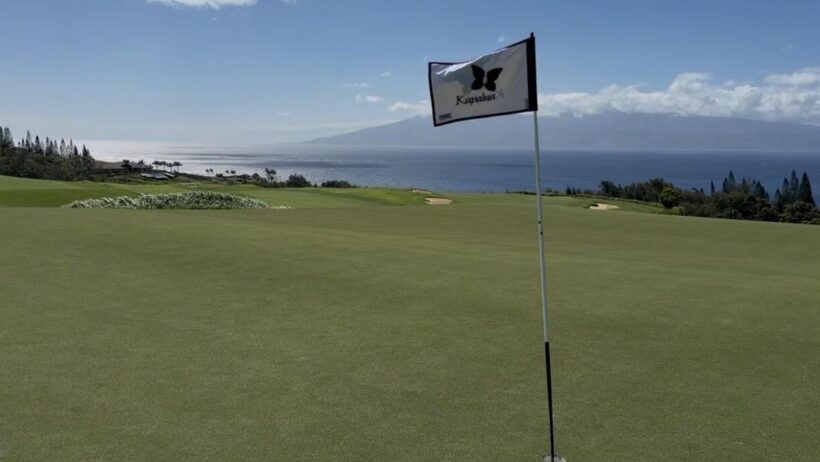
HONOLULU (Island News) — For years, Hawaiʻi’s golf industry benefited from something few destinations could match: national television exposure, the world’s best players and millions of viewers watching tournaments from some of the state’s most recognizable courses.
Twelve premier golf properties across five Hawaiian islands are joining forces through Play Hawaiʻi Golf, shifting from competition to collaboration to strengthen the state’s golf industry, economy and opportunities for young golfers.
But as Hawaiʻi’s professional golf landscape has changed, some of the state’s premier golf resorts are taking a new approach to attracting visitors.
Instead of competing against one another, 12 golf properties across five islands are now working together to market Hawaiʻi as a single world-class golf destination through a new initiative called Play Hawaiʻi Golf.
“We always wanted to do something like this together, where we’re selling the destination, Hawaiʻi as a destination,” said Alex Nakajima, general manager of Kapalua Golf and Tennis. “Hawaiʻi should be sold first, and then let the customer choose the best fit for them.”
The collaboration brings together resorts that have traditionally competed for the same visitors. Organizers say the goal is to make sure Hawaiʻi is part of the conversation when golfers begin planning their next vacation.
“We want to come together and make sure anybody looking for a next vacation, Hawaiʻi is considered, and the game starts from that point on,” Nakajima said.
The idea is simple: golfers may choose a particular course, resort or island once they decide to visit Hawaiʻi, but the industry believes its first challenge is convincing them to choose the islands in the first place.
Greg Nichols, general manager and director of golf at Ko Olina Golf Club, said the competitive nature of golf has not prevented the industry from recognizing the benefits of working together.
“If you’re involved in the game of golf, you love to compete, but we also love to collaborate,” Nichols said. “We’re always trying to help each other, and so I think that’s really been the strength.”
The effort is also about more than golf.
The industry contributes an estimated $2.4 billion annually to Hawaiʻi’s economy, supporting businesses and workers far beyond the courses themselves. Golf visitors stay in hotels, eat at restaurants, rent vehicles, shop and spend money throughout the communities they visit.
“It goes into travel and hospitality, the hotel industry, also food and beverage, all the restaurants that contribute to it,” Nichols said. “We talked about clothing, all the vendors and the stuff that we wear. So I think for the local population that’s the most direct benefit.”
Organizers also hope Play Hawaiʻi Golf will help invest in the future of the game. Part of the initiative will support junior golf programs, creating more opportunities for young people across Hawaiʻi to learn and participate in the sport.
“Personally, it’s always been junior golf,” Nichols said. “But for any PGA professional, our mission is to help grow the game of golf, and so we are trying to always advocate for getting people into the game.”
Whether the initiative ultimately becomes a model for other golf destinations remains to be seen.
But for Hawaiʻi’s golf industry, the shift is already underway: in an increasingly competitive tourism market, former competitors are betting that collaboration may be one of their strongest advantages.