
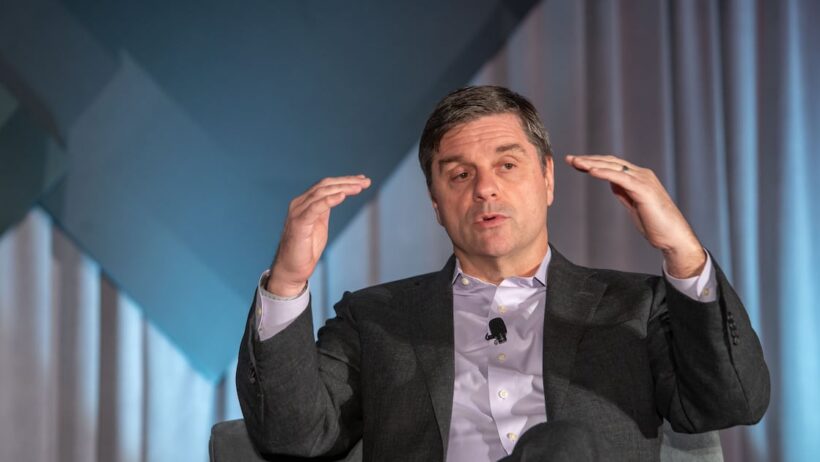
Sharp-eared attendees at this week’s SBJ Dealmakers conference heard PGA Tour CEO and former NFL No. 2 Brian Rolapp say something worth filing away for the next round of collective bargaining between the NFL and the NFL Players Association.
In comparing the NFL to the PGA Tour, Rolapp said revenue-sharing arrangements in the NFL and other unionized leagues can discourage leagues from investing in new business lines that could ultimately enrich everyone, because it shares revenue with players but not expenses.
“Essentially half of every dollar that comes of revenue goes to the players, and then the league has to pay expenses, and whatever is left over, the owners get it,” Rolapp said. “And so that creates an interesting economic incentive and dynamic. It also kind of limits you on the type of businesses you can invest in and build internally. It [puts] you more heavily on the licensing side of a business model.”
Rolapp was referring to what NFL insiders call “CBA math,” that if someone inside the NFL creates a business plan that costs $10 million to implement, it must generate $20 million in revenue to break even including the players’ share.
He continued: “So if we’re in a league like that, where 50 cents of every dollar goes out the door and you’re running it and I say, ‘Joe, we’ve got this great business plan. I’m going to invest this much. It’s going to yield this much, except the problem is, I can’t make it work because half the revenue’s out the door before we even get to spend a dollar.’”
Rolapp no longer speaks for the NFL, Roger Goodell or the owners. But it’s not the first time someone intimately familiar with NFL ownership noted this phenomenon. In May 2025, Goodell, without being asked, said owners had discussed “the rising cost of investment” and “the cap system itself, the integrity of that system, how’s it working, where do we need to address that in the context of collective bargaining.” I noted this issue in a 2023 SBJ cover feature, quoting NFL consultant Marc Ganis.
To change this dynamic, owners would have to convince the NFLPA that there’s ultimately more upside for players if owners could keep more revenue to spend on promising ideas. There is some precedent for this — the union agreed in 2011 to let owners hold back 1.5% of revenue to spend on stadium upgrades, under the premise that facility improvements drive big increases in ticketing and suite revenue. It’s an uphill battle, because most players would be retired before the upside could be realized.
Also, this dynamic is one factor behind the NFL’s creation of a private equity fund with General Atlantic, which can generate returns that don’t have to be shared.
Rolapp said the PGA Tour and its athletes are “completely aligned” because they’re “essentially equity holders” and prize purses are determined after expenses. “You can think long-term,” Rolapp said. “And I think it’s really unique in sports in that regard, that we can think that way.”