
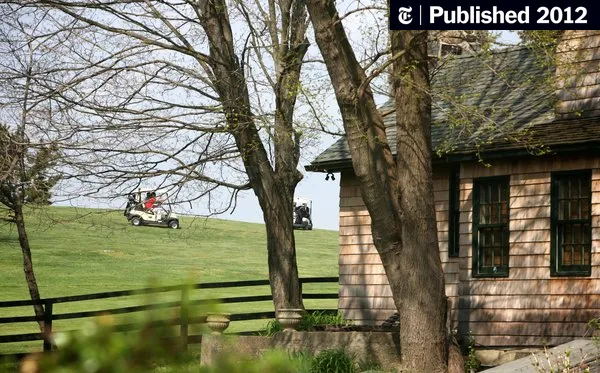
On the other hand, some people love having a club as a neighbor. In Garrison, Joann Alvis and Daniel Greenberg, who since 2005 have owned a three-bedroom colonial on two acres next to a golf course, say they are willing to contend with whatever cons there may be, in exchange for looking out back at a vast expanse of green as opposed to a neighbor’s backyard. And in winter, the course becomes a playground for their son, 15, and his friends, who sled there when it snows.
Ms. Alvis, a stay-at-home mother, says the location gives her family the opportunity “to live close to nature and get to see a lot more wildlife — foxes and coyotes, for example — than if we were in a subdivision.” She and Mr. Greenberg, a retired garment executive, have their well water tested regularly, and to date, she said, “we haven’t had a problem.”
Chris Davis, the chairman of the Hudson Highland Land Trust and an owner of the club, which is called the Garrison, has instituted green practices, many of them having emerged from an educational program administered by Audubon International. Mr. Hurdzan says many club owners and managers today pride themselves on being part of the green movement. For them, he said, “chemicals are the last resort.”
When it comes to the dangers of errant golf balls, of course, such changes are irrelevant. Not all houses on fairways are good buys. “It’s still a matter of buyer beware,” Mr. Hurdzan cautioned. “And be careful to ask the right questions, speak to the neighbors and make sure play areas are far enough away from where the house you are considering is located.”
Or as Susy Glasgall, a broker for Houlihan Lawrence in Rye, put it: “Golf courses can be a very positive asset in selling a house, but they’re not for everyone. A lot depends on how close the house is to the holes.” In general, homes with golf course vistas command higher prices — up to 25 percent more, she said.