
Updated Sept. 8, 2026, 5:50 p.m. ET
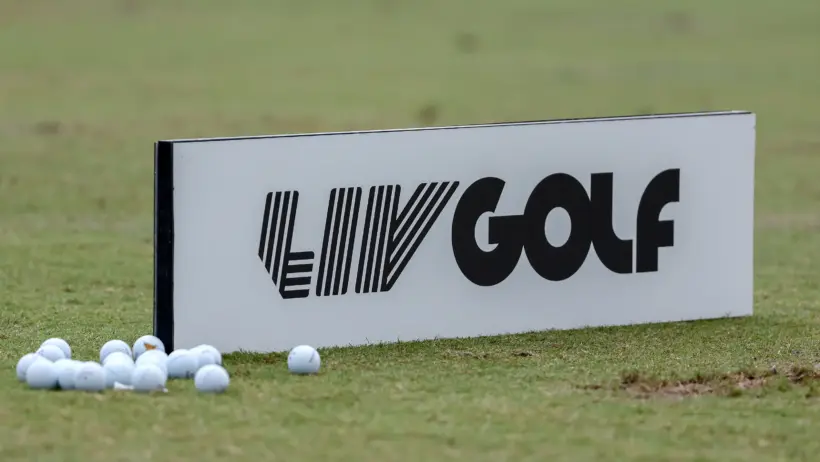
LIV Golf has filed for Chapter 11 bankruptcy protection as part of a major restructuring plan.The filing follows the Saudi Public Investment Fund’s decision to end its funding of the golf league.A new proposal would make players majority owners and reduce the number of events and prize money.The league aims to emerge from bankruptcy in early 2027 with a new, leaner business model.
LIV Golf’s 2026 season was originally supposed to conclude with its Team Championship in Michigan. Instead, the league’s final event arrived a week early at The Club at Chatham Hills in Indiana, part of the most tumultuous period in the circuit’s brief history.
When players arrived at LIV Golf Indianapolis in August, rumors swirled that the tournament might not only mark the end of the season, but potentially the end of LIV Golf itself. At the time, the speculation stemmed from mounting financial pressures, the cancellation of the Michigan finale and growing uncertainty about the league’s long-term future.
Those questions now appear to have some answers.
LIV Golf announced on Tuesday via a release that it has filed for Chapter 11 bankruptcy protection as part of a restructuring agreement with BC Partners Credit aimed at preserving the league and making players majority owners of the reorganized company. The filing follows months of financial uncertainty after the Saudi Public Investment Fund decided earlier this year to end its backing of the venture after losing billions of dollars since LIV’s 2022 launch.
More: To whom does LIV Golf owe money? Here are top 30 unsecured creditorsExplore how to live where you love to play Access community guides, golf real estate insights, trusted agent connections, and content built for passionate golfers.

The bankruptcy filing formalizes a difficult year that included a series of cost-cutting measures. LIV recently informed a significant number of employees that their positions were being eliminated as part of a broader effort to scale back operations. The league also canceled two events from its 2026 schedule, including the Michigan Team Championship that was expected to serve as the season-ending showcase.
Throughout the summer, LIV executives insisted they were getting close in a search for new capital to keep the league operating beyond 2026. BC Partners Credit emerged as the leading candidate to provide that lifeline, with company executives attending recent LIV events alongside CEO Scott O’Neil while negotiations intensified. But securing fresh investment proved closely tied to player participation, with reports indicating the league needed enough support from its roster to move forward with a restructured future.
That future now centers on a dramatically different vision than the one that launched LIV four years ago.
The proposed “LIV 2.0” model calls for a reduced schedule of 10 events, about half of them outside of the United States, with significantly lower purses than the record-setting prize funds that attracted many of golf’s biggest names. Rather than relying on unlimited outside funding, LIV’s new structure would give players ownership stakes in the league, aligning their financial interests with the circuit’s long-term success.
“The people of LIV Golf, led by the players, have continued to show incredible resilience, commitment, and a shared belief in what we are building,” O’Neil said in announcing the restructuring. “This process gives us the structure and time to pursue a landmark transaction and begin the next chapter of LIV Golf.”

The company said the Public Investment Fund will provide $49.6 million in debtor-in-possession financing during the Chapter 11 process, while BC Partners Credit and other prospective investors are expected to provide exit financing once a reorganization plan receives court approval.
“Plenty of well-known companies have taken this path before us,” O’Neil added, “including Marvel Entertainment, Delta Airlines, and Caesars Entertainment, along with sports franchises like the Los Angeles Dodgers, Pittsburgh Penguins, and Leeds United F.C. “
What once appeared to be a direct challenger to the PGA Tour is now fighting for survival. Yet LIV executives insist the bankruptcy process is not a liquidation, but a bridge to a new beginning. The league hopes to emerge from Chapter 11 in early 2027 with fresh capital, a leaner business model and an unprecedented ownership structure that would place players at the center of the enterprise.
In the filing, LIV lists its creditors as numbering between 1,000 and 5,000 and estimates its assets between $100 million and 500 million while estimating liabilities at between $500 million and $1 billion.
For a league that spent its first four years redefining professional golf’s power structure, the next chapter could prove even more consequential. LIV Golf has reached the end of one era. Whether the player-owned version becomes a sustainable force in the game remains an unanswered question.

Editor’s note: This is a developing story. Stay with Golfweek for the latest updates.
Tim Schmitt is the managing editor of Golfweek.