

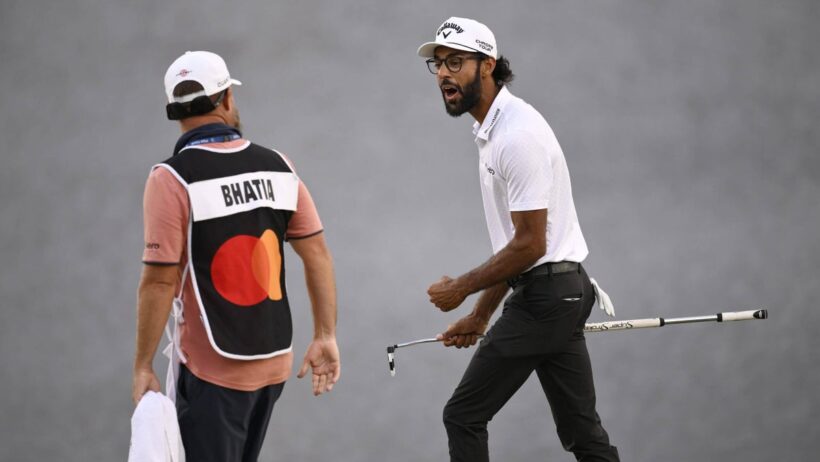
Seven years later, the 24-year-old grizzled vet has fully arrived.
Akshay Bhatia has had expectations on him since he was 12 and playing in the Augusta National Drive, Chip and Putt; since he became the top-ranked junior in the world; since he took the unconventional path and turned professional at 17, just months before a pandemic changed the landscape.
Sure, he’d proven himself a success. He’d already won twice on the PGA Tour and played in majors, but when a player is around as long as Bhatia, the novelty wears off. Being a top-40 player felt forgettable. It became so easy to forget he turned 24 just two months ago.
Sunday at the Arnold Palmer Invitational, the young lefty reminded the world he might just be the best under-25 golfer in the game.
Bhatia came from five shots behind to force a playoff and defeat Daniel Berger at Bay Hill, a signature win that propels Bhatia into a new level of respect on the PGA Tour. He can now boast three career wins and a case as one of the best players in the world.
This is not an outlier performance. Bhatia has found elite form in 2026, finishing third at the Phoenix Open before a T6 at the AT&T Pebble Beach Pro-Am and another top-20 at the Genesis Invitational. The key for Bhatia was becoming the kind of golfer who could take over on Sundays.
This Sunday, he displayed both ends of the spectrum: youth and grit. Volatility and a clutch finish.
Entering the day just one behind Berger in the final group, Bhatia played the front nine in 2-over par as he struggled to find fairways. Bhatia fell down the leaderboard while Berger had a four-shot lead over Ludvig Åberg and Cameron Young.
Then, Bhatia got hot. He birdied 10, 11, 12 and 13, thanks in part to a 57-foot birdie putt on 11 and a suddenly dialed iron game.
“I played with some anger for those couple of holes,” he said.
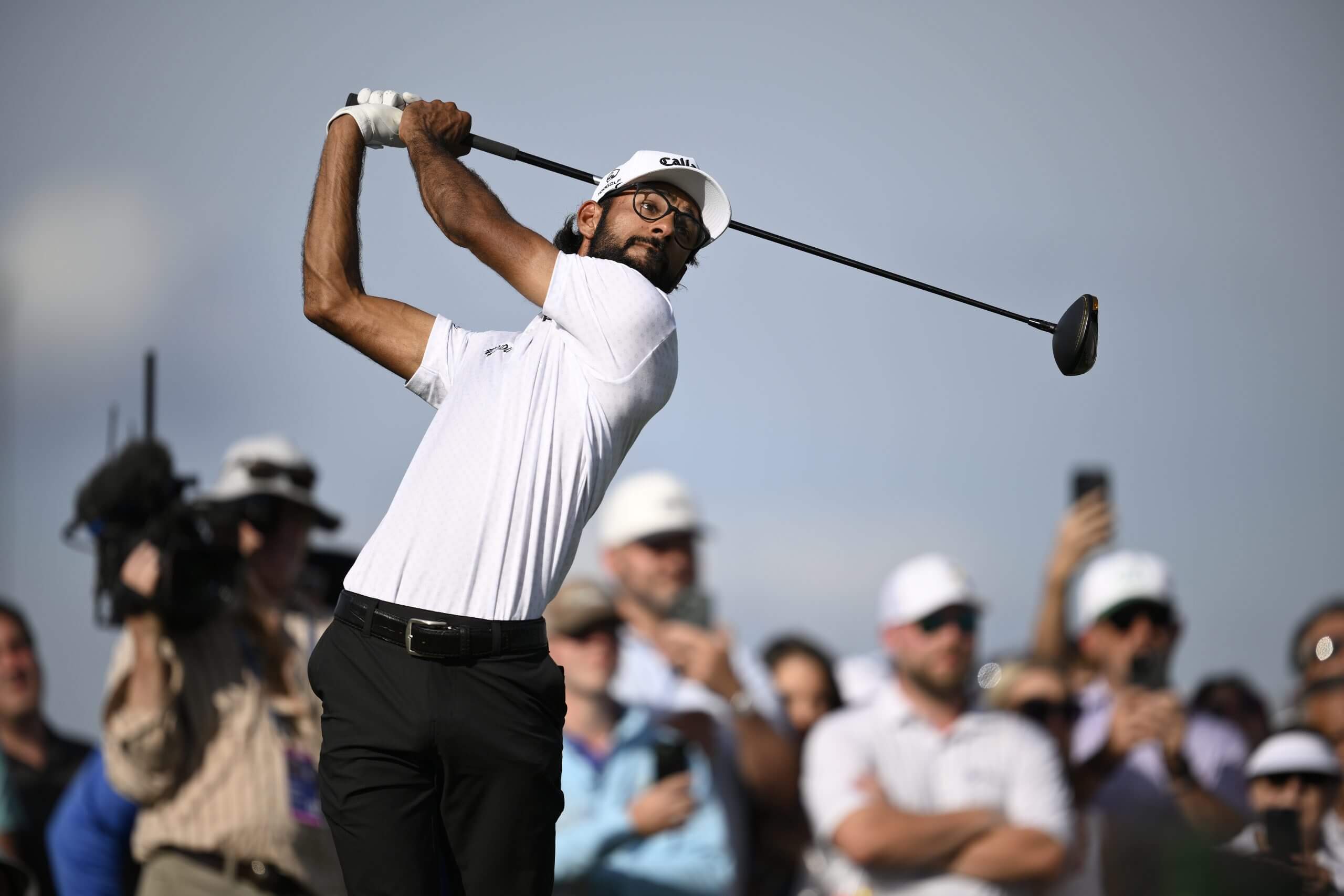
Akshay Bhatia watches a tee shot on the 15th hole during the final round of the Arnold Palmer Invitational at Arnold Palmer Bay Hill Golf Course. (Orlando Ramirez / Getty Images)
He remained three back until that birdie on 13 as Berger’s first real mistake of the week resulted in a fried egg lie in the bunker. He had to take his medicine for bogey to turn this into a one-shot event. Bhatia then bogeyed 14 to seemingly limit his chances.
That was until he had 190 yards to the pin on the par-5 16th hole.
“Just try to hit the best 6-iron of your life,” caddie Joe Greiner told him.
“And I did,” Bhatia joked after the win.
Bhatia hit an aggressive draw at the pin that nearly landed in the hole and left him just a short putt for eagle, the shot of the tournament, while Berger birdied the hole to stay ahead by one. The drama continued as Berger bogeyed 17 to fall to a tie, and by the time Berger’s poor drive on 18 forced him to lay up into the fairway, it appeared all but over. Instead, Berger got up and down with a difficult 14-foot putt to force the playoff.
In the playoff, Bhatia found the green in regulation as Berger again left himself in a difficult spot. This time, Berger couldn’t make his par putt, and Bhatia easily finished off the biggest win of his career.
Again, while Bhatia feels so much like a veteran, he’s two years younger than “breakout” young players like Åberg, Chris Gotterup and Jacob Bridgeman, and even a year younger than the Højgaard twins. He was part of the same junior class as exciting young Stanford grad Michael Thorbjornsen.
But Bhatia can tee it up each week with seven years of professional experience at his back. He’s grinded on lower tours. He’s fought and failed multiple times. He’s lived the highs and lows of this life, and now he has all those lessons and an entire career in front of him. And some pretty big wins already in the bag.