

A pair of brand snafus this summer posed different but intertwined questions about how brands represent women, their webs of responsibility and how to come out of a crisis alive.
Recent controversies surrounding Neutrogena and Callaway ask questions of PR and crisis comms (Callaway / Good Good Golf)
It seems we never go long without a brand landing itself in major hot water. In recent weeks, that hot water has been heartily filled with a pair of companies, Neutrogena and Callaway, facing questions about their representation and treatment of women.
The pair of media storms surrounding these errors collectively ask questions about approval processes, the quality of crisis comms advice, corporate responsibility and how sexism plays out in 2026. To begin to answer those questions, we canvassed opinions from PR, comms and marketing leaders.
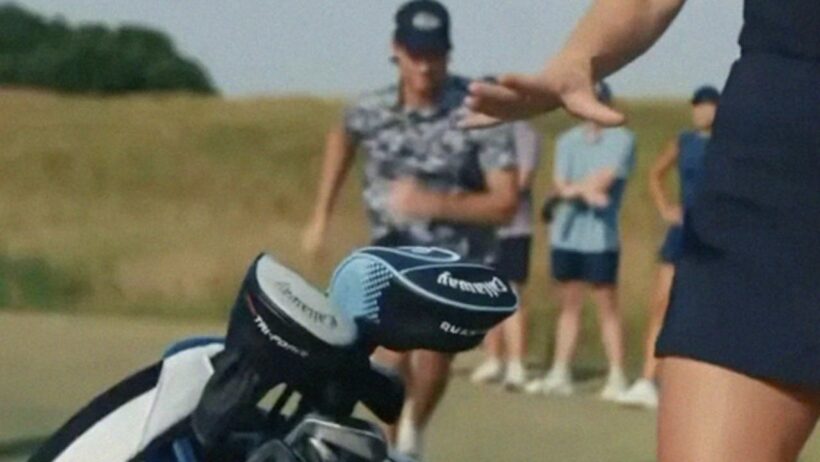
Lucy Allen, PR & communications director, Spin: “Guess what, brands: women are multi-dimensional. We can want clear skin and be living with postpartum depression at the same time, which is exactly what Neutrogena forgot with Hayden Panettiere. Then there’s Callaway, which left me genuinely shuddering. Watching a man shove a woman to the ground to sell a golf club is overt, ugly sexism and the fact it got through layer after layer of approval says a lot about who’s in the room when these decisions get made. The sad truth is, some men watching that ad would have laughed. The apology came and the video got pulled, but the damage was already done. You can’t un-ring that bell.”
Niki Hutchinson, founder, LarkHill PR: “In the words of Elton John, ‘Sorry Seems to Be the Hardest Word.’ But this really isn’t about the apology – lacking or late. In both situations, it’s about the performative statements supporting women that countless brands make and fail to follow through on. These were certainly not spur-of-the-moment decisions made by either Neutrogena to end the relationship with Hayden Panettiere or Callaway to run the ad campaign. They must have gone through endless approval processes and sign-offs with senior stakeholders before being actioned. Did anyone ask ‘Why are we doing this?’ at any stage? This tells you much more about a brand’s DNA and what it stands for than its annual ‘we support women’ message on International Women’s Day. When media and consumer backlash come, crisis management is rolled out and treated like the sacrament of penance. It’s both ludicrous and, worryingly, a sign of the times.”
Katie McIlvenny, PR & media consultant: “Big brands still rely heavily on virtue signaling. How great would it have been if Neutrogena, at the time of Hayden’s admission, had partnered with a charity helping women with postnatal depression? Undertones of social washing, perhaps, but at least it would have shown care. With scandals like Callaway’s, I find it hard to believe a business that size has entire teams behind a campaign like that and not one person asking, ‘Is this a bit off?’ My guess is someone did, but it was overridden for the creative idea. Which raises the question of who’s in the room when these calls get made. The silver lining: the backlash shows people expect more from brands now. Brands that act immediately, not with a delayed apology, are the ones consumers go back to.”
JP Escobar, VP of marketing services, Propeller: “As PR professionals, it’s never fun to admit we’re wrong, especially during a major crisis. But if I’ve learned anything in my career, it’s that a well-timed apology can set the tone for the rest of the response. We see brands get caught defending what they intended instead of acknowledging the harm they caused. That doesn’t fly on topics as sensitive as women’s health and abuse. The court of public opinion is swift in its outcry, but it can also be forgiving when you admit you’ve dropped the ball and show what you’re going to do differently. And let’s be real: the world loves second chances and a good comeback story. Don’t write these brands off just yet.”
Want to go deeper? Ask The Drum
Jef Loeb, creative director, Brainchild Creative: “To really get the juicy gist from the unfortunately fathomable Neutrogena and Callaway own goals, you need to recognize that while both live in the church of corporate idiocy, they sit in very different pews. Neutrogena is your classic PR blunder: a failure to recall the cautionary PR poster showing a billboard with the headline ‘Imagine if everything you said today wound up here’. Callaway, by contrast, is far more au courant, living at the intersection of a massively networked world, creator follies and the fact that brands have to start playing chess, not checkers. If Cracker Barrel didn’t unmissably underscore that C-suites need to see the board in all its dimensions, Callaway nailed it to the ground. And don’t get me started on how Google and Apple, blithely breaking brand faith by leaping like hungry Lake Ontario trout at the autocratic whim, maps back to the very same point.”
Lesley Pert, head of corporate and reputation management, Tigerbond: “The ultimate lesson to be learned? Learn to catch bad ideas before they get out the door. Creative teams must step back and consider how their concepts and decisions will actually land. Cognitive diversity is key and they need to challenge each other’s ideas instead of reinforcing them. Armando Iannucci captured this beautifully more than a decade ago in his We’re Good At Television sketches, which showed self-congratulatory TV executives getting so dazzled by their own brilliance that they couldn’t see their own idiocy.”
Chris Cochrane, founder & chief strategy officer, Plug Media: “Bad apologies aren’t the point here. In both cases, the damage was done much earlier. Neutrogena is answering for a decision made a decade ago, while Callaway is answering for content created with a partner. Responsibility doesn’t fade with time, and the buck can’t be passed to a partner. Brands need to look beyond whether something might cause offense and consider who is being belittled, silenced or made the butt of the joke before it is approved. If comms is only asking those questions when the apology is being drafted, it is already too late.”
Britta Tronke, general manager, Serviceplan PR & Content: “How Callaway and Neutrogena handled their communication crises reflects a deeper shift: the rise of an AI-driven attention economy. Content is produced faster, receives fewer human checks and creators are hired and discarded according to performance metrics. If brands no longer build an emotional relationship with their own content, why would they feel genuine responsibility for it, or credible compassion for a spokesperson they worked with for more than a decade? The result is predictable. When backlash hits, apologies often appear engineered for reach, visibility and brand protection rather than empathy for those affected. Callaway at least adjusted course once public pressure mounted. In an era where outrage fades quickly, this may not cause lasting reputational damage. But it has little to do with authentic crisis communication and even less with the long, patient work of building a brand people genuinely love.”
Nula Keeling, director of planning, MFM: “This summer’s PR scandals have made me think less about whether brands know how to apologize and more about whether they are giving women enough of a voice before things go wrong. The Neutrogena and Callaway situations are very different, but both raise questions about who gets to shape how women are represented. For me, the real opportunity is to move beyond simply speaking to women and create more space for women to speak within brands, in the room, in the creative process and in the decisions that shape how we are portrayed. Having a female perspective shouldn’t be a tick-box exercise or something that only becomes valuable when there’s a crisis. It should have influence. Because when women have a genuine platform and the confidence to challenge decisions, brands don’t just become more representative. They become more relevant, more credible and ultimately more resilient.”
Jo Royce, Wacl member & global growth marketing capabilities at Kimberly-Clark: “What’s most disappointing about these examples is they rarely come as a surprise. It’s almost more surprising that brand snafus, campaign inconsistencies and cracks in the brand authenticity armor don’t surface more often. In fact, it can be hard to find a huge number of examples of deep and authentic synergies between brands, their products, the customers they ’serve’ and the figures and faces they choose to advertise and promote them. And yes, celebrities – as with all real-life humans – should represent so much more than figures and faces. Ironically, it’s all too often the surface-level synergies alone that form the basis for the marketing. In the age of AI, turning everyone and everything into hyper-glazed, smoothed and homogenous ‘things’, there is even more of an opportunity for brands to actually do their homework and recognize the power of speaking to the real lives of their customers.”