


What is the best Callaway driver for you in 2026? Our launch monitor-backed test reveals all.
Callaway have been at the forefront of golf club development for nearly 40 years, they are a market leader when it comes to the best golf clubs, and throughout their history have made some of the best golf drivers of all time.
Since the original Epic in 2017, the company has plowed huge resources into harnessing the power of Artificial Intelligence to design smarter golf clubs. Thanks to tracking hundreds of thousands of real-world golf swings the most recent Quantum driver models have faces optimized to counteract the most typical mishits of the intended audience of each different model.
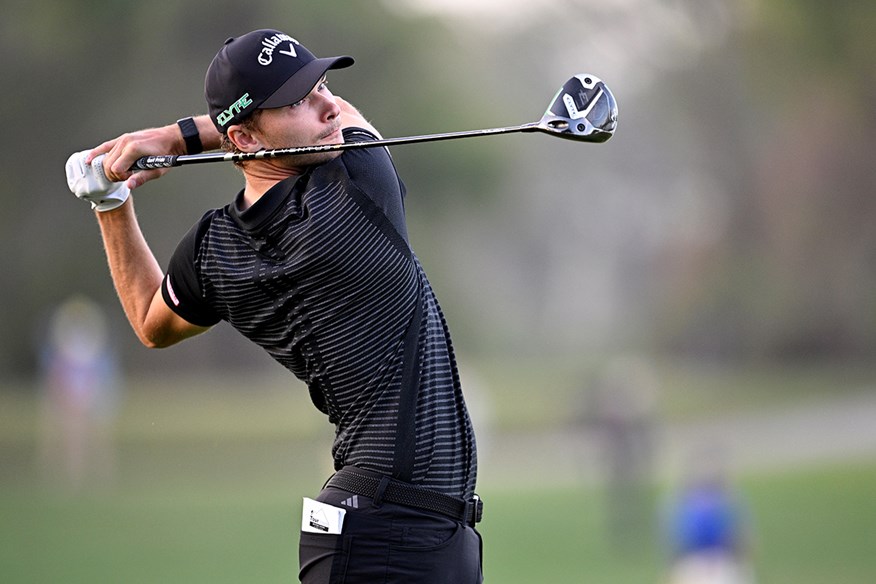
Whether you’re Xander Schauffele, a decent club golfer, or a beginner golfer there’s a Callaway driver out there for you, here’s our rundown on choosing which will best suit your game in 2026.
Best Callaway Driver – Jump to:Best Callaway Drivers: At a glance:
Best Driver 2026: Callaway Quantum Triple Diamond Max driver | VIEW OFFER
Best Driver for Forgiveness: Callaway Quantum Max D driver | VIEW OFFER
Best Low Spin Driver: Callaway Quantum Triple Diamond driver | VIEW OFFER
Let’s dive into the best Callaway Golf Drivers of 2026…
Best Callaway Drivers 2026
Best Driver 2026 – Winner
 What we say:
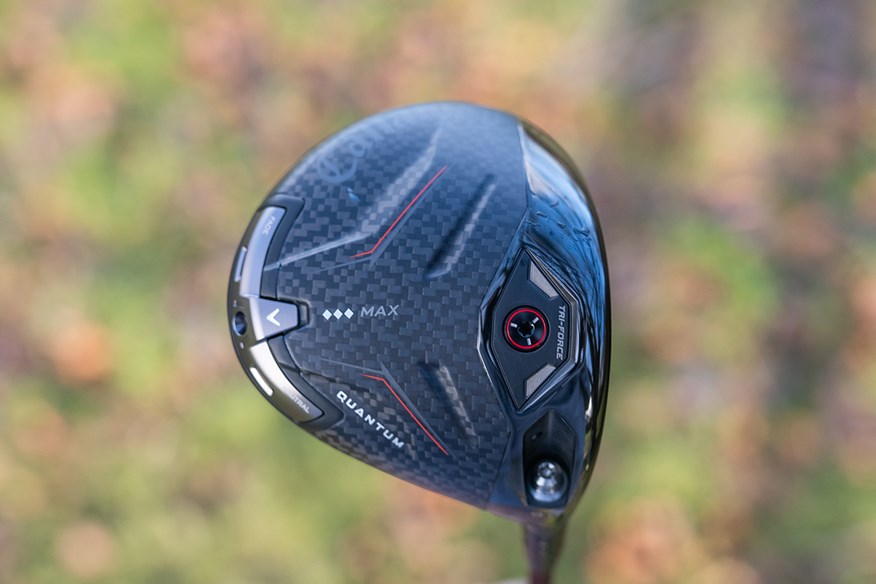
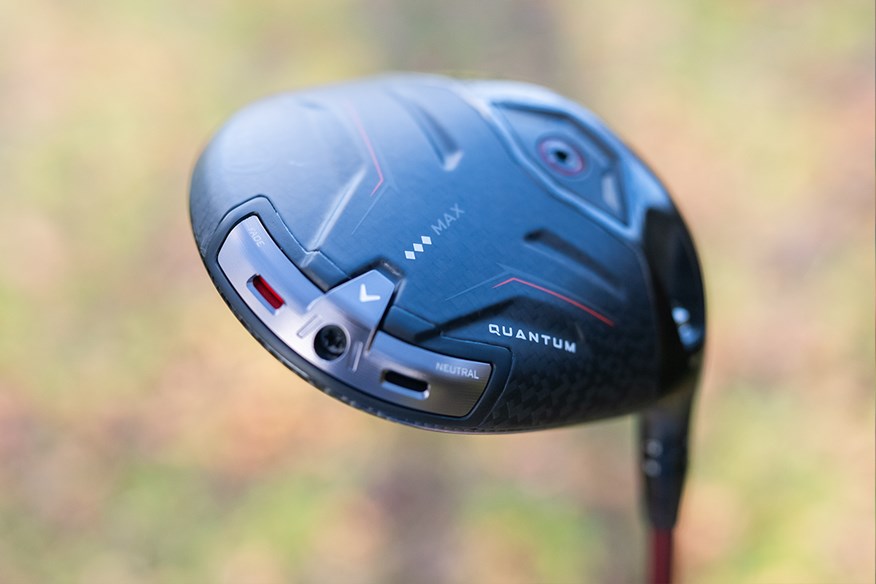
The winner of the 2026 driver test, the Quantum TDM has surprised us at every moment of our journey with it, from release all the way through our hands-on review and now through our official testing period.
The Triple Diamond Max represents a true jack-of-all-trades offering great consistency, top of the line distance, and stability that’s closer to the heads in the ‘Forgiving’ category than the ‘Low Spin’ one.
Eagle-eyed readers might notice that, statistically, the Triple Diamond outperformed the TDM for metrics, but TG’s experts believe the standard TD just doesn’t have the same long-term performance benefits and playability for the majority of golfers.
Callaway’s Quantum Triple Diamond Max, however, is friendly enough for far more than just elite-level golfers in 2026.
What our tester says:
“I love the Triple Diamond Max. There are only minimal differences between this and the Triple Diamond – slight amount of offset, fractionally bigger frame, etc – but I feel like I can’t really miss with the TDM because of that. I’d be quite happy to play this but equally put it into the hands of a mid-handicap player.”
Read our full Callaway Quantum Triple Diamond Max review
Key driver test data
Ball Speed 161.1 mph | Carry 282.9 yards | Spin 2,065 rpm | Launch Angle 12.3º | Height 31.7 yards | Descent Angle 35.3º | L-R Dispersion 16.3 yards
Specs Features
Lofts 9º / 10.5º Dexterity RH / LH Stock Shaft Options True Temper Denali Frost Silver 50g (S) / Fujikura Ventus Black 60g (S/X) Stock Grip Options Golf Pride Tour Velvet 360 Black Cap CHEV 50g Tri-Force three-layer face design of titanium, poly mesh, and carbon fiberAi-Optimized modeling for enhanced ball speed on mishits360º Carbon Chassis for precise CG placementLighter and stronger materials for improved forgiveness and tighter dispersion
Best Driver 2026 – Runner-up
 What we say:
In 2025, we labeled the core Callaway release as the most fit-able product on the market, although it missed out on winning any of our major awards by a slim margin.
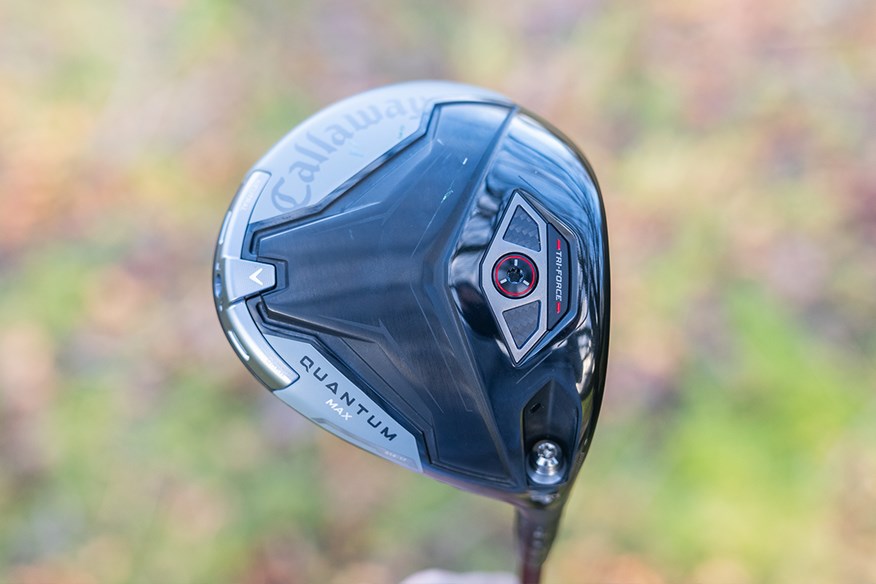
Apparently, Callaway took this personally because they’ve seriously brought the heat with the new Quantum Max. One of the hottest faces we tested in 2026, the entire Quantum range is incredibly fast, but what we love about the Max is that it retains that versatility of the previous model, while gaining speed.
An outstanding driver, and one that only just loses out on top spot to its sister model.
What our tester says:
“I don’t think you’ll be looking far to see a Quantum Max in golfers’ bags this year. The shape and style look better than the Elyte, with a slightly bigger profile seeming to invite you into it. I love the feeling from the face as well!”
Read our full Callaway Quantum Max review
Key driver test data
Ball Speed 163.7 mph | Carry 286.2 yards | Spin 2,128 rpm | Launch Angle 11.4º | Height 30.2 yards | Descent Angle 35.2º | L-R Dispersion 16.3 yards
Specs Features
Lofts 9º / 10.5º / 12º Dexterity RH / LH Stock Shaft Options Mitsubishi Chemical Vanquish 40g (R2) / True Temper Denali Frost Silver 50g (R/S), 60g (S/X) Stock Grip Options Golf Pride Tour Velvet 360 Black Cap CHEV 50g Tri-Force three-layer face design of titanium, poly mesh, and carbon fiberAi-Optimized modeling for enhanced ball speed on mishitsAdvanced Perimeter Weighting for precise CG placementLighter and stronger materials for improved forgiveness and tighter dispersion
Best Driver for Forgiveness 2026 – Third place
 What we say:
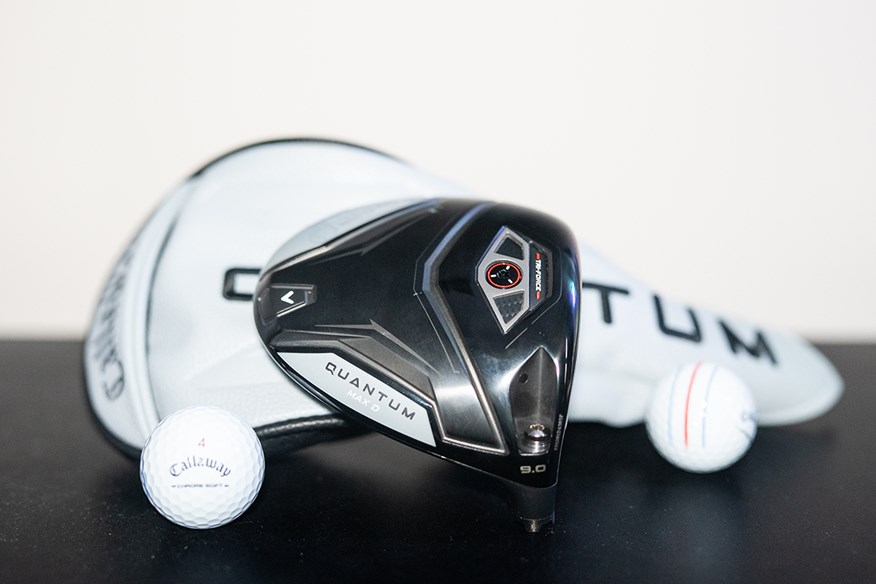
While Max D isn’t quite as fast as the rest of the Quantum range (by a fraction), Callaway’s choice of issuing golfers with a draw-bias offering over just a high-MOI is definitely worthy of praise.
Ultra-forgiving 10K-style heads can be harder to square up due to their nature of being more resistant to twisting, so seeing a commit to a driver that is built to help shot shape as well as retain distance.
That being said, Quantum Max D did is still very forgiving, and for the golfer fighting a slice this is one of the most impressive options of the year.
What our tester says:
“There’s a little bit more of a closed face here, but otherwise it’s not that different in look from the core Max model – great for golfers who need the help but don’t want to look down at something that looks ‘too draw biased’ while still being easy to turn over.”
Key driver test data
Ball Speed 160.7 mph | Carry 281.1 yards | Spin 2,043 rpm | Launch Angle 11.4º | Height 29.0 yards | Descent Angle 34.6º | L-R Dispersion 21.8 yards
Specs Features
Lofts 9º / 10.5º / 12º Dexterity RH / LH Stock Shaft Options Mitsubishi Chemical Vanquish 40g (R2) / True Temper Denali Frost Silver 50g (R/S), 60g (S/X) Stock Grip Options Golf Pride Tour Velvet 360 Black Cap CHEV 50g Tri-Force three-layer face design of titanium, poly mesh, and carbon fiberAi-Optimized modeling for enhanced ball speed on mishitsAdvanced Perimeter Weighting for precise CG placementLighter and stronger materials for improved forgiveness and tighter dispersion
Best Low Spin Driver 2026 – Winner
 What we say:
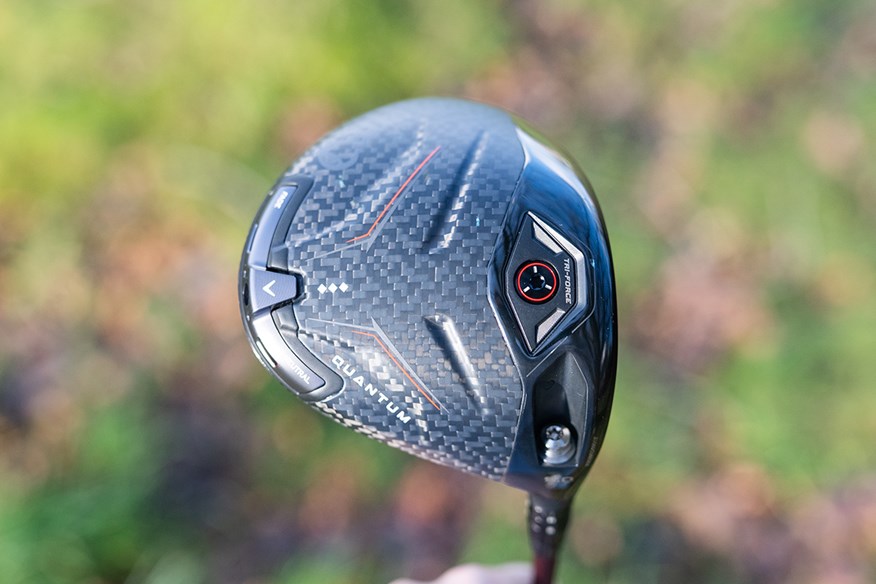
We aren’t being hyperbolic to say the Callaway Quantum Triple Diamond is monstrously long, even with how tight performance can be when comparing modern drivers.
Number one for carry (286.3 yards), number two for ball speed (162.8 mph), and creating a stable ball flight at a nearly 2,000 rpm of spin, the TD is scary-good.
If you’re looking for unbeatable distance from a driver, and you can afford a little bit of off-center forgiveness, Triple Diamond needs to be a consideration for anyone who’s serious about hitting their shortest iron possible into the green.
What our tester says:
“This driver is ridiculous, isn’t it? The Triple Diamond just feels like it’s flying off the face so fast, but I actually feel like the flight is good with it – it’s not dropping out the air. That slightly smaller head looks great behind the ball as well.”
Read our full Callaway Quantum Triple Diamond review
Key driver test data
Ball Speed 162.8 mph | Carry 286.3 yards | Spin 1,996 rpm | Launch Angle 11.9º | Height 30.0 yards | Descent Angle 34.7º | L-R Dispersion 12.3 yards
Specs Features
Lofts 8º / 9º / 10.5º Dexterity RH / LH (9º, 10.5º only) Stock Shaft Options True Temper Denali Frost Silver 50g (S) / Fujikura Ventus Black 60g (S/X), 70g (S/X) Stock Grip Options Golf Pride Tour Velvet 360 Black Cap CHEV 50g Tri-Force three-layer face design of titanium, poly mesh, and carbon fiberAi-Optimized modeling for enhanced ball speed on mishits360º Carbon Chassis for precise CG placementLighter and stronger materials for improved forgiveness and tighter dispersion Best Older Callaway Drivers
Sweeter from every spot
 The Max is the core Ai-Smoke model. It was the most forgiving driver in the Ai-Smoke range. The Max is the only one in the family to have an adjustable sole weight, mass, which will help golfers dial in a preferred shot shape.
This is a good looking, fast driver that is now a very acceptable price. Expect premium adjustability, increased ball speed, and confidence at address with the flagship model for Callaway’s 2024 offering.
A powerhouse throwback from 2021
 The Callaway Rogue ST line of drivers are still highly regarded as one of the best drivers in the last five years of releases, and for good reason!
The Rogue ST offered one of the cleanest looks in the category at the time, with a simple black gloss sole, matte crown, and a touch of burnt yellow, hiding some incredibly consistent performance.
Designed at the very start of the high MOI era, the Rogue ST chose a different route to providing forgiveness to golfers, using Callaway’s Ai supercomputer to create a more helpful face platform over pulling weight further back.
This gave the driver a unique mixture of face forgiveness coupled with more explosive power from a weight-forward design, becoming. stalwart club that you can still see in the bags of tour pros and amateurs to this day.
Best Callaway drivers 2026: The dataManufacturerModelClub Head Speed (mph)Ball Speed (mph)Carry Distance (yds)Backspin (rpm)Launch Angle (º)Peak Height (yds)Descent Angle (º)L-R Dispersion (yds)CallawayQuantum Max112.6163.7286.2212811.430.235.215.9CallawayQuantum Max D112.3160.7281.1204311.429.034.621.8CallawayQuantum Triple Diamond112.7162.8286.3199211.930.034.712.3CallawayQuantum Triple Diamond Max112161.1282.9206512.331.735.316.3
*All lofts at 9° unless otherwise stated.
What type of driver do you need?Low Spin
Low spin drivers have two main performance attributes, both of which are influenced by the club’s more forward Center of Gravity (CG). Center of Gravity plays a part in both forgiveness and launch conditions, which can help you decide if this style of driver is right for you.
As is obvious through the name, the CG of these drivers helps lower spin rate (as well as launch) as it helps keep the front of the driver down. CG is trying to stay as low to the ground as possible, so being near the face means you’ll see reduced dynamic loft/loft at impact.
Unfortunately, low spin drivers also have less forgiveness for the same reason; CG lowers the MOI (Moment of Inertia), which is the club’s resistance to twisting on off-center hits. If you really struggle with spin, this can be a reasonable sacrifice, but for most golfers, this will cause more issues than it could solve.
Callaway’s best low-spin driver option in 2026 is the Callaway Quantum Triple Diamond driver.
 Core Drivers
Core drivers are a brand’s standard model, built to offer an ideal mix of both distance and forgiveness for every level of golfer.
Typically, these drivers will have a mid-head CG location. This provides something close enough to the face to keep ball speed (and distance) at the higher end, while also being far enough back to maintain a better MOI number. This gives you more help on mishits for a stable but still powerful option from the tee.
Max Forgiveness Drivers
Drivers built for maximum forgiveness have their CG as far back as possible to boost the MOI rating right up to the legal limit. Most drivers in this category exceed or match 10,000 g-cm2, which is a measured of force needed to twist the driver – the MOI. This is also why you’ll see many of these drivers labelled as ’10K.’
These drivers will give you the most help possible, if you struggle with finding the middle as consistently, but be warned, these drivers will also launch higher due to the CG being further back, raising the face.
Rearward CG can also make the driver harder to square up, due to the CG being so far away from the axis of rotation (the hosel – where the shaft and the head connect). If you’re looking to fight a cut shot, or a ‘slice’ if it’s really bad, a draw bias driver might be a better option than just a high forgiveness model.
 Best Callaway Driver 2026: Buying GuideThe importance of center of gravity (CG)
One of, if not the most important aspects of modern driver design is CG (Center of Gravity) placement. CG will help dictate the characteristics of the driver by influencing how the head wants to present itself during impact and how it reacts to different strikes.
While CG overall is a way to describe the point that the driver’s weight is balanced in all directions, and is measured over several planes, including the X- and Y-axis.
Shot Shape
X-Axis is about heel-to-toe location and can influence how much draw or fade bias a driver can have. If I’ve put the Center of Gravity closer to the heel, the club will be easier to square up and can help with fighting a cut shot or open-face strikes. The driver will be harder to close if the weight is in the toe.
Spin
The Y-Axis is high-to-low (or crown to sole) and changes the driver spin rates. If I have CG higher in the head, impacts below that placement will cause the driver to ‘deflect’ downwards and cause the ball to spin more through ‘Gear Effect.’ Conversely, lower CG will mean more of the face will resist the backspin being created.
 Loft
Finding the right loft is one of the most important elements to consider with a new driver. Possibly the biggest influence on key metrics, including spin, launch, height, and descent angle, it will also impact the speed and distance of your drives. More loft works better for slow swing speeds, or golfers that hit ‘down’ on the ball. Less loft works better for faster swing speeds or golfers that hit ‘up’ on the ball.
Adjustability
As we mentioned with Center of Gravity, some drivers can be altered to suit different players’ needs. This can come in the format of the moveable weights or with a fixed position that can have different weights installed like the Titleist GT2 offers.
Working with the right professional to find the correct choice in the plethora of settings now available is paramount.
Custom fitting
While it’s 2026 and we’re in the most advanced position we’ve ever been in with fitting technology, a surprising number of golfers are still just buying off-the-shelf models.
Visiting a custom fitter doesn’t have to come with an extortionate price point or the upcharges you’ve been led to believe. A lot of custom-fitted clubs can be purchased at the same price as the stock options but giving yourself the best chance at striking the ball out the middle and finding your target is essential to playing better golf.
Budget
Drivers, like everything, are getting more expensive, no doubt. I think there are two ways of considering the budget you want to commit to when searching for a new driver.
If you’re new to the game of golf, or progressing rapidly in your golf game, it may not be the best idea to commit to a $600 driver immediately as there is a strong chance your needs will also change within 12-18 months (although if you can don’t mind the cost, we wouldn’t want you to dismiss a new model driver).
The alternative is to consider how long you’ll likely have the driver for. Golfers keep their woods for five years on average, so I’d think about how the price will break down over the length of time you’ll have the club in your bag.
A $600 driver over five years is $120 a year – that’s a far more reasonable amount for the use you’ll get out of it each year.
 History of Callaway drivers by year
Callaway Big Bertha (1991)
The oversized original changed driver design forever, delivering forgiveness golfers had never experienced before.
Callaway Great Big Bertha (1995)
Titanium construction created faster ball speeds and made premium metalwoods the industry standard.
Callaway Biggest Big Bertha (1997)
A larger head and deeper face produced huge distance gains for late-90s power seekers.
Callaway ERC II (2000)
Controversial hot-face technology generated explosive ball speed before governing bodies ruled against it.
Callaway C4 (2001)
Radical carbon-composite construction looked futuristic and pushed driver materials into new territory.
Callaway Great Big Bertha II 415 (2004)
Compact pear-shaped profile appealed to better players chasing workability and lower spin.
Callaway FT-3 (2005)
Fusion technology blended titanium and carbon for improved forgiveness and perimeter weighting.
Callaway FT-i (2007)
Square-headed design maximized MOI and became one of Callaway’s boldest driver experiments.
Callaway Diablo Octane (2010)
Forged composite crown reduced weight and delivered faster swing speeds through improved aerodynamics.
Callaway RAZR Hawk (2011)
Lightweight construction combined forgiveness and speed in a sleek, confidence-inspiring shape.
Callaway X Hot (2013)
Aggressive face technology generated serious distance and became hugely popular with club golfers.
Callaway Big Bertha Alpha (2014)
Gravity Core adjustability allowed golfers to fine-tune launch and spin like never before.
Callaway XR 16 (2016)
Boeing-inspired aerodynamics helped increase clubhead speed and tighten dispersion off the tee.
Callaway GBB Epic (2017)
Jailbreak technology stiffened the body, unlocking exceptional ball speed across the face.
Callaway Rogue (2018)
Enhanced Jailbreak structure improved forgiveness and made Rogue one of Callaway’s most reliable drivers. Read our Callaway Rogue driver review.
Callaway Epic Flash (2019)
Artificial Intelligence designed the Flash Face to optimize speed and consistency on mishits. Read our Callaway Epic Flash driver review.
Callaway Mavrik (2020)
AI-designed faces tailored each model for different player types and launch conditions. Read our Callaway Mavrik driver review.
Callaway Epic Speed (2021)
Cyclone Aero shaping boosted speed while Jailbreak AI technology improved stability and forgiveness. Read our Callaway Epic Speed driver review.
Callaway Rogue ST (2022)
Tungsten Speed Cartridge delivered high launch, low spin, and impressive forgiveness levels. Read our Callaway Rogue ST driver review.
Callaway Paradym (2023)
360 Carbon Chassis saved weight and created one of Callaway’s fastest modern drivers.
Callaway Paradym AI Smoke (2024)
AI Smart Face technology adapted performance using real golfer swing data. Read our Callaway Paradym AI Smoke driver review.
Callaway Elyte (2025)
Refined aerodynamics and improved face responsiveness delivered exceptional all-round driver performance. Read our Callaway Elyte driver review.
Callaway Quantum (2026)
Thermoforged carbon construction and advanced AI face optimization combined for faster ball speeds, improved forgiveness, and highly adjustable performance.
Best Callaway Drivers 2026: FAQs
What is the most forgiving Callaway driver?
The most forgiving Callaway driver in 2026 is the Callaway Quantum Triple Diamond Max driver, but we’d encourage you to get fit for the right product before just purchasing a club based on ‘on paper’ forgiveness. If you’re hitting the ball all over the face, a fitter could help with a shaft change to improve strike. This might mean you need less forgiveness than you currently think.
What is the best Callaway driver for seniors?
The best Callaway driver for seniors is the Callaway Quantum Max driver, as it’s one of the most versatile drivers we tested in 2026, so it’s suitable for nearly every golfer. As always, though, we’d recommend you get fitted for your driver, as you may need a different driver from what you would think or expect.
Am I good enough to use a Callaway Triple Diamond driver?
The Callaway Triple Diamond driver is suited for high-spin players regardless of how ‘good’ they are, so it can be played by a wide variety of golfers at different skill levels. If you are thinking about playing the Triple Diamond model, we’d advise going for a fitting to make sure it suits your needs.
Should I buy a second-hand Callaway driver?
Second-hand Callaway drivers are a great option if you don’t feel you can justify the cost of one of the latest models. You can also still buy the older releases brand new from some retailers who still have stock of the previous lines. Our favorite Callaway drivers from recent years include the Mavrik, the Rogue ST, and the Paradym AI Smoke heads.