

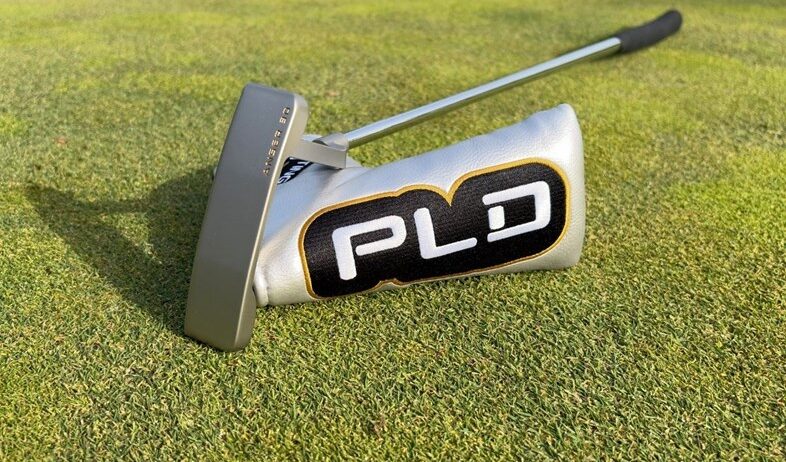
The Ping PLD Anser is a masterpiece that combines the tradition and history of the Anser with modern technology to create a truly breathtaking blade putter
Is there a more iconic golf club than the Ping Anser? Probably not.
The Anser has a long and proud history dating back to 1966, when Karsten Solheim filed the patent that changed putters – and putting – forever.
The revolutionary design was heel-toe weighting and, in 1984, when the original patent expired, it opened the floodgates for every manufacturer to replicate this feature, and it continues to be a key component in the best blade putters in 2026.
At the top of that list is the OG blade – the Ping Anser. After conducting our largest-ever putters test in 2026, including 110 models, 29 of which were blades, the Ping PLD Anser emerged as the best blade putter for its classic design and all-around performance.
Putters don’t get any more special than the Anser, not only because it’s the most-decorated putter of all time, but because each model incorporates a significant piece of golf history while also sporting the name that kicked off the revolution in 1966.
No putter collection is complete without an Anser, and I’m going to tell you why the PLD is the model to add to your collection.
Quick verdict
The Ping Anser is the most recognizable blade for a reason. It has won 58 majors and over 500 professional events. It’s also the world’s most copied golf club. That puts a lot of stress on Ping to continue delivering premium Ansers, and the PLD is quite possibly their best version yet. This putter encapsulates everything that comes to mind when you think about an Anser: timeless, sleek, classic, premium, etc. The PLD is the one Anser I think every golfer should add to their putter collection.

Price: $449.99 / £429.00
Pros & Cons Ratings Specs Features
Pros A proven model for 60 yearsClassic, timeless, stylish, and premium designReliable performance across the facePerforms exactly as expected Cons Shallow-milled offers a firmer feel that not every golfer will like (deeper-milling available for a softer feel)Not as forgiving as wider-body blade options
Look, Sound, and Feedback
Technology and Components
Distance Control and Roll
Forgiveness and Stability
Overall
Loft 1° – 6° Lie angle 66° – 74° Length 31″ – 37″ Solid block of forged 303 stainless steelShallow-milled faceSatin finish
Looks, Sound, and Feedback: 4.5/5
Blade putters grab every golfer’s attention, and none are as pretty as the Ping PLD Anser. It’s so simple. And that’s what makes it so beautiful.
The Anser profile has hardly changed in 60 years, other than to incorporate technological improvements and advances. This, again, adds to the beauty of the Anser, and it highlights how rightly proud Ping are of this putter.
Specifically focusing on the PLD Anser, this is my favorite iteration of the Anser, surpassing the Redwood in my rankings. I marginally prefer the satin finish to the matte black option, but both work extremely well to capture and accentuate every curve and sharp edge of the Anser’s body.
The gold accents add to the PLD Anser’s premium nature, but if you wish to choose another color, there is a choice of customizing your Anser with 15 options.

The white alignment line on the back portion of the blade is also another aspect of the PLD Anser that can be customized by changing the color, removing it, or adding an extra alignment aid on the topline of the blade.
I would remove the long line in favor of a white dot or line on the topline of the PLD Anser because I like having my focus brought as close to the ball as possible, being right-eye dominant.
No matter what color you pimp out your Anser with or which alignment aid you choose, you’d have to go for something pretty drastic to hinder this putter’s appearance.
The PLD Anser delivers a crisp, solid sound. It’s relatively low, more akin to a click than a ping. The sound changes depending on your strike location and golf ball, which feeds into feedback.
With the sound changing based on how and where you make contact, it provides feedback you can learn from to improve your putting stroke and impact position. Audible feedback is stronger than the feedback you feel in your hands. On mishit putts, you can feel a difference to well-struck putts, but it isn’t a stark difference like it is with sound.
I prefer hearing a bad putt rather than feeling one, so this doesn’t bother me, but other golfers would probably want to feel a bad putt, as well as a good putt, more than what the PLD Anser offers.

Technology and Components: 4/5
The Ping PLD Anser isn’t the most technologically advanced putter, but no blade is, and as I’ve already mentioned, the seemingly simple nature of a blade only adds to its beauty.
The head is precision-milled from forged 303 stainless steel, giving the PLD Anser its premium look while helping Ping achieve the precise shapes and tolerances. It’s a beautifully simple design, but the manufacturing process is anything but.
The face is where you’ll find the most obvious technology. Golfers have the choice of either a shallow or deep-milled face. The model we tested features a shallow-milled face that delivers a firmer feel. The deep-milled face uses Ping’s Aggressive Milling Pattern (AMP) to create a softer feel and quieter sound.
This wouldn’t be an Anser without the traditional heel-toe weighted construction. This allows more mass to be distributed towards the extremities of the head, to add a degree of stability without losing the compact blade shape that makes the Anser so appealing.
There’s also a moderate amount of toe hang (30°), making the PLD Anser particularly well suited to golfers with a slight arc in their putting stroke. It’s a sensible choice for anyone who has a tendency to miss putts to the right.
None of this is particularly flashy, and that’s the point. The PLD Anser is built around precision milling, sensible weight distribution and carefully considered face technology rather than gimmicks.
This continues into the components. Ping offer one shaft to pair with each finish and one grip. It doesn’t get much simpler than that. But if it works, why overcomplicate it?
You can adjust length, lie angle, and loft, but a part from that, there isn’t anything else to tweak and cloud your thoughts with. The PLD Anser is superbly simple.
That being said, some golfers enjoy playing with head weights and having shaft and grip options galore, so if that sounds like you, the PLD Anser may not be the putter for you.

Distance Control and Roll: 4.5/5
The Ping PLD Anser’s shallow-milled face produces a very consistent roll that isn’t particularly fierce. The reason I say this is because I was expecting the ball to travel much quicker off the face than it does.
From impact all the way through to when the ball comes to rest – hopefully in the hole – the roll is pure, and that is closely related to distance control.
It took me a few putts to get used to the tamer roll than I was expecting, but once I realized I needed to hit the ball a little harder than I would probably like, it didn’t take me long to get to grips with how much to give each putt from varying distances.
My tendency with the PLD Anser is to miss putts short as opposed to smashing it past the hole, but I rarely left it outside of tap-in range once I got dialed in (I say that as if I ever get dialed in on the course).

Forgiveness and Stability: 4/5
I’m scoring the PLD Anser on forgiveness and stability based on it being a blade putter, not just a putter. Compared to your oversized mallet and zero-torque models, it is noticeably less forgiving, but it’s bound to be, so it’s unfair to compare it to those models. For that reason, this rating is based on how forgiving and stable the PLD Anser is for a blade putter.
Despite its relatively narrow profile, the PLD Anser feels extremely stable on long putts. I actually preferred using the PLD Anser on long putts more than I did on putts in gimme range, but that’s definitely more down to my putting stroke than the putter.
You can feel the release of the PLD Anser, which is exactly what you want from a blade putter with toe-hang. The natural toe-flow does impact the PLD Anser’s stability and, in turn, forgiveness, but not enough for you to be scared of the amount of toe-hang, with it being moderate at 30°.
The PLD Anser isn’t a putter to pick if you want forgiveness and stability, but for a blade putter, it’s not lacking any compared to other similar models. So if you’re in the blade putter market, this isn’t an option to dismiss despite its slender profile.

Final Verdict: 4.25/5
I’m an absolute sucker for a Ping Anser because of its heritage, and how much Ping still lean on its history 60 years on from the original Anser.
As I’ve already mentioned, at the top of my Anser rankings was the Redwood, but it has been ousted at the top by the PLD.
Using the PLD Anser brings a smile to my face every time I take it out because it embodies everything the Anser stands for: a timeless, traditional, premium performance blade.
The PLD Anser isn’t going to restart a resurgence of Anser putters on Tour, but if anyone is looking for an Anser to add to their collection, this is the one you need.