


Do me a favor, would you?
It won’t take long. It’ll be really easy and might be kinda fun.
First, grab yourself a pen and some paper. That’s part one.
And now for part two: Could you list for me the top 5 things you truly can’t stand about the big OEM’s in golf? I mean, what really pisses you off?
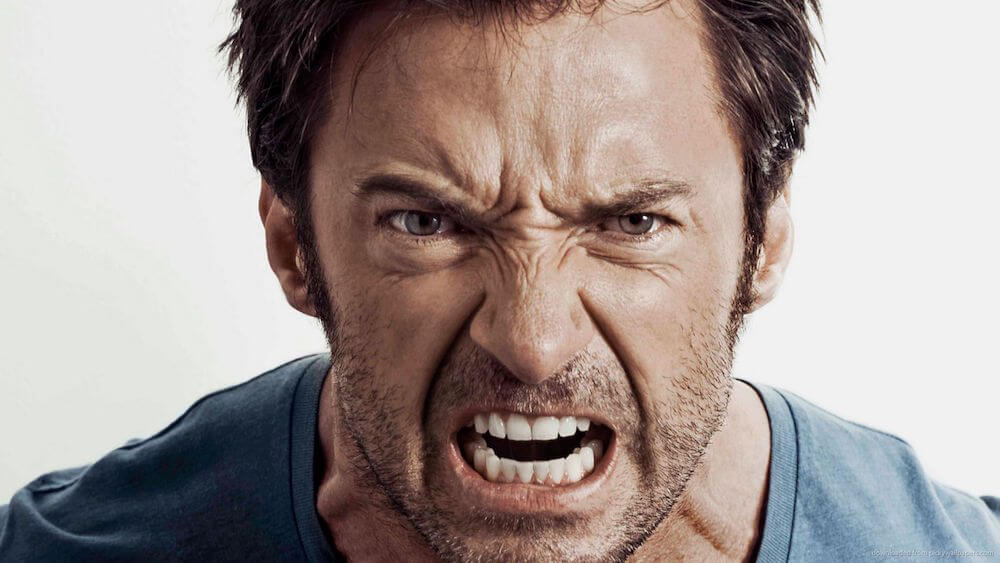
You know what I’m talking about – the stuff that makes you fire up the ol’ laptop and let the world know you’re mad as hell, and you’re not going to take it anymore. It could be the promise of stupid-long distance, or maybe it’s this week’s driver of the decade.
Write ‘em down.
Is your blood boiling? Good.
Told you this would be fun.
Now hold on to that list as you continue to read. As you go, I want you to check off each one of your grievances as it comes up. I’m willing to wager that, if you’re completely honest, you’ll be surprised by how few you will have ticked off by the time we’re done here.
Now, with that as your mission, let’s look into the life and times of Bridgestone Golf.
Rubber Barons
Some quick facts for your consideration:
Bridgestone is really big – nearly $32.5 Billion in sales worldwide
That’s twice as big as adidas, and $2 Billion more in sales than Nike
Founded in 1931, made first golf balls in 1935, first clubs in 1972
World’s #1 tire manufacturer, surpassing Michelin in 2014
World’s #1 maker of all things rubber, and not by a little
Purchased Firestone in 1988
Produced first golf balls in the US in 1990, under Precept brand name
Bridgestone Golf brand established in the US in 2005
Tour Pros include Snedeker, Kuchar, Couples, Creamer, Webb and Lewis
Tires are 84% of worldwide sales
Remaining 16% is from Diversified Products – conveyor belts, hydraulic hoses, rubber tracks, automotive polyurethane foam, seismic isolators, bicycles and…
Golf balls and golf clubs

But while Bridgestone corporate is approaching its 85th birthday, Bridgestone Golf in North America can be considered pre-pubescent at only 10 years old. Want a kicker? In Japan Bridgestone Golf is barely a toddler, only a 2 year old brand.
Say What?
More on that later.
“Other”
If you were to look up Bridgestone’s market share for equipment in the US and Canada, you’d find it perpetually listed under “other.”
“Bridgestone views itself as a small, boutique brand in the US,” says Bridgestone’s Golf Club Marketing Manager, Josh Kinchen. “We offer high end, premium clubs with a focus on forged irons. We’re not for everyone, and we’re okay with that.”
So a $32.5 Billion company is okay with “other?”
“We’re never going to be a company that just releases product, with no real benefits over the previous product, just to hit specific sales goals. There are quite a few companies out there like that, but that’s not us. We want to grow year over year, and doing that slowly and steadily is more sustainable than making a big one-year splash. Too often that big spike is followed by a big loss. We don’t want to do that.” –Josh Kinchen
Well, there’s slow and steady, and then there’s glacier-like. But four years without releasing any new product? That kind of hiatus usually says “Nothing to see here. Move along.”
In Bridgestone’s case, the four year break meant something else entirely.
2011 – 2015: The Wonder Years
Back in 2011, Bridgestone gave us the very well-received J40 series of irons and woods (MyGolfspy loved them all, especially the driver). And then?
Crickets. Right up until 2015.
Those were the Wonder Years, as in “I wonder what the hell happened to Bridgestone?”
Well, they weren’t asleep at the wheel. Quite the opposite, in fact.
For years Bridgestone dominated the golf equipment market in Asia – Japan in particular – under the brand name Tour Stage. Japan is the 2nd largest golf market in the world, and Tour Stage was, year in and year out, a top 2 or 3 brand in both balls and equipment.

In other words, it was a Golden Goose.
But in 2014 the Tour Stage name went away, a victim of Global Branding. The parent company killed off Tour Stage in order to unify its global golf business under a single brand name: Bridgestone Golf.
“It was at least 3 or 4 years in the making to change the Tour Stage name to Bridgestone Golf worldwide. It was a difficult decision but a strategic one. Bridgestone Golf globally is a very important piece of the Bridgestone business, mainly because we talk to a very premium consumer. We’re a $32.5 Billion organization and the #1 rubber manufacturer in the world. But having disjointed brands across the world is just not ideal in really telling our story.” – Corey Consuegra, Bridgestone Director of Marketing.

So the 4-year product cycle here in the US was basically a byproduct of the Asian brand unification. The Japanese golf market may very well be in more of a decline than the US market, so growth there means taking a bite out of someone else’s apple. If you’re in a market share dogfight, it’s to your advantage to have the biggest dog in the fight.
And if your dog is named Bridgestone, you might as well let the big dog eat.
“We Sell The Truth Here”
So, we have one of the world’s largest companies holding the position of bit-player in the world’s largest golf market, while rebranding a leading seller in the world’s 2nd largest golf market.
And the same company just closed up shop in the world’s fourth largest golf market, the UK.
“Nothing we do here is simple,” says Kinchen, in what may be the understatement of the year. “In our ball fittings, we could fit everyone into one of our two premium priced balls. That’s simple. It’s not right, but it’s simple.”

Doing right by the customer is a recurring theme with Bridgestone. Kinchen says Bridgestone’s mostly frequently recommended ball during its ball fittings is the $28/dozen E6, not the higher margin $45/dozen B330 series, because the E6 is what’s best for those particular customers. And in true money-where-their-mouth-is fashion, Bridgestone says they’re the only company that’ll let you hit any competitor’s ball during a fitting to see how it shakes out.
“If the competitor’s ball is better for you, we’ll tell you that. What we’ve found is we win 7 out of 10 times in getting the player more distance off the tee, while not losing any spin around the green. Go to any competitor’s ball fitting and see what they allow you to hit. I guarantee you there are no competitors’ balls there. In that regard, we sell the truth.” – Josh Kinchen
And serendipity, be thy name – I went to a Bridgestone ball fitting at the local golf show this past weekend and with my February-in-Minnesota Spinorama driver swing, Bridgestone sure enough fit me into the E6.
Golf blog readers have an innate ability to sniff out marketing bullshit, often when it isn’t even there. What’s undeniable, however, is that the OEM’s with the biggest market share (if that’s how you define success) or the biggest profits (if that’s how you define success), also have the most the most prolific marketing machines. Love it or hate it, those companies command your attention and, quite often, your money.
“We could make things up all day long, and it would be fun. But it’s not right. We’re not here to jade the consumer. Right now, my fear for the equipment category is that many major manufacturers are just looking for innovations that create a marketing story as opposed to innovations that directly impact the consumer. I feel like that’s wrong.” – Corey Consuegra
A Marketing Catch-22
I’m guessing “Outrageous Marketing Claims” and “Too Many/Too Frequent Product launches are somewhere near the top of your “Hate” list. Any good golf blog reader can recite chapter and verse their list of grievances against the BIG OEM’s like it was the Apostle’s Creed.
“They spend big money on marketing to tell consumers their stuff is new and great, when it really isn’t,” says Kinchen. “Some companies buy the Tour and TV. We don’t.”
The brands that don’t play marketing/product launch games to the same extent as the big boys – we’re talking the Wilsons, Hogans, Mizunos, Tour Edges and Bridgestones of the world – are like short-knockers forced to play from the tips: that second shot becomes a hell of a longer and getting home in 2 becomes a hell of a lot harder. And in this game you can’t really tee it forward.
It’s a marketing Catch-22.
If you don’t aggressively market, you don’t have brand awareness. If you don’t have brand awareness, you don’t have distribution. If you don’t have distribution, you don’t have market share. And if you don’t have market share, you don’t have revenue to spend on marketing and you can’t market aggressively.
It doesn’t really matter much whether your reasoning not to play the marketing hype game is philosophical or budgetary – the challenge is the same. And while it can be a circular Catch-22 for the smaller guys, it becomes a self-feeding beast for the bigger guys.
“The big companies out there say they’re going to reign it in, but they never really do. More power to them if that’s what they want to be. That’s not what we want to be. I guess your path is determined by what your end of goal is. Our goal is to create loyalty and trust. For better or for worse, that’s who we are.” – Josh Kinchen
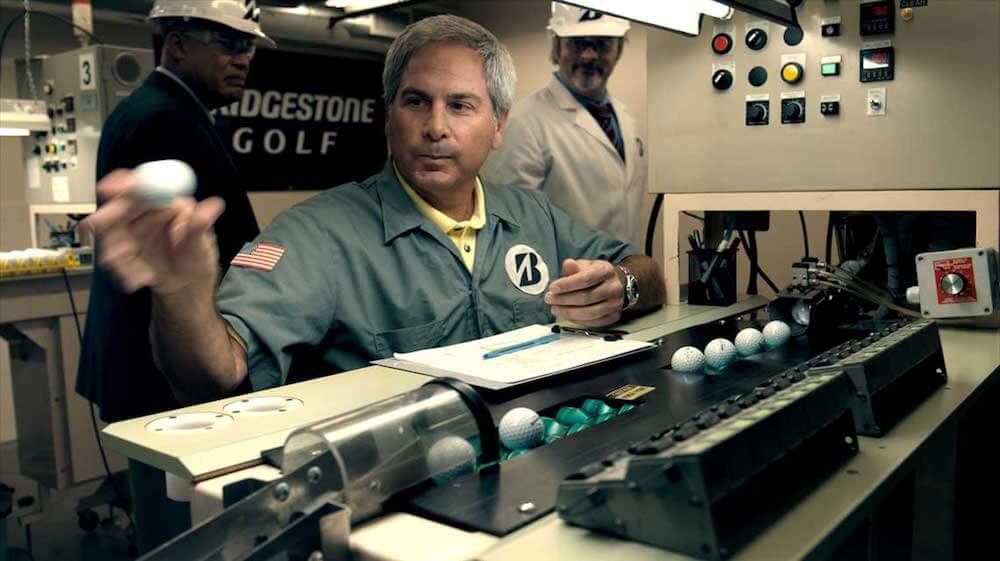
Bridgestone corporate will be a major sponsor of the Rio Olympics this year, and Bridgestone Golf markets balls with relative gusto in all the standard channels, basically because that’s what butters the bread. As the Olympics get closer, you’ll see Bridgestone Golf evolving from “#1 in Ball Fitting” to “#1 Ball Expert.”
That subtle change is to let you know that Bridgestone believes, after more than 300,000 in-person ball fittings, they know your golf swing and your golf ball needs better than anyone else. They’re the company that did, in fact, invent ball fitting, and I suppose that counts for something.
Unfortunately, Bridgestone’s equipment has seemingly been getting the short end of the marketing stick. That may be the very definition of irony since the lineup, from driver to wedge, is at the very least the equal of anything on the market today. As with many other so-called “challenger brands,” Bridgestone struggles with availability, brand awareness and what you might call “line clarity,” or who the targets are for each club in the offering.
Being satisfied with Other wouldn’t seem to be in Bridgestone’s DNA, and they tell us they’re most definitely not okay with the status quo. We reported on rumblings of Bridgestone’s plans for the US golf market over a year and a half ago. But even incremental changes in equipment market share are challenging, especially in a static golf market.
We’ll discuss those challenges, and how Bridgestone plans to address them, in Part 2 of this series.