

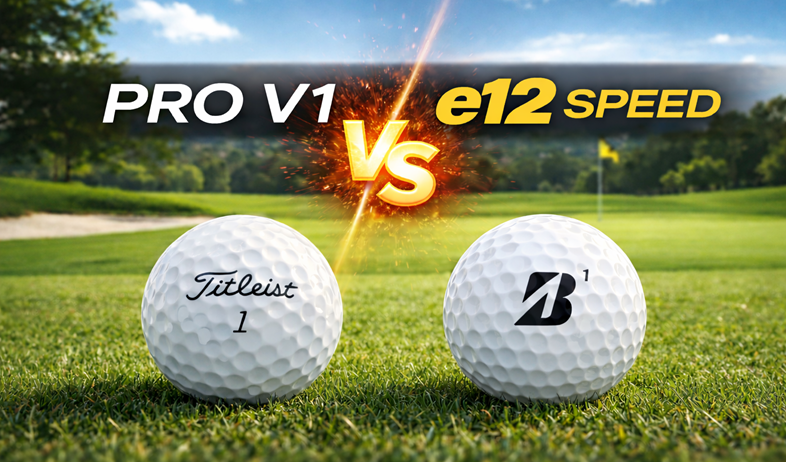
We robot-tested the Titleist Pro V1 and Bridgestone e12 Speed head-to-head with a wedge, a 7-iron, and a driver at three different swing speeds. The results weren’t what anyone expected.
The Titleist Pro V1 is the reference point in golf balls. It’s the ball everything else gets compared to, the one players trust, the one other manufacturers benchmark against.
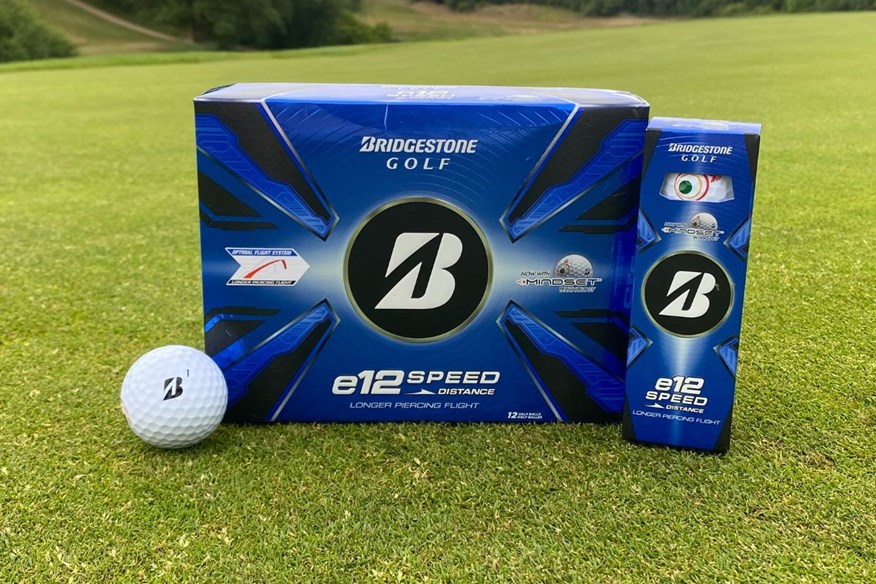
The Bridgestone e12 Speed, on the other hand, is a two-piece ball that sits in a much lower price bracket and is aimed squarely at everyday golfers. At £32.99/$34.99 per dozen, compared to £52/$57.99 per dozen for the Pro V1, on paper, this shouldn’t even be a conversation.
And yet, when we robot-tested them head-to-head with a wedge, a 7-iron, and a driver at three different swing speeds, the results were more than a little surprising – and slightly uncomfortable if you’re trying to justify the price of premium golf balls.
Here’s how that head-to-head actually played out across the bag.
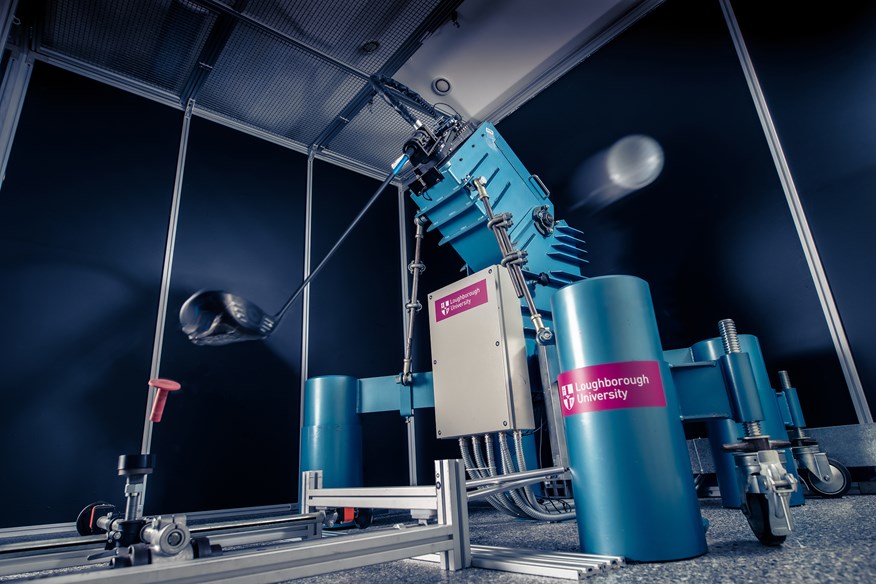 Driver performance – three swing speeds, one awkward trend
To cover a range of golfers, we tested at 114mph, 93mph, and 78mph driver swing speeds.
114mph driver
At the highest speed, the Titleist Pro V1 delivers the launch, spin, and distance you’d expect from a premium tour ball.
It’s just that the Bridgestone e12 Speed goes a fraction further.
BallBall Speed (mph)Launch Angle (°)Backspin (rpm)Carry Distance (yds)Peak Height (ft)Peak Height (yds)Descent Angle (°)Bridgestone e12 Speed164.011.42680273.999.133.037.6Titleist Pro V1163.911.12684273.297.232.437.2
While there’s not much to separate them, a two-piece ball sitting above the Pro V1 on the distance chart is not how this is meant to go – especially at elite speeds where golfers tend to be discerning over their ball choice.
The reason is fairly clear: both models generated almost identical ball speed, but the Bridgestone launched and flew slightly higher.
The numbers are so close you would never notice a difference on the course – but that in itself is a win for a budget two-piece ball going head-to-head with the No.1 ball in golf.
93 mph driver
At this average club golfer swing speed, the Bridgestone e12 Speed again has the slight edge.
BallBall Speed (mph)Launch Angle (°)Backspin (rpm)Carry Distance (yds)Peak Height (yds)Descent Angle (°)Bridgestone e12 Speed134.112.92574209.722.331.8Titleist Pro V1133.812.82709208.722.532.4
The margins are small, but they’re consistent. The e12 Speed produces slightly more ball speed and edges ahead on carry, while Pro V1 sits a little higher on the spin side.
If you’re swinging around the mid-90s, the cheaper ball is actually giving you a little more distance off the tee.
78mph driver
At lower swing speeds, golf balls tend to bunch together, and that’s exactly what happens here. There’s no dramatic separation – but the pattern still holds.
BallBall Speed (mph)Launch Angle (°)Backspin (rpm)Carry Distance (yds)Peak Height (yds)Descent Angle (°)Bridgestone e12 Speed113.214.12317161.315.527.0Titleist Pro V1113.113.82525161.015.527.5
We’re talking fractions, not eye-catching gaps. But across all three swing speeds, the e12 Speed finishes ahead of Pro V1 for driver carry distance.
It’s important to point out that this isn’t about the Pro V1 underperforming – its carry distance ranked 7th of all 62 balls tested at 114mph swing speed, 18th at 93mph, and 16th at 78mph – it’s just that the e12 Speed punched well above its weight and expectations.
But what about with a 7-iron and wedge, where premium balls tend to separate themselves with far higher spin rates?
 7-iron performance – is this where the Pro V1 justifies its price?
With a 7-iron, again the Bridgestone e12 Speed is slightly longer than the Pro V1 – but iron performance is about more than distance.
BallBall Speed (mph)Launch Angle (°)Backspin (rpm)Carry Distance (yds)Peak Height (yds)Descent Angle (°)Bridgestone e12 Speed109.221.34467157.630.045.1Titleist Pro V1108.321.14598155.329.344.9
The Pro V1 spins a touch more and produces a slightly steeper descent angle.
But the margins are so small – less than 70rpm of spin and 0.2° in descent angle – you really can’t separate them.
Again, it’s not about the Pro V1 performing poorly – it was in the middle of the pack for spin and descent angle – it’s just that the e12 Speed pipped it on both while delivering a couple yards more carry distance.
That means the Bridgestone outshines the number one ball in golf for driver and iron performance. But what about wedges – will a two-piece budget model be let down by a lack of short game control?
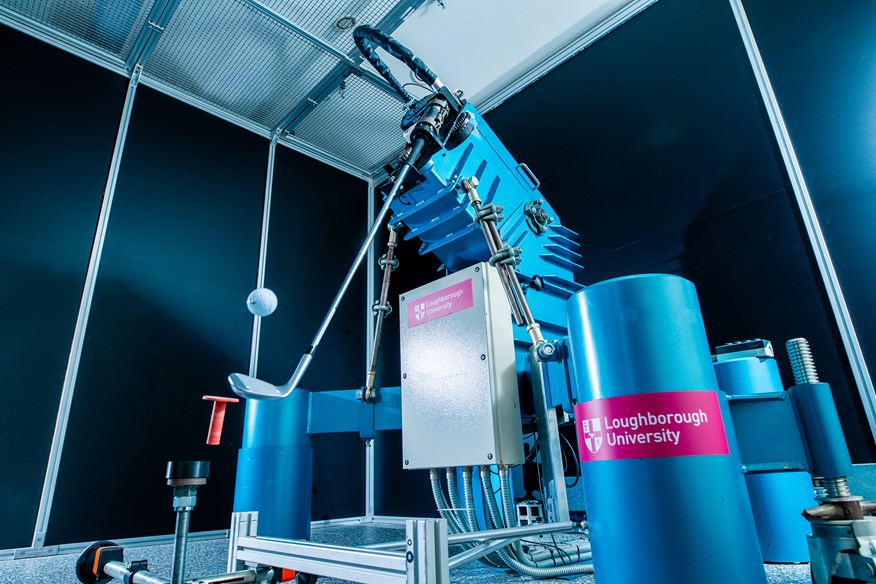 Wedge performance – the biggest surprise of all
If you’d asked me before seeing the data to pick one area where the Pro V1 would clearly win against a two-piece model, I’d have said wedge performance, without hesitation.
But the data says otherwise.
BallBall Speed (mph)Launch Angle (°)Backspin (rpm)Carry Distance (yds)Peak Height (yds)Descent Angle (°)Bridgestone e12 Speed46.430.7595139.86.936.0Titleist Pro V146.231.2569239.97.036.7
The Pro V1 launched higher and with less spin than the e12 Speed – the opposite of what’s typically expected from a tour-level vs budget ball comparison. The Pro V1 did deliver a slightly steeper descent angle, which will help with stopping power, but the extra spin on the e12 Speed means there won’t be much in it.
Around the greens, the gap between these two balls is far smaller than most golfers would ever guess.
 The price factor: why this comparison matters
This is the part that turns a close test into a genuine upset.
The Titleist Pro V1 sits right at the top of the market. It’s expensive, unapologetically so, and its reputation is built on elite performance from tee to green.
The Bridgestone e12 Speed lives in a very different price category.
If the Pro V1 comfortably beat it everywhere, that would be expected. If the e12 Speed occasionally got close, that would still be understandable. But when a significantly cheaper ball matches or beats the Pro V1 for driver carry across three swing speeds, shades it with irons, and even spins more on wedges, it forces an awkward question.
How much of what we’re paying for is performance – and how much is reputation?
Again, this is no criticism of the Pro V1 – it delivered the solid numbers and all-round performance you would expect – it merely highlights what an astonishing performance the e12 Speed delivered.
 Which one should you actually play?
This comparison doesn’t dethrone the Titleist Pro V1. It’s still one of the most complete, balanced golf balls in the game, especially if iron and wedge control are your absolute priorities and price isn’t a big factor.
But the Bridgestone e12 Speed proves something important.
If you care more about performance than playing what the pros play, and you’re not willing to pay top-tier prices for a tour badge, it performs far closer to the number one ball in golf than it has any right to.
The Pro V1 will continue to remain the benchmark, but the data shows the gap between it and some other balls isn’t nearly as wide – or expensive – as many golfers assume.
That doesn’t make the e12 Speed better than Pro V1 – but it does make ignoring it much harder.

Pros & Cons Specs Features
Pros Perfoms more like a premium golf ballOutstanding tee to green performanceAmazing feedback and response Carry distance (yds) Driver 114mph – 273.9 | Driver 93mph – 210 | Driver 78mph – 161.3 | 7-iron – 157.6 Ball speed (mph) Driver 114mph – 164 | Driver 93mph – 134.1 | Driver 78mph – 113.2 | 7-iron – 109.2 Backspin (rpm) Driver 114mph – 2,680 | Driver 93mph – 2,574 | Driver 78mph – 2,317 | 7-iron – 4,467 | Pitch – 5,951 Launch angle (°) Driver 114mph – 11.4 | Driver 93mph – 12.9 | Driver 78mph – 14.1 | 7-iron – 21.3 | Pitch – 30.7 Descent angle (°) Driver 114mph – 37.6 | Driver 93mph – 31.8 | Driver 78mph – 27 | 7-iron – 45.1 | Pitch – 36 Peak height (yds) Driver 114mph – 33 | Driver 93mph – 22.3 | Driver 78mph – 15.5 | 7-iron – 30 | Pitch – 6.9 Compression (psi) 103 Optimal Flight SystemFast gradational coreMindSet technology330 dimples2-Piece constructionAvailable in white only 
Pros & Cons Ratings Specs Features
Pros Extremely versatile golf ball suitable for a wide range of golfersBrilliant distance off the teeGreat feel and responseAmazing short game spin and controlPenetrating ball flight that optimizes carry distanceMore durable than the previous generationMassive Tour approval Cons Very difficult to find a fault, but other golf balls are very competitive
Durability
Versatility
Tee to Green Performance
Feel and Response
Construction 3-piece Cover Urethane Dimples 388 Feel Soft Flight Mid Long game spin Low Short game spin High Color options White; Yellow Alternative models Pro V1 Enhanced Alignment; Pro V1 High Numbers New faster high gradient coreSpherically tiled 388 tetrahedral dimple designSpeed amplifying high-flex casing layerSoft cast urethane elastomer cover