


PONTE VEDRA BEACH, Fla. — Standing atop a golf cart trying to get a good peek at the tee shot above, Roger Maltbie still has time to mess with the masses.
A gaggle of college-age golf bros swarm Maltbie’s cart, more focused on this sport’s hybrid between “golf grandpa” and Norm from “Cheers” than they are Scottie Scheffler hitting from the fifth tee at The Players Championship. Their vape pens have been hit, to say the least. “The man, the myth, the legend!” one shouts at Maltbie. He’s in the thick of the action again, and man, oh man, does that feel good to him.
“Why are your guys’ eyes so red?” Maltbie cracks, laughing to himself.
He’s 74 now. The droopy mustache has become a tighter white goatee. The signature plump build has trimmed down. But the headset is back on, the microphone in his grasp. And make no mistake, a freshly lit Marlboro menthol remains in the free hand.
“These guys are higher than bejeezus,” he says, dropping into his passenger seat in the cart with a big ole grin. He turns to his longtime volunteer driver, Tom. “Back to my chariot!” They speed down the fairway while Maltbie playfully shouts at people in the way, making faces at spectators like they’re all in on some prank together.
“People love when you mess with them,” he says.
Roger Maltbie is back. Sort of. But even that is enough. Three years after he was unceremoniously let go by NBC Sports in a situation Maltbie said was “handled pretty s—y,” Golf Channel brought him back for nine events in 2026 to do the thing he did as well as anyone for more than 30 years: talk golf.
He was back at Pebble Beach, where he got married down the road in Carmel 46 years ago and where he’s been known to close down the on-resort property Tap Room a time or two. And he was at the Players, where he let The Athletic tag along for two days.
But this week, he’ll be at the place that reminds you there’s more to the man than the lovable caricature he’s often framed as. He’ll be roaming the fairways at the Memorial Tournament, 50 years from when Maltbie won the inaugural holding of Jack Nicklaus’ signature event in a wild, luck-filled playoff over Hale Irwin.
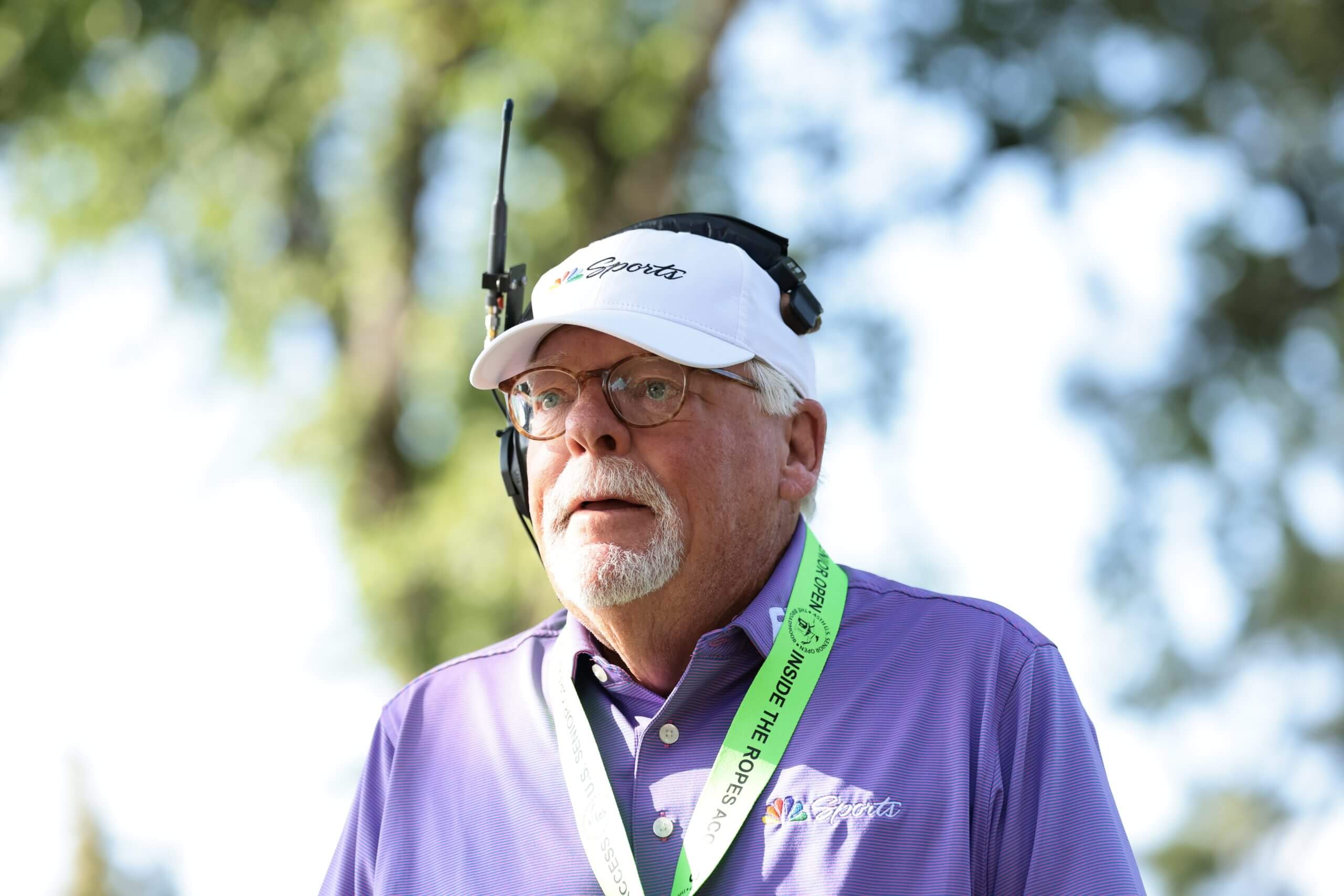
Roger Maltbie has become more well-known for decades on golf broadcasts than he was as a player. (Andrew Wevers / Getty Images)
In a sport that has had its fair share of larger-than-life characters, Maltbie is the rarity who lives up to your hopes. My god, how he’s lived these 74 years, the kind of persona who could win five PGA Tour events but whose broadcasting career takes the cake. A guy who played with a Michelob sponsorship on his bag, was profiled by Playboy, and once got so drunk he left a $40,000 winner’s check at T.O. Flynn’s tavern outside Boston. The man has three Super Bowl rings (seriously). He’s got a wife, kids and grandchildren. He’s got the whole world in his hands.
And as unequivocally happy as Maltbie is to be back, the story here is the people watching. To walk with Rog is to be interrupted constantly. Hey Roger! Sup Roger! I think that’s really him! Justin Thomas turned and saw him on the first tee. “Hey, Rog’,” Thomas said. “Wanna play with us? We’ve only got three.” Maltbie, of course, quipped he’d only slow them down.
At one point, Golf Channel executive vice president Tom Knapp, who is responsible for bringing Maltbie back to TV, swung by to shake his hand.
“Rog, for two weeks in a row now, you’ve made the internet very happy,” Knapp told him. “You really have. It’s a rare thing. We call it the Angry Internet, and you’re the one thing that’s made them happy.”
In a time of phony influencers and contrived personalities occupying our feeds, Roger Maltbie can still break through. And it’s not just because he’s funny. It’s not because he was such a great golfer or because of his insight on TV. It’s something so much simpler — why people liked watching him play, listening to him on TV, and want to chat with him all night at the bar. It’s because he’s real. He’s Rog.
To understand why this all works, the secret sauce, pretend you’re at a Morton’s Steakhouse with Roger and the gang. The one on Sand Lake Road in Orlando. Dan Hicks and Jimmy Roberts are there, as usual, the old NBC Sports brain trust and the other members of the Supper Club, three brothers by choice who worry they’ve spent more dinners together on the road than with their families over the last quarter century.
Imagine Roger is there drinking Ketel One on the rocks with blue cheese-stuffed olives instead of covering the 2000 U.S. Open. The one at Pebble Beach. The one where Tiger Woods dominated the field with records that haven’t been touched since. They’re watching on TV as Woods hacks out of thick rough, behind a tree, 202 yards out from a par 5, and rolls it up to the green.
Roger turns to Dan and Jimmy, and says, “It’s just not a fair fight.”
That’s perhaps the most famous line of Maltbie’s career — and one of the most iconic of Woods’ too. In real life, Maltbie said it as the ball rolled onto the green on the NBC broadcast, but as Roberts thinks back on it, it works because it’s exactly what he would have said to them watching at a bar. Nothing about that line was written. He wasn’t even trying to be funny.
“The genius of it,” Roberts said, “is that you know he’s not trying to be anything. You know, he’s just being Roger Maltbie.”
It all goes back to how this started.
It was 1987, and Maltbie wasn’t old, but he wasn’t young. NBC asked the 35-year-old to come help out with coverage at Kapalua. They wouldn’t pay him anything, but it was a free trip to Hawaii with his wife, Donna. He said sure, and NBC loved him. They offered him a job and told him what it paid. “I can’t take that kind of pay cut,” Maltbie told them. “I just can’t do that. Thank you very much.”
Nearly four years passed. More time on the body. A second shoulder surgery. NBC came back asking if he’d help with the second course coverage of the Bob Hope Desert Classic at Indian Wells. Maltbie got an idea. The 1991 Ryder Cup was that fall at Kiawah Island in South Carolina — what became the “War by the Shore.” He told them, “I’ll do it if you also let me do the Ryder Cup.” Deal.
This is where it gets good.
Maltbie was assigned to follow Payne Stewart versus David Feherty in Sunday singles, and while the U.S. made its epic run, American Mark Calcavecchia was a group ahead, blowing a four-shot lead against Colin Montgomerie with four holes to play. The man just needed a bogey to win the match on the par-3 17th, and after Montgomerie missed the green, Calcavecchia shanked it in the water.
They halved the match, and executive producer Terry O’Neil got in Maltbie’s ear, with instructions to find Calcavecchia and interview him. Maltbie tentatively did what he was told — he tracked down Calcavecchia in the TV compound with their mutual instructor, Peter Kostis.
Calcavecchia’s head was buried in a trash can, puking his brains out. Eyes swollen. “I don’t know what a nervous breakdown is,” Maltbie recalls, “but this man has had enough.” Calcavecchia thought he’d just cost his team the Ryder Cup (he didn’t). Maltbie took one look at his face and understood.
Maltbie walked back into his production truck to find a frustrated O’Neil. “I thought I told you to interview Calcavecchia.” So Maltbie explained. Didn’t matter. O’Neil told him to go back and wait with him until he talked.
“No, I’ve got an idea,” Maltbie said. “Why don’t you stay with him, and he’ll talk to you maybe. But I’m not doing it. I still gotta go play golf with him. I’m one of them. I’m not a TV guy.”
Three weeks later, Maltbie was offered another full-time job. That time, he took it. He was a TV guy now.
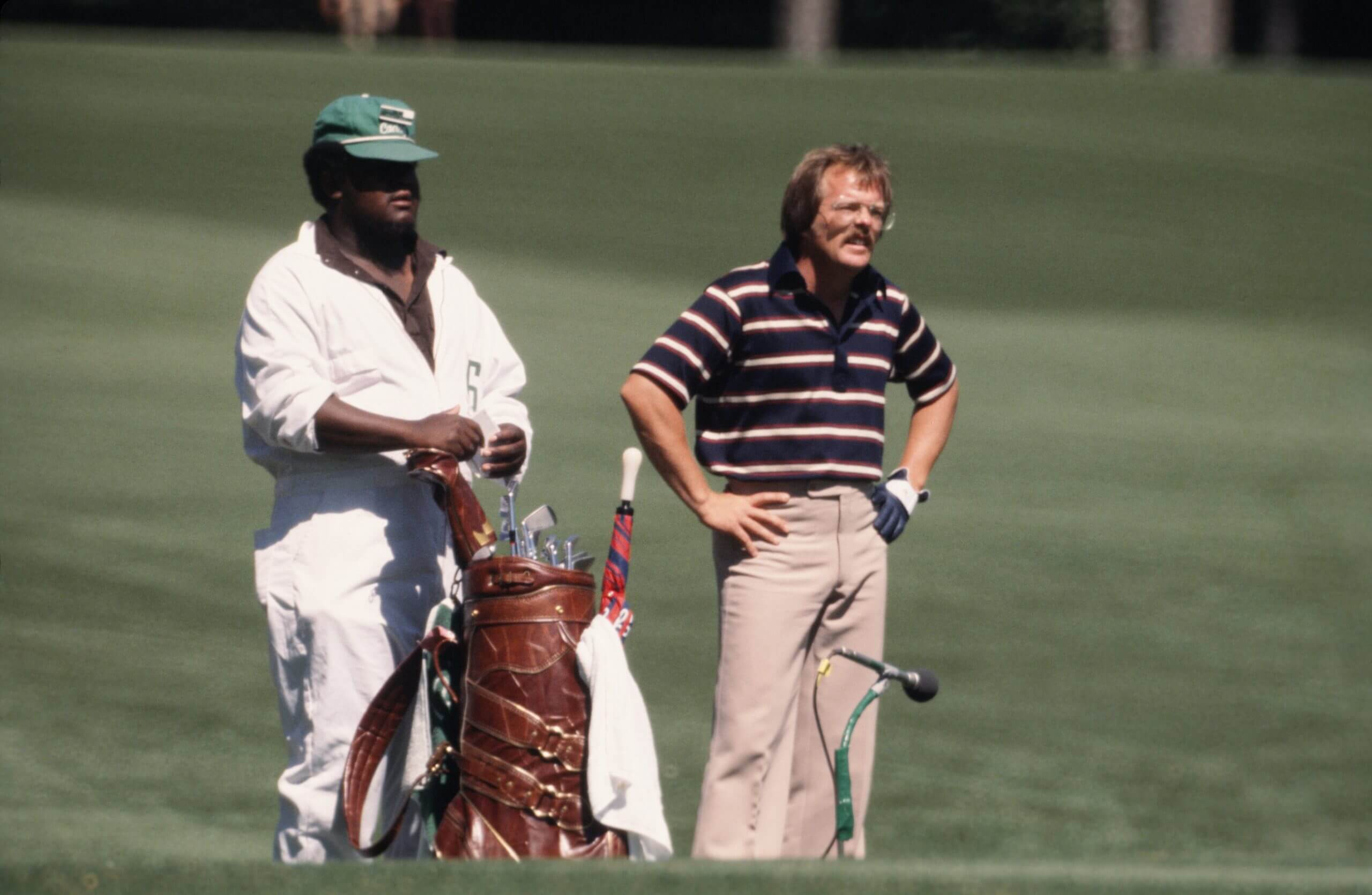
Roger Maltbie finished tied for fourth at the 1987 Masters, his best finish at Augusta National. (Augusta National / Getty Images)
He’s also smart enough to know much of his value as a TV guy was because he’s not, in the same way, he points out, Smylie Kaufman is a peer to the current stars. It was a badge of honor not to be a TV guy.
“I didn’t know s— from Shinola,” he says. “I didn’t know anything about broadcasting on television. And I still don’t. I don’t want to know.” Thirty-five years later, he’s a core piece of television history. He admits he’s become far more known for the last 35 years than the prior 40.
So he’s asked: When you think of who you are, are you more the golfer or the broadcaster?
“Well … you know … that’s a good question,” Maltbie says, taking a drag of his dart and blowing smoke off the side of a hospitality balcony.
“I still see myself as a golfer,” he says, and let’s just be Roger Maltbie for a moment.
You spend your whole life from childhood dreaming of making it on the PGA Tour, practicing your ass off. Go from San Jose City College to San Jose State. Get on tour in 1975. Win back-to-back events, then Rookie of the Year. A year later, the iconic win at the inaugural Memorial. It’s all happening.
Then, it stops. No wins for almost a decade. Qualifying for majors is a struggle. But still, life is good. You’re a personality. You’re a good time. The guy fans want to have a beer with, and players still flock to. Have a late renaissance, winning twice in 1985, including the World Series of Golf, but time is catching up to you.
TV is only supposed to be a side gig. Just a couple of weeks while you rehab. An even better offer comes. You’ve got a 10-year exemption, so doing the TV thing to supplement only playing 15 weeks a year makes sense. But you’re damn good at it. They call you the Golf Whisperer. You know the players’ wives, their kids. Go from playing 15 events. To 11. To seven. To two.
“You keep going further, and it gets to the point where they don’t even know I played on the tour,” he says. “I’m a broadcaster. They’ve only known me as a guy on TV. You go through these periods of time, and that’s how my relationship with the players and the job has changed.”
The more you talk to Maltbie, the quicker you learn it was never about him becoming either a golfer or a broadcaster. He’s the river flowing through life, bouncing from one absurd story to the next. The roles? They tailored themselves to him.
Which reminds Maltbie of the best advice he ever got. It was after that first tournament at Indian Wells. He tracked the producer down in the parking lot and begged for help. He had no idea what he was doing.
“Listen,” Larry Cirillo said, “You know the subject matter. Just be yourself. That’s all you’ve got to be.”
Which made Roger wonder, “What the hell is myself?”
The beauty of a Maltbie story is that he doesn’t tell it like he’s giving you the highlights or servicing a larger point. The story is the point. The details are layered and the detours and nooks and crannies are the soul. It’s not your aunt who can’t get to the punchline. It’s an artist who knows that adding the texture makes it feel more real. And Roger wants you to feel part of the story.
He tells you about how the Michelob deal came together and how it was heaven, because beer brands sell their products at huge events, meaning he got free hospitality trips to Super Bowls and all-star games as a brand ambassador. “Plus, they put a tapper in my home. And the local wholesaler would come, send the guy out, clean the lines, and replace the keg every week. And then they sent me four cases of Michelob every month. You think I’m on the road all these weeks, right? So now, in the offseason football time, I’m like the most popular guy in the world. ‘Oh, my God, come on. We got a ticket for you for this, come tailgate this.’ I’ll bring the beer!”
He tells you why he’s wearing a San Francisco 49ers Super Bowl ring. A Bay Area boy, Maltbie played the Pebble Beach Pro-Am with 49ers owner Eddie DeBartolo every year, and eventually DeBartolo invited him to a game, then season tickets, then box seats. They won the Super Bowl, and DeBartolo invited him to the ring ceremony. As players and coaches went off for dessert and coffee, DeBartolo said, “Roger, come with me.”
He quietly handed him a box with a Super Bowl ring. Floored, because he played no part, Maltibie put in a safety deposit box. Months went by, and they saw each other again, and DeBartolo immediately asked him where the ring was. “That’s not why I gave it to you,” a disappointed DeBartolo said. Maltbie has worn it everywhere ever since.
He tells you about when NBC Sports put out a staff mandate to be active on social media, to which he promptly cautioned the executive: “Do you have any idea how much I drink? And what I think is funny at 10 o’clock at night? You really want me doing that?” NBC Sports let it be known that Roger Maltbie was exempt.

Roger Maltbie’s distinctive broadcasting style captured audiences for decades. (Al Messerschmidt / Getty Images)
But then we get to the last few years, and his time away from the big events.
He downplays it. “Ah, you know, watched some golf on TV. I’m pretty good at doing nothing.”
But it hurt. Maltbie admits he felt both pain and gratitude when his 31 years at NBC ended. But a man who makes fun of himself as much as Maltbie does isn’t the type to let pride be his downfall. He stayed busy, working senior tour events and helping out on the PGA Tour occasionally.
“He has a really great perspective on life,” Roberts said. “When he was going through it, I remember thinking to myself, ‘There’s something to be learned here.’ I think he feels good enough about himself to not confuse who he is with what he does.”
But when Knapp and Golf Channel looked to strengthen their brand this year after a round of corporate restructuring, they called Maltbie.
“We’re in this world of wanting to drive the viewership lower and younger,” Knapp said. “We want viewership to get younger. But I think one of the things that people may not realize is, younger viewers, so viewers in their mid-20s and mid-30s, have grown up with Roger Maltbie. He’s their golf grandpa.”
And Maltbie accepted, because the part that people might miss about Maltbie is that he really is all about the golf. He loves watching it. He loves getting up close. For years, he refused NBC producers’ suggestions to put him in one of the towers. He said he could do that from home. He wants to be on the ground reading greens and watching ball flights.
Plus, he wants to be back in the mix. He wants to be back at the Tap Room, at the steakhouses with the Supper Club, and running into random staffers who call his name when they see him.
All those weeks watching from home let him think about where golf broadcasts are going. He loathes the tape-delay heroes, who make “predictions” that they already know to be true. “It’s OK to be wrong,” he says. “When you do it right and the words spill from your mouth, and you have painted the picture of what you thought may happen, it’s like hitting one flush. There’s a satisfaction.”
Oh, and the jokesters. He’s not gonna name names, but he doesn’t vibe with the forced comedy. When you listen to Maltbie’s calls, he’s not trying to be funny or do a stand-up set. He’s reserved, giving direct thoughts with fewer words. “Humor presents itself, presents the opportunity,” Maltbie says. “Let it be natural. I don’t want to hear your comedy hour.”
For 40 years, Roger Maltbie golfed. For 35 years, he did TV. In all that time, nothing’s really changed in him, no matter the job description.
As Maltbie set off for a closer look at TPC Sawgrass’ sixth green, Tom, the man who drives Maltbie around in these cameo weeks back on the PGA Tour, spoke some truth. Tom still helped out and drove for the last three years. It was a hell of a lot less fun, he said. So many back at home have felt the same way. Which is why Tom was so blown away by seeing the people react to seeing Maltbie again. He went quiet for a moment.
“To a lot of people,” he said, “Roger is golf.”