
How much time needs to have gone by in order to feel nostalgia for something?
That’s a question I keep mulling over as I watched “Rory McIlroy: The Masters Wait” this past week, the new documentary about the 2025 Masters that was made by Amazon Prime in association with Firethorn Productions, McIlroy’s own production studio. The documentary will be available to the public on March 30, but early screeners were provided to various members of the golf media, and if you are interested in reliving the most volatile and emotional Masters Sunday in the history of the event, I would encourage you to watch.
There are elements of it that I deeply enjoyed, particularly the interview footage of McIlroy’s parents, Gerry and Rosie, who are the stars of the documentary. Anyone familiar with my writing in this newsletter won’t be surprised by that development. Stories about parents who make sacrifices so that their kids can pursue their dreams — and then openly express pride over how their son handles himself in the face of adversity — are a lay-up for me as a viewer. The McIlroys, understandably, stopped granting interviews years ago, but the love they have for their son shines throughout the film.
I even experienced a twist of this in my own life, early in the documentary. My kids were giddy when they recognized their father’s voice asking McIlroy a question during a press conference, and it was a nice window to be able to talk about the deeper meaning behind McIlroy’s now-famous quote: “I’d go through 100 Sundays like this in order to get my hands on another major championship.” The scene essentially establishes the narrative engine of the film, the idea that the wait made everything worth the trials that preceded it.
There is also a juicy scene, midway through the doc, that reveals an interesting tidbit from the final round that had not yet been made public. On the ninth hole, McIlroy and Bryson DeChambeau each hit their approach shots in close, and it was unclear which player’s ball was away. DeChambeau suggested to McIlroy they flip a tee to decide who should go first, an offer which McIlroy admits he was baffled by. This was the final round of the Masters, not a Tuesday afternoon Nassau. McIlroy countered that they bring in a referee to measure. DeChambeau shrugged and told McIlroy to go first. McIlroy buried his putt, DeChambeau missed his, and DeChambeau faded away over the next few holes.
Hardly a scandal, but in the tense-but-polite world of major championship golf, it was great theater, and certainly confirms that McIlroy and DeChambeau did have at least one conversation that Sunday, which contradicts DeChambeau’s claim that McIlroy would not speak to him throughout the day.
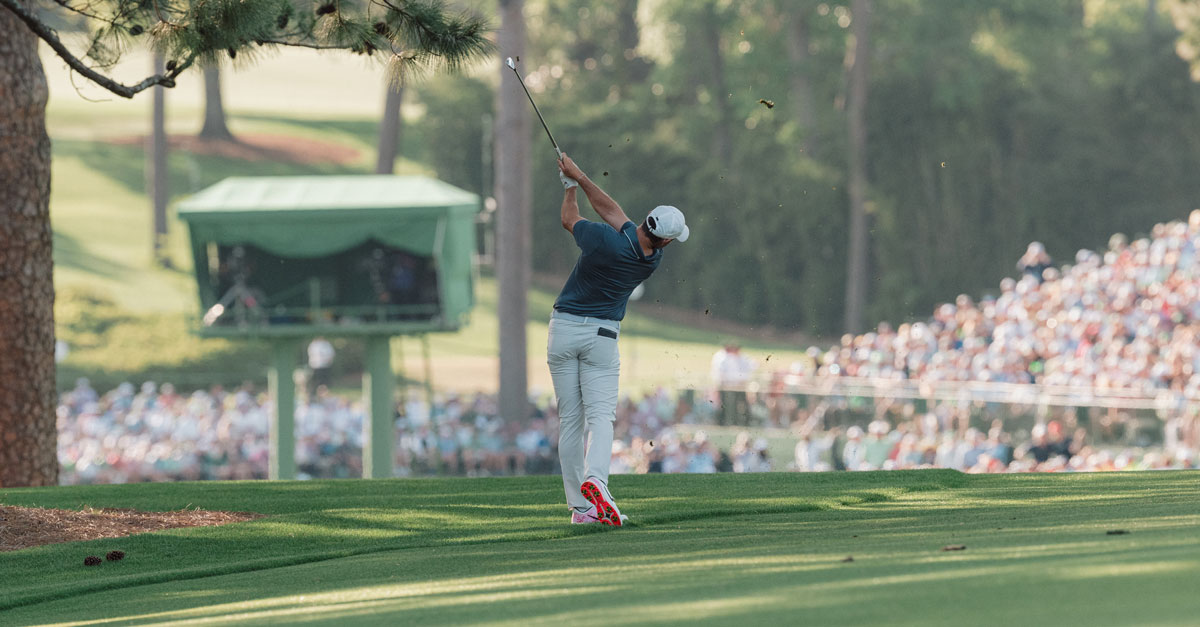
There are also elements of the documentary I am less bullish about, although your mileage may vary. The director, Drea Cooper, incorporates some stylized elements that involve McIlroy — wearing the same clothes he did on Sunday — recreating the shots he hit during his final round. Augusta National granted permission to Cooper, McIlroy, and the crew to return to the course and shoot scenes of McIlroy standing in spots where he hit shots that will live forever, allowing for moody close-ups and angles that would not be possible during the actual competition. It works better in some places than others, although it’s hard to tell if the dark color grading during those scenes is an intentional choice or a function of the fact that the weather they got on the day the club gave them permission to film was gray and dreary, at least in contrast to the perfect weather of that actual Sunday in April.
In the end, my main takeaway was that I wish we had the patience as a society to wait on these kinds of documentaries, even if we film some of the footage right away and then lock it up in a vault for an undetermined period. The greatest sports documentaries (When We Were Kings, Senna, OJ: Made in America, The Last Dance, Hoop Dreams) all have one thing in common. By the time they were released, enough time had passed that there was a hunger for the subject matter, a sense of discovery. They made you long for a time that had come and gone, even if you didn’t live through it.
In turning this documentary around less than a year after it happened, it’s easy to feel like the film ignores its own thesis, that the wait — and the hundred Sundays in between — make the payoff that much sweeter.