

Every good golf swing starts with a good grip, yet there are countless ways that even this most fundamental of golf skills can go awry without you even noticing.
Every day, thousands of golfers take to the course casting barely a thought as to whether or not they’re getting a consistent grip on the club every time. Yet gripping the club from the wrong angle or with the wrong technique can lead to a whole host of swing maladies.
Adam Keogh, Head Professional at The National Golf Centre at Woodhall Spa – home of England Golf, sees this every day. Working with both elite golfers at national squad level and everyday members at Woodhall Spa, Keogh has devised a simple process that, after a bit of practice, anyone can replicate basically without thinking.
The key, Keogh says, is to ensure that the club face is being given as little chance to deviate throughout the swing as possible. “You want to set the hands and wrist up to hinge naturally without encouraging the kind of movement that can send the angle of the club face askew at impact.”
Achieving this takes just a few tweaks to your standard pre-shot, which can be distilled down into a simple three-step process to get the perfect golf grip every time.
Article continues below ADVERTISEMENT
Article continues below ADVERTISEMENT
How to grip the golf club perfectly every time 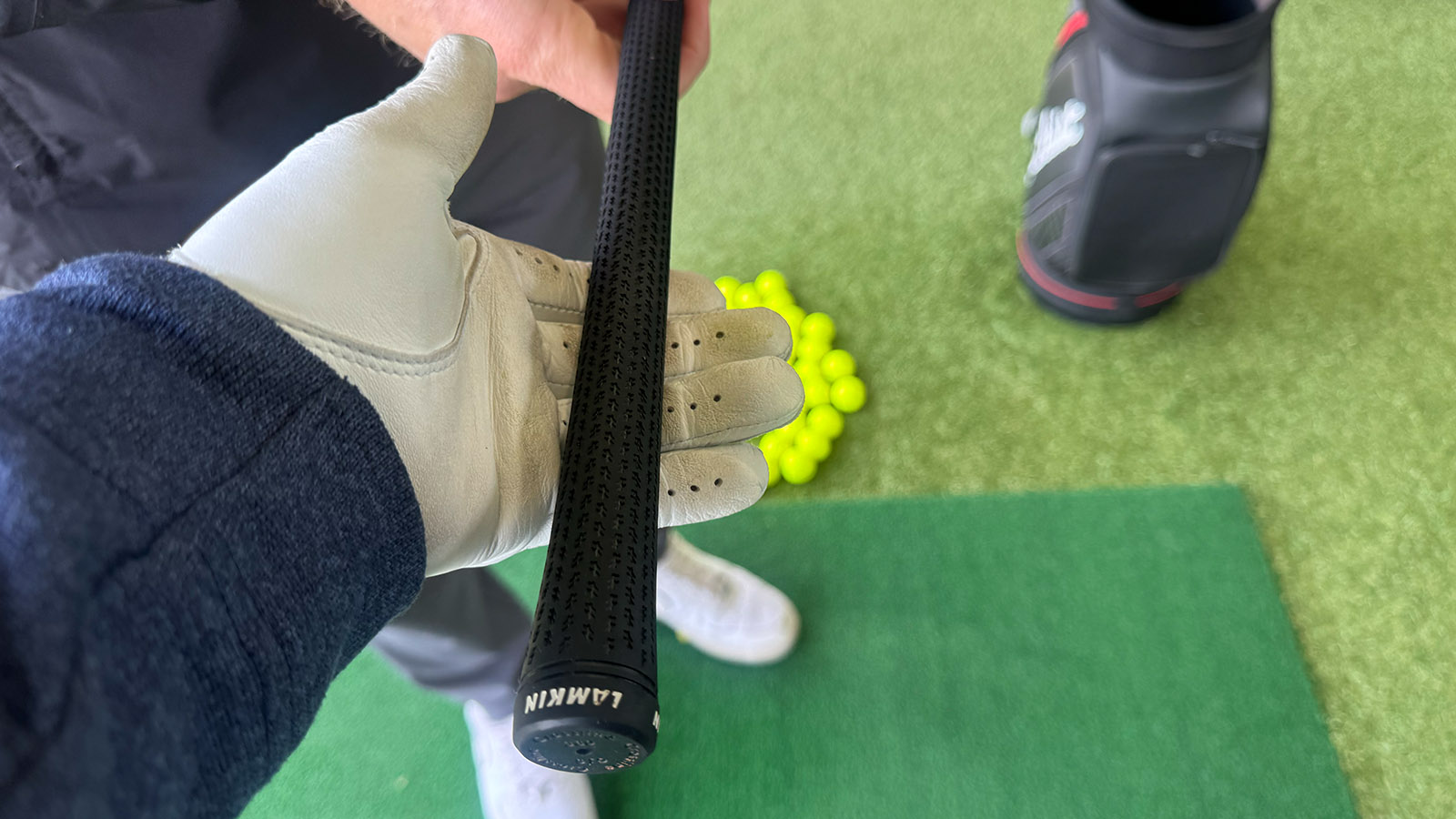
Image: GolfMagic
1. First of all, take the club off the ground
Never put the club on the ground and then grip it. The moment you do that, the wrist will lock, which is great for putting but not a full swing. Conversely, gripping the club with it sticking directly into the air can facilitate too much wrist movement.
In order to prevent this, you want to hold the club out in front of you, perpendicular to the ground. At this stage, ensure that the club face itself is in the square position you would ideally like to present at impact, and not overly closed or open.

Image: GolfMagic
2. Allow the golf club to rest naturally in your fingers
With the correct shape established, allow the grip of the club to sit into the pads of your top hand. You should feel the majority of the contact between the second and third knuckles of your fingers, and not in your palm as many people tend to do without realising – something that kills wrist hinge and drains power in your swing.
Article continues below ADVERTISEMENT
Article continues below ADVERTISEMENT
Once you’re comfortable, wrap your top hand up around the grip, with your thumb resting comfortably just past the centre of the grip directly in front of you. As a frame of reference, you should be able to see the first two knuckles of your hand. Any more, and your grip is too strong. Any less, and it’s probably too weak.

Image: GolfMagic
3. Grip with the bottom hand
With the club still in front of you, you can then wrap the bottom hand around the upper thumb to lock in the grip. While your top hand is predominantly responsible for steering the ship, the bottom hand is what generates power throughout the swing.
Once you have correctly gripped the club, you should have created two Vs between your thumbs and index fingers.
When you address the ball, both Vs should point between your chin and your right shoulder to ensure your hands are in the right position.
Article continues below ADVERTISEMENT
Article continues below ADVERTISEMENT
To test whether you’ve got this right, once you’ve completed your grip you should be able to hinge your wrists directly up and down and side to side without altering the angle of the club face. If you find the face is twisting undesirably (something that leads to a lot of pulls and slices), try regripping.
Interlock, overlap, or baseball style?
There are many different styles of golf grip, and it’s likely that if you’ve played for a little while you’ve already figured out which is most comfortable for you.
Most amateur and professional golfers use either an interlocking or an overlap grip on the club, with the bottom pinky finger either wrapping up over the top hand or interlocking with the pinky on the top hand. The thinking behind this is that it better facilitates club face control and promotes a softer grip pressure.
If you do feel more comfortable using a baseball-style, or ’10-finger’ grip, however, fear not. Keogh assures us there’s no major downside to this, and the best grip for you is always what feels the most comfortable. 10-finger grips tend to be favoured by players with smaller hands, and indeed, many top pros have used a 10-finger grip in their time, including current world number 56 Michael Thorbjornsen.
What other steps can I take to make sure I’ve got the right grip?
As with all things in the game, installing a good golf grip as second nature takes practice. Thankfully, this is one of the easiest things to reproduce at home, and all it takes is a club you can practice with a few times a day to make gripping the club in a new way feel routine.
Article continues below ADVERTISEMENT
Article continues below ADVERTISEMENT
One of the simplest ways to ensure the correct top hand finger grip is to get an old golf glove and draw a line showing the ideal path of the grip across the pads of your fingers. Training gloves are also available that allow you to feel this, rather than see it.
If you really want to get a feel for what’s considered a desirable grip, a number of training aids exist that can help you. We’re big fans of the Golf-Grip trainer, which is affordable, portable, and works for both left and right-hand golfers.
It also fits over a range of different grip sizes and can be used at the driving range and during your warm-ups to install the right grip feel before a round.
GolfMagic may receive a small advertising or affiliate commission if you buy via our links. Pricing may vary.
Show Affilizz Embedded Content
Loading this video will expose you to potential cookies and tracking by the provider
Looking at your golf club grips themselves can also have a major impact on your swing, particularly if you have particularly small or large hands. To ascertain whether the grips on your clubs are right for you, we’d recommend hitting a local pro shop or visiting a fitter to talk through your options.
Article continues below ADVERTISEMENT
Article continues below ADVERTISEMENT
Subscribe to our Newsletter