

Learning how to choose irons for beginners does not have to be complicated or expensive. (And, you don’t really have to choose right away, anyway)
Let me explain…
I played my first many rounds of golf with borrowed clubs.
For years after that, I played used irons I picked up for next to nothing. (I was in college and had no money to speak of.)
My first big purchase of new clubs was the Callaway Big Bertha Fusion irons circa 2007 or so.

I’d classify them as a mix between game improvement and player distance irons – probably closer to player distance if I’m honest. But, they had rather large heads compared to the player irons I play today.
I rode those clubs from an 11+ handicap down to a 5.3.
I hit them high – I could flight them down – I hit them far – I could shape them – and I had great distance control.
I only ever got rid of them for my player irons because a friend suggested it because I test and recommend new irons. So, I did.
I never outgrew them.
I stress that because a common question in forums and on the top of high handicappers minds is, “Will I outgrow these?”
I say, not necessarily and don’t let anyone tell you differently.
Now, will you want newer or more demanding irons at some point. Most of us do.
But for now, let’s get you that first set and make sure you get the right one for your game and for your pocket book.
The Three Decisions
There’s no lack of opinions or questions about how to choose irons that best serve you.
Shaft flex, shaft weight, loft, swing weight, loft progression, cavity back, cast vs forged, etc.
Here’s what I think matters for beginners:
What type of iron matches where your game is.
Set makeup — it’s fewer clubs than you think (for beginners).
How much to spend and where to buy. (You’ve got nearly endless options)
For the beginner, this is it…period.
Everything else is a question for another day.
I’m going to take you by the hand and walk you through this process until you are 100% confident on your next step.
What Makes an Iron Forgiving
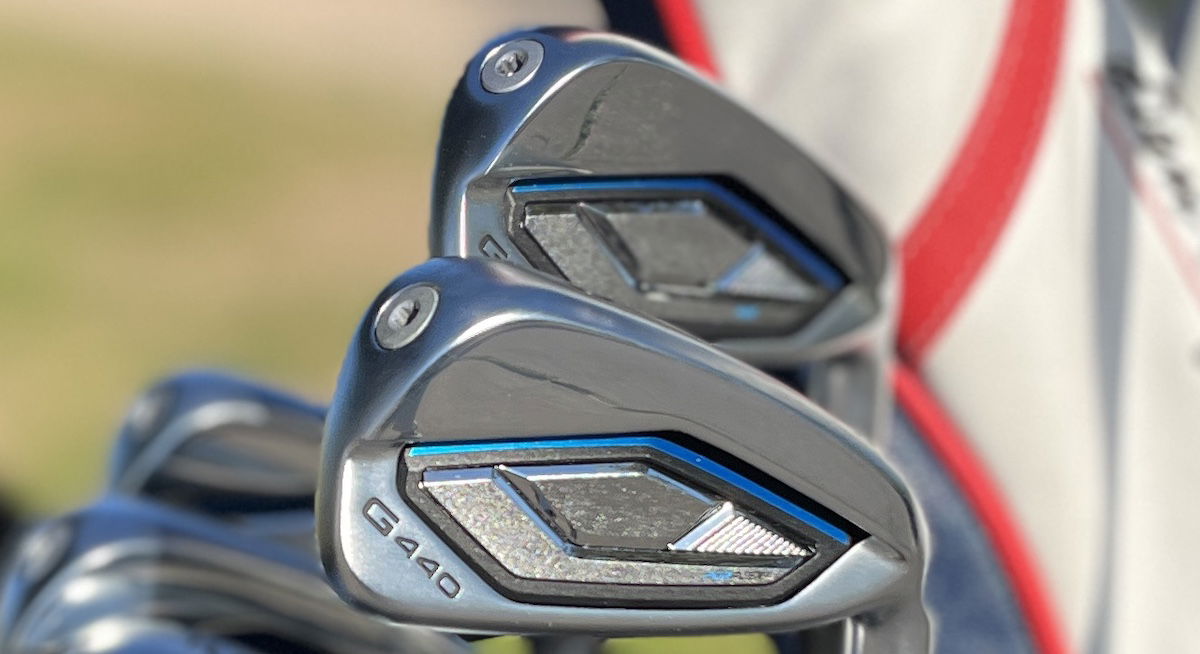
Perimeter weighting is what makes an iron more forgiving.
Perimeter Weighting = Cavity back (never muscle back)
TLDR: You want to get cavity backs irons 10 times out of 10 as a beginner because they lose less distance and go straighter on mishits.
Below is a little deeper explanation.
Cavity back irons allow for greater perimeter weighting which does a couple things for you.
You get a larger sweet spot for more distance over a larger portion of the face. The face is thinner for a trampoline-like effect, plus the head twists less because of perimeter weight distribution.
They move more weight lower in the face to help you launch the ball easier and higher.
Wider sole that more easily slides through the turf when you hit behind the ball vs digging into the turf with a thinner sole. (Fat shots are punished less)
Muscle back irons are created from a single piece of metal and are “forged” into a clubhead. So, this single piece of metal starts out with all of the mass dead center and has to be “worked” out to the perimeter.
This means less perimeter weighting which means less forgiveness, less help with launch, and these irons won’t go as far as perimeter weighted irons.
For a deeper look at how these play out across specific models, see our most forgiving irons guide.
Iron Types Explained
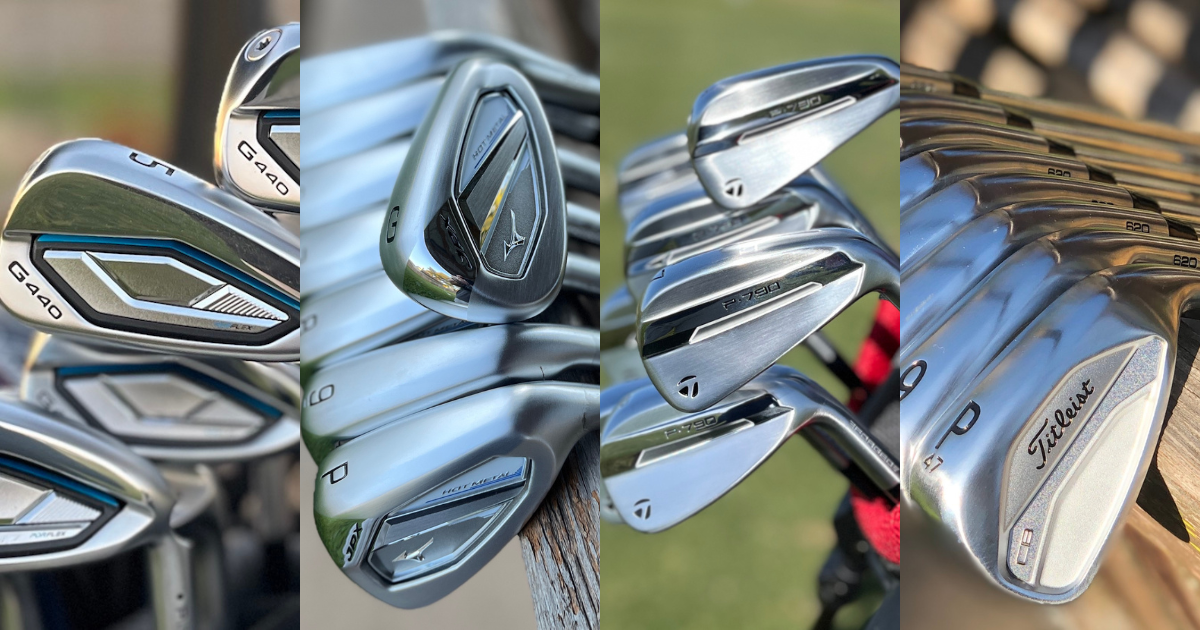
These are the four categories of irons covering every handicap. (We’re focused on the first two only.)
Super Game Improvement

Built for one purpose: getting the ball in the air and keeping mishits playable.
The largest heads, widest soles, most offset, and maximum perimeter weighting. Everything about the design is working to help you.
Who they’re for: beginners and high handicappers are the target. Or, anyone who consistently struggles to get the ball airborne, has a hard time making solid contact, and has severe misses – left or right.
They’re bulky with a lot of offset and should look plenty playable at address.
Examples: Ping G440, Titleist T350.
Game Improvement
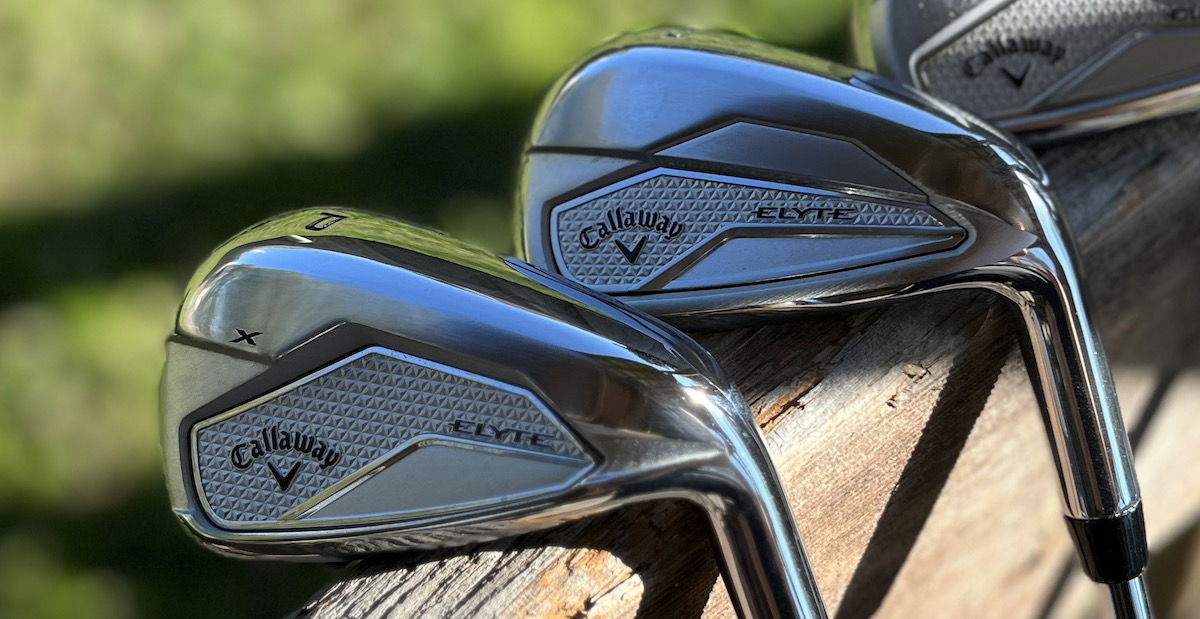
Beginners can start here. You’ll have a little less forgiveness because the heads are smaller. Thus, a smaller sweet spot.
But not much.
Depending on which clubs you choose, you can take these from beginner to single digits and never move out of this category. A fair number of low handicappers do just this.
They also may have a little less offset. They’ve still got perimeter weighting with a lot of the weight lower in the clubhead to help with launching the ball high.
They may look a little sleeker and may have better sound and feel – though not usually.
Who they’re for: 10–20 handicap golfers who can make decent contact but still need mishit protection — which is most people reading this guide.
Examples: Mizuno JPX 925 Hot Metal, Cobra DS-Adapt. See our game improvement irons list for more.
Players Distance

Getting into serious player looks now.
They’re sleeker, are more refined, have less offset and are designed for more consistent ball strikers.
You get a nice blend of game improvement features (forgiveness, help with launch, and help with distance) and player iron features like workability and refined sound and feel.
Start thinking about these when you get around a 12ish handicap.
Player irons

This is where you’ll see smaller to small clubheads. Thin toplines and soles. Much less offset, and more traditional lofts.
They can be muscle back like Mizuno Pro S1 irons irons or cavity back like Taylormade P-7MC irons.
Naturally they’re meant for competent ball strikers and will have less to much less forgiveness. You’ll get less help with launch and you’ll get less help with distance.
Don’t touch these…yet.
Iron Type
Best For
Forgiveness
Offset
Launch
Feel
Beginners?
Super Game Improvement SGI
20+ handicapTrue beginners
Maximum
Significant
Very Easy
Muted
✓ Yes
Game Improvement GI
10–20 handicapAfter 6–12 months
High
Moderate
Easy
Good
✓ Yes
Players Distance PD
5–15 handicapConsistent ball striker
Moderate
Minimal
Moderate
Very Good
Not Yet
Players / Blades MB
Single digitScratch & below
Minimal
None
Player-dependent
Elite
✗ No
Bottom line: If you’re reading a beginner guide, you want super game improvement or game improvement irons. Players Distance and blades require consistent ball striking you haven’t built yet. Tour pros play cavity backs — there’s no shame in forgiving irons.
GolferGeeks.com | Based on testing 30+ iron sets | See our Most Forgiving Irons guide for top-rated picks.
Shafts and Loft: What You Need to Know
Shaft Flex
One note before getting into our recommendations.
There is no industry standard for the flex of shafts. Manufacturers determine the labeling according to their own standards.
That said…
Most beginners should get irons (and woods) with regular flex shafts. Unless you very obviously have a faster swing. (Say 90+ with a driver)
This is why we suggest testing different shafts before you buy. WARNING – minor rabbit hole: Shafts have different flex characteristics within flex stiffness ranges. (We won’t get into that now, but something to be aware of).
On steel vs. graphite: The vast majority of us start the game with steel shafts and do just fine.
Graphite is worth considering if you have slower swing speeds, joint issues, or just prefer really lightweight shafts.
GolferGeeks Guide
Shaft Flex Chart: Which Flex Matches Your Swing?
Match your swing speed or typical 7-iron distance to find the right flex — the wrong one costs you both distance and accuracy.
Flex
Swing Speed
7-Iron Carry
Typical Golfer
Ball Flight if Wrong Flex
For Beginners?
LadiesL
Under 75 mphSlowest swing speeds
Under 100 yds
Women, seniors, juniors
Low, weak ball flight
If it fits
SeniorA
75–85 mphSmooth, easy tempo
100–120 yds
Senior men, slower swingers
Low trajectory, loss of distance
If it fits
RegularR
85–95 mphAverage male golfer
120–150 yds
Most male beginners
High & ballooning if too soft
✓ Most beginners
StiffS
95–110 mphStrong, athletic swing
150–175 yds
Athletic players, low-mid handicap
Low & right if too stiff
Only if athletic
Extra StiffX
110+ mphTour-level speed
175+ yds
Low handicap, scratch players
Severe loss of distance & control
✗ Not for beginners
Bottom line: Most male beginners land in Regular flex. If you’re athletic and hit it farther than average, get fitted before assuming Stiff — playing the wrong flex is one of the most common and easily fixed equipment mistakes.
GolferGeeks.com | Ranges based on True Temper, KBS & Ping fitting standards | See our Best Iron Shafts guide for top-rated picks.
Jacked Lofts
Modern game improvement irons have significantly stronger lofts than traditional irons, and this is consistent between manufacturers.
According to Golf Digest, the average game improvement 7-iron today is around 28 degrees — compared to 34–35 degrees for a traditionally-lofted iron. That’s roughly a two-club difference bearing the same number.
I know what you’re thinking: “How am I supposed to hit the ball higher with such strong lofts?”
Clubhead construction is waaaay more advanced these days. In fact, they have to make the lofts stronger to handle how quickly modern irons launch the ball. Without this, your ball would balloon up with too much spin, too little control, and lose too much distance.
GolferGeeks Guide
Loft Comparison: Why Your 7-Iron Isn’t Really a 7-Iron
Modern game improvement irons use stronger lofts than traditional irons — same club number, very different loft. Don’t compare irons by number. Compare by loft.
Club
Traditional Loft
Modern SGI/GI Loft
Difference
What This Means
4-Iron
24°
18–20°
4–6° stronger
Plays more like a traditional 3-iron
5-Iron
28°
22–24°
4–6° stronger
Plays more like a traditional 4-iron
6-Iron
32°
26–28°
4–6° stronger
Plays more like a traditional 5-iron
7-Iron
34–35°
28–30°
4–7° stronger
Biggest gap — most commonly compared
8-Iron
38–39°
33–35°
3–5° stronger
Distance gap between 7 and 8 narrows
9-Iron
43–44°
38–40°
3–5° stronger
Gapping issues start to show up here
PW
47–48°
42–45°
2–5° stronger
Gap wedge often needed to fill the hole
Why it matters: Hitting your 7-iron 160 yards doesn’t mean you’re a long hitter — your loft might be 28°, not 35°. When comparing irons across brands, check the actual loft numbers, not the club number stamped on the sole. Gapping is a bigger concern once you’re scoring consistently; for now, just know stronger lofts = more distance, less stopping power on greens.
GolferGeeks.com | Loft data based on MyGolfSpy 2025 iron database & Golf Digest Hot List | See our Most Forgiving Irons guide for top-rated picks.
How Many Irons Do You Actually Need?
The USGA allows 14 clubs. You don’t need 14. And filling every slot before you can make consistent contact is one of the most common mistakes beginners make.
My recommended setup for beginners (not written in stone):
Driver
3-wood
6-iron through sand wedge. No gap wedge and your 6-iron can easily be a 6-hybrid.
Putter.
Having a 5-wood is not a terrible idea and could even replace the 3 wood.
Here’s a simple rule of thumb to keep in mind as a beginner and high handicapper: More loft equals more backspin which equals less sidespin which equals straighter shots.
Also worth noting, your 3-wood will probably be your go-to off the tee for a while, not your driver.
It’s shorter, more lofted (getting the ball in the air easier), and significantly easier to make contact with. Most beginners hit it more consistently than a driver for the first several months. Don’t force the driver until you’re ready for it.
No gap wedge yet. With a pitching wedge and sand wedge in the bag, you have more than enough wedge coverage while you’re learning. The “gap” between them only becomes a real problem once your distances are consistent enough to notice it — and that takes time. Add a gap wedge later when you can tell the difference.
I don’t believe you need any club higher than a 6 to start. You can always add those 4 and 5 irons or hybrids later once you’re making consistent contact with your 6 iron or hybrid and you notice a legitimate distance gap you need to cover.
GolferGeeks Guide
Beginner Bag Setup: Start Simple, Add Later
Your first priority is making consistent contact — not filling every slot. This is the setup that gets out of your way while you’re learning.
Club
Role
Include?
Driver
Off the tee on par 4s & 5s
✓ Yes
3-Wood
Fairway shots, shorter tee shotsWill likely be your go-to off the tee — much easier to hit than driver
✓ Yes
5-Wood
Easier launch than 3-wood, versatile from fairwayCan substitute for 3-wood or carry both
Optional
▼ Iron Block ▼
6-Iron
Longest iron in your bag
✓ Yes
7-Iron
Mid-range workhorse
✓ Yes
8-Iron
Approach shots
✓ Yes
9-Iron
Short approaches
✓ Yes
Pitching Wedge (PW)
Inside 100 yards, bump-and-run
✓ Yes
Sand Wedge (SW)
Bunkers and short game~54–56° — no gap wedge needed yet
✓ Yes
Putter
Most important club in the bag
✓ Yes
Add these later — once you’re making consistent contact:
Hybrids — replace your 4 and 5-irons when you’re ready to stop fighting the long irons
Gap Wedge (~50–52°) — becomes relevant once your PW distance is consistent and you notice the distance gap to your SW
Lob Wedge (60°) — specialty club; add it when you’re scoring in the high 80s or better
4 or 5-Iron — only if you specifically want irons over hybrids down the road
GolferGeeks.com | 14-club limit per USGA Rule 4.1 | See our beginner golf set makeup guide for full details on building your bag as you improve.
What You Can Expect to Spend: New & Used
Buying New Irons
I’ve always said golf can be as expensive as you want it to be.
You can buy excellent new beginner irons at ~$200/club, ~$150/club, ~$125/club, or less.
Often, it comes down to your preferences. (The clubs at these various price points perform pretty much the same.)
How an iron looks to you is a big deal. You’ll never get comfortable if you don’t like the way it sits behind the ball at address.
Do you like the shape of the head?
Do you like the cosmetics?
Is the head too small or too bulky?
As you get better, sound and feel become more important.
When buying your set, I think it’s best to think of pricing for sets in terms of price / club. Easier to compare apples to apples that way. Though, you can’t always piece together your set in that way. But it gives you a reference to compare.
The Budget Tiers
The chart below breaks down what each price tier delivers. Prices sourced from manufacturer MSRPs and verified retailer pricing as of early 2025.
GolferGeeks Guide
Iron Pricing: What You Get at Every Budget
Per-club cost is the only number that matters. Set prices are meaningless without knowing how many clubs are in the set.
Tier
Per-Club Cost
6-iron–SW (5 clubs)
What to Expect
Examples
Budget
$50–90/club~$250–450 for 5 clubs
Entry Level
Functional, forgiving enough to learn on. Limited feel feedback. Shafts and grips often generic.
Wilson Launch Pad, Cleveland Launcher XL, box sets
Mid-Range
$100–150/club~$500–750 for 5 clubs
Strong Value
Solid GI performance, good forgiveness, better shafts. Where most beginners get the best return.
Callaway Elyte X ($150), Mizuno JPX 925 Hot Metal ($150), Cobra DS-Adapt (~$143)
Premium
$150–185/club~$750–925 for 5 clubs
Premium GI
Elite GI performance, refined aesthetics, better sound and feel. You’re paying for quality, not just forgiveness.
Ping G440 ($170), Callaway Apex Ai300 (~$175)
Premium+
$200+/club~$1,000+ for 5 clubs
Top-Tier
Best technology, best feel, best everything — but not better forgiveness than Mid-Range for a beginner.
Titleist T350 (~$214/club based on $1,499 7-piece set)
▼ The Option Most Guides Don’t Mention ▼
Used Premium
$30–60/club~$150–350 for a full set
Best Value
2–4 year old premium irons at budget prices. Iron technology advances slowly — a 2019 G410 or 2021 Mavrik Max still performs. This is where smart buyers shop.
Ping G410, G425 · Callaway Mavrik Max · Mizuno JPX 923 Hot Metal · TaylorMade SIM2 Max
Jamie’s take: For most beginners, the sweet spot is Mid-Range new or Used Premium. You don’t need to spend $200/club to learn the game. The G410 at $200–350 for a full used set — in “Good” condition from 2nd Swing or Global Golf — outperforms anything in the Budget new tier and competes with Mid-Range.
What to avoid: Spending Premium+ prices on clubs you’ll be hitting into trees for your first season. Save that money for lessons — they’ll do more for your game than an extra $500 in shaft quality.
GolferGeeks.com | New prices based on manufacturer MSRP as of early 2025 | Callaway Elyte: Callaway press release | Ping G440: MyGolfSpy | Mizuno JPX 925: MyGolfSpy | Titleist T350: Golf Monthly | Prices subject to change — verify before purchasing
Buying Used Irons
I think manufacturers make genuine advancements in iron technology about every 7 years or so. (Rough guess from testing for over a decade) And I’m talking about the kind of advancements that the average player on the ground can feel. Not the incremental differences an Iron Byron robot or some scratch golfer can tease out.
The technology gap between iron generations is smaller than manufacturers want you to believe. Iron design has matured.
The physics of a cavity back iron haven’t changed since Karsten Solheim figured it out in the 1960s. What changes between generations is mostly incremental — marginally thinner faces, slightly repositioned tungsten, updated aesthetics.
I’ve said for years the G425 was the last great game improvement iron from Ping. The G410 was just as good. A used G410 in good condition, which typically runs $200–350 for a 6–7 piece set depending on condition and configuration, is one of the best bargains in golf.
Same with the JPX Hot Metal line from Mizuno. (I started testing Mizunos with the JPX 921 line – six years old now)
Anything post-2015 from a major OEM (Ping, Callaway, TaylorMade, Mizuno, Titleist) is more than adequate for a beginner. The technology in a 2019 G410 or 2020 Callaway Mavrik Max will not hold your game back.
Where to buy used: Stick to graded inventory from reputable dealers. Avoid eBay unless you know what you’re looking at.
Callaway Pre-Owned — manufacturer-certified, condition graded, Callaway-specific inventory
2nd Swing — large inventory, detailed condition grades, good pricing
Global Golf — 90-day satisfaction guarantee.
Next Round – exclusively sells used clubs.
Important note: You’ll save a LOT of money if you don’t care how an iron looks. Nearly always, the business end of the club head – the grooves – are in good condition.For current new iron recommendations at every price point, see our most forgiving irons guide.
Should You Get Fitted?
No. Maybe a static fitting if you are very short or very tall. This is only to lengthen or shorten your iron shafts or change the lie of the head.
FAQs
What type of irons should a beginner use?
Game improvement or super game improvement cavity backs. Maximum forgiveness, low CG, wide sole.
Should beginners use cavity back irons?
Yes, always. Muscle backs are for consistent single-digit handicaps only.
How many irons does a beginner need?
6-iron or hybrid through pitching wedge plus a sand wedge.
Should a beginner get fitted for irons?
Only for length and lie angle. Skip full custom fitting until your swing stabilizes.
How much should a beginner spend on irons?
$100–130/club for solid game improvement irons. Quality used sets offer better value than new budget sets.
Are graphite or steel shafts better for beginners?
Steel for most beginners. Graphite for slower swing speeds (under 70mph with a 6-iron), seniors, or anyone with joint issues.
Will beginners outgrow game improvement irons?
Most won’t — or won’t need to. Quality GI irons serve golfers well past single-digit handicap.
What’s the difference between game improvement and super game improvement irons?
SGI has larger heads, more offset, and maximum forgiveness for 20+ handicaps. GI is for 10–20 handicaps with a more refined look and better feel.
Final Thougths
The most important thing to know is you’ve got options and you can spend as much or as little as you please.
Know your budget.
Know what you want out of golf (Are you strictly casual or are you the more competitive type.)
Know your set makeup (We showed you that above.)
Look at a bunch of clubs and have fun.
Thanks for checking out our guide on how to chose irons for beginners.