50 Words or Less
The Callaway Quantum Max driver has exceptional ball speed and distance consistency. Strong adjustability with a movable weight and adjustable hosel. Can work for almost any handicap level, depending on ball flight preference.
Introduction
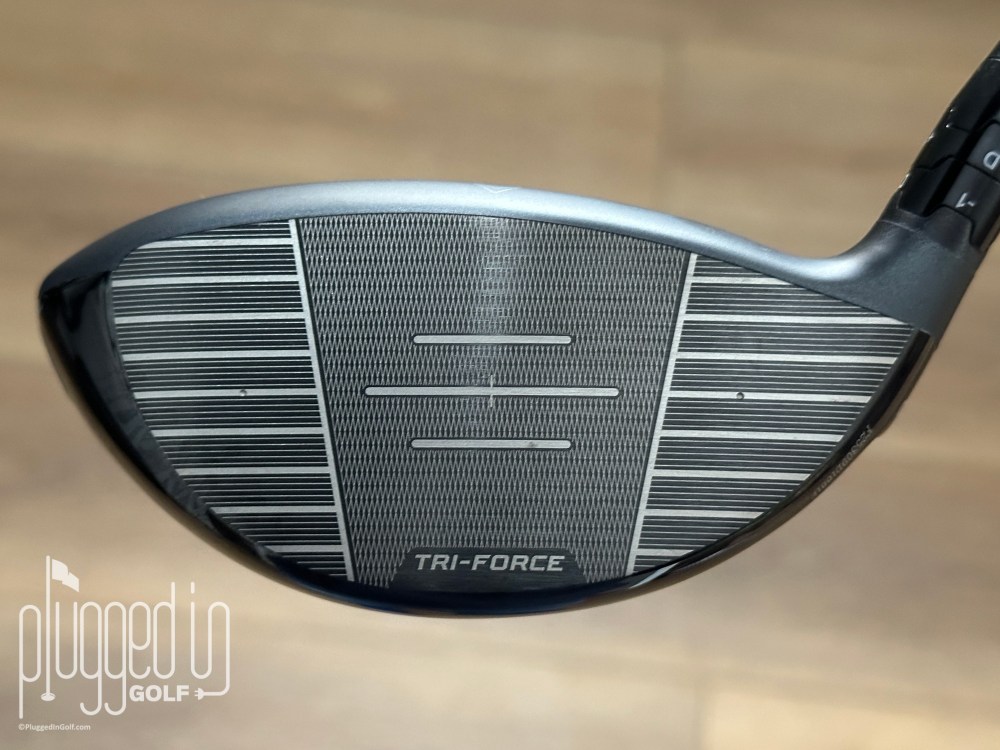
Callaway knows that the most important factor in driving distance is ball speed. That’s why they’re focused year after year on having the most technologically advanced club faces in the game. For 2026, that means a totally new face construction – the Tri-Force Face. I got to put it to the test in the new Callaway Quantum Max driver, and I came away very impressed.
Looks
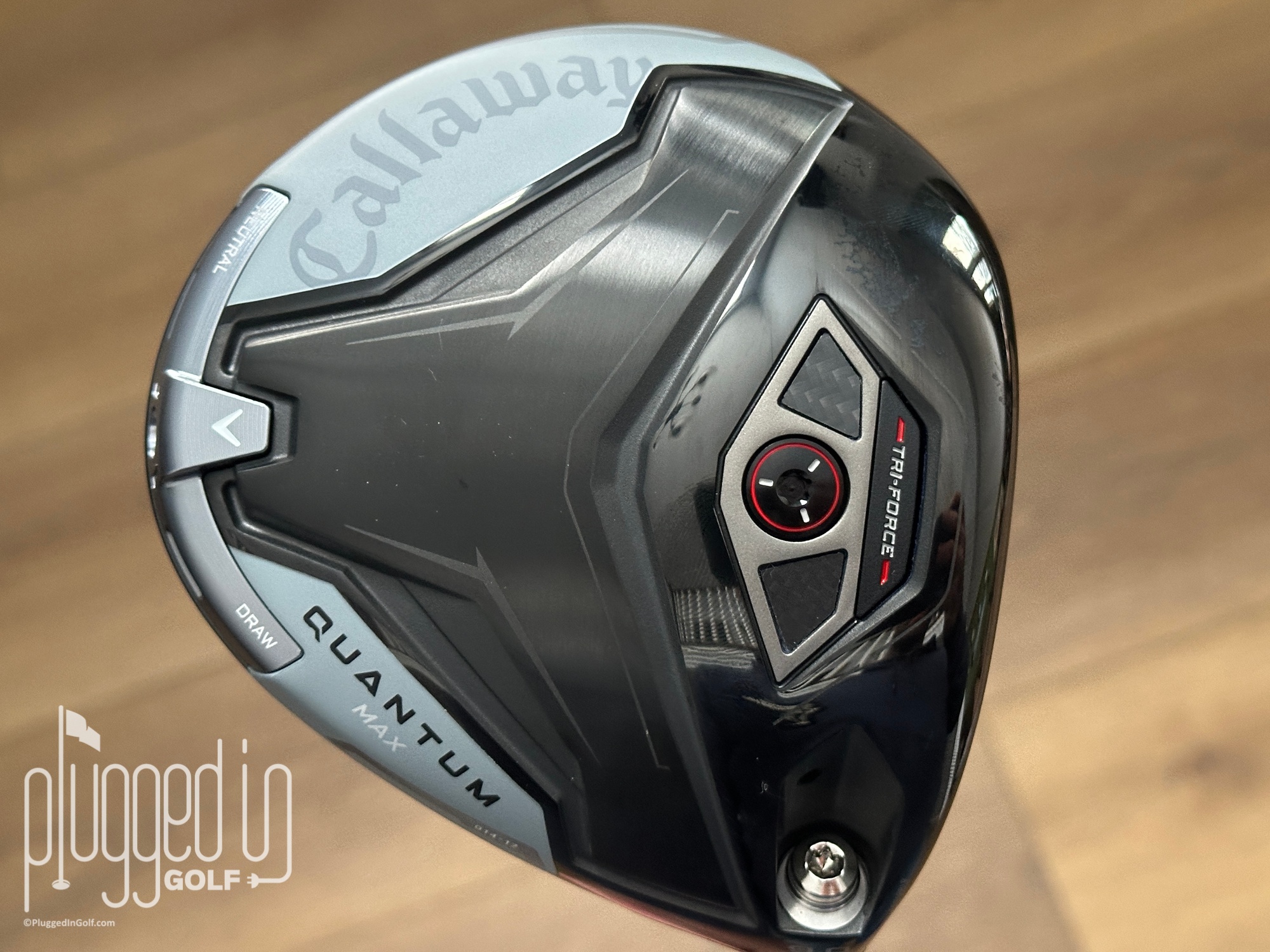
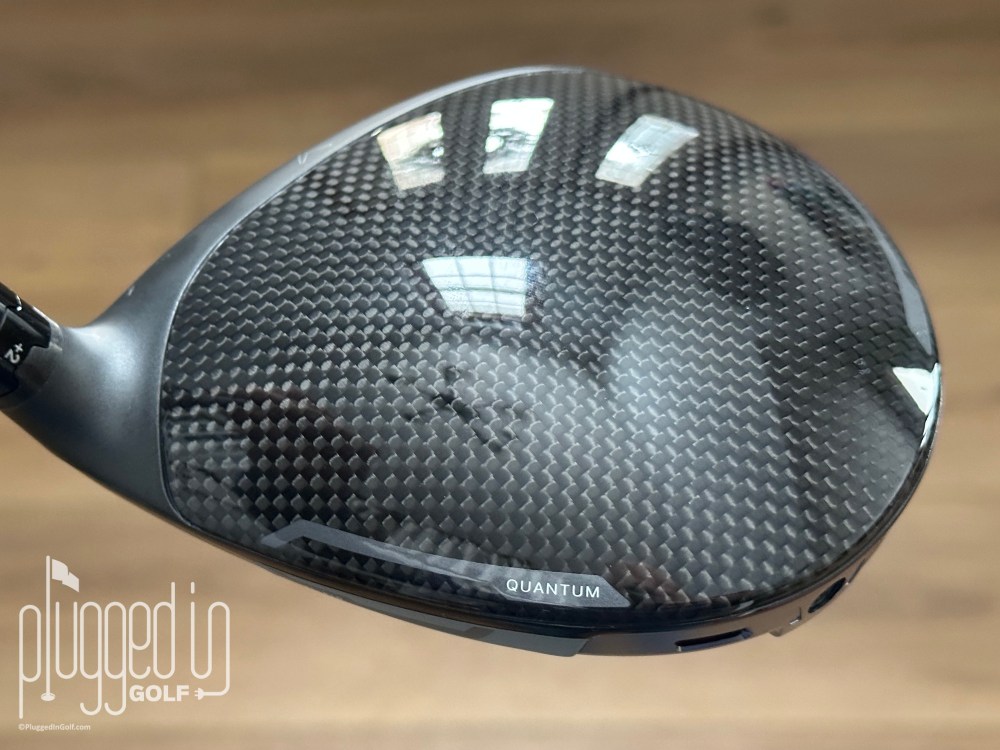
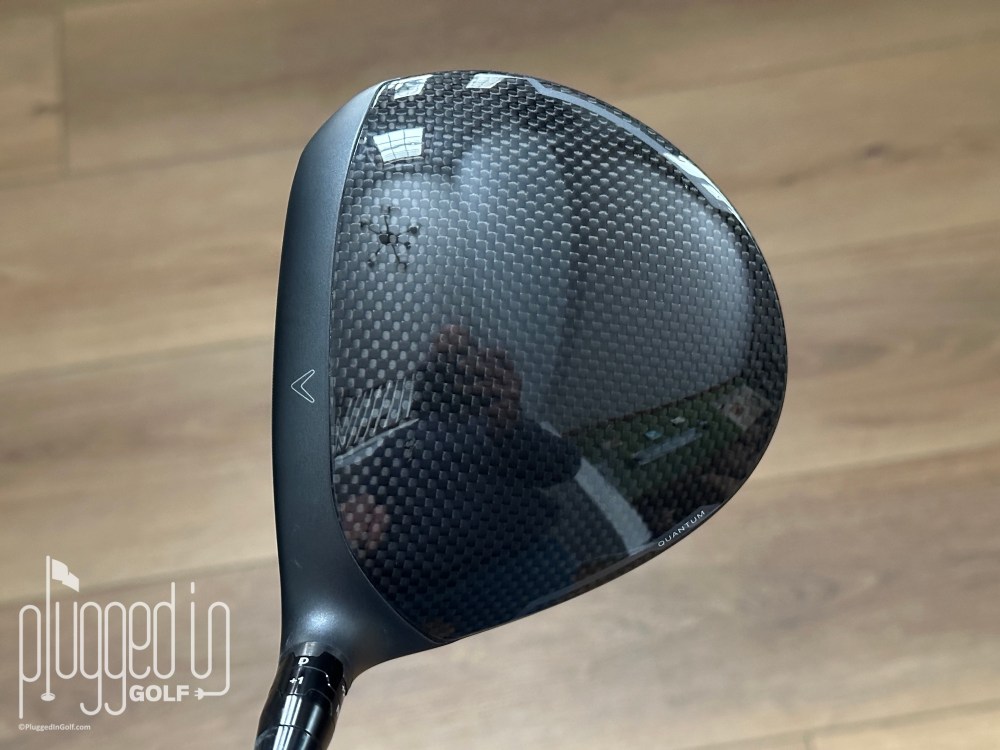
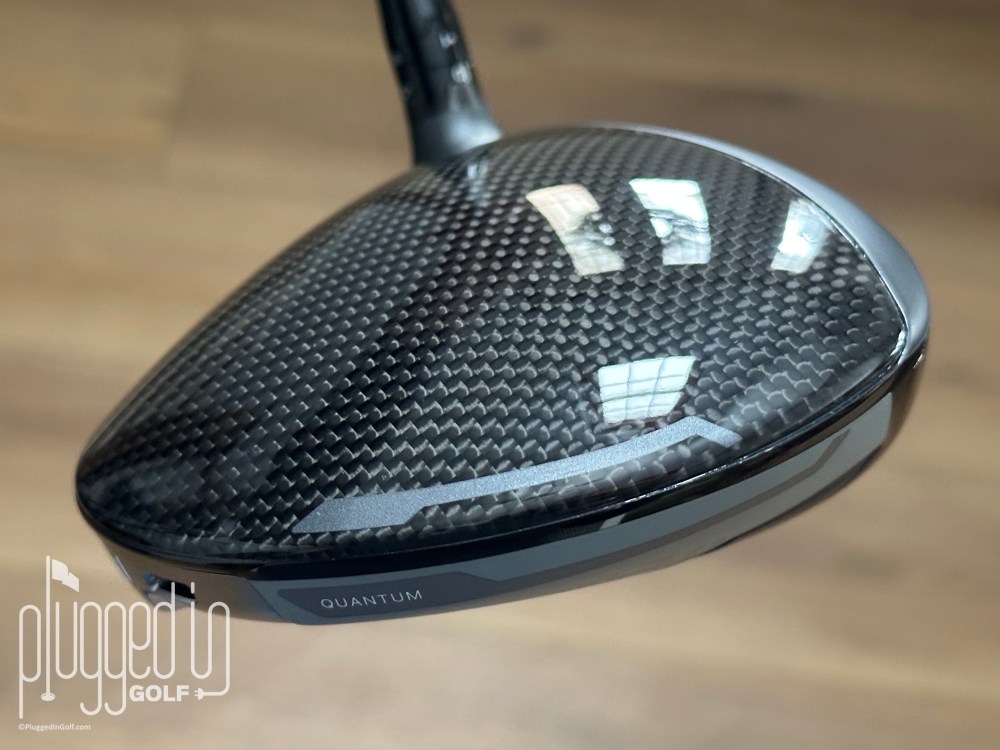
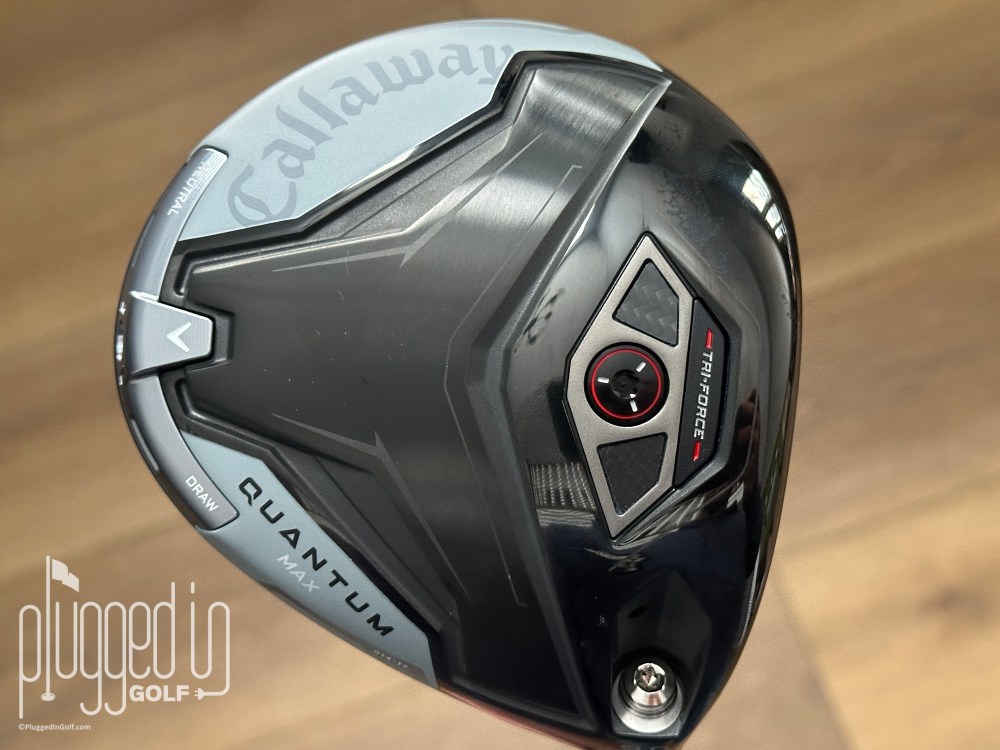
I’ll start by evaluating the Callaway Quantum Max driver, then I’ll offer some comparisons to the other models in the Quantum driver family. The Quantum Max driver has a shiny, dark grey carbon fiber crown with a thin ribbon of matte grey at the leading edge. A thin white chevron acts as a subtle alignment aid, and the other crown graphics are nearly invisible.
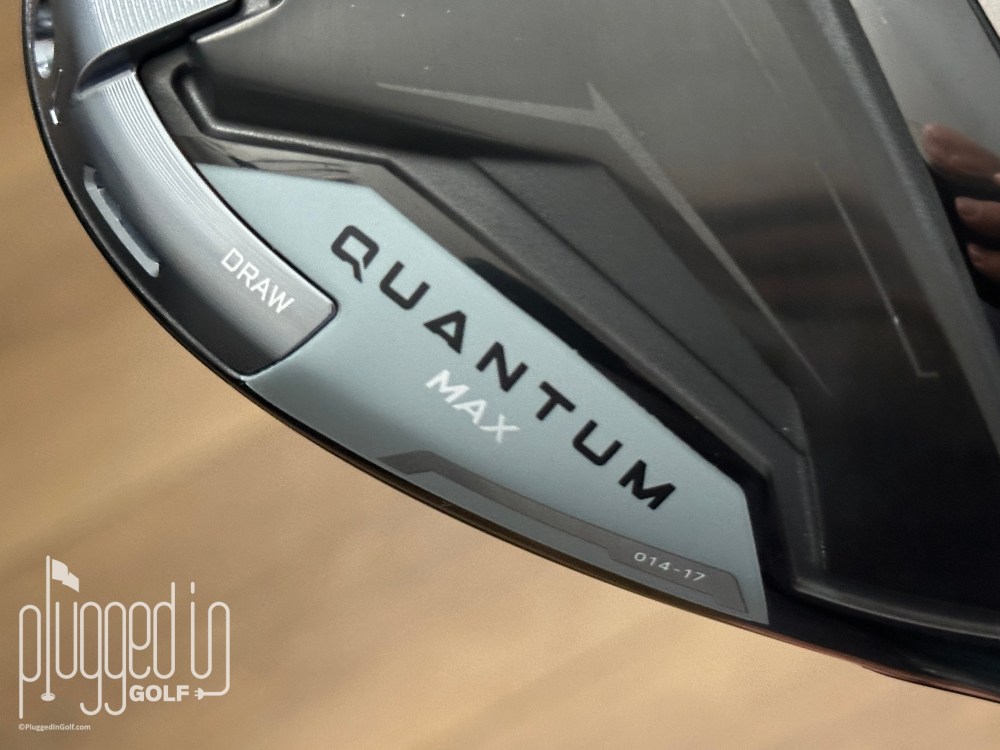
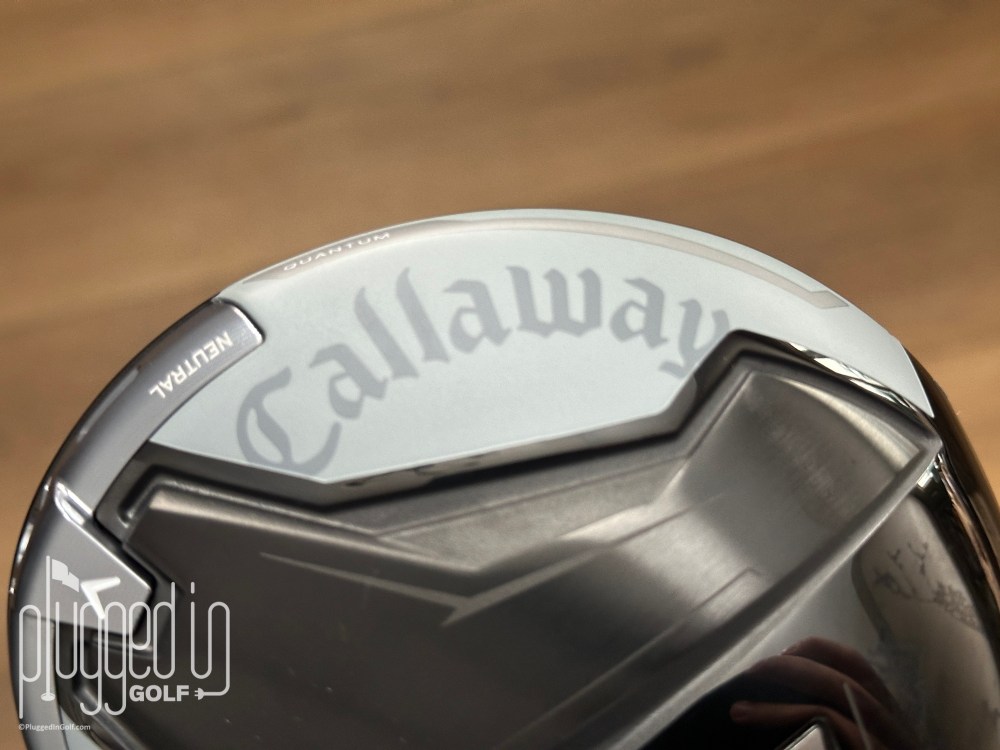
In the bag, the Quantum Max is a blend of black and light grey with moderately sized branding. This sole design is shared with the Quantum Max D, though the Max has Advanced Perimeter Weighting, and the Max D does not. The sole of the Quantum Max is quite different from the Triple Diamond Max [review HERE] which is carbon fiber and almost entirely black.
Turning back to the address position, the Callaway Quantum Max driver looks fairly similar to the Triple Diamond Max. The Quantum Max is slightly longer front to back, and its face is smaller, but these are differences that you have to look for carefully, even when they’re side by side. Comparing the Quantum Max to the Quantum Max D, the Quantum Max is a bit shorter front to back with a more streamlined shape. I think there’s a bigger difference between the Max and the Max D than between the Triple Diamond Max and the Max.
Sound & Feel
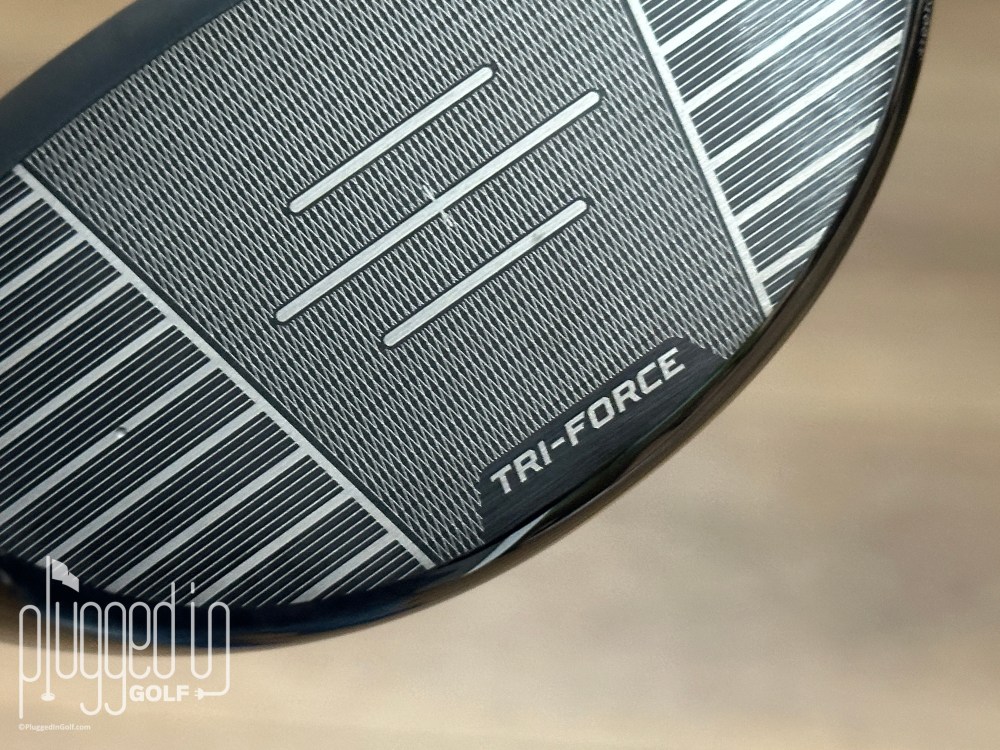
I loved the feel of the Quantum Triple Diamond Max, and I was pleased to find that it was replicated perfectly in the Callaway Quantum Max driver. The Tri-Force Face – a combination of titanium, poly-mesh, and carbon fiber – produces a feeling that’s solid but also bouncy and fast. There’s ample feedback on strike location, but the face feels hot unless you’re on the very edge.
The sound of impact is also similar to the Quantum TD Max driver. Hitting them back to back, the Quantum Max sounds a bit more lively, but it’s still muted – booming, not ringing. Once you spend a little time with it, the sound will add a layer to the feedback, confirming when you hit one perfectly.
Performance
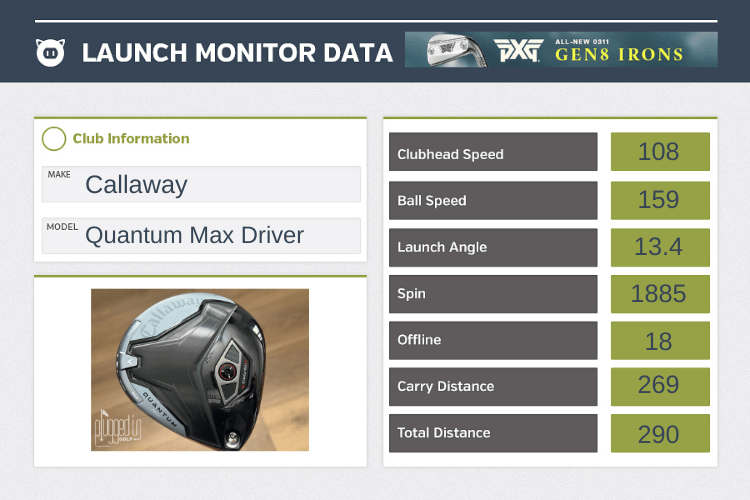
In my testing, the thing that stood out most about the Callaway Quantum Max driver was the ball speed. Thanks to the Tri-Force Face, the Quantum Max was generating ball speed that was consistently at or above my gamer. To be clear, I’m not saying that I was 5 MPH faster with the Quantum Max, but I got to my peak speeds more easily, and my mishits were faster. That’s a pretty great place to start from if you’re searching for more distance off the tee.
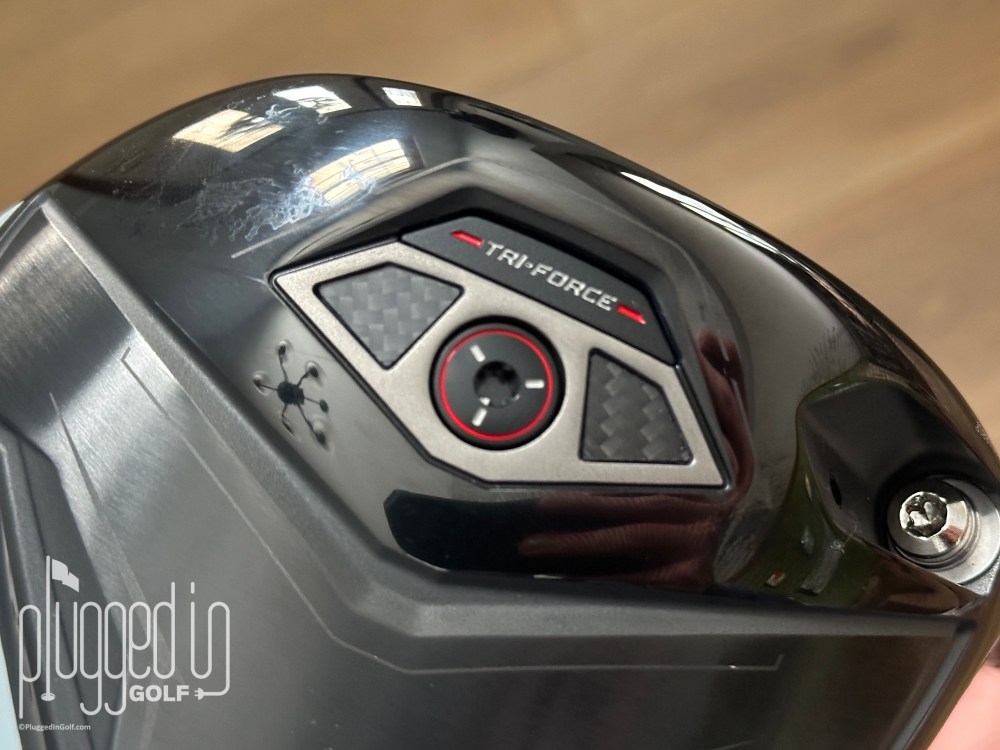
Beyond just keeping the ball speed high, the Quantum Max has an “Ai-Optimized Face Design” meant to balance speed, spin, and launch across the club face to keep distance consistent. This is something I definitely saw in my testing. I had a couple poor swings that prompted notes like, “250 carry off the heel.” When I lost a little ball speed from a sub-optimal strike, the distance loss was typically minimal because the launch ticked up and the spin dropped. These weren’t dramatic swings, just enough to take the pain out of my mediocre swings.
The Callaway Quantum Max driver is billed as “Mid-High” launch with “Low” spin. I think this was born out in my testing, though my spin lower than what’s expected because I was hitting primarily draws. Compared to the Quantum Triple Diamond Max [review HERE], the Quantum Max should be higher launch and spinning, but the difference was marginal for me because of the difference in shot shape.
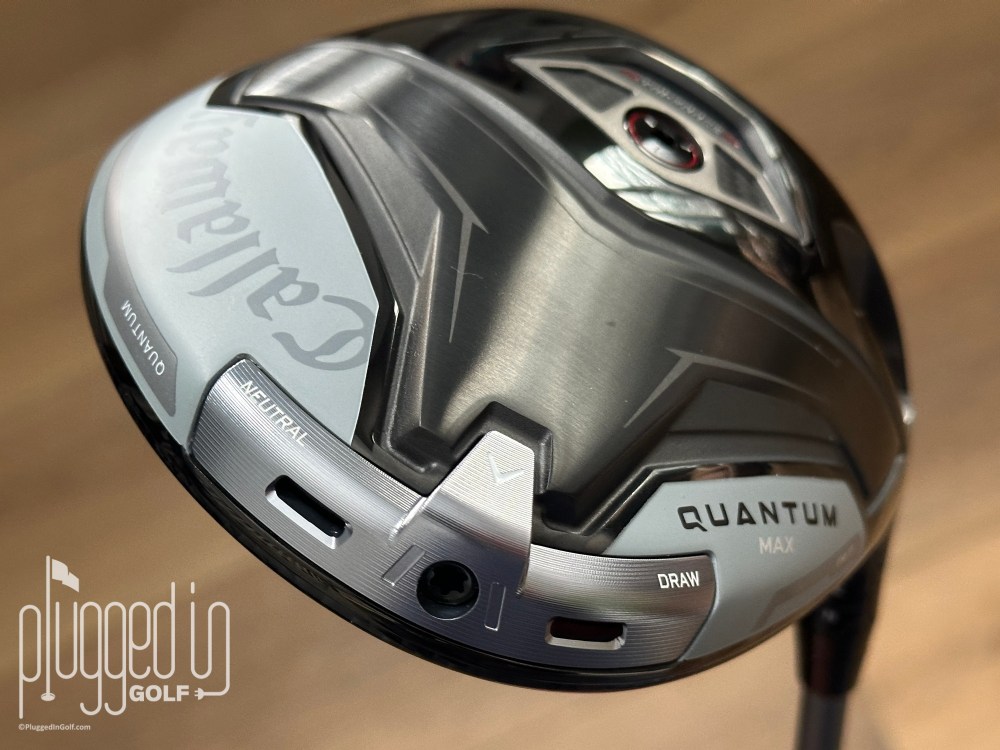
Like the TD Max, the Quantum Max driver has both Advanced Perimeter Weighting (APW) and an adjustable hosel. The difference between the two drivers is that the Max has Neutral and Draw settings where the TD Max has Neutral and Fade. In the Neutral setting, the Callaway Quantum Max driver is fairly neutral. The Draw setting enhances the right-to-left shape noticeably, but it’s not an extreme bias. You can fully take the right side out play by pairing the Draw weighting with the right hosel adjustments.
I’ll close with some direct comparisons to the neighboring Quantum drivers, the Triple Diamond Max and the Max D. In testing them side by side, I was really surprised by how equal the Max and TD Max are in forgiveness. Callaway rates them both “Higher” in forgiveness, but I didn’t believe that until I experienced it for myself. I think this is a case where a lot of players could be happy in either driver, it’s just a matter of deciding which shot shape you want to favor and if you have a strong preference for the address look of one over the other.
Finally, the Quantum Max D driver is rated as “Highest” in forgiveness, and that came through in my testing. Moving to this club, you trade the APW for a strong internal draw bias and truly outstanding forgiveness. A full review of the Max D is coming soon, but I can tell you now that it’s the obvious choice for players who battle a slice and want maximum consistency off the tee.
Conclusion
With the Quantum Max, Callaway has shown that you can offer golfers elite distance and forgiveness in a club that’s still versatile and good looking. While the Triple Diamond Max is a worthy consideration, especially for those that fight a hook, I expect to see the Callaway Quantum Max driver among the very top selling sticks this year.
Buy the Callaway Quantum Max Driver HERE
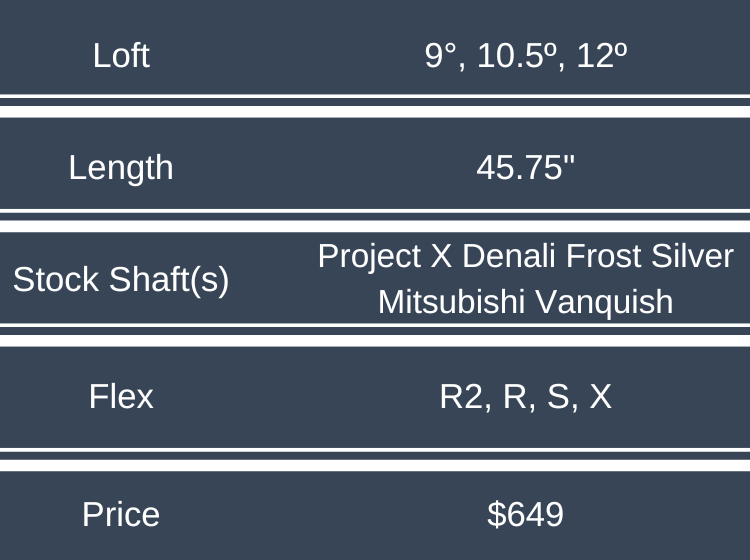
Callaway Quantum Max Driver Price & Specs
Editor In Chief at Plugged In Golf
Matt has worked in nearly every job in the golf industry from club fitting to instruction to writing and speaking.
He founded Plugged In Golf in 2013 with the goal of helping all golfers play better and enjoy the game more.
Matt lives in the northwest suburbs of Chicago with his wife and two daughters.