
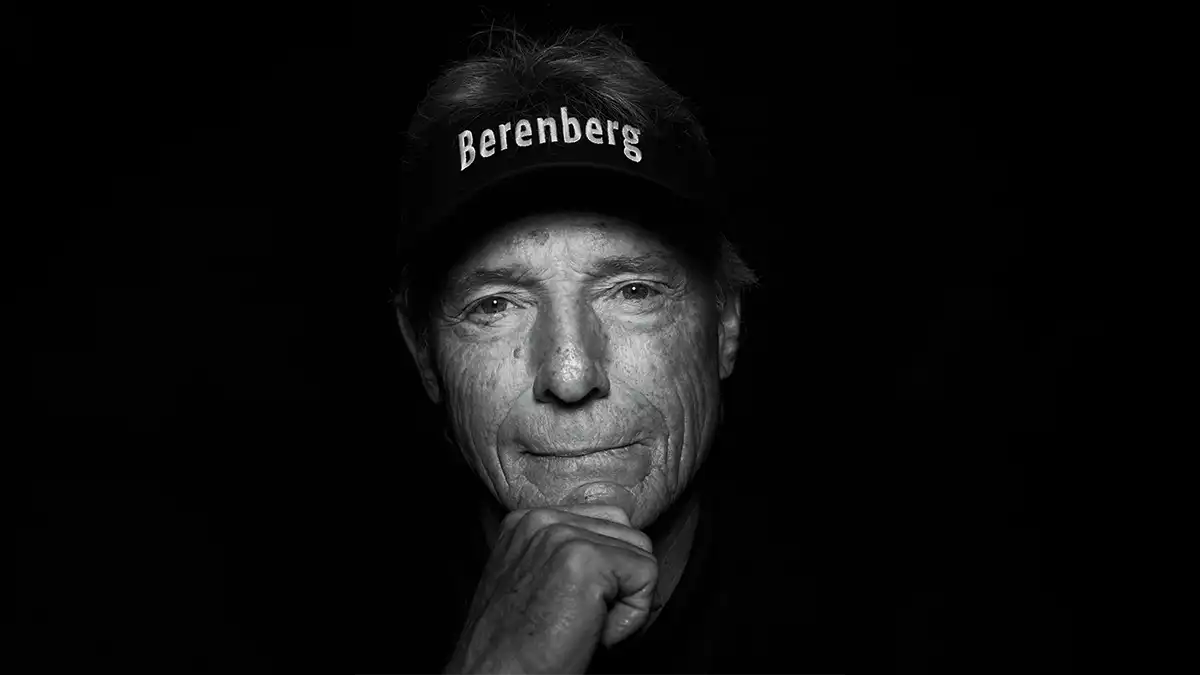
My advice for playing this game for decades to come.
Editor’s note: You probably know Bernhard Langer is the oldest player to win a PGA Tour Champions event. Langer, now 68, did it in 2024 at age 67 (Charles Schwab Cup). But here’s a fun fact: guess who is the second oldest? It’s also Langer. How about the third? Same. He has set the age record six times! Scott Hoch, at age 63, is the next oldest.
They say golf might be the only sport you actually play more as you get older, not less. This could explain, in part, why Langer’s career seems to defy the laws of nature. Langer has won a record 47 tournaments since he turned 50 (Hale Irwin won the second most with 45). Langer has also finished in the top-five in PGA Tour Champions events an astonishing 156 times.
Before wrapping up his 18th season on the senior circuit at the Skechers World Champions Cup, Langer graciously took some time to share his thoughts on how to slow down Father Time to keep playing golf at a high level. – Ron Kaspriske
Why me? Not sure, but I have a few guesses
Why do I think I’ve had so much success after turning 50? Well, first, I think I have good genes. My mother (Walburga) lived to 100. Also, I live reasonably clean. I sleep eight hours a day, don’t drink a lot of alcohol (though I like a shandy every now and then), and I’m not out all night partying. What else – I’ve exercised all my life and have been constantly working on the technique of my golf game. So why do I have more longevity? I really can’t say for sure, but all of those things contribute – and so does my keen desire to compete. I love competition, and I don’t mind practising to stay sharp (but I have learned to take more time off as I get older and older). You have to listen to your body and brain and find the right balance of practising and playing and knowing when to rest. I don’t hit hundreds of balls a day like I used to.
I hope this seems like common-sense stuff for most of you. My best advice is, if you want to keep playing at a level that is satisfying, practise, but not too hard. Work on your short game maybe more than your full swing. Also, get plenty of rest and know when your body and mind feel fresh and when they don’t. If you ignore that last part, things might not work out so well for you. There’s also some things you can do with your game to adjust to how you’re ageing. They are things that I’ve done, which might help you, too.
Address and backswing
You can still make a full turn (just not like you used to do it)
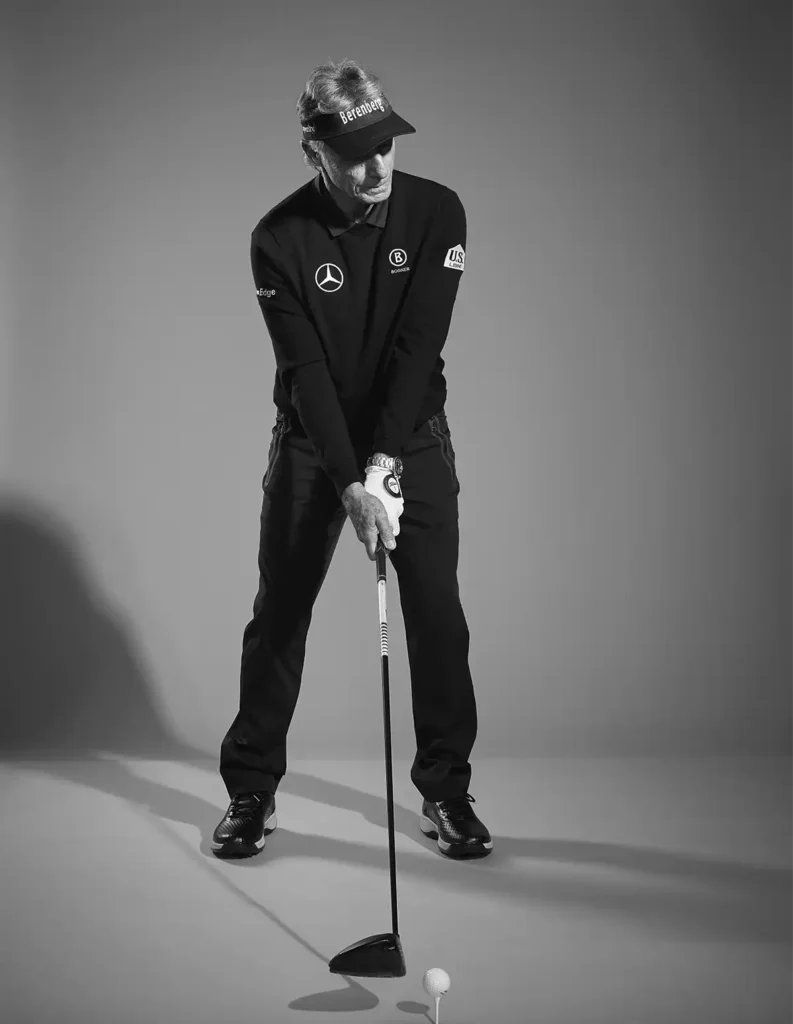
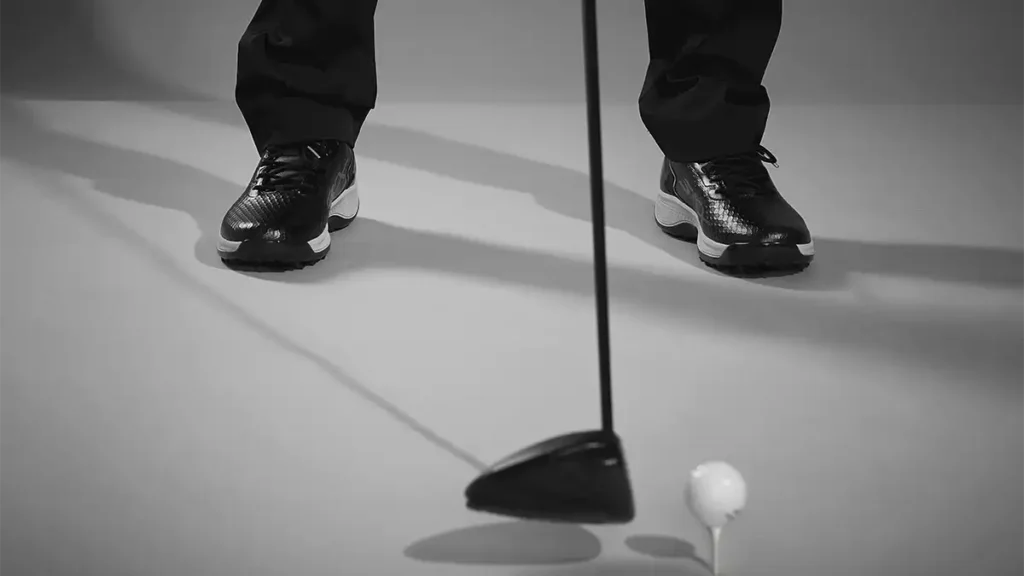
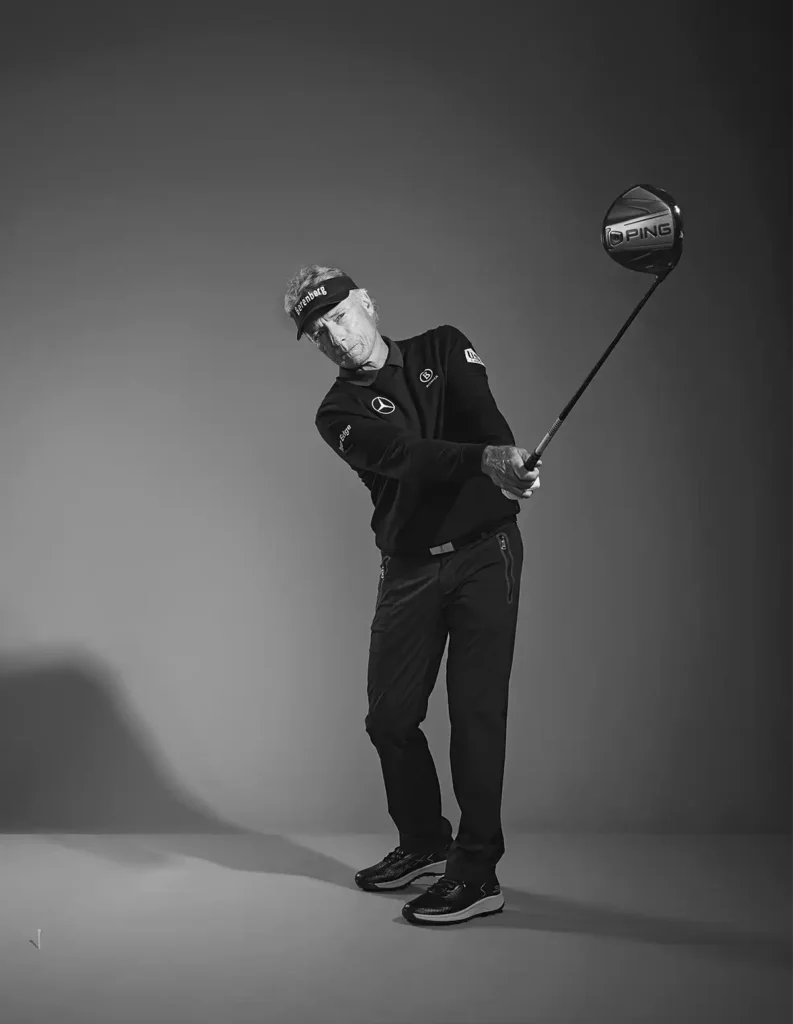
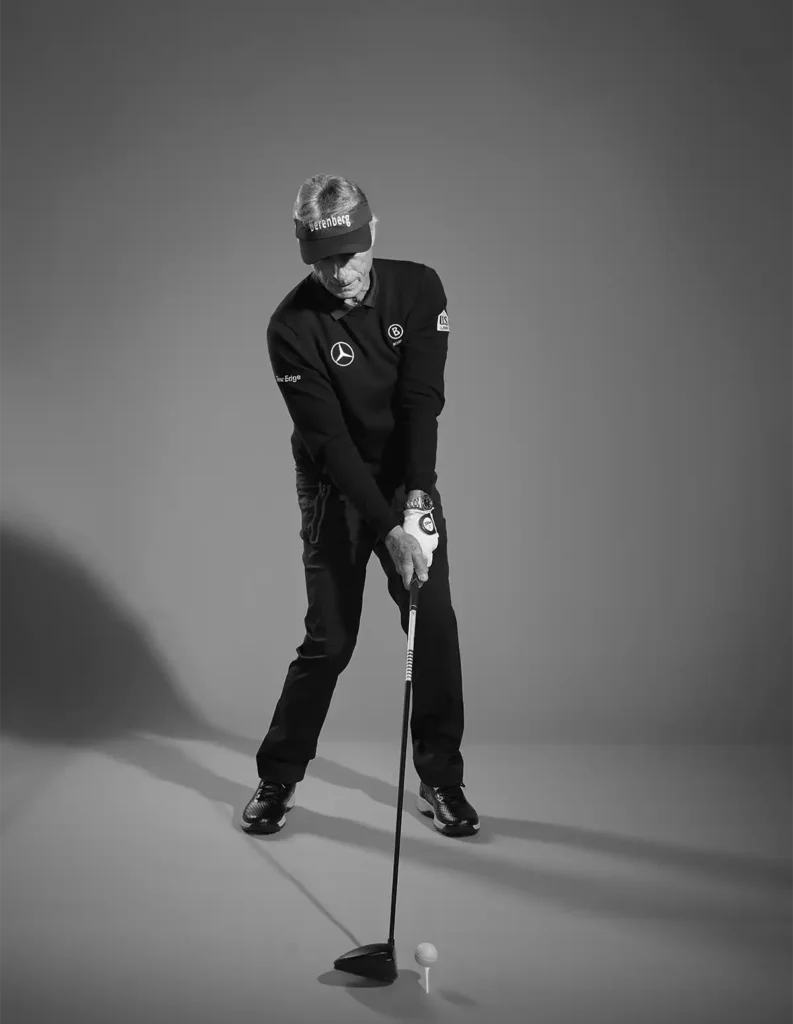
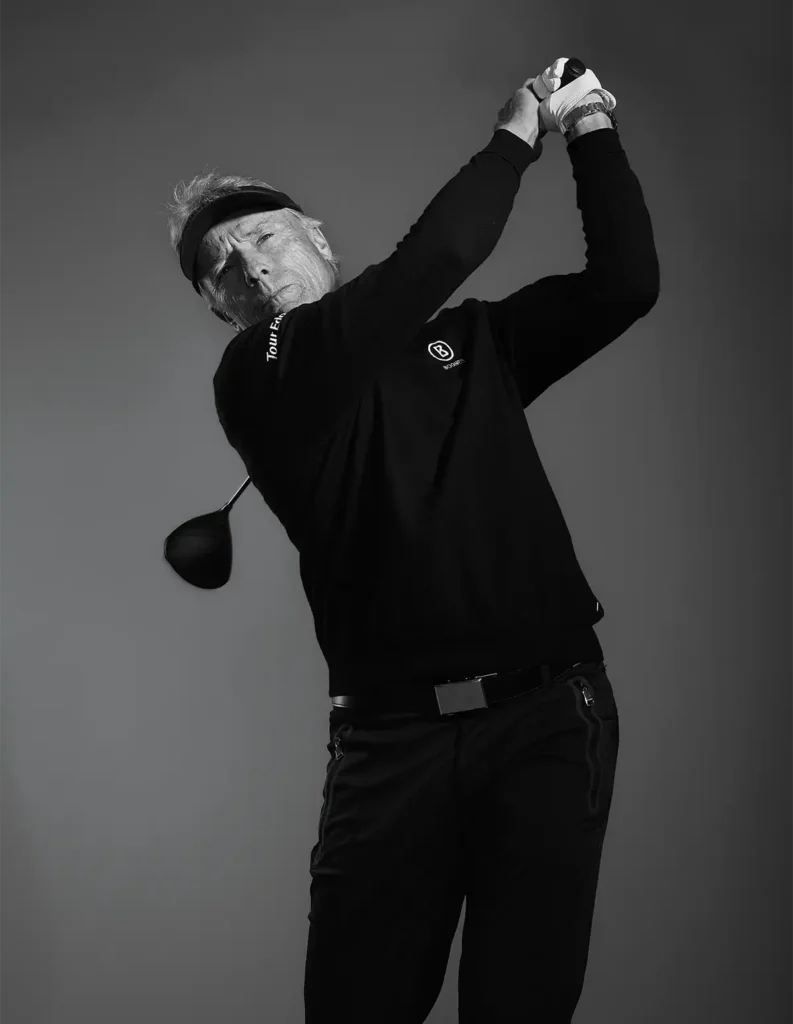
I hear people on TV say my swing looks similar to what it looked like 30 years ago. I think it’s quite different. One thing you’ll notice is my stance. It’s somewhat narrow compared to other players [below] because it helps me rotate better. If you stand too wide, it tends to restrict the hips – and many of you are already stiff in the hips – so it will limit your backswing length. For me, a wider stance also gets me swaying off the ball, which can really hurt your ball-striking. Solid contact is more important than ever as you get older. I might have lost a yard or two with my driver because I don’t stand wide with all that spine tilt away from the target, but I make better contact. I’ve always felt like I’m more precise with a narrower stance.
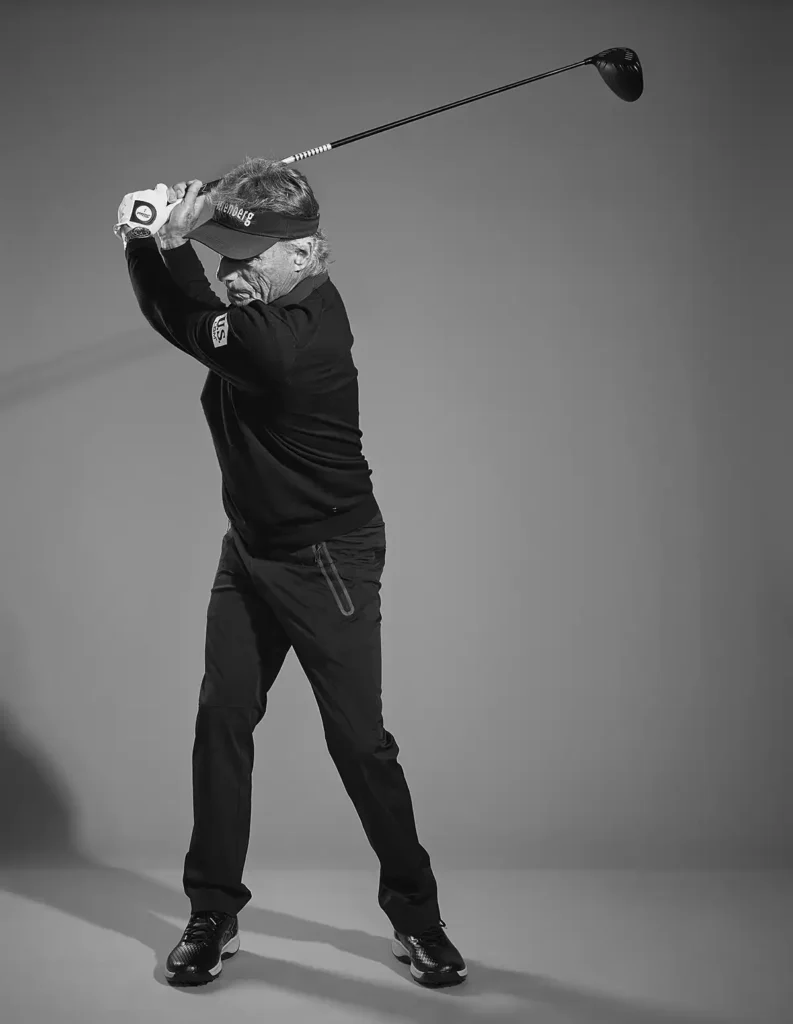
Another thing you might notice is how much my head swivels as I take the club back [left]. I’ve had a very stiff neck for many years, so my head has to do that. It’s the only way I can make a full backswing. However, allowing your head to rotate just a little as you swing back does help promote a better turn. Try it.
Through-swing
Take pressure off your spine and release the club
My late golf coach, Willy Hoffman, saw how I was swinging in my 20s – more reverse-C finish and pressure on my spine, etc. and he said we needed to make changes so I could play well in my 40s, 50s and 60s. Knowing that modern equipment would help preserve some distance, I started working on swing changes that were better for my back, even though they weren’t as effective for hitting it far. It wasn’t like Nick Faldo, who was gone for two years from tournaments while he changed his swing. Mine took years and years before it got to where it is now.
The way I swing now, with more of an emphasis on trapping the ball and reducing the amount of spine tilt through impact, helps keep my lower back healthy. I still get sore, but this is a swing you can use for a long, long time. The feeling you want is your chest stays over the ball as the club moves through the hitting area. Some people call it “covering the ball”, and it puts a lot less stress on your spine while still providing some pop to your drives and other full-swing shots. You still want a little tilt away from the target through the hitting area like I’m demonstrating [right], but the feeling is that you’re more centred and not hanging back.
Also, to compensate for a lack of distance, you might consider getting your forearms and wrists more involved in the strike. When I turned 60, I started to gradually lose distance – and I didn’t like it.
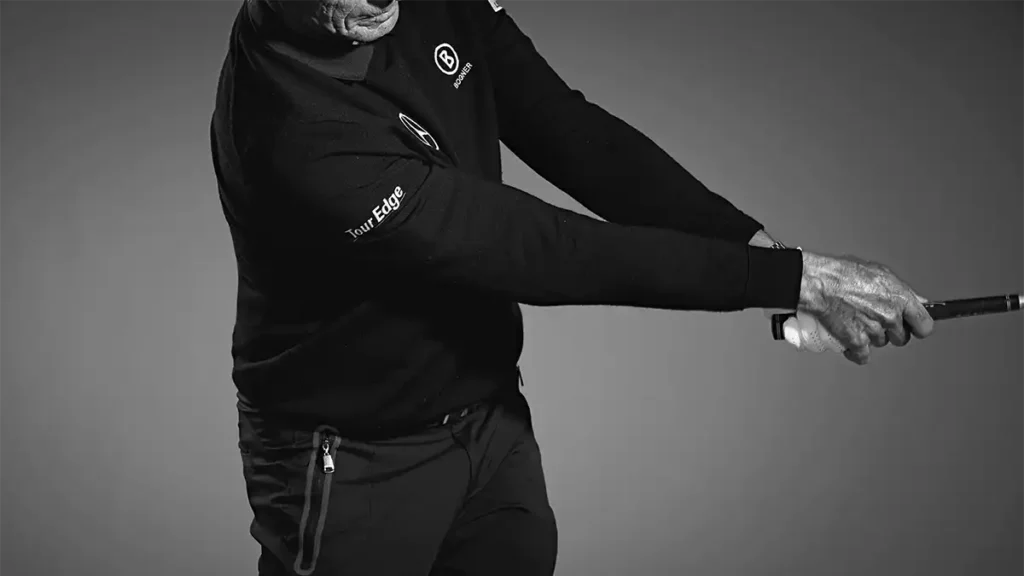
I tried swinging harder but then my back started hurting, so I had to find another way to generate power. One way to do that is by utilising the hinging and unhinging of the wrists and the rotation of the forearms [far right]. They can create real speed for golfers who can’t get as much power anymore from leg strength and hip rotation. For me, I like to feel I create a bunch of speed just before the club gets to the ball, and that comes from a “release” of the wrists and a rotation of the forearms through impact. I trap the ball and compress it.
Short game
For guys like us, this part of the game is the great equaliser
You don’t need strength to have a good short game. Even better, you won’t wear yourself out practising around the greens. I knew as I got older, I had to become a better short-game player to make up for having to hit longer shots into greens. If you can routinely get up and down, it really does level the playing field.
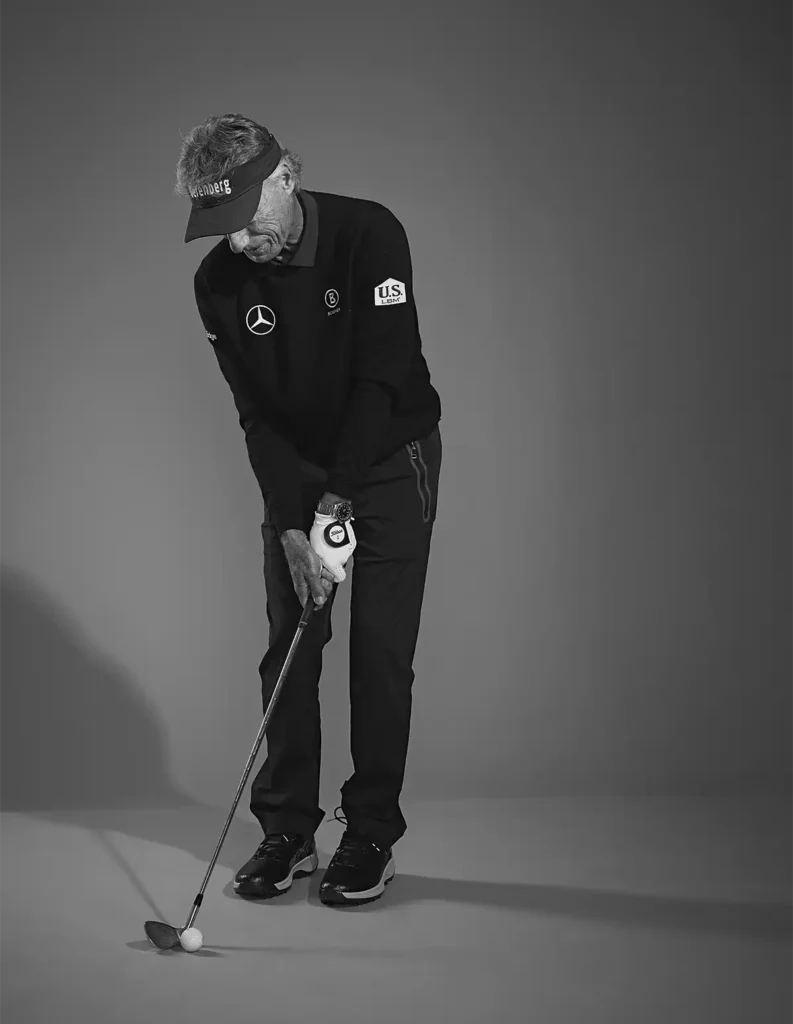
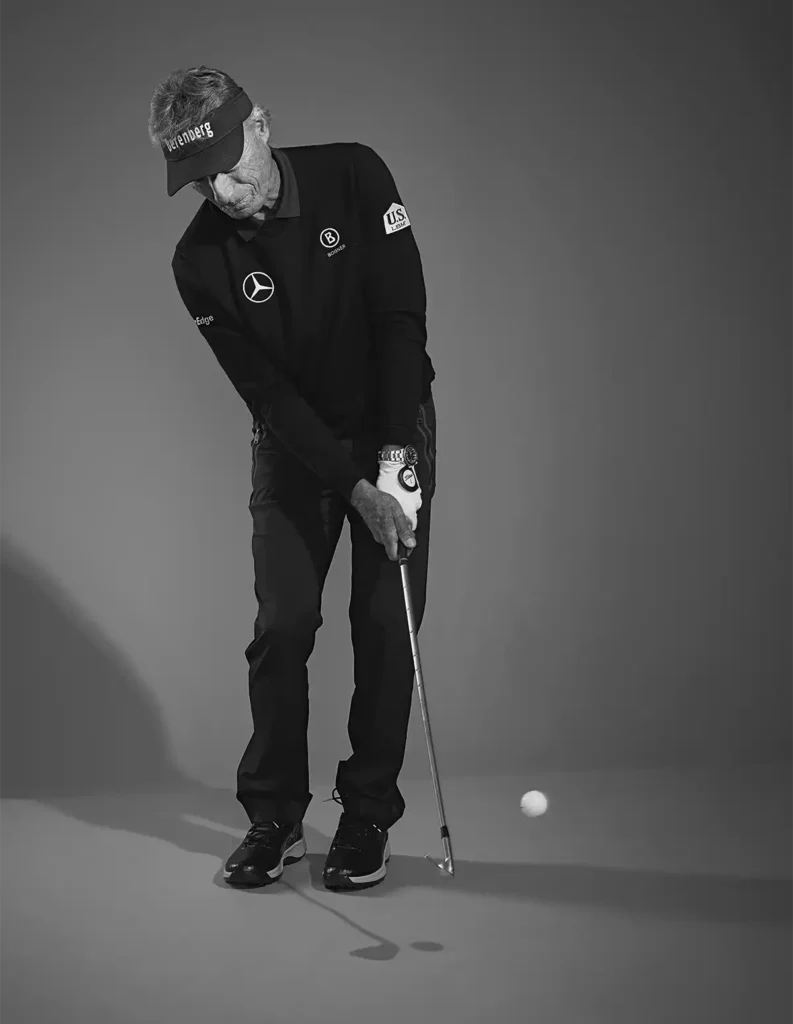
The first thing you should do is try using different clubs to hit these shots around the greens. A 64-degree wedge might be good for someone like Phil Mickelson who can play the miracle shots all the time, but I think you should try chipping with a pitching wedge like I am [above] or a 9-iron, 8-iron, even a hybrid. Get good at running the ball up to the hole. How much you get your hands and wrists involved in these shots is up to you, but I will say letting the club do most of the work is probably going to help you a lot more if you aren’t someone who practises much. Even hitting chips with a 6-iron like you’re making a putting stroke is going to be a reliable shot.
Putting
Feeling shaky? You might need a fresh approach
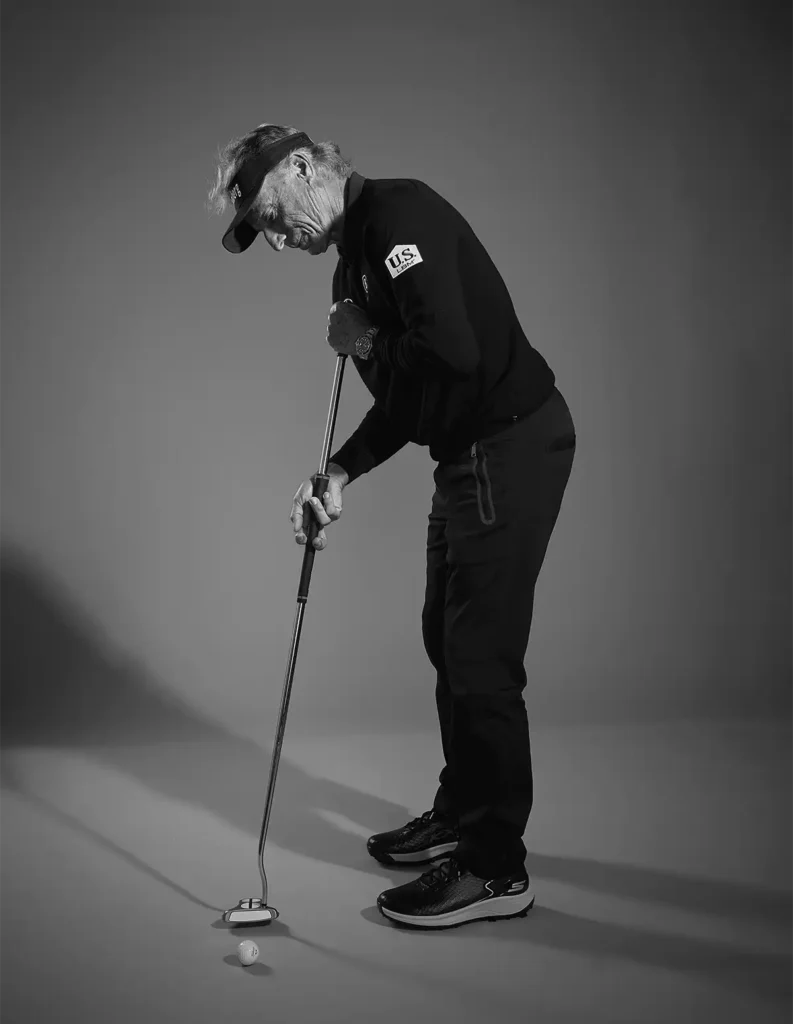
It’s no secret that I’ve had the yips multiple times in my career, and I’ve since gone to using a long putter to help make a better stroke. You can see how I use it [right]. Standing taller like this also takes some of the pressure off my lower back that using a standard-length putter and stance can cause. Truthfully, though, I don’t think it’s easy to use a long putter. It’s actually harder. But if you’re really bad with a short putter or you feel like your hands are too shaky, you might as well give one a go. The reason? It might bring the one thing to your putting that really is the difference between success and failure. That thing is comfort. Whatever putter you use, and however you stand over the ball or hold the club, that’s the real key to this part of the game. Use the approach that gives you the most confidence and belief in yourself.
Fitness
Don’t hate the gym. It’s going to be your best friend
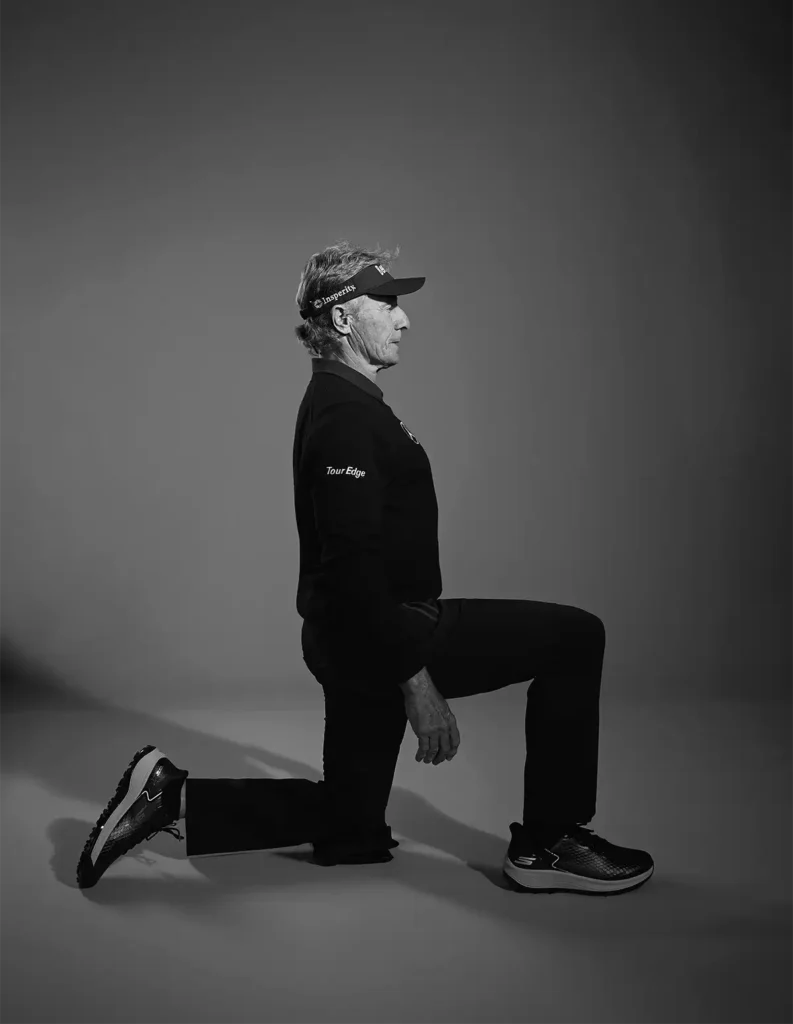
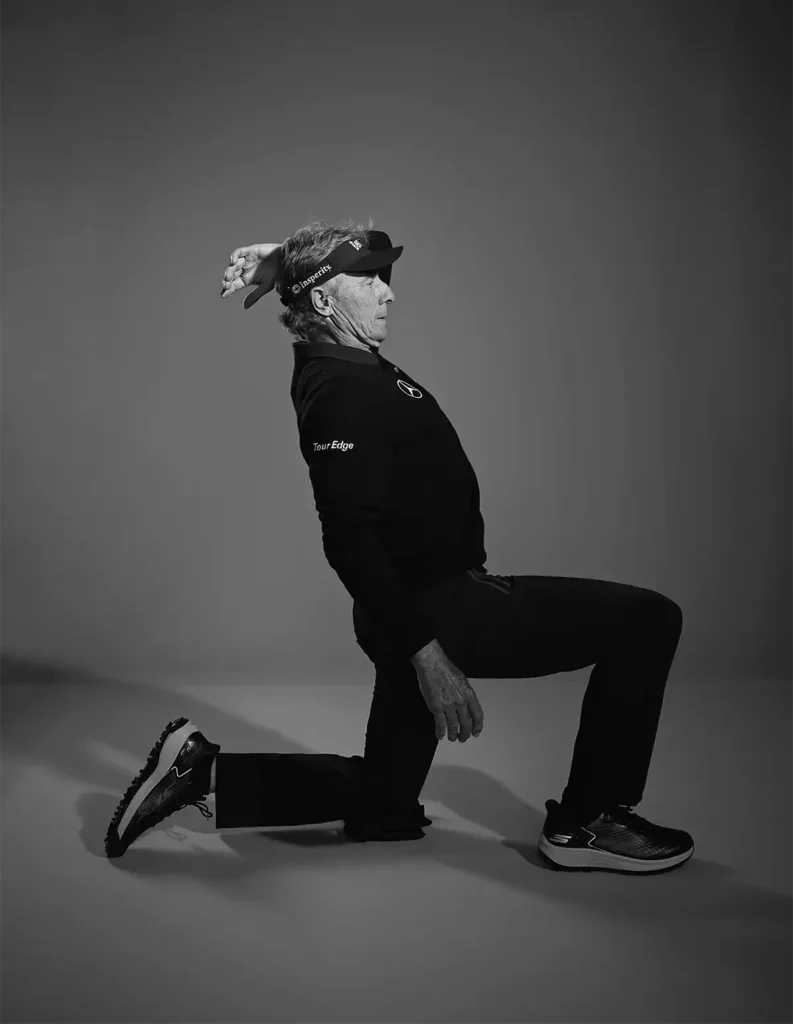
One thing I’ve learned is that we sit too much. I was given a stretch by a physical therapist back in Germany, and I do it before and after the gym, before I play, even before I go to bed. It opens up your front side from your toes all the way through your hips – all the parts of your body that get short and tight from sitting. For me, it counters all those airplane flights and long drives in the car. You can do this stretch standing or kneeling. I do it standing with my arms braced in a door frame and my pelvis extended forward. Or you can do it like you see here [right]. Shift your hips forward and hold the extended position with one arm up for a few seconds, return to start, then do it a few more times, flipping leg positions.
I’m in the gym almost every day. On off days, it’s 90 minutes. On days I’m playing, it’s an hour and then I stretch after the round. That probably sounds like a lot, but it’s a big reason I’m able to stay out on tour as much as I do. It’s typically about 30 to 60 minutes of cardio, usually the stationary bike or walking uphill on a treadmill. The rest of the time is stretching and light weights.
I’ve never done heavy weight lifting. I had a stress fracture and bulging disc in my spine when I was 19, so I have days when I feel stiff and very achy and days when I’m good. I’ll take anti-inflammatory drugs sometimes, but I don’t want to do that often. I don’t want to put my stomach through that, but they do help when you really need it.
The thing you have to try to do is get the blood flow going. That’s going to help you feel and play your best, so focus on things that get you loosened up.
The next match
Let your love of the game motivate you to do the work
In early December I played in the Skechers World Champions Cup at Feather Sound Country Club in Clearwater, Florida. It was a team event (I played for Team Europe) and it reminded me of the Ryder Cup – with some noticeable differences. You’re playing matches against two guys from different teams at the same time, instead of one. We had six of the most famous Europeans, Americans and the rest of the world (International Team) playing against each other. I always thought it would be a great thing to have a Ryder Cup-type event on the PGA Tour Champions. Many of us playing in it had known each other for 30 to 40 years. We’re all friends, but when it comes down to it, you still want to win and beat the other guy. This could be a big event for the future.
\I think if you’re looking forward to playing, it goes a long way to motivating you to do all the things you need to do to make that happen – no matter how old you’re getting. The message is to keep it fresh and enjoy golf. At least that’s how I’ve approached it – and so far it has worked out pretty well.
Photographs by Jesse Rieser