
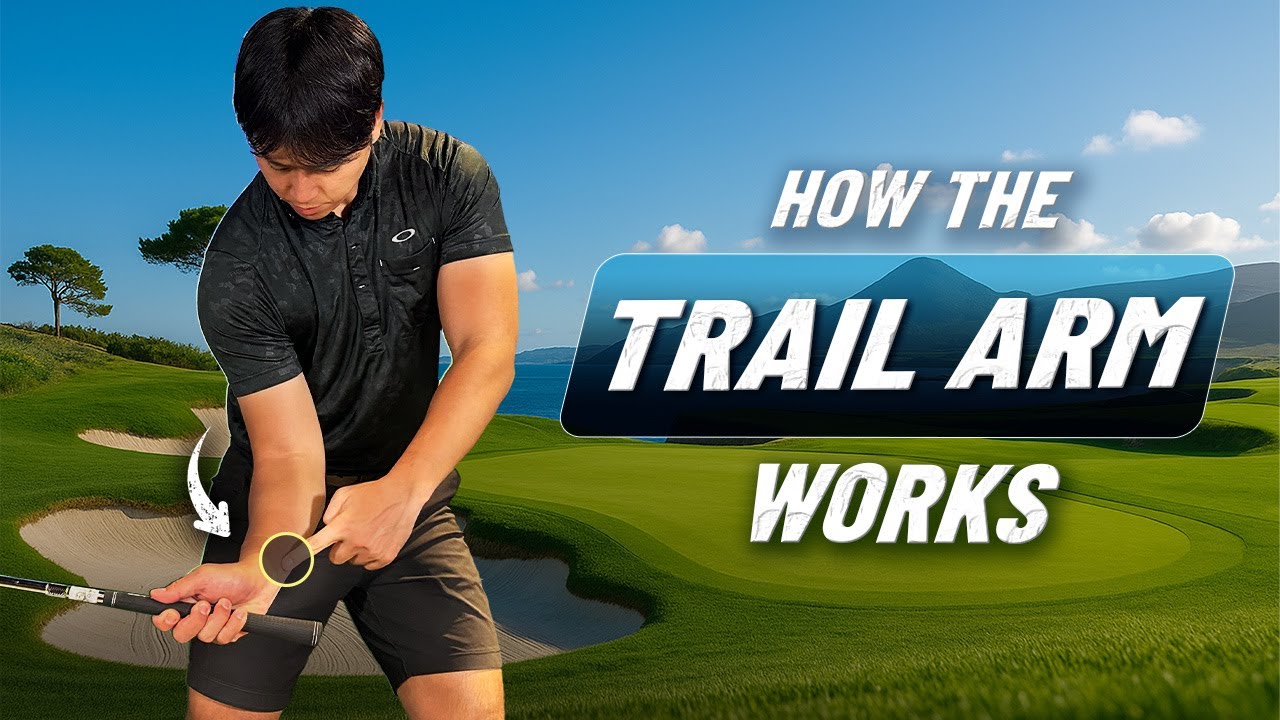
Check out these amazing golf tips to improve your golf swing! This video provides essential golf instruction, focusing on the proper movement of your trail arm during the golf backswing and golf downswing. This detailed golf lesson provides effective golf drills to help refine your form.
@hackmotion
HACK MOTION SENSOR:
https://hackmotion.com/jonathankimmoss
**There is a sale of 20% off until the end of November 2025!!!**
ONLINE COACHING:
https://skillest.com/@JKMMetaGolf
INSTAGRAM: @JONATHANKMOSS
TIKTOK: @JKMGOLF
Welcome back to another video everyone. So in today’s video I’m going to teach you guys all about the movement of your trail arm throughout the back swing and the down swing and just explaining how it actually works. So the reason why this subject may be very complex is because your arm and wrist can move in so many different ways. But I’m going to highlight the most important things to consider that’ll be an absolute gamecher when you’re trying to put the club in a better position so you can hit some better golf shots. Let’s get into it. Okay. So, to start off this explanation, when you look at your trail arm, obviously there’s kind of your upper part of the trail arm, which is from the shoulder down to the elbow, and then from the elbow, which is the forearm and the wrist. Starting with the elbow. Okay, we know that the the trail elbow can actually move kind of two ways, right? You can you can see that I can point your elbow more inwards. Okay, that’s meaning like my my arm is more externally rotated almost like I’m losing an arm wrestling match. Or I can turn it inwards to where uh my elbow is pointing outwards. So that’s kind of like where I’m winning the arm wrestling match, which we don’t typically want to do, right? We don’t want to have our arm turned in. Okay? We kind of want it more externally rotated if we can. So, when we have the club positioned at setup, okay, you’re going to look for the pit or the kind of um the crease of your elbow right here to kind of be facing forward. Okay, we don’t want our our arms turned in. Okay, kind of like this. That’ll promote some um things that we don’t want throughout the swing. Okay, so we want to make sure that our trail arm is more on the externally rotated side. Okay. Not kind of pointed out at the start, more externally rotated. Now, when we start to make our back swing and everything like that, what people don’t realize that now when it comes to the forearm and the wrist is if you can keep your elbow in one position, you can move your forearm and wrist separately or like independent from where your where your your elbow is positioned. That’s actually what makes this a very big realization for a lot of you because most people think that or move their trail arm kind of all all in one piece. Okay, that means if I have my trail arm externally rotated, then my hand will also be kind of pointed up. Or if I point my elbow out, my hand will also be pointed down. But you can definitely move your wrist and forearm independent or separate from your elbow. So having that understanding that you can position your elbow in a certain place while also moving your forearm and your wrist independent from that position is a very important thing that a lot not a lot of people realize. And knowing how to position your right arm and your right wrist in a certain way throughout the down swing and or the back swing can really help you with your shots and get your club in a in a really nice position to immediately have you hitting better shots. When we get your elbow slightly external, okay? Meaning you’re losing that arm wrestling match feeling. When people make a back swing, what happens is they might be able to keep their their right arm in that external position, but they have their forearm and wrist kind of turned open. So now you can see that my palm and the inside of my forearm is kind of facing more up. Okay? So if I were to do that with a in a in a back swing, then that would actually have my club face very very open in the back swing. Okay? So for example, if I just turn to the side and I keep my elbow in that position, but I turn my forearm over. Okay? You can kind of see that that really opens up the club face. You can see the inside of my arm and my palm is facing up. Now, if I just leave my elbow in that same position, but I turn my forearm and my wrist down, you can kind of see now the the club face is a little bit angled downwards, which is a lot more square than where it was. So, from the front view, I can keep my elbow in that position, but I can turn my forearm and my wrist kind of down so it moves independent from each other. Okay? So, knowing how to do that will allow you to keep the club face a lot more square going back. It’ll prevent the club from whipping back behind you as well. Now, in the down swing, when we make this movement, a lot of people kind of tell me that they understand that they have to get the elbow kind of in front of the wrist. Okay? They’re trying they’re all trying to get that right arm externally rotated like this. Okay? Like they’re losing an arm lessing match, which is generally very beneficial for a golf swing. And we don’t want obviously the other other way, okay? We don’t want the the elbow to point out. We don’t want that right arm to kind of turn in. So if we’re ensuring that that right elbow comes in in front of our our stomach, what I often see is someone again who has their trail hand turned towards the camera or open. So when they start to do this, you can see that the the blade of my club face is is wide open. So they can get their right arm in a good position here. But because they don’t they didn’t understand that you can move your forearm and wrist independent or separate, they leave that club face wide open. Okay? So they hit it like this. What you can do is like if I keep my elbow in that same position, you can see when I turn my wrist and my forearm down while keeping my elbow in that same position, now the club face is a lot more square. So when I come back into impact, I can actually get the club face back to square instead of leaving it open like this. I can have open position here. Whereas if I have it turned down, then I can actually get the club face back to where it’s supposed to be or wherever it’s functional. So to help make these movements a lot more simple for you, I’m just going to label these movements. Okay? So starting with the elbow, when I have it externally rotated like this, elbow kind of pointing in, right? That’s going to be position A. Now, if I go to the opposite end of the spectrum, have it completely turned down, elbows kind of pointing out, that’s position C, somewhere kind of between the two is position B. So, for my elbow, having it in the ideal position A, B, and C. You can see that the more severely internal I make it, it gets more A, B, and C. Okay? And then reverse. So now with the forearm and the wrist, so when I have my palm up, that’s position A pointing to the side, that’s position B pointing to the ground, position C. So I’m going to mix and match as I explain positions or common positions throughout the back swing and the down swing. So that’s easier for me to tell you what positions to get into to get you in an ideal position. Okay. So, now that you kind of know or I’ve labeled the positions, when we start to make a a a back swing, now if you’re a player that gets, you know, the club opened and kind of behind your hands, you’re a player that’s gets your elbow into position A, but you also get your hand and your forearm in position A. Okay? You can kind of see my elbow is external, but my palm and my my forearm is kind of facing up. And and you can see what that does to the actual club face itself. It actually opens up the club face. Ideally, what you would want is you want to obviously keep your elbow in position A, but you want to feel like your forearm and your palm is in position C. It’s kind of turned downwards while my my elbow is kind of pointing uh inwards or external. Okay. So, if we can get we can kind of do that. You can kind of see how my palm and everything is my forearm feels like it’s like kind of turned down, right? The face is angled a bit down and my elbow is kind of still in this external position while my hand is just turned down at the same time. Okay. So, we actually want to make sure for the most part position A with the elbow, position C with the forearm and the palm. All right. So, we can do that throughout the whole back swing. You can kind of see my forearm is turned turned down. Okay. My palm is turned down. Now also in the down swing people get their elbow in position A or try to but then at the same time their club face is wide open. So they have their form and their palm again in position A. So it’s kind of pointed up and that you can see the club face is very very open. In order for people to compensate from here, they either throw their elbow out like this to try and smother or close that club face or they just end up blocking it because the the club face is just so open. They don’t have enough time to get the face to close down. Again, in the down swing, obviously elbows position A, but again, we want that palm and the forearm to feel like it stays in position C. Okay, you can kind of see my palm faces more down. It’s not in position A where the palm is kind of facing up. Okay, so position C with my palm and my forearm. And you can kind of see how that changes where the club face is oriented. And that way when I come in, the club face is going to be more square instead of it being like wide open. So, I’m going to use the hack motion sensor to actually show you um how these positions change the wrist positions and it’ll also give you kind of a measurement just so you can see how my wrists are moving exactly. Okay, so I have the um hack motion sensor on my trail hand and uh forearm. Okay. So, I’m going to go over um those positions and just share how my wrists uh wrist angles or my wrist movement changes as I get into different positions. Let’s go through the back swing. Okay. So, now in the back swing, those players that will keep their elbow in position A, but will get their forearm and hand position in position kind of A as well. Okay. with the palm up. You can see that when I the more I get my hand in um or turned up, my forearm turned up, you can see that there’s more and more like flex like flexing in my trail wrist. Okay? Kind of see the number reading more like really really flex if the more I really get it turned open. Okay. Now, the more I get my palm and my my my forearm in into position C, okay, where it’s kind of turned and facing down to the ground, you can kind of see that my trail wrist gets into more and more extension just by turning this down, keeping my hands on it. Okay, you kind of see. Okay, I’m going to turn it open. My trail wrist gets into more flex. The more I turn it down, it gets into more and more extension. Okay. Flex and extension. So that’s kind of how it relates to kind of the the the wrist angles or how the wrist moves kind of in the back swing. Now into the down swing, it’s the same thing. Okay. So when I get to the top and I come down, if my elbow gets into position, it keeps stays in position A, but my hand and forearm are in position position A as well, facing up. You can see that the more my palm is just facing towards the sky, the more there the flex there is in my trail wrist. Okay. But if I keep my elbow in that position, but then just get my palm kind of turning turning down as much as I can, you can kind of see that automatically puts more kind of extension into my trail wrist as well. Okay, you can see the numbers how the numbers translate as well. Okay, and you can see how that changes where the face is, right? Then I can kind of come in and make sure that the club face returns to square a lot easier. You can see my elbow is still in position A, but I’ve got my palm and my forearm up, right? You can see that the flex in my my trail hand. The more I keep my elbow in position A, but then just turn my palm down, right, it gets my trail wrist in a more extended position. Now, when I come down again, position A. But if my palm’s up, there’s more flex. And then the more I turn try to to turn my palm down while keeping that same position in my elbow, you kind of see there’s more and more extension happening. So again, just without a club, if you want to see the more position A and then position C with my hand and palm. That’s generally the positions that you’d want your your trail arm to be in ideally. Okay? Remember, you don’t want position C with your elbow, okay? And also position C because then you’re just going to smother things, okay? Everything’s going to be thrown outside and you’re probably going to swing over the top and just smother the golf ball. You want position A with that elbow combined with more so position C in the in the palm and the wrist. Okay, you can kind of see how I can move those two make those two movements independently. Okay, so I don’t want position C and then me messing around my wrist. I want position A and then palm down in position C. So give that a try. Let me know what you guys uh your experiences in the comment section below. So I’m just going to hit a shot. Okay, just to show you that for this entire swing, I’m going to try to keep my elbow in position A while my my forearm and wrist is in position C with the palm and forearm turned down while my elbow is pointing in. So, it’ll be like external with my elbow but palm and wrist forearm facing down. Okay, I’m going to be in that position the whole time. Okay, so when I make Okay, at a dress, you can kind of see I’m right here with it. My elbow’s kind of right in there. The pit of my armpit is kind of facing forward. Okay. So now when I do a takeaway, it’s still there. Now I’m trying to keep my my palm in position C. It’s kind of facing down. Okay. Club face is pointed down. All right. Now when I make go to the top, you can already see my elbow is still in position A. I’m not raising it high. Keeping it exter as as external as I can. And then you can see my palm is facing you guys. So it’s it’s it’s facing down still in position C. Okay. I go to the top. It’s there. Down swing. Also position A. Okay. Position A with the elbow. And you can see my palm is facing down as much as I can. Okay. In position C. So I’m going to try to keep that A and C position the whole time. Okay. And that way I can I feel pretty confident knowing that my club face is isn’t going to be wide open. Okay. But perhaps in if I go one piece at a time or step by step, see my elbow’s still external. My palm is facing down. It’s still external. Palm is facing you guys. Okay. Come in. Palm is position or elbow still in position A. Palm is still facing down. Okay. Okay. And then as I go through it, okay, just try your best to get elbow in position A, elbow position A, palm and form position C. Okay, that’s a general um way to think about it. But if you can one understand that your elbow movement of your elbow and then your form and wrist can can be in two independent positions, that in itself is a very big game changer. Okay. And if you can get the elbows and wrists positioned in this manner throughout the back swing and the down swing, that’s going to immediately get you in a position to hit better golf shots. Thank you guys so much for watching. Now, if you have any questions about anything that I’ve talked about, you can leave a comment down below. Love to try and answer those questions for you. And if you are interested in taking some online lessons from me, I will also leave a link to that in the description box so you can see all of the details. See you guys on the next
34 Comments
Amazing breakdown. Love the explanation and breakdown of the different positions.
This is such a good tip. I was definitely messing this up.
You have the easiest to learn from videos on YT. Really appreciate your content.
Okay so can the next vid about after you make contact with the ball? Hehe
Great vid with the visual break down, thank you.
Hi Jonathan from Romania. First of all good content (should work on the flickering in the back though). For me the difficult part is trail arm AND hip rotation and/or pressure/weight shift which goes inevitable hand in hand. Maybe it would be a good content showing the interaction of both.
Again me. At exact 16:00 is the key movement of trailers and hip rotation.
Jonathan, I love your videos. But as much as this topic is interesting, this video was difficult to watch. Your camera / shutter speed setting is making your lights flicker.
Hi Jonathan thank you for your video.It s very clear explanatin. We can swicth our arm to pronation at top the backswing? Tks
so many teachers confuse the hell out of us amateurs with increbilily complex incomprehensible explanations. Thank you SOOOOOOOOO much
great vides Jonathan. thanks.
Makes sense but unnecessarily stretched
good video — can you comment a little bit about how in motion that trail wrist condition and forearm might need to change to take the club from first parallel in the takeaway up to a top of backswing and the transition back down into that trail forearm supination and trail wrist extension. My understanding is that we get back to the good supinated forearm/trail wrist extension as we get back to approaching impact. But …. in order to maek the swing dynamic as move through the backswing and transition, we have to give away the position in order to complete a proper backswing with the forearms in particular
Please, I have a question for you: when I do the driver, should I follow the same way that you demonstrated with the iron?
Right hand only swings with wrist the whole time in max. dorsal extension is the best drill.
One question I have about the trail arm is this. Do you push through the ball with your trail hand at impact or more pulling through the ball with your lead hand at impact?
that animation arm made no sense! it's an upside down left hand!! ruined a good video.
Great subject
Hi jon thanks for the video! Awesome explanation of trail arm/elbow and trail wrist. Are you keeping trail wrist and forearm at position C through impact then releasing? Or releasing just before impact?
Hey Jonathan, on the backswing it appeared as if your forearms needed to rotate open correct but you flexed your wrist to help with the club face opening?
Finally!!!! someone with solid instruction to square up the club face! is this concept for both iron and metals
should i address the ball in this position, or adjust during the back swing? please clarify
Very complicated explanation. Should have been relatively easier.
This was a great lesson on focusing on the trial arm. I wish I had someone explain this to me when i started golfing. Everyone always told me what to do, but never really explained the wrong things to do. Labeling each segment with an A B C is so much easier than continuously saying “internally/externally” and “flex/extended”.
Absolutely amazing video
Good stuff
Dear J, this is great… I will occasionally (and randomly) hit a wretched slice even though everything else is correct. the club coming thru wide open without me thinking about it. So it's good to focus on this turning down move, for me anyway…
You explain concepts better than any other golf instructor I've seen. Repeating things, details etc…..so good and helpful to those trying to get better
Hi, You explained this in a very good way. i did not manage to tuck my right elbow in and at the same time not slice the ball. I can not wait to check this out in real life.
😅 Heureka : I found it.
Thanks a lot. 😆Never heard this simpel helpfull explanation before. 😜
Great vid, thank you 🎉 I think my biggest hang up is weight transfer and rotation (timing) into my left side (right handed). I tend to slide the hips instead of rotating and leave my club face open and block shots right – Non sliced shots. I try not to do it, but it just happens haha. Do you have a drill for this? Thanks again for the great videos!
the information I really good, butt when you say 'kinda ike this' and kinda like that' it makes me think it's not really doing one or the other. is it or not?
This was an excellent explanation, my question for you is however, how do you combine this with the feeling of hitting the ball with the back of the club or should not worry about that feeling
Good info. Way too much redundancy. He could have said this in a quarter of the time.