
At dusk, when the patio lights came on and the after-dinner crowd showed up, things got interesting at Butler Pitch & Putt. And, nursing my IPA on a warm spring evening in downtown Austin, I sat at a picnic table near the first tee and watched a few groups tee off. First up, a young couple — ripped jeans and T-shirts — headed to the blocks. The young lady — split grip, hunched posture, up and down like a yo-yo — needed six swings (I counted) to make contact. Her companion then took a vicious lunge and nuked one straight left over the railway tracks into Never-Never Land. I ordered another. Austin’s golf scene was growing on me.
The long and storied golf history in Texas hardly needs an introduction. So I won’t give it one. But Austin — think Dallas with tatts and a nose-ring — is cut from a different cloth. Things are a little “weird” there. And most Austinites seem to like it that way. (“Keep Austin Weird” is a slogan the city wears with pride.)
Unquestionably, the inner-city, anything-goes, all-are-welcome vibe at Butler is the quintessential example. This is a place, now 75 years old, where golfers in mini skirts, tank tops and funky-patterned pumps fit in better than country-clubbers with pleated pants and collared golf shirts. “No shoes, no tee time, no problem” is the official mantra of the place. Some would argue — and I’d be in that camp — that golf needs places like Butler. It’s simply in a league of its own. Without it, thousands of Austinites would never have learned or been introduced to the game.
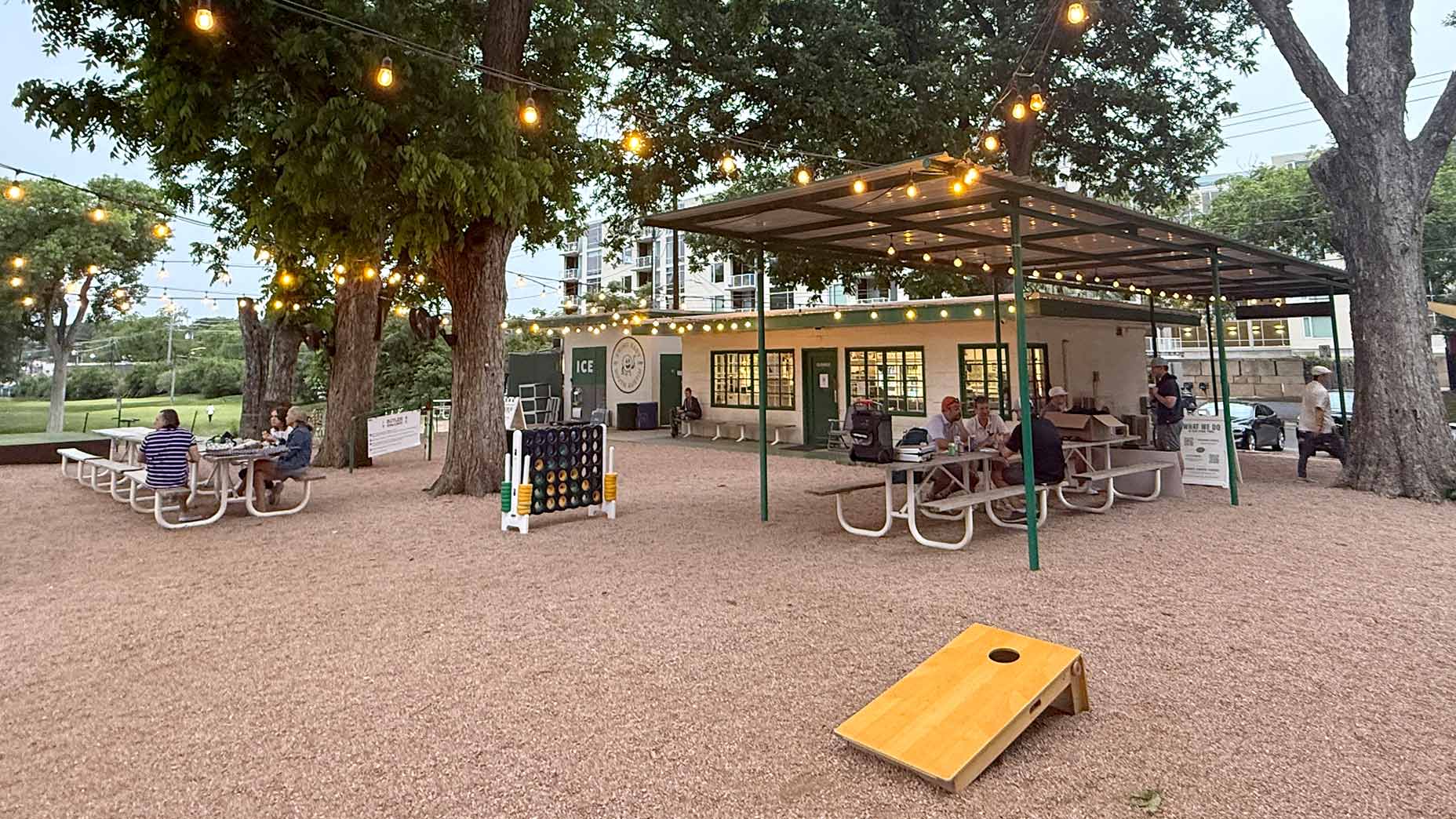
The “clubhouse” of the Butler Pitch & Putt in Austin, Texas.
Andrew Penner
But, as hip and “ungolfy” as Butler is, make no mistake, it is a golf course. There’s a clubhouse (your closet might be bigger), food and beverage (craft beer in the clubhouse and a Gimme Burger food truck outside in the courtyard), and there are nine quirky holes that vary in length from 61 to 101 yards. No golf clubs or golf balls at your disposal? No problem. They also rent clubs and balls for a dollar. (An extra ball, or two, might come in handy. The railway tracks and Lee Barton Drive are kinda close.)
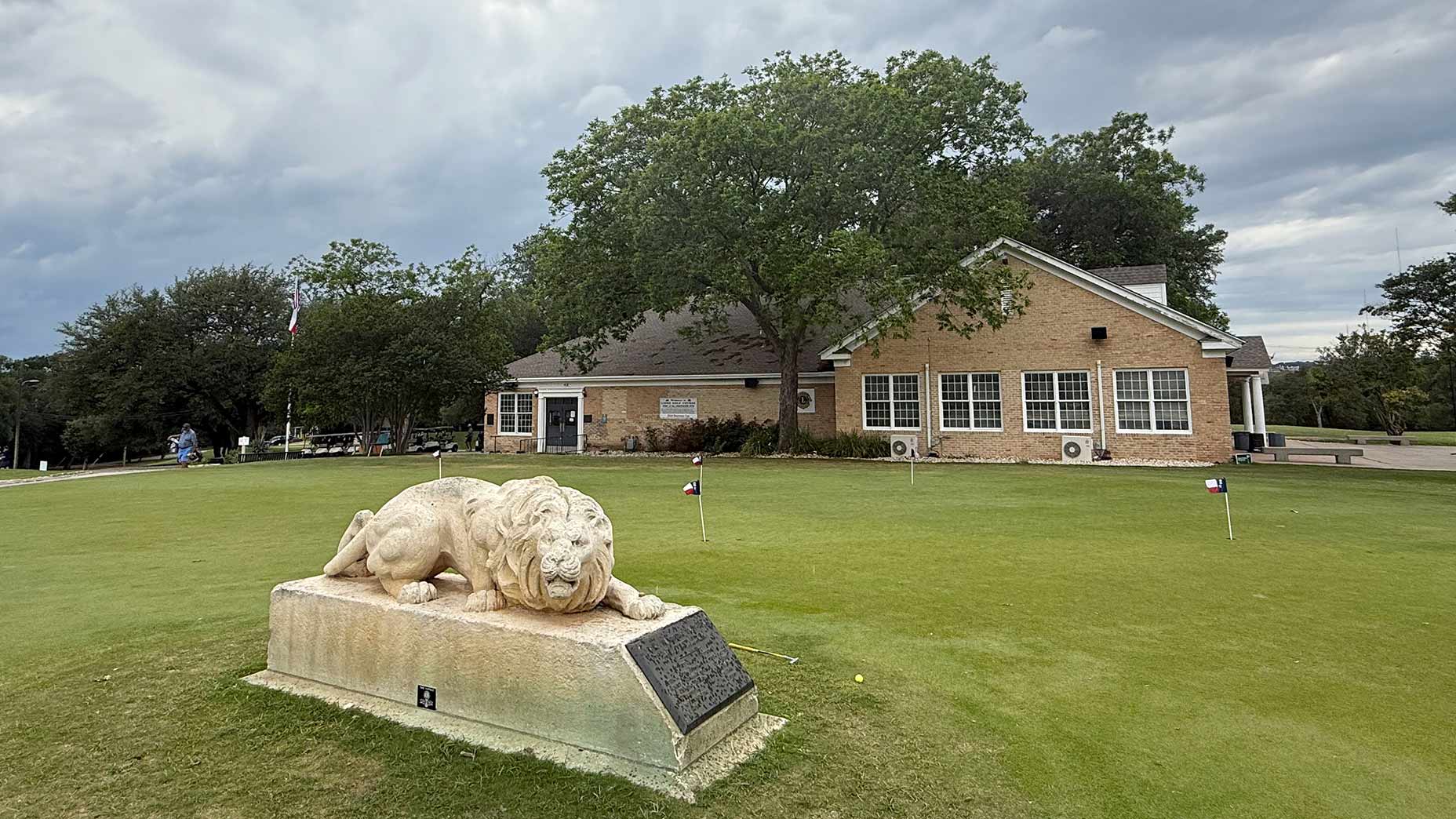
Of course, Butler, as cool and quirky as it is, isn’t the only golfing lifeline for Austin’s inner-city folk. Located just west of the downtown core, Lion’s Municipal Golf Course is another local institution with legendary status. And its pedigree, its history, as an irreplaceable “treasure” in downtown Austin, is every bit as compelling. Unfortunately its status — hence the ongoing “Save Muny” campaign — is in jeopardy.
Built in 1924, Lion’s Municipal (everyone simply calls it “Muny”) is a grassroots, blue-collar municipal course where legends such as Ben Crenshaw and Tom Kite learned the game and honed their craft. Many other notable players — Ben Hogan, Byron Nelson and the local teaching legend, Harvey Penick, come to mind — were regular patrons.
True, Lion’s won’t blow you away with timeless, Golden Age architecture (B.F. Rowe is credited as the original architect, however, A.W. Tillighast did give it a tweak in 1936), a regal clubhouse or phenomenal turf conditions. But there is an aura there, a status in the community, that puts Muny in rarefied air.
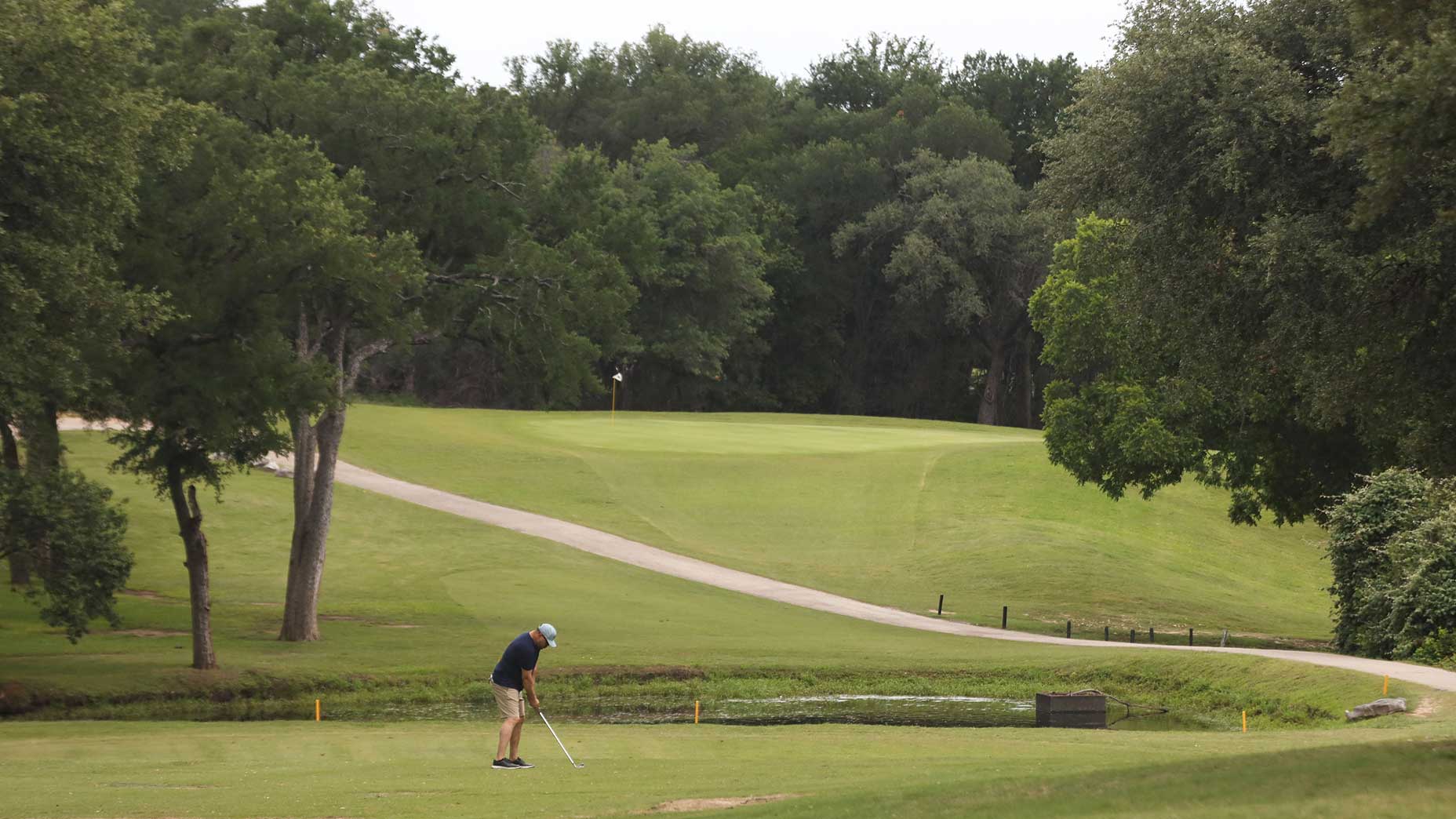
A golfer hits an approach at Lions Municipal.
Andrew Penner
“Muny does over 70,000 rounds a year,” says Scotty Sayers, who is a co-chair with Ben Crenshaw on The Muny Conservancy initiative that was launched a number of years ago to preserve the course. “Our mission is to preserve, restore and protect this iconic course. It would leave a huge void in the community if it disappeared.”
Although it’s complicated, Muny’s precarious position is due, in large part, to future expansions, infrastructure issues, and so on, that could be coming down the pipe with the current landowner, the University of Texas. The City of Austin operates the course but leases the land from the University. And it’s been that way since 1937.
However, the “Save Muny” campaign has plenty of traction and hope remains high that the course will be saved. Besides Crenshaw, arguably Muny’s greatest advocate, many other PGA Tour players, celebrities, musicians and personalities are lending a hand to the cause. Jordan Spieth, musicians Willie and Lukas Nelson, and actor Luke Wilson are just three examples. (Recently, a bill passed to push the dissolution date to May 2027.)
Angela Garcia, an Austinite and the wife of Sergio Garcia, also sits on the Save Muny Board of Directors. And the Garcias (Sergio occasionally shows up at Muny unannounced and joins a group of junior golfers) have been strong advocates for years.
“Muny isn’t just a golf course,” says Angela Garcia. “It’s a way of life. The golf course serves as an after-school and weekend home to hundreds of junior golfers in Austin. It’s where over a dozen junior high and high school golf teams practice every day. There are many kids who wouldn’t be able to play golf if Muny didn’t exist.”
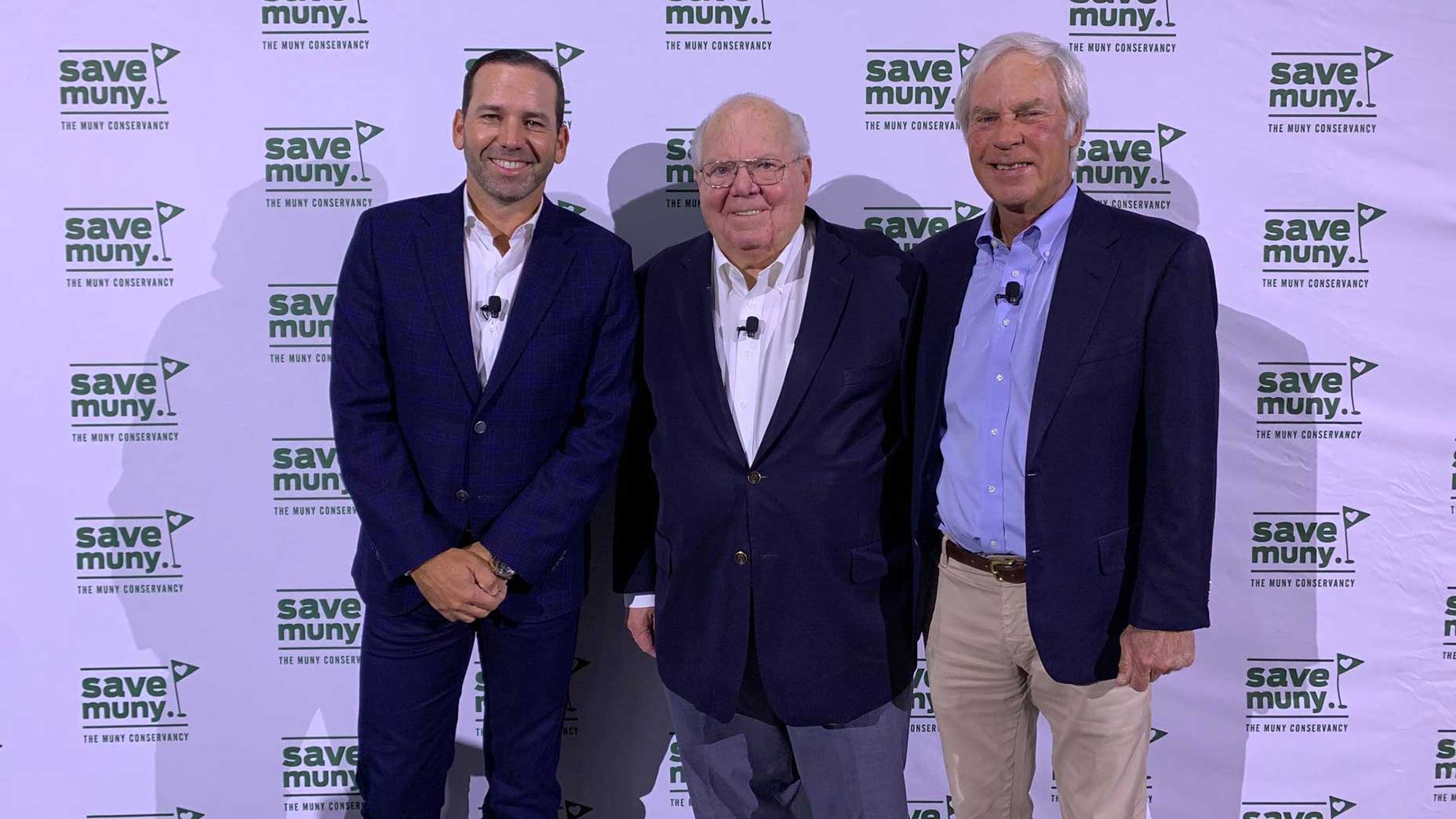
Sergio Garcia, Verne Lundquist and Ben Crenshaw at one of the Muny fundraisers.
Courtesy Photo
Garcia, who met Sergio during her reporting stint at Golf Channel, also has a strong personal connection with Muny. A former player on the UT golf team, Garcia played and practiced at Muny regularly in the mid-2000s. “The giant heritage oak trees on Muny are really impressive and one of my favorite aspects of the course,” says Garcia. “These are some of the most beautiful trees you will ever see. If we don’t save Muny, we will lose a cherished place in our community that kids for generations to come will enjoy and use as a refuge.”
Fittingly, in 1950 Muny was also the first golf course in the south to desegregate. In fact, it’s listed in the National Register of Historic Places for its role as a civil rights landmark. It became a place where all people, regardless of color, creed or culture, could tee it up and play golf.
And, for the record, there is nothing remotely “weird” about that.
Where else to play
If you’re looking for the ultimate Texas two-step, two of the state’s resorts landed in GOLF’s Top 100 Resorts in the World. There’s Omni Barton Creek Resort & Spa (20 minutes west of downtown Austin) and Omni PGA Frisco Resort & Spa (30 minutes north of Dallas/Ft. Worth International Airport). Both offer luxurious accommodation, award-winning golf courses, exceptional dining, world-class spa experiences and more. Check out December promotions here. And for more Austin-area golf, check out Lost Pines Golf Club east of town, The Golf Club at Star Ranch north of the city, Kissing Tree Golf Club to the south and, about an hour west, a handful of courses at Horseshoe Bay Resort.
While you are there
Austin is also known as the “Live Music Capital of the World,” with numerous festivals throughout the year and live music venues peppering the downtown core. And, due to Austin’s cultural diversity and spirit of creativity and artistic expression, it’s not just country music. Jazz, folk, blues, hip-hop, indie, punk; you name it, it’s alive and well in Austin. Click here for more information.