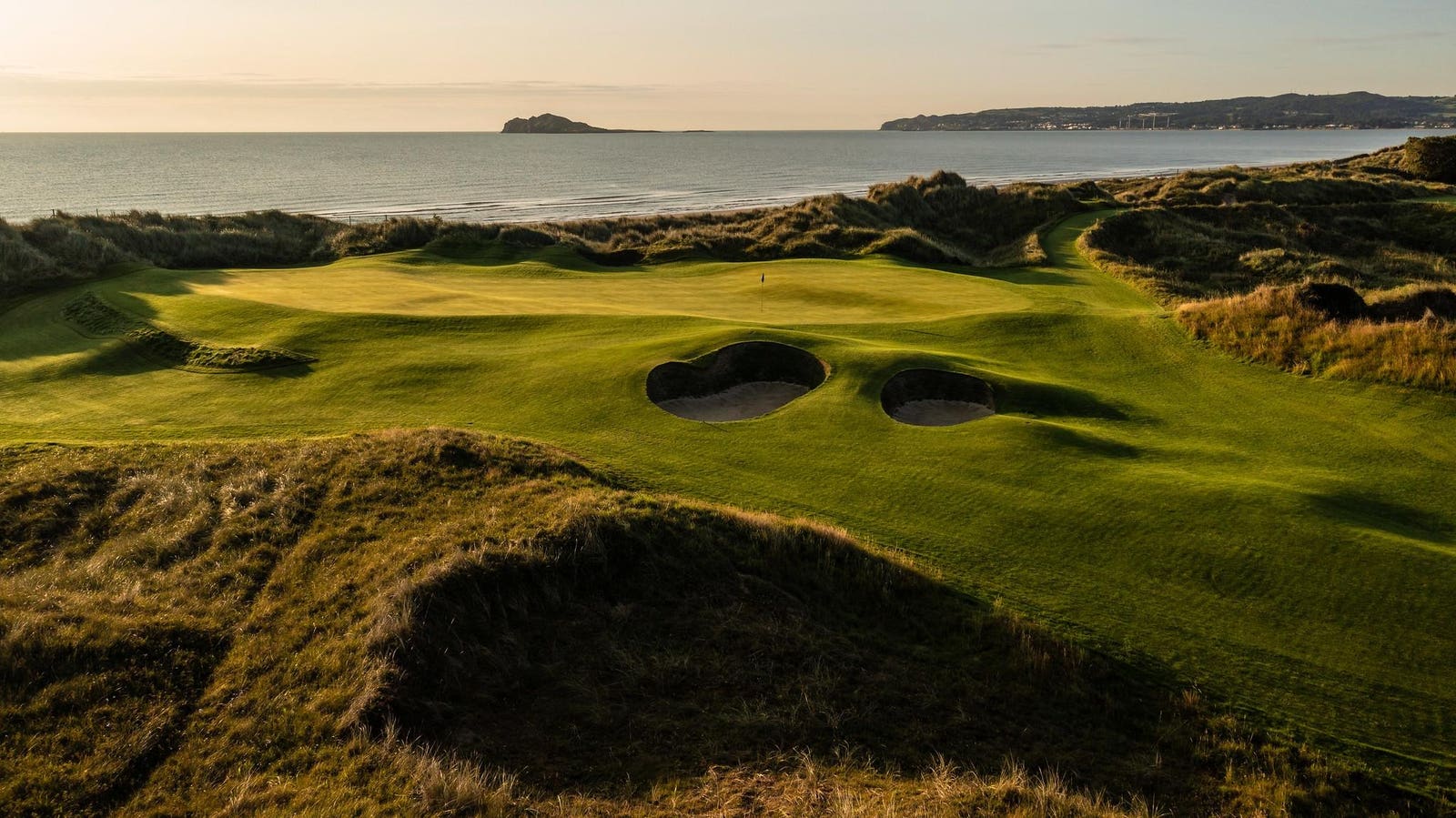
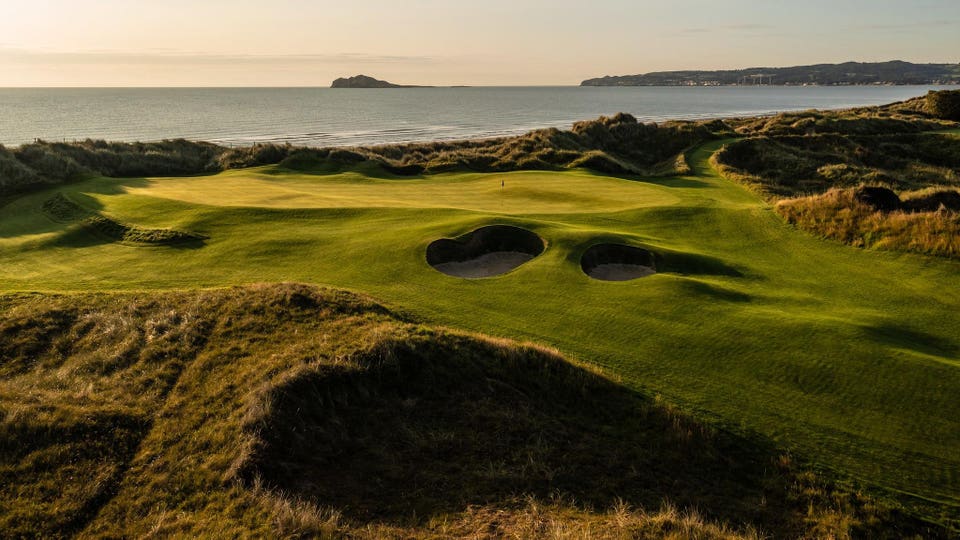
Hole 9 at Jameson Golf Links at the Portmarnock Resort is a short par three that provides dramatic views of the water and depending on the wind can play 2 clubs less or 3 clubs more than the listed yardage.
The Azelea Co Ltd.
Just to the north of Dublin lies land steeped in golf and whiskey tradition, where the legacy of John Jameson intersects with the R&A, and where the surrounding area may become the epicenter of golf history in the years to come.
Jameson Distilling’s history predates formal golf in Ireland by 88 years, with the first formal golf club established in 1858 and Jameson beginning distilling in 1780. The family began operations on Bow Street but eventually found residences north of the city.
Royal Curragh Golf Club may be the oldest formal club in Ireland, but a nine-hole course on what is now Jameson Links was constructed on Jameson family land by John Jameson III sometime in the 1850s. Jameson III purchased a 600-acre parcel in 1847 and built both a home and a golf course overlooking the sea and the ruins of the ancient church of St. Marnock.
Credited with stewarding one of the longest-running distilling and golf legacies in the country, Jameson IV made another significant contribution to the sport when he leased land to the founding members of Portmarnock Golf Club on the southern end of the peninsula. The club opened in 1894 with Jameson IV serving as its first president.
As Portmarnock rose in stature, the original nine holes beside the Jameson home fell into disrepair. It would take nearly 100 years for golf to return to the grounds adjacent to the estate. And as Portmarnock’s profile grows—along with increasing speculation about its future inclusion on the Open rota, it’s likely renewed attention will also shine on its neighboring links.
The Jameson Family cemetery can be seen off the right side of the first hole’s fairway at Jameson Golf Links at the Portmarnock Resort. The Jameson family established golf on the property as early as the 1850’s.
The Azelea Co Ltd.
“Founding members of those early golf clubs likely would have played golf at the original nine-holer and would have known the Jameson family,” said Paul McCanny, Director of Golf at Jameson Golf Links at the Portmarnock Resort.
The links burst back onto the scene in 1995 when Bernhard Langer and Jeff Lynch of (re)Golf were tasked with designing a modern routing that incorporated the original eighth, ninth, and 15th holes. Jameson Golf Links at the Portmarnock Resort was born—or reborn.
PORTMARNOCK, CO DUBLIN – OCTOBER 19: The par 3, 7th hole at Portmarnock Golf Club on October 19, 2010 in Portmarnock, Co Dublin, Republic of Ireland. (Photo by David Cannon/Getty Images)
Getty Images
Portmarnock Golf Club, the likely future Open Championship venue, sits on relatively flat terrain surrounded by water on both sides, leaving it exposed to unrelenting wind. Jameson Links at Portmarnock Hotel is its opposite, shaped by dramatic land movement and a rugged dunescape more commonly found in western Ireland. Holes weave through heather and gorse-covered mounds, and the atmosphere is as transporting as the architecture itself.
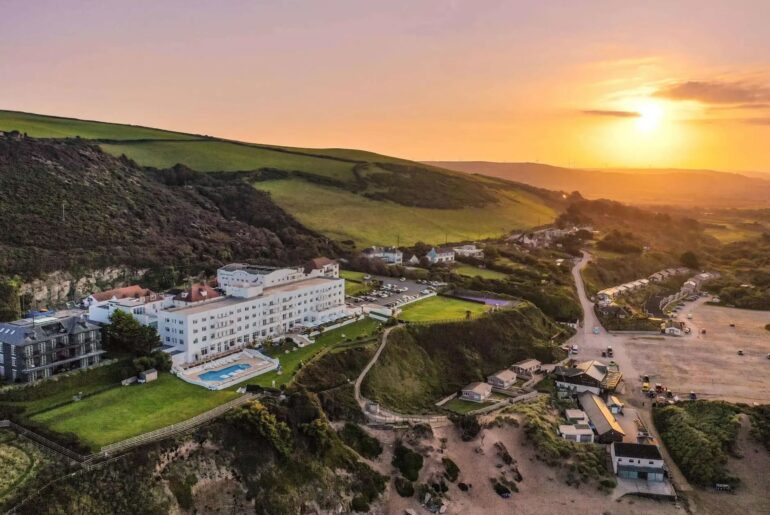
The resort’s amenities range from fine dining to casual pub settings, while the clubhouse, tucked into a corner of the property, is a small but inviting shop marked by the iconic Jameson ship logo.
A short walk over a bridge leads from the practice green to the opening tee, offering views of the ocean, the Jameson family home, and the historic cemetery. With a stiff coastal breeze and a touch of left-to-right movement, a wayward opening tee shot could easily flirt with centuries-old gravestones.
“We played the Blue Tees off 6,500 yards, par 71, with short par 3s that meant many par 4s over 420 yards, sometimes into tight greens. It was a very enjoyable challenge, really. I will definitely come back!” said golfer Javier Pintos.
The short par-3 3rd looks back toward the hotel and is defended by eight greenside bunkers that range in depth and severity. Pin placement on the three-tier green can alter the hole dramatically.
“I really like the new ninth, as it is a complete change in direction from the other par threes and draws your attention to the coastline,” says Lynch. “The green is one of the largest on the course, with bold contours to help a player access certain hole locations—or make for some fun recovery shots. Unlike the west coast, the wind here does not predominantly come from one direction, which adds more variation.”
The par five 12th hole rises dramatically to a volcano style green guarded by bunkers on the right. Reachable in two for longer players, the approach can repel shots into the deep bunkers in the front or off the steep slopes in the rear.
The Azelea Co Ltd.
As the round turns toward the sea, the routing tightens along the Irish coastline, weaving around sand dunes. The 12th green stands out as a volcano, perched atop a hill with steep fall-offs and pot bunkers guarding every misstep. From the summit, players gain one of the most expansive panoramas on the property.
The finishing stretch is unforgiving. The right-sweeping par-4 16th can push balls onto the beach when the wind cooperates. The 17th, a lengthy par 3 exceeding 200 yards from the back tees, offers little relief. The home hole requires precision from tee to green, its narrow avenue guarded by dunes that swallow imprecise approaches.
The restoration of golf on the former Jameson property, combined with its proximity to a likely future Open Championship venue, positions Jameson Golf Links at the Portmarnock Resort as an ideal location for qualifying rounds, practice sessions, and lodging. It is a place where golf’s past, present, and future converge on land shaped by both whiskey and wind.