
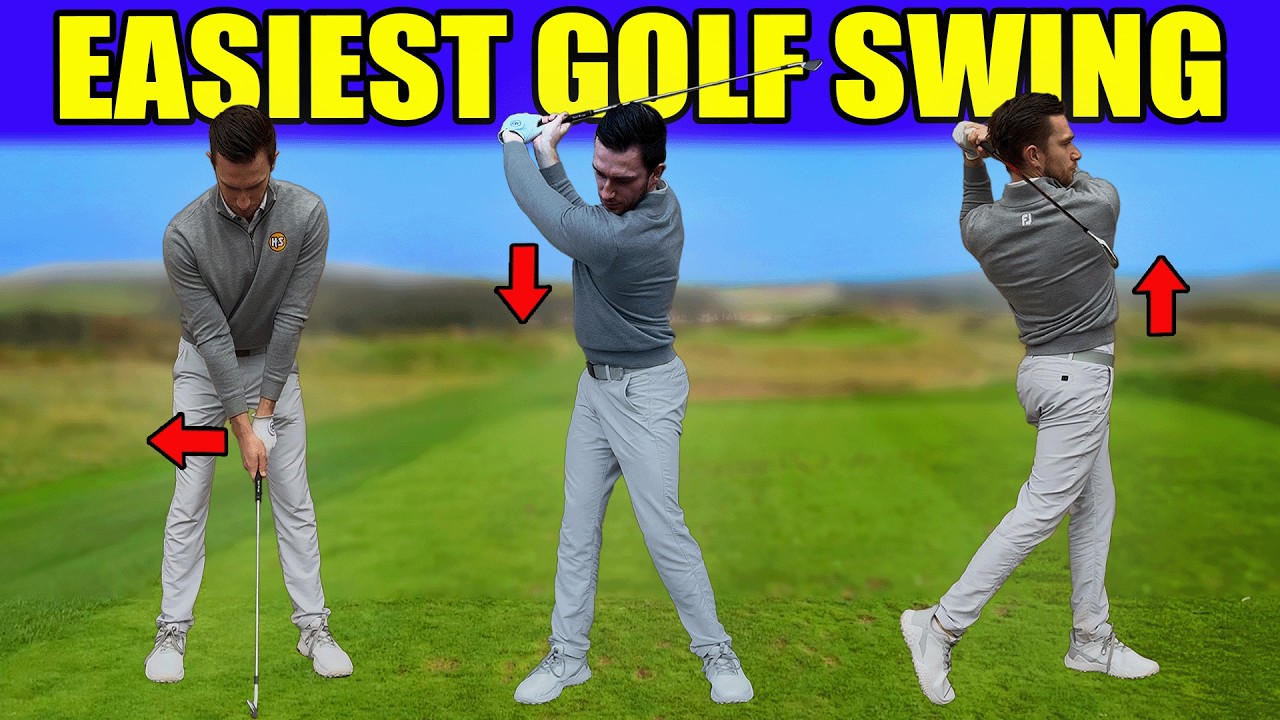
The golf swing becomes so much easier when you finally understand this.
This is Part 1 of a 3-Part Series where Harry Shaw (Golf Swing Specialist) breaks down the most common basic errors he see’s golfers make every single day and more importantly, how to fix them for good.
Part 2 will focus on driver specifics and Part 3 will cover Iron specifics.
In today’s video, we’re starting with the core reasons so many golfers struggle to build a consistent, reliable golf swing. You’ll learn exactly what’s holding you back, what you need to understand to make the swing feel significantly easier, and finally, a simple, step-by-step guide you can apply to your full swing straight away.
*
CHAPTERS
00:00 Intro
00:38 What To Expect From This Video
01:04 Why Golfers Struggle To Build A Reliable Golf Swing
02:33 What Tour Players Do So Well (We Should Copy)
05:30 Build This Into Your Full Golf Swing (The Plan)
06:51 Section 1 – Stabilising The Wrists During The Takeaway
09:37 Section 2 – Adding This Gradual Motion Into The Backswing
12:48 Section 3 – The Motorbike Drill To Perfect The Downswing
15:43 The Simple Recap & Putting Each Section Together
*
Use Code: harry5 for 20% off The @hackmotion Sensor (December 1st ONLY!)👉 https://hackmotion.com/harryshaw
*
My Links 👉 https://linktr.ee/HarryShawGolf
*
You Can Download My FREE Course Management Starter Guide HERE 👉 https://harryshawgolf.kit.com/6274a29d2d
*
Online Lessons 👉 https://skillest.com/coach/harry-shaw
*
In-Person Lessons 👉 https://www.thegolfprojx.com/golf_simulator/golf-lessons-with-harry-shaw/
*
Share This Video 👉 https://youtu.be/2U_RQvr9pd8
Do you want your golf swing to feel so much easier than it is right now? Well, this is part one of a three-part series where I’ll be covering the main basic errors I see golfers make in their swing and how to simply fix them for good. Part two, we’re going to be discussing driver specifics. And part three, we’ll dive into iron specifics. But more on that to come later on. So, for those of you who are new to the channel, welcome. I’m Harry, a golf swing specialist, posting content like this every single week to help you lower those scores and improve those golf swings. So, consider clicking that subscribe button and turning the bell icon to all so you don’t miss out on any content coming your way. So, to start off this series, video number one being this video in particular, we’re going to cover exactly why we get so many golfers time and time again struggling to create a consistent and reliable golf swing, as well as what you need to know to make the golf swing much easier. And finally, do make sure you stick around for this as I’ll be going over a simple step-by-step guide on how you can implement this into your full swing very quickly. So, let’s dive into part one. So, why is it that golfers at the moment are struggling to build a consistent and reliable golf swing? Well, it’s all good being able to get the golf swing perfectly on plane, back swing, down swing, but if the club face is completely out of position, it makes it very difficult to turn that reliable, consistent plane that you’re swinging on into a consistent ball flight. That’s the key. We need a reliable golf swing that’s going to help us create a consistent ball flight. And it’s all to do with, as I mentioned, the way this club face works during the golf swing. You could have literally the perfect onplaying golf swing, but if the club face isn’t working in your favor, just like that one there, we can see it’s gone way off to the right and nowhere near the distance to the pin. Open club face, poor strike, just no good. So when we take a look at the hack motion data that this is showing on here, it’s showing that my wrist at the very top of my golf swing is plus 21. So that means 21 degrees of extension. So where we get this cupping here of this lead wrist. So for me being a right-handed golfer, it is my left wrist here. You would have noticed the hat motion sensor here. This helps you track what your wrists are doing in the golf swing. And this is the key. If we want a consistent, reliable golf swing, we’ve got to be making sure that our hands and our wrists are working correctly. So, this now brings us into part two. What tour players do so well and how we should be using our wrists correctly, hands and wrists correctly in the golf swing. And if you know this and they’re able to build this into a a full swing, it’s going to make things so much easier for you. So, we’ve just explained there that if I was just to allow my club here to get into an extended position, I swing through. We’ve noticed there a big slice with a seven iron. If we want to straighten those up and we’ve got a swing working perfectly on plane, we want to be able to see a gradual reduction. This is what the pros do. A gradual reduction of this extension from the setup position to a flexed position at impact. So we can see there now my wrist is in a flexed position and that’s allowing me now to get those hands forward and compress the golf ball with a square club face. So all I’ve done to be able to do that is simply gradually allowing my wrist to move into a straight position in line with my arm as we take the club back. Good checkpoint here is the club face here pointing a bit more towards the ground or the leading edge parallel with the spine angle. as I’ve made my way up to the top of the golf swing, I’m just holding that angle pretty much. And then I’m starting to increase that as I make my way into the down swing sequence. So, if I just start to focus on that gradual reduction of extension and moving this into flexion in my lead wrist, look what happens. It completely changes the outcome of the golf shot. It’s helped me there produce too much of a draw unfortunately, but I’ve hit it perfectly out the middle. Carry distance is way further than before. Total again is way further than before. And have a look at that impact video on the screen there. Way more square. So for me, I have a tendency of swinging too far on the inside. Hence why that one has drawn off to the left of target. But we’d much rather take that second outcome compared to the first. And have a look at the top of my golf swing. This is a little bit exaggerated because that’s another thing I tend to do. Exaggerate this this angle here. More of a bow position at the top of my golf swing. But that was minus30 minus 30°. So 30° in the flex position at the very top of my golf swing and having a look at impact there at minus 9. So what’s happened there for me is I’ve actually gone from this flex position here and then I’ve reduced it on the way down. What I would like to coach you is how we do the opposite. How we get a gradual increase of that motion rather than being that far at the top of the golf swing. But that just shows you there straight away a good example between those last two shots when we have a look at the first shot hit and also the second shot hit on the screen there. Massive difference between the two. And this now leads us into the final part, part three. How we build this into our full swing. the stepby-step simple guide that I want to show you so you can start to implement this and make sure you’re doing this correctly straight away. But just quickly right now, HackMotion is a product that is helping so many golfers correct the swing issues I have mentioned so far. And let’s not forget one of the biggest margins tour pros have is data. And it’s something that has certainly helped with my eye play, but also my T-shots with driver as well. So, why not make it your own little gamecher by scanning the QR code here or clicking the link in the description? As if you’re watching this and we’re still on Cyber Monday, December the 1st, 2025, there’s an exclusive 20% off discount code you can use on their site. Use Harry 5 and that will automatically give you 20% off one of these hack motion sensors. So, I’ll leave the QR code on the screen for the next 10 seconds. So the simple guide is going to be broken down into three different sections. Section one is all to do with how we set the club in the right position for the takeaway. Then we’re going to look into how this should work on the back swing, where this should be in the back swing. And then final one is how this should be implemented into the down swing. So I’m going to go on to the Hack Motion uh app here using my iPad. I’m just going to go off my custom practice mode that I’ve got this set on and I’m going to go on to drills. Now, we’re going to start off with the stable wrist takeaway drill. Now, the idea behind this is it allows you to set the club correctly as we have done already with the actual wrist at the start of the golf swing. So, I’m going to set my club here into the position it’s asking me to. And then from here, it’s going to load once it’s ready. Now I’m gonna make a back swing. And as long as I hear the halo noise or the buzzing here that I can feel from the hack motion, I can make sure now that I’m keeping the right amount of flexion up to the very top of the golf swing. So it’s that feeling of that gradual reduction of that extension from my address position here. So, if we just get into that position there, and then as I go, I’m just making sure that I’m gradually reducing that extension and moving this into flexion. Just like that. And you can go back and forth and practice this. You can start hitting a few shots, which is great about this. And it tracks everything for you just to check up on your progress. I’m going to do this one more time and then show you how you can do this or how to get a feel for this if you were to try this without it. So again, just feeling that motion all the way up to the top of the golf swing. So there’s the stable wrist takeaway. That’s really helping us there get that extension and move it into more of a flexed position. A good checkpoint that I like to feel when I’m trying this without the hack motion sensor or the feeling that that is actually giving me with the hack motion sensor is really just imagining that I’ve got my glove on here and the glove logo itself. I use this part here of the hack motion sensor. That part there of the hack motion sensor is starting to face towards the golf ball. If we start to see this here, so the back of my lead hand here, my glove hand, if we start to see that face towards me or up as we can see there, that club face now gets in a very open position and that causes me there to keep this extension in my lead wrist. You can see there from the numbers on the screen on the hat motion data. No good. So, as I’m feeling this motion on the way back, all I’m doing here is allowing my lead wrist to flex. And obviously, my trail wrist is going to do the opposite. So, I’ve got both my hands here. I’m just allowing those to move back like this here. And that just allows me then just to get that glove logo or the hat motion center to face down towards the floor or towards the golf ball. So gradually reducing the extension and moving into the flexion up to the top of the golf swing. Now that does cover both the takeaway and the back swing if you were to simplify things using the hack motion drills. But if you are wanting to be a bit more specific with this in terms of those feels, I like to think glove logo to golf ball, glove logo to sky. So if you get that feeling and sensation of getting the wrist to move in a way that allows the glove logo to face towards the golf ball first or towards the ground, we can see there that that sets the club perfectly parallel with the spine angle. As I make my way up to the top of the golf swing, the key that you want to make sure you do correct is just continuing that motion up to the top of the golf swing. We don’t want you to lose this angle here. Have a look at the data on the hat motion. If we lose this angle, make our way up to the top of the golf swing. The hard work that we’ve done for the takeaway will just completely go. It’s pointless. So, we want to make sure yes, we get the takeaway. So we set it correctly, but then from there we’re maintaining this up to the top of the golf swing. So we’re going from glove logo facing the ball, glove logo facing the sky. So that’s the feel you can add specifically if you want to practice this without it. So now I’m going to go on to another drill and I’m going to go on to the top of the back swing drill. The top drill it’s called. So I’m going to select my club again. So, I’m just going to make my way now to the very top of the golf swing, and it should record everyone that I get within that range that we did for the takeaway. So, I’m getting into that position that Hat Motion’s asking me to here. And then from there, I’m just making my way up to the top of the golf swing. And there we go. It’s captured there. Another one in a good reliable position. So, as long as we can see there the left wrist, the lead wrist at the top of the golf swing, nice and flat, maybe a little bit bow biased, that is absolutely fine. That’ll really help you for when it comes to the down swing. So, same feeling there. Glove logo down, glove logo up, and there you go. Another tick there from that device. So, good practice there. That’s really going to help me get into the takeaway and also the top of the back swing. So, applying that feel for the takeaway. You can practice just to begin with hitting a few chip shots, making sure you get that movement right, and then just simply allow yourself to hold that angle, maintain that angle that you’ve set on the takeaway all the way through to finish. So, only carried 27 yards as expected, but the club face on that one looked in a much better position. And then doing this to the top of the golf swing. Focusing from that position there. Gradually increasing the flexion and maintaining that angle up to the top of the golf swing. Glove logo down. Glove logo up. And we can see there another one that’s drawn a little bit to the left, but perfect distance again. Another good strike, square face. How should this then be brought into the down swing? Section number three. So, this one here allows you from the top of the golf swing to get a good feel and sensation of what you need on the way down to be able to get that club face pretty much back in that same position as you had it on the takeaway. So, I’m going to get into my address position from here and it should start to load once I’m in that position. There we go. Then from there, I’m just swinging up to the top. Then from there, I’m just making sure on the way down, I’m staying within that range. You can see there it’s gradually moving into more of a flexed position. And we can see there, that’s looking better already. And I can keep going, keep going all the way through to impact and all the way through to finish. So, just to exaggerate things, I am just going to set my lead wrist a little bit more in the flex position to start off with if I want to really exaggerate that feel on the way down. So, once I get to the top of the swing, there we go. I could exaggerate it that little bit more, adding that feel all the way into the down swing. So that’s allowing me there to really get that feel and sensation of starting to move that club face back down into that same position. If you wanted to try this without it, how I’m feeling that on the way down is getting my glove logo or the hat motion sensor I’ve got on here to simply point back down towards the golf ball. So to simply point down back down towards the golf ball. Then I’m continuing that rotation right the way through. So that there is just literally me going from this point and just trying to get that sensation there. Almost like I’m trying to get my left hand palm, my lead glove hand palm to face up towards the ceiling as I make my way down. Now what you want to be careful of is when you do this, you don’t force it over like this here. This should all come from the hands and wrists and the arms should allow for this move to happen rather than getting involved and trying to do it forcefully. So now once I add that in and start to add that in into my golf swing, as long as I rotate the body efficiently, I can trust that that club face is going to be square. Now the reason for this is when we promote more shaftling through body rotation, this promotes an open club face. So, we want to add something to that to square things up. To square it up, we want to add that flexion. So, once we address the ball, we make our way through the swing. That’s why it’s so important to be able to get that natural reduction of extension and make your way into a flex position to hit the golf ball to strike that golf ball pure. So to go away and practice this for the feel, you just want to allow the glove logo to face the golf ball, glove logo to face upwards, glove logo to face back down at the golf ball. But as you make your way down, as you can see here from the face on view, I’m allowing my lead hip here to start to rotate backwards and away from the golf ball. That’s going to allow me to create room to continue rotating and also strike the golf ball with a nice square club face and get that compression from the hands being more forward. So, same feel with the golf club here back to this point up down and allow that rotation to square things up with that club face. And that was much better there. I was able to really get the body involved on that one. Hence why it started a little bit more to the right. And can it just get on the green? Finally, I’ve hit one on the green. But I would take all those three shots around that green here at Trump Turbury. That hole in particular, I played it a couple of weeks ago and it was incredibly difficult. So I have made that golf shot there look pretty easy. So if you’d like to make the hack motion your little game change to helping you track your data and how to control this club face more using the hands and wrists, I’ll leave the link in the description below. or if you’re watching this on TV, the QR code is over here to the right hand side of your screen. For part two and part three, if they’re not already on the end screen over here showing for you to click on next, that means it’s not been published just yet. So, go ahead and follow me on Instagram as I’ll be posting story reminders for part two and part three. Or be sure to keep an eye on my community posts on YouTube as I’ll also be keeping you up to date on there as well. Thanks for watching. If you’re looking for more content like this to help you further improve your golf swing, I’d recommend checking those two videos out anyway on the screen just for the time being. Thanks for watching and we’ll see you in one of those two over


1 Comment
Harry, I’m a bit disappointed in this video. It’s nothing more than a long commercial for the Hack Motion device! I really enjoy your coaching but not a commercial.