
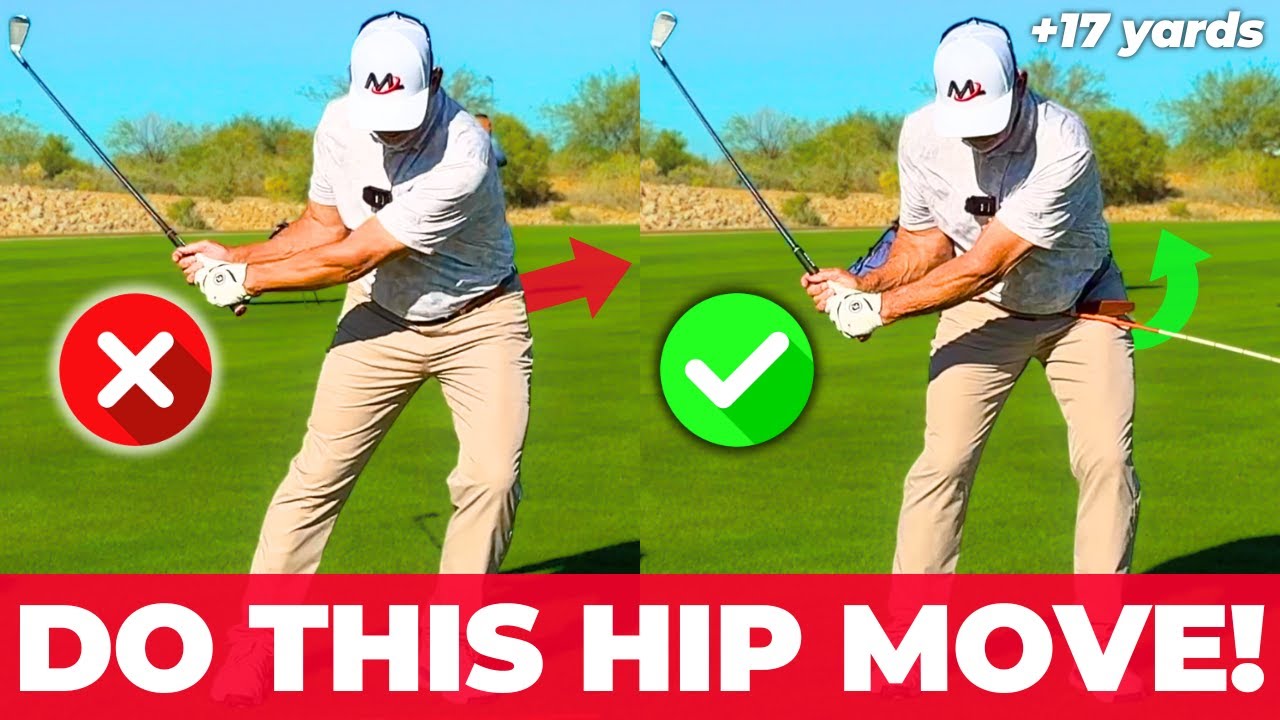
Ed Lasater joins me to share how this one left hip move helped him overcome pain and injury for a more athletic golf swing!
*Get Personalized Coaching NOW 👉 https://swinglikeanathlete.com*
SUBSCRIBE
https://www.youtube.com/c/milolinesgolf?sub_confirmation=1
ONLINE ACADEMY – Get Milo’s Full Swing Playbook HERE!
BOOK A LESSON
GOLF SCHOOLS
MILO APPROVED TRAINING GEAR :: DISCOUNTS
WATCH THESE NEXT
FOLLOW MILO
Instagram: https://www.instagram.com/milolines_golf/
Facebook: https://www.facebook.com/milolinesgolf
Twitter: https://twitter.com/MiloLinesGolf
Don’t forget to LEAVE A COMMENT with any and all questions, video tip requests, and thoughts. We do our best to respond to every comment and sincerely appreciate your feedback!
Learn to Swing Like an Athlete™ with Milo Lines Golf! My channel and coaching team will provide you with lessons and tips to help you play better at this game and better tap into your inner athlete. Most of our content is filmed at the beautiful Superstition Mountain Golf & Country Club in Gold Canyon, Arizona.
#milolinesgolf #golf #golfswing
What’d you hurt? Uh, I hurt my left hip. I found my hip getting too far forward outside of my ankle and it hurt me. I was left and I was going more left and my hip joint was getting too far outside my ankle joint and I wasn’t pushing up and back enough and I was at in range of motion and it was so much pressure and stress in this hip. So, I was looking for an alternative and I was noticing that in a baseball swing that the lead hip never gets outside the ankle, which then didn’t put any pressure on the outside of my hip. One of the antidotes that I used was I would take the alignment rod and my goal in practicing this was to feel like in transition, I want the lead side to feel like it’s going down as I’m turning to finish up. So for the player at home whose hips tend to slide forward like this, a good thought in their mind or a good little saying would be lead side or lead hip down and around, right? Yes. Holy pure. Now from my vantage point, I could clearly see the left side of that stick go down and around. Yeah. So now let’s see it full speed. No stick. Hey everybody, welcome back. Milo here along with Ed, special guest. Just drove in from San Diego and today we’re out here at Whirlwind Golf Club and we’re just getting ready for a golf school. Now, before we turn the camera on, Ed, you shared a little bit of a background story about how you wound up finding me and how this all became how you became part of our team. Yeah. I don’t remember exactly what year it was, maybe 17 or 18. I’m not 100% sure what it was, but back then I was making a swing that uh was efficient, not long on distance, but uh I ended up injuring myself as a result of it. What’ you hurt? Uh I hurt my left hip. I found my hip getting too far forward outside of my ankle and it hurt me. So, I was looking for an alternative and I was noticing that in a baseball swing that the lead hip never gets outside the ankle which then didn’t put any pressure on the outside of my hip. Then I found you. Since then, we’ve been friends ever since. So I at that point in time I had my my channel was called Golfletthletics and I was posting a lot of content where baseball was related to golf. Yeah. When a hitter hits a baseball, he hits it and his chest and the bat are fairly close to parallel to each other. So there’s a lot of rotation into the ball. So it kind of jived with what was going on in your mind. Yes. Exactly. So at the time when I when I injured myself, I never had much if any pressure to the trail side and then I would go even more to the lead side, I was left and I was going more left and my hip joint was getting too far outside my ankle joint and I wasn’t pushing up and back enough and I was at in range of motion and it was so much pressure and stress in this hip. That just looks like it hurts just right. It just does. Yeah. And fortunately, I was strong enough to where I never hurt my right lower back when I went into that much right side bend, but it did hurt my hip. My path was excessively to the right. Now, I was hitting this beautiful little push draw, but again, it put so much pressure on my hip and then that’s what led me to what you do. So what I found was then once I was able to keep this hip inside my ankle joint, I then had to change the way my hands and arms worked. As we discussed in when I took that lesson, I think it was in 2017. The more I can keep my right wrist extended as I’m flexing and turning, now the center of mass can stay farther behind, I can have this little window and I can start this thing on target or a little bit out to the right and finish posted up. Awesome. Can you show us one in slow motion where you walk through that that pattern shift? Okay. So, before it was very left and down like this and then when I changed it, it took and by the way, changes take a long time. So, students need to be very patient with themselves. And I always prefer way more practice swings than real swings. And if you do a real swing, do it at slow, slow speeds and video it to confirm you’re doing what you think you’re doing. So, if this winds itself up, this is working back. This is going to stay back here. Then, you’re going to keep turning and then extend up from there. That way, the center of mass is far enough behind you to basically keep your hands to the right of your shirt buttons all the way into impact, then extend up and finish. I love how you broke that into two chunks. It’s a really good way to start incorporating things. Yeah. And once you can break it into two chunks, then you can start to smooth out the lines that are kind of blur the lines so it all blends. Yes. Exactly. But I but I think if if people just go at full speed, they’re going to use the same power source they’ve always had and they’re not going to make a change. Well, when we swing at full speed, we go into reflex and your brain just goes to what it knows. Exactly. The only way to make a change is to dial the speed back, right? where you actually have some motor control over what’s going on because at full speed nobody does. I want you to show everybody you hitting one kind of slow bad because I don’t want you to get hurt. And then one doing it correctly at a slow rate of speed so everybody can see. So my pressure would be too forward at a dress. There’d be no trigger and then I would continue to lean forward and it would be way out to the right and I would be very vertical and the arms very straight. So then as a way to correct it, this is why I love Foundation 2 so much. Foundation is is really the proof of the pudding. So for those of you at home who don’t know what Foundation 2, it’s part of our online academy. It’s one of our foundational building blocks to the golf swing. So if you want to learn a little bit more about it, come on over and exactly. So basically a foundation too is a wind up, a recentering, a flexing, and a turning and a chipping the ball. and take a lot of speed out of it. So, if I did it at a slow pace, you’d probably see a lot of shaft lean in that shot and you’d see a lot of rotation, minimal amounts of slide, a lot of lateral motion, very minimal. Everybody, I want to give a quick thanks to this awesome club, Whirlwind Golf Club. Here I’ve got Brandon Gordon, head professional, here to tell us a little bit about this place. Yeah, so here at Whirlwind, we’ve got two golf courses, so we got 36 holes. We’ve got the Wild Horse Pass Resort and Casino where you can stay at. And then we’re host of the LPGA4 Championship and also partnered with Milo Lines for his golf school. So we have arguably one of the best practice facilities in the state for you to come see Milo and get your game dialed in. Now, we’re truly lucky and blessed to be able to partner with Whirlwind and host these schools here. This is an awesome facility for our students. Thanks for having us. So, basically, I feel like I’m hitting like a knee high pitch because if I’m waiting for this pitch and I’m going, I’m flexing and turning and I’m like this, it’s just a little bit more bent over. So, one of the antidotes that I used was I would take the alignment rod and I would put it inside the lead one and barely outside the trail belt loop. And my goal in practicing this was to feel like this stick could stay as level as possible as I’m stretching up to the top, but then in transition, I want the lead side to feel like it’s going down as I’m turning to finish up. And I like the visual image of that. So that’s that’s one really good movement or drill. I also like to use boundaries for people. So earlier before the camera came on, we were chatting and Brandon, the head professional here at Whirlwind, actually talked about using a walker and having students hit from within a walker. Things like that where you have boundaries that prevent you from moving too much can be really beneficial for a lot of people. It can be as long as that lead hip goes down first. Yeah. You want to feel like this thing goes down, which then, as we know how the spiral line works. If that lead side goes down, it’ll pull you on top and get you covering the ball. It pulls your chest forward and down. Exactly. And then you’re on top of it so you can deliver shaft lean. Where if if this goes this way. So for the player at home whose hips tend to slide forward like this, a good thought in their mind or a good little saying would be lead side or lead hip down and around. Right. Yes. And as long as they maintain enough wrist extension and potentially a little supenation, they’re in the money spot. But if they don’t do these two and that shaft tips out, it’s not going to be good. They’re going to be saying, “I’m hitting them fat now and I’m pulling them.” Then they’re going to go back to jumping and tilting. Yeah. Yeah. as a as an attempt to shallow the club out. So, Ed, let’s show them one where we hit it with the stick in and then we’ll hit one a little more full so they can see this in action. Holy pure. Pretty good. Now, from my vantage point, I could clearly see the left side of that stick go down and around. Yeah. So, now let’s see it full speed. No stick. That was full speed. You got to remember I’m 60 years old. That’s about as full as I got. It’s a little different. That was pretty good. Well, does your hip hurt anymore? My hip doesn’t. My shoulder hurts, but that’s a whole another argument. That’s always That’s hurt for a long time. That’s hurt for a long time. So, I think the moral of the story is to help yourself from injury is let’s swing it more like a baseball bat but on a tilted plane. Awesome. It’s what I prefer. It’s a great way to swing a golf club. Not the only way to swing it, but a great way to swing it. Yeah. Well, hopefully you all at home enjoyed that video and learned something about how to swing more like an athlete. And if you did, please hit the like and subscribe button. And we’d love to have you come over and visit us at milolinesgolf.com where we can help you play the best golf of your life.
7 Comments
Always great to have Ed on the channel, and hope you enjoyed his story sharing here!
To work with us at a golf school, get 1-on-1 coaching with Ed, or join our Online Academy – https://milolinesgolf.com
Would you say it's almost like you're feeling the trail hip remaining high? I know Riley at EGS is a big proponent of this trail side pivot action and I'm definitely guilty of not pushing out of my "slide" so any new feel is helpful in changing life long patterns. And I totally agree that practicing with video and at slow speed is key… Been reverting constantly because I swing too fast. sure takes a long time but enjoying the process is key..
Thanks a million for your videos Milo. I love watching them. You make the golf swing look super easy. I keep on trying to do what you teach but it is not as easy as you make it look. Which I had your videos when I started playing 35 years ago.
Milo has a great group of instructors and Ed Lasater is the best in terms of communication and identifying what a student needs to do to improve his/her swing
Sounds like you were doing S&T. Hurt my left hip trying that a few years ago.
Good advice Ed about making changes to a golf swing. Love the stick tip going down concept. How much do you feel like the arm is launching off the chest in the down and around phase?
Ed is a legend! Loved working with him.