
Play the most consistent golf of your life — Join The ManningGolf Academy
https://academy.manninggolf.com/natural-balance
Get Nate as your private coach
https://academy.manninggolf.com/personalized-coaching
The Laser I Use in My Training
https://amzn.to/3V15fBm
Then take my Laser Course inside the Academy to play the best golf of your life.
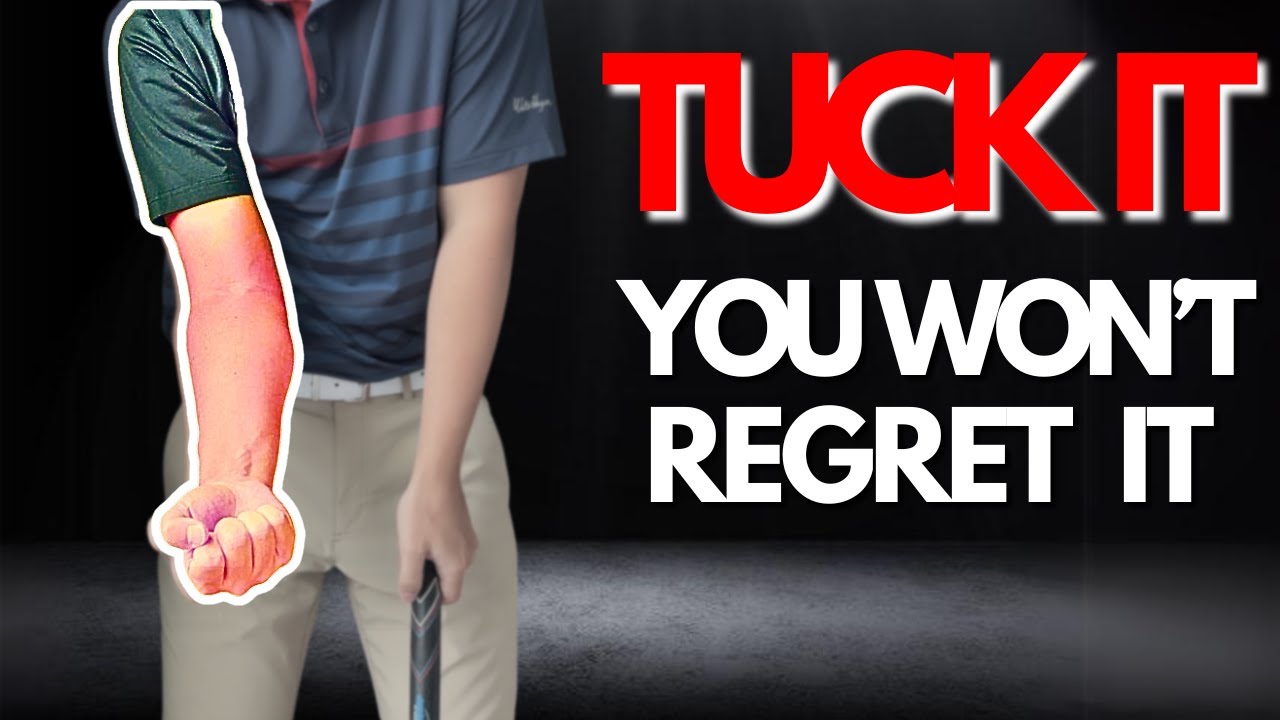
If your swing feels inconsistent, maybe you’re slicing or hitting it fat or thin, the real issue might happen before you even swing. I used to overlook it too until I found one setup move that changed everything. Just by adjusting how I position my trail arm at setup, I unlocked more power, better compression, and a swing that finally felt repeatable. It works with every club in the bag, irons, driver, even wedges. And for many of my students, it completely eliminated their slice. In this video, I’ll show you exactly how to do it and why this one feel might be your biggest light bulb moment in your entire golf game. Because when your trail arm is starting to work with you instead of against you, that’s when everything starts to click. You start striking it more solid. You compress the ball better. You gain distance. Your swing becomes repeatable. Fat and thin shots disappear and your slice gone. So, in this lesson, I’m going to walk you through it step by step. How to set the trail arm it set up, how to feel it, and how to make it automatic in your routine. Let’s get into it. Let’s start with the biggest mistake that I see. Most players start with their trail arm completely out of position. They let it lift, they let it twist, and the swing falls apart before it even begins. When your trail arm lifts or rotates the wrong way, it throws off your alignment path and release. That’s where slices, pulls, fat, and thin shots come from. So, why does it lift and twist instead of having this simple motion? It goes back to the rotations of the arm. For all the people that struggle with contact and slicing the ball, the upper part of the arm is not rotated to the right. For righties, if you start with the arm not rotated to the right and you ask your arm to swing from a stopped position, it lifts straight up into the air. If your arms lift, this means you’re going to cut across the ball and slice it. Also, when your arm lifts, you’re going to lose distance because you will not be rotating your body. Then if you choose to not slice it and rotate the arm in the back swing, you can rotate the arm at a different point in the back swing every time. One can be fat, one can be thin, one can be hooked, you get the point. So to eliminate this timing of when to rotate the arm, you start with the arm already in a rotated position. And once you do that, you’re finally in control. The rest of the motion becomes way simpler and the results show up fast. I’ll walk you through exactly how to feel it in a second. and it simplifies your golf swing more than about anything else can or any tip you’d ever find. Now, if you truly want to have your trail arm on your team to have this simple, easy motion, you need to understand what I’m about to say. And also, for as impossible as golf can feel sometimes, it all comes down to what positions your body is in. You need to get your body in the right positions to get a consistent swing. So, it is not just the rotation of the upper trail arm. There are three more components to this. There is the position of the shoulder, the position of the forearm, and the position of the wrist. You need to get all four right, the shoulder, upper arm, forearm, and wrist to unlock that smooth, natural motion. Don’t worry, it’s much simpler than it sounds. And when they come together, ball striking just starts happening on autopilot. First, the shoulder has to be in the right position. The shoulder can work all the way in and all the way out. We want the shoulder in the position where the arm isn’t all the way jammed in there. The elbow is instead pointing straight down at the hip. The same position that you would shake someone’s hand in. Another thing that happened when you did that is when you really jammed the shoulder in there, the shoulder raised. Then it went back down and then it would come back up like it’s on a pendulum. We want the shoulder at the bottom of that pendulum. So you could extend your trail arm straight down to achieve this shoulder down position. Now from this shoulder down position, you get the upper part of the trail arm in the right position. So the shoulder stays in the down position and we rotate the upper trail arm from the elbow to the shoulder to the right. For righties, this eliminates all sorts of problems in your swing that we mentioned earlier, including mainly the timing of when you’re going to have to rotate that arm in the swing. We’re taking that out of play. The next thing we’re going to have to do is get the forearm in the right position. If we keep our forearm in the position where it’s sunny side up, watch how our arm will react to swinging the weight, it will entirely bring us off the ball, compromising our ability to strike the ball first. We need the arm to be in balance where it’s doing the same thing every single time. And your trail arm’s in control, and it’s not the other way around where the weight is in control of your trail arm. And so this leads us directly into the next point, the forearm. After we get the shoulder in its good position and the upper part of the arm already rotated, we actually need the forearm to be rotated the complete opposite way for our arm to be in balance where it is doing the same thing every time. To prove this, if I grab the weight and I get into my top of the back swing position and I turn my forearm the same way as my upper arm, watch the dumbbell fall straight down, you are no longer in control of the weight, meaning you are no longer in control of the club. We want to stay in control. Watch how when I keep my forearm turned to the left, I can stay in this position with the dumbbell and be in control of the weight. Then from this position, I can simply swing the trail arm around the body and back around and back around again. And we start getting this simple motion once we are in balance. So that leaves the wrist position. The wrist position and the forearm position are directly related to each other. We need the trail wrist cocked back. This simplifies everything for us in the golf swing. We start with the wrist already cocked back and then we keep it cocked back the whole swing. So we never lose that angle and we hit those compressed shots. So a really cool thing happens when you get the wrist in the position I’m about to show you. So get the shoulder in the right position. Get the upper arm in the right position. Now the trail wrist back and up. And the forearm automatically gets in the right position. If you come up standing straight up and down, the trail arm should now be able to work flat around the body. If you grab the tennis racket, the tennis racket would be doing this motion, staying square around the body. If you start doing this motion where the forearm rotates open, the forearm did not stay turned to the left, and you would be out of balance with the dumbbell from that example from earlier. But now that you’ve got the trail arm in the right position, this is where everything starts to come alive. You’re not just in a better position, you’re set up for a completely different motion. one that’s smooth, repeatable, and powerful because it works with your body and not against it. And to tie it all together, we’re going to do one drill that is simple and gamechanging. And once you do this, you’ll understand why the swing hasn’t clicked until now. But before we do that, I want to clear something up, because I see this all the time, and it messes up this motion completely. Let’s talk about what tucking the trail arm really means. A lot of golfers here tuck the trail arm and they think it means pinning their elbow against their ribs and that their elbow has to stay touching their side the entire swing. But that’s not it. That creates tension, restricts movement, and actually makes the swing more complicated. To achieve this position that I do not recommend, what is happening there is what I call jamming the trail arm, not tucking the trail arm. The upper part of the arm is rotated to the right, but the shoulder got pushed up and it really rotated in. This pushes the elbow much closer to the belly button. This is not on the natural motion of the trail arm to simply swing around the body back and through. This is how the club gets stuck behind you and you hit fat and thin golf shots. We want the elbow much closer to the right hip. The upper part of the arm should feel turned in, rotated toward the body, but not jammed in. So get that shoulder back down and the arm will get into a much better position. You should feel like you could shake someone’s hand from that position. The elbow points down, not behind you. The shoulder is relaxed and low, not scrunched up. When you get it right, it’ll feel like your arm is coiled and ready and not stuck. We want a nice simple motion where the club comes right back to where it started. So all tucked in means is is the upper part of the trail arm rotated to the right for righties. If it stays tucked in or rotated to the right, again, it doesn’t literally mean it is tucked in close to the side. You’re in a good spot to swing from the inside and return right back to where you started. So, we tuck it in the right way set up. But that does not mean it stays tucked in close to the side the whole swing. It simply means we start and keep the arm rotated to the right and let it naturally swing around the body. So, now that you understand what tucked in really means and how to avoid jamming it in too tight, this is where the swing starts to feel completely different. When the trail arm is in this position, it does a few magical things all at once. It naturally works around the body, not up and down. It keeps your swing on plane without thinking about it. It creates that smooth transition into the down swing, and it gives you a natural, powerful release without flipping. And here’s the best part, the motion stays the same for every club in your bag, driver, irons, wedges, everything. It’s one feel that works everywhere. But don’t just take my word for it. I want you to feel it for yourself. So, here’s the drill that ties all of this together. You don’t need a club. You don’t need a net. You don’t even need to be at the course. All you need is a golf ball or some kind of ball because what we’re doing is throwing. More specifically, throwing underhanded toward the target. But here’s the key. You’re not throwing from some manipulated position. You’re throwing with the trail arm in the same position we just built. So, grab a ball, stand up straight, and feel this. You’re going to throw the ball underhand at the target. And notice a few things. First, your upper arm stays rotated in. It doesn’t lift and twist. That rotation is what keeps the arm going around the body naturally. Second, feel the forearm. You’re not rotating it open and flipping it over at the bottom of your throw. You’re keeping it angled over to the left for righties, the same way we built in your setup. That’s what keeps the face square longer and what eliminates timing issues. And that’s what gives you those compressed iron shots. Third, feel what your wrist is doing. It stays cocked back during that throw. That trail wrist angle you set up with at the setup position. You’re maintaining it through the throw and letting it naturally unhinge into the extension. You’re not forcing a release. The release happens because the trail arm is extending. Now look at where your trail arm finishes. It’s extended towards the target. Not flipping over, not curling up. It’s what I call the over position. a strong, square, fully extended arm path that mirrors what great ball strikers do through impact. This underhand throwing motion is how we take all those pieces, the shoulder, the upper arm, the forearm, and the wrist, and turn them into one simple flowing motion. And here’s the magic. If you keep the trail arm in that same position and just swing it around your body, you get a repeatable, powerful, natural swing. From a standing position, swing the trail arm across your body like you’re practicing the throw. Feel your body respond. Your torso starts rotating to support the motion. Your trail hip starts to turn back. Your lead side starts to get out of the way. You’re not having to create these movements. Your body is reacting to the arm working correctly. You’ll also notice something else. The more you do this motion, the more your arm starts swinging on the exact same path every time. It’s not lifting. It’s not stalling. It’s not looping. It’s just following its natural arc around your body back and through. That’s how you get consistent ball flight. That’s how you get speed at the right time. So, if we stand straight up and down and extend our trail arm into this over position and now get into our impact position and as we throw the ball, feel the trail arm get to the same over position we just found. Something incredible happens. That arm extension, it goes straight down the line. You’re not trying to swing from the inside. You’re not trying to release the club. You’re just throwing the ball from the right position. and the body and club are doing exactly what they need to. That’s why this drill is so powerful. It’s not about fixing your swing. It’s about building a simple motion that doesn’t need fixing. Try this for a few reps. Throw the ball underhand with a trail arm in position. Stand tall first. Then try it from your golf posture. And each time, feel that extension. Feel the trail arm work around your body back and through. Feel how simple and repeatable it becomes. And once this becomes familiar, the club just becomes an extension of that throw. Now, let’s take that feel and bring it into the swing. You’ve got the trail arm in position. You felt the throw. Now, we’re just going to apply that same motion with the club in our hands. So, here’s what I want you to do. Grab your club, take your normal setup, but this time, go back and walk through the checklist. Shoulder down, upper arm rotated in, forearm angled left, wrist cocked back, and before you even swing, do a few trail arm rehearsals like you’re making that same underhand throw again. Just feel that motion. Feel the arm working around the body. Feel the path. You’ll notice the moment you swing, your body starts to support the motion just like it did during the throw. Now, hit a few shots, wedges or a nine iron is a great place to start. Let the trail arm swing around and extend just like the drill. And watch the difference. The ball starts coming off more solid, more compressed. The swing feels smoother and that slice. It’s all of a sudden disappearing. Why? Because the trail arm isn’t fighting the swing anymore. It’s guiding it on plane back and through. And the coolest part, you don’t need 10 swing thoughts to get this right. You just need to start with the trail arm in the right position and then let the motion do the rest. Now, as you start hitting balls with this trail arm feel, I want you to notice something really important. You don’t have to shallow the club anymore. And here’s why. All shallow really means is the club is coming from the inside. And that happens when your trail arm is rotated correctly right from the start. When the upper arm is rotated in and the forearm is angled over, you’re already on plane. You don’t have to force a reroute halfway up your swing. You’re simply swinging from the inside without even thinking about it. That’s one of the biggest light bulbs for my students. You eliminate this whole layer of technical confusion just by getting the trail arm in the right spot at the setup position. And here’s another big one. You get a consistent top of the back swing position. Because when the arm is working around the body, there’s a natural stopping point. It goes around the body and you feel when it’s done with that motion. But when your trail arm lifts, there’s no clear end point. It can lift infinitely. You can overswing, collapse, or twist the face open without even realizing it. That’s why one swing feels solid and the next is a pull or a slice. By starting with a trail arm on its natural arc, and keeping it there, you take all of that out of the equation. It’s consistent, it’s repeatable, and you’re in control. And finally, the slice. So many players try to fix their slice during the down swing. They try to drop the club on the inside or flip the hands to square the face. But think about what you just felt in that throw drill. you were throwing the ball toward the target or even slightly out to the right of the target with a square release. If the club face is square and the path is from the inside, the ball can’t slice. That’s why this works. You’re not fighting the swing anymore. You’re building it from a position that makes all of the right things happen automatically. And while we’re at it, let’s talk about one of the biggest payoffs of them all. When you get this trail arm working correctly, and that is distance, when your trail arm is working on its natural arc, your body starts to move with it. And what that means is your rotation improves. If your trail arm lifts, you might never get fully turned, but when it swings around your body, your torso and your hips follow naturally. And here’s where you really get that distance. Because your trail arm is on plane and your wrist is maintaining that cocked back position, you’re storing energy and then you’re releasing it at the right time. That over position you felt in the throw drill, that’s extension at the bottom. That’s how you generate speed right when it matters through the ball, not before it. And because this motion is repeatable, you can start swinging your arm on this natural path faster and faster without fearing that all of your consistency is going to disappear. There’s no more guessing where the club’s going to go when you’re swinging it. If you’re new to the channel, welcome. I’m Nate Manning. I’ve spent years chasing every single swing method out there. I’ve tried stack and tilt, monorman single plane swing, Bryson de Shambo swing, Ben Hogan swing, any golf swing method out there. I’ve tried it. I was obsessed with finding the best method for swinging the golf club. What I finally discovered was the simplest method and the only method that’s ever worked for me. It’s called the natural balance swing. It’s all about swinging your arms naturally, turning your body in balance, and doing the same thing every time. I started this channel because this method isn’t being taught anywhere else on YouTube. And it’s the only way I can consistently play great golf. I figured with how infuriating golf was for me, there’s no way this method won’t help those of you who are looking for a very simple and easy way to play golf. So, hope you found some helpful tips in this video. If you did, consider liking, commenting, and subscribing for more helpful golf tips like this in the future. If you’re looking to get started with the natural balance swing, the easiest swing in golf, check out my natural balance essentials course where I cover all the key concepts to get started with the swing at managing.com. Or you can check out one of my structured programs, 30 and 60-day natural balance mastery. So, I also have a senior natural balance swing for those looking to keep it even simpler. We make a few adjustments from the normal natural balance swing that I teach. There are a couple videos in the essentials course if you’re looking to get started with that that highlight the keys to the senior natural balance swing, but I take a more deep dive in the mastery programs. I hope the rest of your day goes well. See you in the next video.
29 Comments
Play the most consistent golf of your life — Join The ManningGolf Academy
https://academy.manninggolf.com/natural-balance
Get Nate as your private coach
https://academy.manninggolf.com/personalized-coaching
The Laser I Use in My Training
https://amzn.to/3V15fBm
Then take my Laser Course inside the Academy to play the best golf of your life.
I started to play golf at 69, have been playing for 10 years now. Took private lessons and followed and joined on line lessons with Todd Graves, Kirk Junge, Mike Malaska, and Todd Kolb. These are all great teachers but do they make it over complicated. Nate Manning has made it so much easier for me. I wish Manning golf all the best. Great Great Job.
my problem is I can't get my lead shoulder to get as far back as my trail arm with keep both hands on the club. So I'm finding my trail elbow naturally (even against my will) tucking back into my body. I have broad shoulders and short arms
One of the most underrated golf swing truths, just discovered myself
Ok, I'm trying some practice swings using this advice. I think I can feel what you mean. Looking forward to trying this at the range.
Thanks for a clear and straight forward lesson on doing things naturally. Intuitive and effective! Well done sir.
Noticed mid center strikes on all my shots. More importantly, I’m consistent and able to swing faster. Thank you my friend!
Controlling the dumbbell is the smartest thing I have ever heard. What a game changer. Ty!
I am a dart player and the key is cocking every position to repeat it. Why I didn’t translate that to golf…but this does…and it makes so much sense…….so…I just came back from 9 holes using the pre cocked right hand….45 years of golfing…and maxim7m drives of 270….i hit 5 drives over 300 yards…as God as my witness. Shocking difference, but it took time to get the feel of a whole new approach form.
Thanks, Manning
I’m going to try this
Thanks
Great presentation
I can confirm that this is 100% correct….. I would add that the grip, especially the left hand has to be in a strong (ish) position
Nat, Great video ! Can you please clarify how to hold the club, at the address position, keeping the trail wrist cocked back, as you set up your grip ? Thanks.
Are you stack and tilting?
THIS IS IT!!! I have been struggling to shallow my downswing for several years, but that is easier said than done. Trying to lower your hands before turning works on practice swings but I can't seem to get it done when hitting a real ball. Out on the course, it's slices, pulls, and topping the ball off the tee. I have heard of this "throwing the ball" drill, but have never had it explained as thoroughly and simply as you have done.
I tried this in my backyard, hitting about 100 wiffle balls, and it not only worked, but my back didn't feel sore afterward from twisting like I normally do. Instead of the multiple swing keys to think about, this drill shlallows the club automatically. This is genius. So I took it to the course a few days later and hit a dead straight drive on my first shot. And it kept going: I normally don't have a lot of good shots to think about after a round, it's common for me to hit only 2 or 3 fairways off the tee. I hit 12 fairways the first time I tried this out, including all 7 on the front nine. At 76, I get a little tired on the back nine and had a poor swing on two of the holes. Thank you so much for making golf fun for me again!
I cannot wait to try this!! I was just practicing in the house with no ball or club and it already feels oddly right! I will update once I try it!
Can't wait to try. Thank you!
– Sir Slice'alot
Hey man,
Saw your vid this morning went to the range in the afternoon
It took a while to get used to, but you are on the money my friend
My slice is almost cured and I did added distance quite consistently.
Gonna try this on the course tomorrow morning and let you know
THANK YOU
Awesome video 👏👏👏 I’m going to try it thank you 😊 😊😮
Earned my sub my G! I used to kind of this naturally. My field was kind of canting my left shoulder slightly right of the target even though my body was set up neutral. It must have put my right arm right in the same position and I always swung with a pre-cocked wrist just like this. I never had issues striking balls. Over the past decade I took too many different lessons with too many different instructors and I've kind of lost anything that feels natural at the moment and I I'm a shell of my normal self on the course no matter how much I practice or play.
This is what I couldn't figure out how to replicate from my natural swing from childhood to when I got married and it all went downhill.
🤔🤔🤔 Might have something to do with marriage too.. stay strong kings
Where do you coach? I’m interested in taking lessons from you.
I’ve been working on this right arm move, but it has never been explained as precisely as you did. I’m 83, still love the game, and this simplifies my thoughts,and allows me to “swing the club head”, with little stress on my body. GOOD JOB!
Once in your acceptable golf position, trail elbow tucked in as you demonstrated and your aim is correct; simply start to orbit your trail elbow around your body which will simultaneously coil your body to simply unwind your body on on your downswing. Cheers
Your methodology appears to be stack and tilt, is that accurate?
This jelped allot thanks
I appr3ciate this breakdown.
Best video I’ve seen on this motion. Fantastic explanation
Nate, this is gold and your teaching presentation is top-notch. I noticed that early in the video at set-up, your right index finger is almost off the club, which Hogan used to practice doing. Also, your weight-forward set-up is reminiscent of stack-and-tilt. Can you comment? Thanks.